
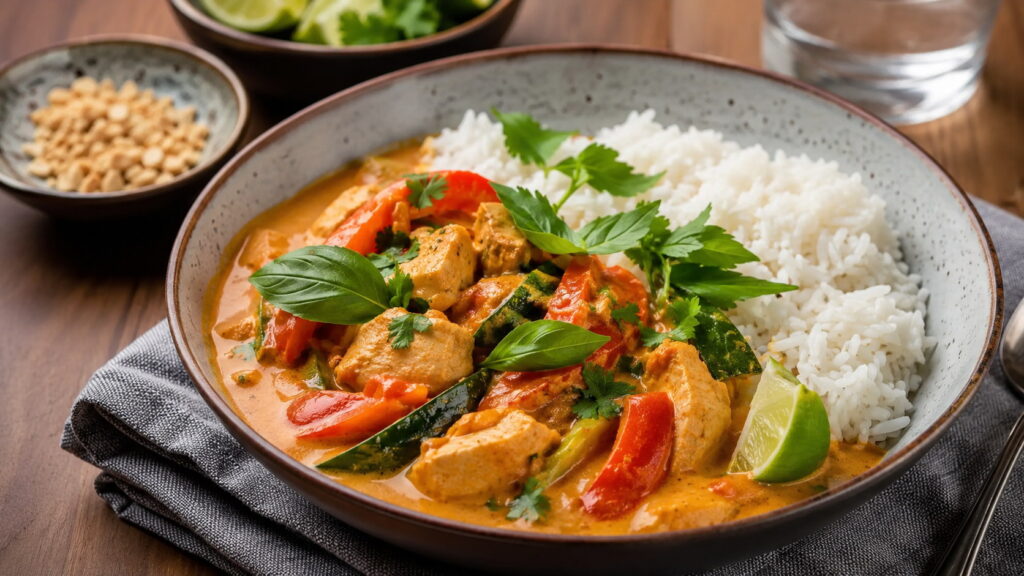
Trader Joe’s Thai red curry recipe is one of those comforting, flavor-packed meals that feels restaurant-quality but comes together surprisingly fast at home. This guide walks you through exactly how to recreate that creamy, spicy, slightly sweet curry using accessible ingredients—plus how to improve it with simple cooking techniques.
You’ll learn how to build deep flavor from the base, choose the right coconut milk, balance heat and sweetness, and avoid common mistakes that lead to bland or watery curry. Expect practical tips, smart ingredient swaps, and clear steps so your curry turns out rich, aromatic, and perfectly textured every time.
In This Article
Why Everyone Loves This Trader Joe’s Thai Red Curry Recipe
A good Thai red curry hits multiple flavor notes at once—creamy, spicy, savory, and just a little sweet. Trader Joe’s version became popular because it delivers that balance with minimal effort.
Home cooks love this recipe because:
- It’s ready in about 30 minutes
- It uses simple, easy-to-find ingredients
- It works with chicken, shrimp, tofu, or vegetables
- The flavor feels complex without requiring advanced skills
This version goes a step further by showing how to deepen the taste using small upgrades like sautéing curry paste properly and finishing with fresh lime juice.
When to Make It
- Busy weeknight dinners
- Meal prep for 2–3 days
- Cozy comfort meals during rainy evenings
- Quick dinner for guests with minimal prep
What Makes It So Satisfying
The richness comes from coconut milk, while red curry paste brings heat and aromatics like lemongrass and chili. A touch of sweetness and acidity rounds everything out, creating a dish that feels complete on its own.
What Makes Trader Joe’s Thai Red Curry Unique?
Trader Joe’s Thai red curry stands out because it simplifies traditional Thai cooking without losing the essence of the dish. Traditional versions often require pounding fresh curry paste and balancing multiple sauces. This version leans on pre-made ingredients but still delivers bold flavor.
Key Characteristics
- Creamy texture from coconut milk
- Moderate heat level (adjustable)
- Balanced flavor without overwhelming spice
- Quick cooking process compared to traditional methods
How It Differs from Authentic Thai Red Curry
Authentic Thai red curry often includes:
- Freshly made curry paste
- Kaffir lime leaves and Thai basil
- Palm sugar and fish sauce in precise balance
Trader Joe’s approach simplifies this by using ready-made curry paste and pantry-friendly ingredients. The result is slightly milder but still deeply satisfying.
Why It Works for Home Cooks
- No specialty equipment required
- Flexible ingredient options
- Easy to adjust spice and richness
- Consistent results even for beginners
Ingredients Breakdown for Trader Joe’s Thai Red Curry Recipe
Understanding your ingredients is the key to making this curry taste incredible—not just good. Each component plays a specific role in flavor, texture, and aroma.
Core Ingredients
- Red curry paste
The backbone of the dish. Provides chili heat, garlic, lemongrass, and spices.
Tip: Sautéing it in oil releases deeper flavor. - Coconut milk (full-fat recommended)
Creates the creamy base and balances spice.
Light coconut milk works but results in a thinner curry. - Protein of choice
Chicken thighs (juicy and flavorful), shrimp (quick-cooking), tofu (plant-based option) - Vegetables
Bell peppers, carrots, zucchini, or snap peas add texture and freshness - Garlic and ginger
Build aromatic depth at the start of cooking - Fish sauce (or soy sauce alternative)
Adds umami and saltiness - Brown sugar or palm sugar
Balances spice with subtle sweetness - Lime juice
Brightens the dish at the end
Optional Flavor Boosters
- Thai basil or cilantro for freshness
- Chili flakes or fresh chilies for extra heat
- A splash of broth to adjust consistency
Ingredient Balance at a Glance
| Component | Purpose |
| Coconut milk | Creaminess |
| Curry paste | Spice & aroma |
| Fish sauce | Umami depth |
| Sugar | Sweet balance |
| Lime juice | Fresh acidity |
Choosing quality ingredients makes a noticeable difference. If you want to better understand coconut milk types and nutrition, the Harvard T.H. Chan School of Public Health guide to coconut milk offers a helpful breakdown.
Smart Ingredient Swaps & Customization Options
Flexibility is one of the biggest strengths of this Trader Joe’s Thai red curry recipe. You can easily adjust it based on dietary needs, spice tolerance, or whatever is already in your kitchen.
Protein Swaps That Work Every Time
- Chicken thighs → Chicken breast
Leaner, but cook gently to avoid dryness - Chicken → Shrimp
Add shrimp during the last 3–4 minutes to prevent overcooking - Chicken → Tofu
Use firm tofu, pan-seared first for better texture - Plant-based option
Tofu + mushrooms create a satisfying, meaty bite
Coconut Milk Alternatives
- Full-fat coconut milk → richest and creamiest result
- Light coconut milk → lower calories but thinner texture
- Coconut cream + water → ultra-rich restaurant-style finish
Adjusting Spice Level Without Ruining Flavor
- Too spicy? Add:
- Extra coconut milk
- A pinch of sugar
- Not spicy enough? Add:
- Chili flakes
- Fresh sliced red chilies
- A small extra spoon of curry paste
Pantry-Friendly Substitutions
- Fish sauce → soy sauce or tamari (for vegetarian option)
- Brown sugar → honey or maple syrup
- Fresh vegetables → frozen stir-fry mix (quick shortcut)
Tip: Keep the balance of creamy + spicy + salty + slightly sweet intact, even when swapping ingredients. That balance defines a great Thai red curry.
Step-by-Step Trader Joe’s Thai Red Curry Recipe (Foolproof Method)
This method focuses on building flavor properly, not just mixing ingredients together. Small technique details make a big difference.
Quick Recipe Overview
- Prep time: 10 minutes
- Cook time: 20 minutes
- Total time: 30 minutes
- Servings: 3–4
Equipment You’ll Need
- Large skillet or wok
- Wooden spoon or spatula
- Knife and cutting board
Step-by-Step Instructions
1. Prep Everything First
Slice protein and vegetables into even pieces. Measure sauces and keep them ready.
Having everything prepped prevents overcooking.
2. Sauté Aromatics
Heat 1–2 tablespoons of oil over medium heat.
Add minced garlic and ginger. Cook for about 30 seconds until fragrant.
3. Cook the Curry Paste
Add 2–3 tablespoons red curry paste.
Stir and cook for 1–2 minutes.
Important: This step unlocks deeper flavor by toasting the spices.
4. Add Coconut Milk
Pour in 1 can (about 400 ml) of coconut milk.
Stir well to combine with the curry paste.
Let it gently simmer for 3–5 minutes until slightly thickened.
5. Add Protein
Add your chosen protein:
- Chicken → cook 6–8 minutes until fully cooked
- Shrimp → cook 3–4 minutes until pink
- Tofu → simmer 5–6 minutes to absorb flavor
6. Add Vegetables
Stir in vegetables and cook for 4–6 minutes.
Doneness cue: Vegetables should be tender but still slightly crisp.
7. Season and Balance
Add:
- 1–2 teaspoons fish sauce
- 1 teaspoon sugar
- Juice of half a lime
Taste and adjust:
- Too salty → add coconut milk
- Too mild → add curry paste or chili
8. Final Simmer
Let everything simmer for another 2–3 minutes until flavors come together.
9. Finish and Serve
Turn off heat. Add fresh herbs if using. Serve immediately over rice or noodles.
Pro Cooking Tips for the Best Thai Red Curry at Home
Great curry comes from technique, not just ingredients. These tips help you move from “good” to restaurant-level flavor.
Build Flavor in Layers
Cooking curry paste in oil first intensifies aroma and removes raw spice taste. Skipping this step leads to flat flavor.
Use Full-Fat Coconut Milk
Full-fat coconut milk creates a naturally thick and silky texture.
Low-fat versions often separate or taste watery.
Don’t Boil Aggressively
Keep the curry at a gentle simmer.
High heat can cause coconut milk to split and lose its smooth consistency.
Balance Is Everything
Thai red curry isn’t just spicy. It should taste:
- Creamy
- Slightly sweet
- Lightly salty
- Bright at the end
Add lime juice last to keep the flavor fresh.
Cut Ingredients Evenly
Uniform pieces ensure everything cooks at the same rate.
Uneven cuts often lead to overcooked vegetables and undercooked protein.
Taste Before Serving
Final adjustments matter more than you think.
A small pinch of sugar or squeeze of lime can completely transform the dish.
Pro Tip: If the curry tastes “flat,” it usually needs acid (lime) or salt (fish sauce)—not more spice.
Common Mistakes to Avoid When Making Thai Red Curry
Even a simple Trader Joe’s Thai red curry recipe can go wrong if a few key details are missed. Avoid these common pitfalls to keep your curry rich, balanced, and restaurant-quality.
Overcooking the Protein
Chicken can turn dry and shrimp can become rubbery if cooked too long.
Fix: Add protein at the right stage and monitor closely:
- Chicken → cook until just done (no longer pink)
- Shrimp → remove from heat as soon as they turn pink
Skipping the Curry Paste Cooking Step
Adding curry paste directly to liquid prevents it from developing depth.
Fix: Always sauté the paste in oil for 1–2 minutes before adding coconut milk.
Using Too Much or Too Little Curry Paste
- Too much → overpowering heat and bitterness
- Too little → bland and weak flavor
Fix: Start with 2 tablespoons, then adjust gradually.
Letting the Curry Boil Too Hard
High heat can cause coconut milk to split, resulting in a grainy texture.
Fix: Keep the curry at a gentle simmer.
Forgetting to Balance Flavors
A curry that tastes “off” usually lacks balance—not ingredients.
| Problem | Likely Cause | Quick Fix |
| Too spicy | Too much paste | Add coconut milk or sugar |
| Too bland | Not enough seasoning | Add fish sauce or paste |
| Too heavy | Missing acidity | Add lime juice |
| Too salty | Excess fish sauce | Add coconut milk |
Overcrowding the Pan
Too many ingredients at once can lead to uneven cooking and soggy vegetables.
Fix: Use a wide pan and cook in layers.
Easy Variations of Trader Joe’s Thai Red Curry Recipe
Once you master the base, this recipe becomes incredibly versatile. Small changes can create completely new dishes while keeping the same comforting flavor profile.
Vegetarian & Vegan Thai Red Curry
- Replace protein with tofu, mushrooms, or chickpeas
- Swap fish sauce for soy sauce or tamari
- Add extra vegetables like eggplant or broccoli
Result: Still creamy, still satisfying, fully plant-based.
Seafood Twist (Light & Fresh)
- Use shrimp or salmon
- Add seafood near the end to prevent overcooking
- Finish with extra lime juice for brightness
Tip: Seafood pairs especially well with a slightly thinner curry base.
Low-Carb / Keto-Friendly Version
- Serve with cauliflower rice instead of regular rice
- Use full-fat coconut milk for higher fat content
- Avoid added sugar or replace with a keto-friendly sweetener
Extra Spicy Version
- Add fresh red chilies or chili oil
- Increase curry paste slightly
- Finish with chili flakes for a kick
One-Pan or Slow Cooker Variation
- Combine ingredients in a slow cooker
- Cook on low for 4–6 hours (except delicate vegetables)
- Add quick-cooking veggies near the end
Result: Deeper flavor with minimal effort.
What to Serve with Trader Joe’s Thai Red Curry
Serving the curry with the right base and sides transforms it into a complete, satisfying meal.
Best Rice Options
- Jasmine rice → classic, fragrant pairing
- Brown rice → nuttier flavor, more fiber
- Sticky rice → more authentic feel
Low-Carb Alternatives
- Cauliflower rice
- Zucchini noodles
- Shredded cabbage sautéed lightly
Fresh Toppings That Elevate Flavor
- Chopped cilantro or Thai basil
- Lime wedges
- Sliced red chilies
- Green onions
Tip: Fresh herbs add contrast to the rich, creamy sauce.
Simple Side Dishes
- Cucumber salad (cooling and refreshing)
- Light spring rolls
- Steamed or sautéed greens
Beverage Pairings
- Iced Thai tea for a sweet contrast
- Coconut water for a refreshing balance
- Light white tea or green tea to cleanse the palate
A well-paired base and fresh toppings help highlight the bold flavors of this Trader Joe’s Thai red curry recipe without overpowering it.
Make-Ahead, Storage & Reheating Tips
Trader Joe’s Thai red curry recipe stores beautifully, making it perfect for meal prep or next-day leftovers that taste even better.
How to Store Leftovers
- Let the curry cool to room temperature before storing
- Transfer to an airtight container
- Refrigerate for up to 3–4 days
Tip: Store rice separately to prevent it from soaking up too much sauce.
Freezing Instructions
- Place cooled curry in freezer-safe containers
- Leave a little space for expansion
- Freeze for up to 2 months
Best practice: Freeze without fresh herbs and add them after reheating for better flavor.
How to Reheat Without Splitting Coconut Milk
Coconut milk can separate if reheated improperly, so gentle heat is key.
- Stovetop (recommended):
Reheat over low to medium heat, stirring occasionally - Microwave:
Heat in short intervals (60–90 seconds), stirring between each round
Fix if separated: Add a splash of coconut milk or water and stir gently to bring it back together.
Make-Ahead Tips for Busy Days
- Chop vegetables and protein in advance
- Mix sauce ingredients ahead of time
- Cook the full curry and portion into containers for the week
Meal prep idea: Pair with rice and vegetables for ready-to-go lunches.
Nutrition Insights: Is Thai Red Curry Healthy?
Thai red curry can be both nourishing and indulgent, depending on how it’s prepared.
Estimated Nutrition (Per Serving)
| Nutrient | Approximate Amount |
| Calories | 350–500 kcal |
| Protein | 20–30 g |
| Fat | 20–30 g |
| Carbohydrates | 15–25 g |
Values vary depending on protein choice and coconut milk used.
What Makes It Nutritious
- Protein-rich (especially with chicken or tofu)
- Packed with vegetables for fiber and vitamins
- Contains healthy fats from coconut milk
Things to Watch
- Coconut milk is calorie-dense
- Sodium can be high depending on fish sauce or paste used
How to Make It Lighter
- Use light coconut milk or half coconut milk + broth
- Increase vegetables and reduce sauce portion
- Choose lean protein like chicken breast or tofu
This balance makes the dish adaptable for different dietary goals without sacrificing flavor.
Frequently Asked Questions About Trader Joe’s Thai Red Curry Recipe
Can I use green or yellow curry paste instead?
Yes. Green curry is typically spicier and more herbaceous, while yellow curry is milder and slightly sweeter. Adjust seasoning to taste.
What’s the best coconut milk to use?
Full-fat coconut milk delivers the creamiest texture and best flavor. Light versions work but produce a thinner sauce.
How spicy is Trader Joe’s Thai red curry?
It’s moderately spicy. Heat level depends on the amount of curry paste used and can be easily adjusted.
Can I freeze Thai red curry?
Yes. It freezes well for up to 2 months. Reheat gently to maintain a smooth texture.
How do I thicken or thin the curry?
- To thicken: simmer longer or use less liquid
- To thin: add broth or coconut milk
Can I make this ahead of time?
Absolutely. The flavor often improves after a day in the fridge, making it ideal for meal prep.
Why does my curry taste flat?
It likely needs balance. Add a bit of lime juice for brightness or fish sauce for depth.
Final Thoughts: Making Trader Joe’s Thai Red Curry Better at Home
Making Trader Joe’s Thai red curry recipe at home gives you full control over flavor, texture, and ingredients. Small adjustments—like properly cooking the curry paste, balancing flavors at the end, and choosing quality coconut milk—transform a simple dish into something truly memorable.
Once you’ve mastered the base recipe, don’t hesitate to experiment. Try different proteins, add seasonal vegetables, or adjust the spice level to suit your taste. This is the kind of recipe that evolves with your cooking style.
Save this recipe for busy nights, share it with friends, or make it part of your weekly meal rotation. When done right, it’s a comforting, flavorful dish you’ll come back to again and again.
