
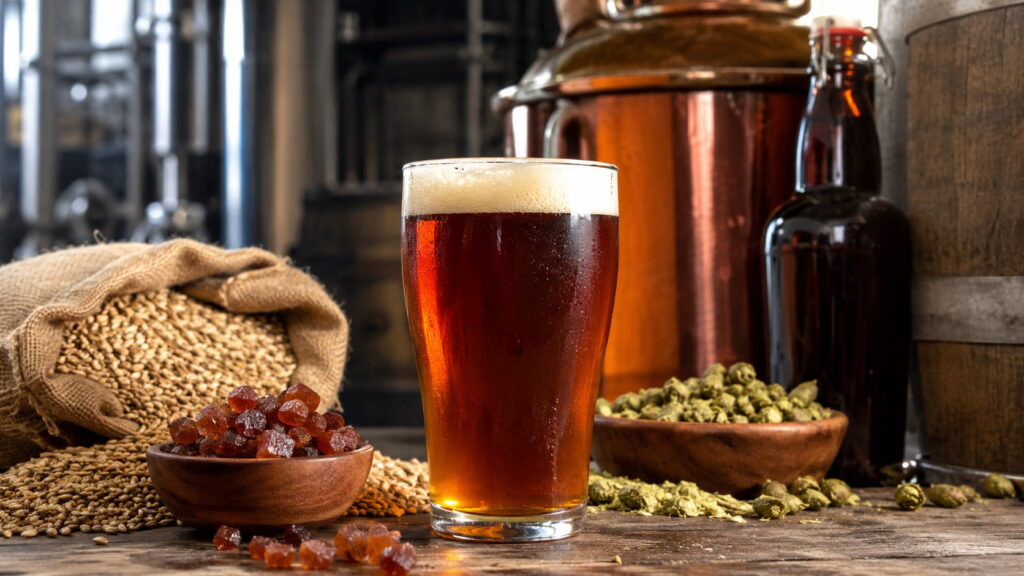
Crafting a balanced amber ale recipe with amber candi syrup D-45 at home is one of the most rewarding brewing experiences. This recipe combines rich malt character with the deep caramelized sweetness of D-45 syrup, resulting in a smooth, complex beer that feels both approachable and refined.
In this guide, you’ll learn exactly how to brew this amber ale successfully—from ingredient selection and brewing techniques to fermentation control, flavor adjustments, and serving tips. Whether you’re a beginner or an experienced homebrewer, this walkthrough focuses on real-world brewing results so your batch turns out clean, flavorful, and consistent.
In This Article
Why This Amber Ale Recipe with Amber Candi Syrup D-45 Stands Out
Amber ales are known for their balance—not too bitter, not too sweet. This recipe elevates that balance by introducing amber candi syrup D-45, which adds layers of complexity you won’t get from standard sugar or even some specialty malts.
What Makes This Recipe Different
- Enhanced depth of flavor: D-45 contributes notes of caramel, toasted sugar, and subtle dark fruit
- Improved fermentation performance: Unlike plain sugar, candi syrup ferments cleanly while boosting alcohol slightly
- Beautiful color development: Expect a deep amber hue with reddish highlights
- Smooth finish: The syrup helps create a rounder mouthfeel without heaviness
Who This Recipe Is Perfect For
- Homebrewers looking to level up from basic amber ales
- Craft beer enthusiasts who enjoy Belgian-inspired complexity
- Anyone wanting a balanced, drinkable beer with character
Key takeaway: This recipe bridges classic American amber ale structure with Belgian-style sugar complexity, giving you something unique yet highly drinkable.
Understanding Amber Candi Syrup D-45 in Brewing
Before brewing, it’s important to understand what makes amber candi syrup D-45 such a powerful ingredient.
What Is Amber Candi Syrup D-45?
Amber candi syrup is a highly refined beet sugar product that has been caramelized under controlled conditions. The “D-45” refers to its color rating, which directly influences both flavor and appearance in your beer.
Flavor Profile and Brewing Impact
- Caramel sweetness without being cloying
- Light raisin and toasted sugar notes
- Clean fermentability, meaning it won’t leave unwanted residue flavors
- Boosts alcohol content slightly without adding body heaviness
Unlike table sugar, which can thin out beer too much, D-45 maintains balance and drinkability.
Why Brewers Choose D-45 Over Other Sugars
- Dissolves easily during the boil
- Ferments efficiently, reducing risk of off-flavors
- Adds complexity without overpowering malt or hops
- Helps achieve a clean, professional-quality finish
For deeper insight into how sugar affects fermentation, you can explore this trusted resource from the American Homebrewers Association, which explains fermentation fundamentals in detail.
Flavor Blueprint of This Amber Ale Recipe with Amber Candi Syrup D-45
Understanding the final result helps guide every brewing decision. This amber ale recipe with amber candi syrup D-45 is designed to deliver a balanced, flavorful pint with depth and drinkability.
Aroma
- Toasted malt upfront
- Light caramel and subtle fruity undertones
- Gentle hop presence (earthy or floral depending on your choice)
Taste
- Medium malt sweetness with caramel richness
- Balanced bitterness that keeps the beer from feeling heavy
- Hints of dark fruit from the candi syrup
- Clean, slightly dry finish
Mouthfeel and Body
- Medium body
- Smooth, slightly rounded texture
- Moderate carbonation for a crisp but not sharp finish
Appearance
- Deep amber to reddish-brown color
- Brilliant clarity when properly conditioned
- Off-white foam head with good retention
Expected Stats (Approximate)
- ABV: 5.5% – 6.5%
- IBU: 25 – 35
- SRM (Color): 10 – 14
Pro tip: If your goal is a more sessionable beer, reduce the amount of candi syrup slightly. For a richer version, increase specialty malts instead of overloading sugar.
Ingredients Breakdown for Amber Ale Recipe with Amber Candi Syrup D-45
Great beer starts with intentional ingredient choices. Each component in this amber ale recipe with amber candi syrup D-45 plays a specific role in flavor, aroma, and structure.
Base Malts (The Backbone)
- Pale Ale Malt (70–80%)
Provides the fermentable sugars and a clean, slightly bready base. - Munich Malt (10–15%)
Adds depth with rich, malty sweetness and a subtle toasted character. - Crystal/Caramel Malt (40–60L) (5–10%)
Enhances caramel notes and contributes to that signature amber color.
Tip: Keep crystal malt balanced. Too much can make the beer overly sweet.
Specialty Addition: Amber Candi Syrup D-45
- Use 0.5–1 lb (225–450 g) for a 5-gallon batch
- Adds caramelized sugar notes, slight dark fruit complexity, and color
- Increases ABV without making the beer heavy
Best practice: Add the syrup during the last 10–15 minutes of the boil to preserve flavor while ensuring proper sanitation.
Hop Selection (Balance, Not Dominance)
Amber ales rely on balance, so hops should complement—not overpower—the malt.
- Bittering hops (start of boil): Cascade, Centennial, or Magnum
- Flavor/aroma hops (late addition): Willamette, East Kent Goldings, or Fuggles
Target:
- IBU range: 25–35
- Smooth bitterness with mild earthy or floral notes
Yeast Strains (Clean Fermentation)
Choose a yeast that lets malt and syrup shine:
- American Ale Yeast (US-05) – clean, neutral, reliable
- English Ale Yeast (S-04) – slightly fruity, fuller body
Fermentation tip: A clean yeast profile works best if you want the D-45 syrup flavors to stand out.
Water Profile Considerations
Water chemistry can subtly improve your final beer:
- Balanced profile (not too sulfate-heavy or chloride-heavy)
- Aim for moderate calcium levels (~50–100 ppm)
- Slight chloride presence enhances malt roundness
Quick hack: If unsure, start with filtered water and avoid overly hard or heavily chlorinated sources.
Essential Equipment for Homebrewing Success
A smooth brewing session depends on having the right tools ready and properly sanitized.
Core Brewing Equipment
- Brew kettle (at least 5–8 gallons)
- Fermenter with airlock
- Large stirring spoon (preferably stainless steel)
- Wort chiller or ice bath setup
- Sanitizer (non-negotiable for clean beer)
Helpful Upgrades for Better Results
- Digital thermometer – accurate mash and fermentation temps
- Hydrometer or refractometer – track gravity and fermentation progress
- Auto-siphon – cleaner transfers
- Temperature control system – prevents off-flavors during fermentation
Sanitization Essentials
Clean beer starts with strict sanitation:
- Sanitize everything that touches cooled wort
- Avoid shortcuts—even small contamination can ruin a batch
Critical tip: If it touches your beer post-boil, it must be sanitized. No exceptions.
Step-by-Step Brewing Process for Amber Ale Recipe with Amber Candi Syrup D-45
This is where everything comes together. Follow these steps carefully for consistent, high-quality results.
Mash Schedule (Extracting Sugars)
- Heat water to ~165°F (74°C)
- Add crushed grains and stabilize mash at 152°F (67°C)
- Hold for 60 minutes
Why it matters: This temperature creates a balanced wort—not too dry, not too sweet.
- Mash out at 168°F (76°C) for 10 minutes
- Sparge with warm water to collect wort
Boil Process and Hop Additions
Bring wort to a rolling boil (60 minutes total):
- 60 minutes: Add bittering hops
- 15 minutes: Add flavor hops + begin adding amber candi syrup D-45
- 5 minutes: Add aroma hops (optional for extra fragrance)
Important: Stir well when adding candi syrup to prevent scorching.
Adding Amber Candi Syrup D-45 Correctly
- Add during the last 10–15 minutes of the boil
- Ensures full dissolution and sanitation
- Preserves delicate caramelized flavors
Avoid adding too early, which can dull its complexity.
Cooling and Transferring
- Cool wort quickly to 65–70°F (18–21°C)
- Use a wort chiller or ice bath
- Transfer to sanitized fermenter
Faster cooling = cleaner flavor and reduced contamination risk
Pitching Yeast
- Aerate wort by shaking or using an aeration tool
- Pitch yeast at 65–68°F (18–20°C)
Pro tip: Proper aeration helps yeast start strong and reduces off-flavors.
Fermentation Timeline
- Primary fermentation: 7–10 days
- Secondary conditioning (optional): 1–2 weeks
Watch for signs:
- Bubbling airlock
- Krausen (foam layer) forming
- Gravity dropping steadily
Patience pays off here—don’t rush fermentation.
Fermentation Secrets: Getting the Best Flavor Development
Fermentation is where your amber ale recipe with amber candi syrup D-45 truly transforms from sweet wort into a balanced, flavorful beer. Small details here make a big difference in clarity, aroma, and overall drinkability.
Ideal Fermentation Temperature
- American Ale Yeast (US-05): 64–68°F (18–20°C)
- English Ale Yeast (S-04): 66–70°F (19–21°C)
Why it matters:
Lower temperatures produce a cleaner profile, allowing the caramel and subtle fruit notes from D-45 to shine. Higher temperatures can introduce unwanted esters.
Monitoring Fermentation Progress
- Use a hydrometer to track gravity every few days
- Expect active bubbling within 12–36 hours
- Fermentation slows after 4–5 days, but don’t rush the process
Done when:
- Gravity readings stay stable for 2–3 days
- Airlock activity nearly stops
Conditioning for Better Flavor
- Allow an additional 5–10 days after primary fermentation
- This helps reduce harsh flavors and improves clarity
Optional cold crash:
- Chill beer to ~35–40°F (2–4°C) for 2–3 days
- Helps yeast settle, resulting in a clearer beer
When to Bottle or Keg
- Bottle once fermentation is fully complete
- Add priming sugar for carbonation (about 4–5 oz for 5 gallons)
- Condition bottles at room temperature for 10–14 days
Pro tip: Rushing bottling can cause overcarbonation or off-flavors. Patience leads to a smoother finish.
Common Mistakes to Avoid When Brewing Amber Ale with D-45
Even a well-planned amber ale recipe with amber candi syrup D-45 can go wrong if a few key details are overlooked.
Overusing Candi Syrup
- Too much D-45 can create an overly sweet or unbalanced beer
- Stick to recommended amounts unless intentionally experimenting
Fix: Balance sweetness with slightly higher hop bitterness in future batches.
Poor Temperature Control
- High fermentation temps = unwanted fruity or solvent-like flavors
- Low temps = sluggish or stalled fermentation
Solution: Keep fermentation within the recommended yeast range.
Incorrect Hop Timing
- Adding hops too late reduces bitterness
- Adding aroma hops too early wastes their fragrance
Quick guide:
- Early = bitterness
- Late = aroma
Weak Sanitization Practices
- Contamination leads to sour, off-tasting beer
- Always sanitize fermenters, tubing, and tools
Golden rule: Clean first, sanitize second—every time.
Incomplete Fermentation
- Bottling too early can cause excess carbonation or bottle bombs
Check gravity, not just airlock activity, before packaging.
Customizing Your Amber Ale Recipe with Amber Candi Syrup D-45
One of the best parts of homebrewing is making the recipe your own. This amber ale recipe with amber candi syrup D-45 is highly adaptable depending on your flavor goals.
Adjusting Sweetness and Body
- Sweeter beer: Increase crystal malt slightly
- Drier finish: Lower mash temperature (148–150°F / 64–66°C)
- Fuller body: Raise mash temp to ~154°F (68°C)
Tweaking Hop Profiles
- Citrus-forward: Use Cascade or Amarillo
- Earthy/traditional: Choose Fuggles or East Kent Goldings
- Balanced: Combine one clean bittering hop with a mild aroma hop
Playing with Candi Syrup Levels
- More D-45: Deeper caramel and slight dark fruit notes
- Less D-45: Cleaner, more classic amber ale profile
Tip: Increase gradually—small changes make noticeable differences.
Creative Variations
- Add a touch of orange peel for brightness
- Incorporate light spices like coriander for complexity
- Blend in a small portion of Vienna malt for extra malt richness
Scaling the Recipe
- Maintain ingredient ratios when increasing batch size
- Adjust boil volume and fermentation capacity accordingly
Key takeaway: Make one change at a time so you can clearly taste the difference in each batch.
Serving and Pairing Your Amber Ale
Serving your amber ale recipe with amber candi syrup D-45 the right way brings out its full flavor potential. Temperature, glassware, and food pairings all play a role in the final experience.
Ideal Serving Temperature
- Serve at 45–50°F (7–10°C)
- Too cold will mute the caramel and malt notes
- Slightly warmer temperatures enhance aroma and complexity
Best Glassware არჩევ
- Pint glass for casual drinking
- Tulip glass to concentrate aroma and highlight subtle notes
Food Pairings That Shine
Amber ale’s balance makes it incredibly versatile:
- Grilled meats (burgers, steak, sausages)
- Roasted vegetables like carrots, squash, and sweet potatoes
- Cheeses such as cheddar, gouda, or mild blue cheese
- Caramelized dishes that echo the beer’s malt sweetness
Tip: Pair foods with similar flavor intensity so neither the beer nor the dish overpowers the other.
When to Drink for Peak Flavor
- Best enjoyed 2–4 weeks after bottling
- Flavors continue to smooth out slightly with short-term aging
Storage and Shelf Life Tips for Homebrewed Amber Ale
Proper storage ensures your amber ale recipe with amber candi syrup D-45 stays fresh, flavorful, and safe to drink.
Ideal Storage Conditions
- Store bottles in a cool, dark place (60–68°F / 15–20°C)
- Avoid direct sunlight to prevent “skunky” flavors
- Keep bottles upright to minimize sediment disturbance
Shelf Life
- Best consumed within 2–3 months for peak freshness
- Can last longer if stored properly, but flavor may gradually fade
Signs Your Beer Is Still Good
- Clean aroma with no sour or vinegar smell
- Stable carbonation
- No unusual haze (unless style-appropriate)
Quick note: Slight sediment at the bottom is normal—just pour gently.
Troubleshooting Your Amber Ale Recipe with Amber Candi Syrup D-45
Even experienced brewers encounter issues. Here’s how to diagnose and fix common problems.
Common Issues and Solutions
| Problem | Possible Cause | Fix for Next Batch |
| Beer tastes too sweet | Too much candi syrup or high mash temp | Reduce syrup or mash lower |
| Thin body | Too much simple sugar or low mash temp | Increase specialty malts |
| Off-flavors (solvent/fruity) | High fermentation temp | Improve temperature control |
| Flat beer | Insufficient priming sugar or short conditioning | Adjust sugar and wait longer |
| Overcarbonation | Bottled too early | Ensure stable gravity before bottling |
| Cloudy appearance | Incomplete conditioning | Allow more time or cold crash |
Clarity vs. Flavor
Clarity doesn’t always affect taste, but:
- Clear beer looks more professional
- Cold crashing and proper conditioning improve both clarity and smoothness
Frequently Asked Questions About Amber Ale Recipe with Amber Candi Syrup D-45
Can I substitute amber candi syrup D-45 with regular sugar?
You can, but it won’t deliver the same depth of flavor. Regular sugar ferments cleanly but lacks the caramelized complexity of D-45.
Is this amber ale recipe beginner-friendly?
Yes, as long as you follow temperature control and sanitation practices. The process is straightforward with attention to detail.
How strong will this beer be?
Most batches fall between 5.5% and 6.5% ABV, depending on your exact ingredient ratios and fermentation efficiency.
Can I brew this without advanced equipment?
Absolutely. A basic kettle, fermenter, and sanitizer are enough. Advanced tools simply improve consistency.
How long should I wait before drinking?
Allow at least 2 weeks of bottle conditioning, though 3–4 weeks often results in smoother flavor.
Can I make this recipe ahead of time?
Yes. Brewing in advance is ideal since the beer benefits from conditioning time before serving.
Why does my beer taste different from batch to batch?
Small variations in temperature, ingredients, or timing can affect results. Keeping detailed notes helps improve consistency.
Brewing your own amber ale recipe with amber candi syrup D-45 is both a science and an art. Each batch teaches you something new, and small adjustments can lead to big improvements in flavor and balance. Try this recipe, experiment with your own variations, and don’t forget to share your results or save it for your next brewing session.
