
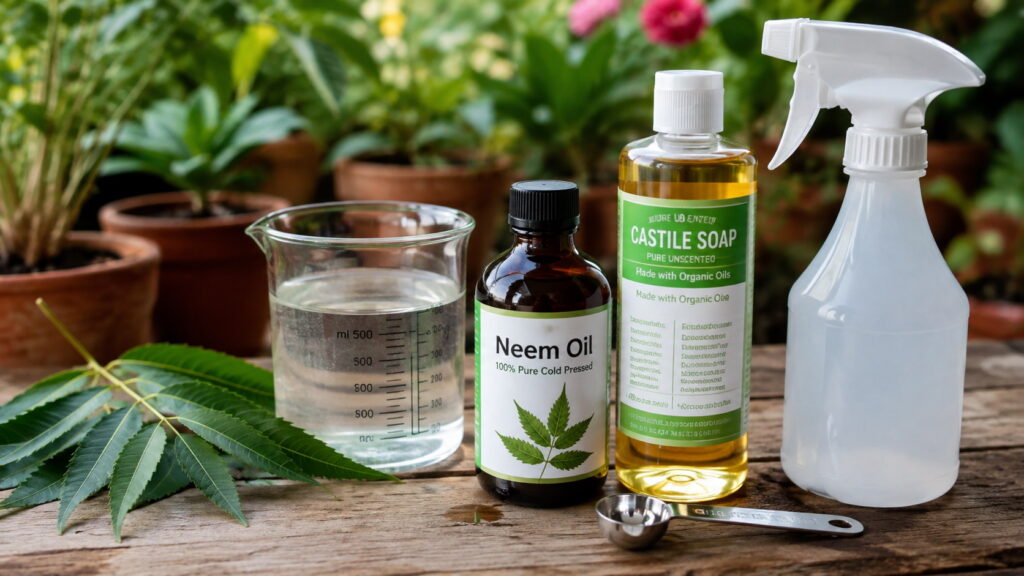
Neem oil and castile soap insecticide recipe is one of the most reliable ways to protect plants without harsh chemicals. Many home gardeners rely on this simple mix to control pests while keeping vegetables, herbs, and houseplants safe.
Clear guidance below will walk through exact ratios, mixing techniques, and application methods so your spray works effectively the first time. Expect practical tips, ingredient insights, and common mistakes to avoid so plants stay healthy and pest-free.
In This Article
Why This Neem Oil and Castile Soap Insecticide Recipe Works (and When to Use It)
Natural pest control often fails due to weak mixtures or poor application. Neem oil and castile soap solve both problems when used correctly.
How Neem Oil Stops Pests Naturally
Neem oil contains compounds that:
- Disrupt insect feeding and reproduction
- Prevent larvae from maturing
- Reduce pest populations over time
Aphids, spider mites, whiteflies, and thrips respond particularly well to neem-based sprays.
Why Castile Soap Makes a Big Difference
Pure castile soap works as:
- A gentle emulsifier, helping oil mix with water
- A contact insecticide that breaks down pest outer layers
Without soap, neem oil floats on water and won’t coat leaves properly.
When to Use This Spray
Best situations include:
- Early-stage infestations
- Preventive plant care routines
- Indoor plant pest control
Heavy infestations may require repeated applications or stronger variations, which will be covered later.
Understanding the Power Duo: Neem Oil + Castile Soap
Strong results come from understanding how both ingredients interact.
Neem Oil: The Long-Term Defender
Cold-pressed neem oil delivers the most active compounds. Effects are gradual but long-lasting because pests lose the ability to reproduce.
Castile Soap: The Immediate Action Booster
Castile soap acts quickly by:
- Removing protective coatings from insects
- Improving spray spread across leaves
A balanced mix ensures pests are both killed on contact and prevented from returning.
Why the Combination Works Better Than Using One Alone
Using neem oil alone often leads to uneven coverage. Using soap alone provides only short-term results.
Together, they:
- Create a uniform spray solution
- Improve leaf adhesion
- Deliver both immediate and residual pest control
Gardeners who switch to this combination usually notice visible improvement within a few applications.
Neem Oil and Castile Soap Insecticide Recipe (Exact Ratios That Work)
Precision matters here. Incorrect ratios can burn plants or reduce effectiveness.
Standard Recipe (Best for Most Plants)
- 1 liter (4 cups) water
- 1 teaspoon cold-pressed neem oil
- ½ teaspoon liquid castile soap (unscented)
Mixing Order (Critical for Success)
- Add castile soap to water first
- Stir gently to distribute
- Slowly add neem oil while mixing continuously
- Shake well before every use
Proper mixing creates a slightly milky solution, which indicates good emulsification.
Quick Batch Adjustments
- Small batch (500 ml): halve all ingredients
- Large batch (1 gallon):
- 1 gallon water
- 4 teaspoons neem oil
- 2 teaspoons castile soap
Key Tip for Best Results
Always mix fresh before use. Neem oil breaks down quickly in water, reducing effectiveness after 24 hours.
Ingredients Breakdown: Choosing the Right Neem Oil and Soap
Ingredient quality directly affects how well your neem oil and castile soap insecticide recipe performs. Poor choices often lead to weak results or plant damage.
Choosing the Best Neem Oil
Look for cold-pressed, unrefined neem oil whenever possible. Stronger active compounds remain intact in this form, making pest control more effective.
- Cold-pressed neem oil: highest potency and best results
- Clarified neem oil (hydrophobic extract): milder, works mainly as a contact spray
- Color & smell: dark yellow to brown with a strong, garlicky scent indicates authenticity
Avoid heavily processed neem oil, as many beneficial compounds are removed.
Selecting the Right Castile Soap
Not all soaps work safely on plants. Pure castile soap keeps your mixture effective and gentle.
- Choose unscented liquid castile soap
- Ensure it contains no synthetic detergents or degreasers
- Avoid added fragrances or essential oils unless intentionally using variations
Popular plant-safe options include simple, ingredient-minimal formulas with olive or coconut oil bases.
Water Quality Matters More Than You Think
Water plays a bigger role than most expect.
- Distilled or filtered water: best for consistent mixing
- Hard tap water: may reduce emulsification
- Chlorinated water: can slightly weaken effectiveness
Room temperature water helps neem oil blend more smoothly, reducing separation.
Step-by-Step: How to Mix Neem Oil and Castile Soap Insecticide Properly
Proper mixing ensures even coverage and prevents leaf damage. Rushing this step often leads to poor results.
Equipment You’ll Need
- Spray bottle (preferably opaque or dark)
- Measuring spoons
- Small mixing container or jug
- Stirring spoon or whisk
Mixing Instructions (Fail-Proof Method)
- Pour the measured water into your container
- Add castile soap and stir gently until fully dissolved
- Slowly drizzle in neem oil while stirring continuously
- Mix until the solution turns milky and uniform
- Transfer to a spray bottle and shake well
Visual Cues for Proper Emulsification
- Cloudy or milky appearance
- No visible oil droplets floating on top
- Even texture without separation
If oil separates quickly, add a tiny extra drop of castile soap and shake again.
Common Mixing Mistakes to Avoid
- Adding neem oil before soap
- Using cold water (causes poor blending)
- Skipping the shake before spraying
Always shake before each use, since natural separation can occur over time.
How to Apply Neem Oil and Castile Soap Insecticide for Maximum Results
Application technique determines whether pests disappear or keep coming back.
Best Time of Day to Spray
Apply during:
- Early morning
- Late afternoon or evening
Avoid direct sunlight. Heat combined with oil can burn leaves, especially on delicate plants.
How to Spray Properly
- Coat both top and underside of leaves
- Focus on stems and hidden areas where pests gather
- Spray until leaves are lightly wet, not dripping
Consistent coverage ensures pests cannot escape treatment.
Application Frequency Guide
- Light infestation: every 7 days
- Moderate infestation: every 4–5 days
- Heavy infestation: every 2–3 days until controlled
Continue treatment for at least one week after pests disappear to prevent return.
Extra Tip for Edible Plants
Rinse edible leaves with clean water before harvesting. According to US Environmental Protection Agency (EPA) guidance on neem oil safety, neem oil is considered low-toxicity when used correctly, making it suitable for home gardens.
Plants That Love (and Hate) This Neem Oil and Castile Soap Insecticide
Not every plant reacts the same way to oil-based sprays. Knowing where neem oil and castile soap insecticide recipe works best helps avoid leaf damage and wasted effort.
Plants That Respond Well
Most common garden and indoor plants tolerate this mixture very well:
- Vegetables: tomatoes, peppers, cucumbers, kale
- Herbs: basil, mint, rosemary, parsley
- Houseplants: pothos, monstera, snake plant, philodendron
- Fruit plants: citrus, strawberries
Regular use on these plants often leads to healthier growth and fewer recurring pests.
Plants That Need Extra Caution
Some plants have delicate leaves that may react to oils:
- Ferns
- Calatheas and prayer plants
- Orchids
- Succulents with powdery coatings
Use a diluted version or test before full application.
How to Do a Safe Patch Test
Before spraying an entire plant:
- Apply the mixture to one small leaf area
- Wait 24 hours
- Check for yellowing, spots, or wilting
Healthy leaves after testing indicate the plant can tolerate the spray.
Common Mistakes That Reduce Effectiveness
Even a well-made neem oil and castile soap insecticide recipe can fail if common errors occur during use.
Using Too Much Neem Oil
Higher concentration does not mean better results.
- Causes leaf burn
- Blocks sunlight absorption
- Stresses the plant
Stick to recommended ratios for safe and effective control.
Spraying in Direct Sunlight
Sunlight intensifies the effect of oil on leaves.
- Leads to scorch marks
- Can permanently damage foliage
Always spray during cooler parts of the day.
Skipping Consistent Applications
One-time spraying rarely solves pest problems.
- Eggs may survive the first treatment
- New pests can hatch within days
Follow a consistent schedule for lasting results.
Poor Coverage
Missing hidden areas allows pests to survive.
- Undersides of leaves often host infestations
- Stems and joints are common hiding spots
Thorough coverage is more important than heavy spraying.
DIY Neem Oil and Castile Soap Insecticide Variations
Different plant conditions and pest levels call for slight adjustments to the base recipe.
Stronger Mix for Heavy Infestations
Use cautiously when pests are widespread:
- 1 liter water
- 1.5 teaspoons neem oil
- ½ teaspoon castile soap
Apply every 2–3 days and monitor plant response closely.
Gentle Mix for Seedlings and Sensitive Plants
Reduce concentration to protect fragile growth:
- 1 liter water
- ½ teaspoon neem oil
- ½ teaspoon castile soap
Ideal for young plants or delicate species.
Optional Additions for Enhanced Effect
Some natural boosters can improve performance:
- A few drops of peppermint oil (repels insects)
- A small amount of garlic extract (adds pest deterrence)
Use additions sparingly to avoid overwhelming plants.
Preventive Weekly Spray Version
Maintain plant health with a lighter routine:
- Standard recipe
- Apply once every 7–10 days
Preventive care often reduces the chance of major infestations later.
Storage Tips: Keeping Your Neem Oil Insecticide Fresh
Freshness plays a major role in how effective your neem oil and castile soap insecticide recipe will be. Improper storage can quickly reduce potency.
Shelf Life Guidelines
- Mixed solution: best used within 8–24 hours
- Unmixed neem oil: lasts up to 1–2 years when stored properly
- Castile soap: stable for long-term use
Neem compounds break down once diluted, which is why fresh batches perform better.
Best Storage Practices
- Use a dark or opaque spray bottle to protect from light
- Store in a cool, dry place away from direct sunlight
- Keep the bottle tightly sealed to prevent oxidation
Signs Your Mixture Has Gone Bad
- Strong sour or rancid smell
- Oil separating excessively even after shaking
- Reduced effectiveness against pests
When any of these appear, discard and mix a fresh batch.
Safety Tips When Using Neem Oil and Castile Soap Spray
Natural does not mean completely risk-free. Proper handling keeps both plants and people safe.
Personal Safety
- Wear gloves when mixing and spraying
- Avoid contact with eyes and mouth
- Wash hands after application
Pet and Child Safety
- Keep freshly sprayed plants out of reach until dry
- Avoid spraying directly near pets
- Store neem oil securely
Indoor vs Outdoor Use
- Indoor use requires good airflow to avoid buildup
- Outdoor spraying should avoid windy conditions
- Never spray near beneficial insect activity like bees during the day
Even natural sprays should be used responsibly to prevent unintended harm.
Troubleshooting: When Your Neem Oil Insecticide Isn’t Working
Occasionally, results may fall short. Small adjustments can dramatically improve effectiveness.
Pests Keep Returning
- Increase application frequency
- Ensure full plant coverage
- Continue treatment for at least one week after pests disappear
Leaves Showing Damage
- Reduce neem oil concentration
- Spray during cooler hours
- Test on a small area before full use
Mixture Separates Too Quickly
- Add a tiny extra drop of castile soap
- Shake thoroughly before each spray
- Use warmer water during mixing
Stubborn or Resistant Pests
Some pests require combined approaches:
- Alternate with other natural sprays
- Remove heavily infested leaves
- Improve plant airflow and cleanliness
Consistency and observation are key to long-term success.
Frequently Asked Questions About Neem Oil and Castile Soap Insecticide Recipe
Can I use neem oil spray every day?
Daily use is not recommended. Applying every 4–7 days works better and avoids plant stress.
Does neem oil kill beneficial insects?
Direct contact can affect beneficial insects. Spray early morning or evening when pollinators are less active.
Can I use this on edible plants?
Yes, neem oil and castile soap insecticide recipe is commonly used on vegetables and herbs. Rinse produce before consuming.
Why does my mixture keep separating?
Separation happens when emulsification is weak. Add slightly more castile soap and shake well before use.
Can I store the mixture for later use?
Fresh mixtures work best. Use within 24 hours for maximum effectiveness.
Is neem oil safe for all plants?
Most plants tolerate it well, but sensitive varieties should always be patch-tested first.
Growing healthy plants without harsh chemicals becomes much easier with a reliable neem oil and castile soap insecticide recipe. Try the method, adjust based on your plants’ needs, and keep a consistent routine for the best results. Save the recipe for later and share it with fellow gardeners who want a safer, effective pest control solution.

2 thoughts on “Neem Oil and Castile Soap Insecticide Recipe (Safe, Easy Natural Pest Control)”