
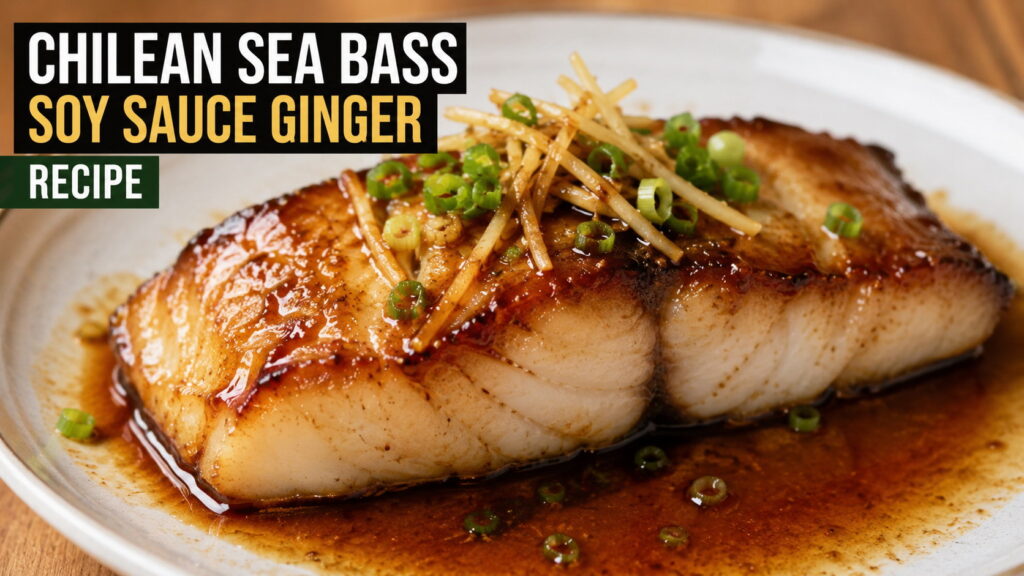
Few dinners feel as luxurious as perfectly cooked Chilean sea bass, yet a good Chilean sea bass recipe with soy sauce and ginger is surprisingly simple to prepare at home. Rich, buttery fish meets a savory soy-ginger glaze, creating a restaurant-style main course with crisp edges, a tender center, and plenty of flavor in every bite.
The key is treating the fish gently. You’ll learn how to choose and prepare Chilean sea bass, balance the soy-ginger sauce, build a beautiful sear, and cook the fillets without drying them out. Along the way, we’ll cover ingredient substitutions, practical cooking tips, serving ideas, and the small details that make the finished dish taste polished rather than merely homemade.
In This Article
Chilean Sea Bass with Soy Sauce and Ginger: A Restaurant-Style Dinner Made Easy
Chilean sea bass has a naturally rich texture and high fat content, which makes the fish especially well suited to bold savory flavors. The buttery flesh can stand up to soy sauce, ginger, garlic, sesame oil, and a touch of sweetness without becoming overwhelmed.
A quick pan-sear gives the fillets a deeply browned exterior while keeping the center moist and delicate. The soy-ginger sauce goes into the pan near the end of cooking, where the heat helps concentrate its flavor and gives the fish a glossy coating.
The goal is not to drown the sea bass in sauce. A well-reduced glaze should cling to the surface and complement the fish rather than cover up its natural flavor.
Quick Recipe Overview
| Detail | What to expect |
| Prep time | 10 minutes |
| Cook time | About 10–15 minutes |
| Total time | About 20–25 minutes |
| Servings | 2 |
| Cooking method | Pan-seared |
| Difficulty | Easy to moderate |
| Main flavors | Soy sauce, ginger, garlic, sesame |
| Best texture | Golden outside, moist and buttery inside |
A heavy skillet, preferably stainless steel or cast iron, works especially well because the pan retains enough heat to develop good browning. A flexible fish spatula also makes turning thick fillets much easier.
Food safety matters even with a premium fish. The USDA recommends cooking fin fish to a minimum internal temperature of 145°F (63°C), measured with a food thermometer. (Ask USDA)
What Makes This Chilean Sea Bass Recipe with Soy Sauce and Ginger So Delicious?
The success of this Chilean sea bass recipe with soy sauce and ginger comes from contrast. Chilean sea bass brings richness and a soft, almost silky texture, while the sauce contributes salty, sweet, acidic, and aromatic notes.
Rich Fish Meets Umami-Rich Soy Sauce
Soy sauce supplies concentrated umami and salt. A relatively small amount can season the fish and create a flavorful glaze, so there is no need to heavily salt the fillets beforehand.
Choose regular soy sauce or a lower-sodium variety according to your preference. Reduced-sodium soy sauce gives you more room to adjust the seasoning without making the finished sauce excessively salty.
Fresh Ginger Keeps the Dish Bright
Fresh ginger does more than add heat. Its sharp, fragrant character cuts through the richness of the sea bass and gives the sauce a clean, lively finish.
Grated ginger disperses more easily through the sauce, while finely minced ginger leaves tiny aromatic pieces throughout the glaze. Fresh ginger is strongly preferred here over dried ground ginger because the flavor is brighter and more pronounced.
A Touch of Sweetness Rounds Out the Sauce
Honey or brown sugar softens the salty edge of soy sauce and helps the glaze develop a glossy finish as it reduces.
Keep the sweetener restrained. The finished sauce should taste savory first, with just enough sweetness to balance the ginger and soy.
Acid Prevents the Sauce from Feeling Heavy
Rice vinegar provides a mild acidity that keeps the glaze balanced. Lime juice can also work when you want a slightly brighter, more citrus-forward flavor.
A small amount goes a long way. Too much acid can overpower the delicate flavor of the fish.
Sesame Oil Adds the Finishing Aroma
Sesame oil contributes a nutty aroma that fits naturally with ginger and soy sauce. A little is enough; excessive sesame oil can dominate the other flavors.
For the best balance, think of sesame oil as an accent rather than the primary cooking fat.
Ingredients You’ll Need for the Soy-Ginger Chilean Sea Bass
Simple ingredients produce the best version of this dish because the fish itself is the star.
Main Ingredients
Chilean sea bass fillets: Choose thick, evenly sized portions so they cook at roughly the same rate. Skin-on fillets can be used, although skinless portions make the soy-ginger glaze easier to coat evenly.
Soy sauce: Provides salt and umami. Regular soy sauce delivers a stronger savory flavor, while low-sodium soy sauce gives you greater control over the final seasoning.
Fresh ginger: Use freshly grated or very finely minced ginger for the brightest flavor.
Garlic: Adds savory depth and pairs naturally with ginger.
Honey or brown sugar: Creates gentle sweetness and helps the sauce become glossy as it reduces.
Rice vinegar: Adds acidity and keeps the glaze from tasting overly rich or salty.
Sesame oil: Adds a subtle toasted, nutty aroma.
Neutral cooking oil: Avocado, grapeseed, canola, or another neutral oil works well for searing because the oil should support the fish rather than compete with the sauce.
Optional Garnishes
- Thinly sliced green onions
- Toasted sesame seeds
- Fresh cilantro
- Thinly sliced red chili
- A small squeeze of lime
Garnishes should be added shortly before serving so their freshness contrasts with the warm, savory glaze.
One important preparation step should never be skipped: pat the fish thoroughly dry before cooking. Surface moisture can interfere with browning and cause the fillets to steam rather than sear.
How to Choose and Prepare Chilean Sea Bass for This Recipe
Good ingredients make a noticeable difference with a simple fish recipe. Since the soy-ginger glaze uses only a handful of ingredients, choosing a good piece of Chilean sea bass and preparing it correctly will have a direct impact on the final texture.
Look for Thick, Even Fillets
Choose fillets that are firm, moist-looking, and evenly cut, ideally around 1 to 1½ inches thick. Thicker portions are particularly forgiving because the exterior has time to brown before the center becomes overcooked.
Fresh fish should have a clean, mild smell rather than a strong fishy odor. The flesh should look moist and firm, not mushy or excessively watery.
Frozen Chilean sea bass can work beautifully too. Frozen portions are often a practical choice when fresh fish is unavailable.
Fresh vs. Frozen Chilean Sea Bass
| Type | Advantages | Best preparation |
| Fresh | Convenient when high-quality fish is available | Cook within the recommended storage period |
| Frozen | Easy to keep on hand and often consistent in quality | Thaw completely before cooking |
| Previously frozen | Can still produce excellent results | Dry very thoroughly before searing |
Never cook thick frozen fillets directly in the skillet for this recipe. Uneven cooking can leave the center cold or undercooked while the outside becomes overly browned.
Thaw frozen fish in the refrigerator rather than at room temperature. Once thawed, remove the fillets from their packaging and pat them very dry with paper towels.
Dry the Fish Before Seasoning
Moisture is one of the biggest enemies of a good sear. Water on the surface needs to evaporate before browning can begin, which can leave the fish pale and less flavorful.
Pat both sides thoroughly with paper towels. Let the fish sit uncovered for a few minutes afterward if the surface still feels damp.
Season lightly with salt if using low-sodium soy sauce. Skip or minimize additional salt when using regular soy sauce, since the glaze will provide plenty of seasoning.
Let the Fillets Lose Their Refrigerator Chill
Taking the fish out of the refrigerator about 10–15 minutes before cooking can help the center cook more evenly. Avoid leaving seafood sitting at room temperature for extended periods.
The most important preparation steps are simple: thaw completely, dry thoroughly, season lightly, and handle the fillets gently.
How to Make Chilean Sea Bass with Soy Sauce and Ginger Step by Step
A pan-seared approach gives Chilean sea bass an attractive golden exterior while preserving its naturally buttery center. The sauce comes together in the same skillet, allowing the browned bits from the fish to add extra flavor.
Step 1: Mix the Soy-Ginger Sauce
For two generous fillets, combine:
- 3 tablespoons soy sauce
- 1 tablespoon honey or brown sugar
- 1 tablespoon rice vinegar
- 1 tablespoon finely grated fresh ginger
- 1 small garlic clove, finely minced
- 1 teaspoon sesame oil
Whisk until the honey or sugar is mostly incorporated.
Taste the sauce before adding it to the fish. Regular soy sauce can vary considerably in saltiness, so adjust the sweetness or acidity according to the brand you use.
Step 2: Prepare the Chilean Sea Bass
Pat two Chilean sea bass fillets completely dry.
Season both sides lightly with freshly ground black pepper. Add only a small pinch of salt, or leave the salt out entirely if your soy sauce is full sodium.
Allow the fish to rest while the skillet heats.
Step 3: Heat the Skillet
Place a heavy skillet over medium-high heat and allow it to heat thoroughly.
Add about 1 tablespoon of neutral cooking oil. The oil should look fluid and shimmer lightly without smoking heavily.
A properly heated pan helps create immediate contact between the fish and cooking surface, which encourages browning.
Step 4: Sear the First Side
Place the fish into the skillet presentation-side down.
You should hear a steady, gentle sizzle. Avoid moving the fillets around during the first few minutes.
Cook for approximately 3–5 minutes, depending on thickness, until the underside is deeply golden and releases relatively easily from the pan.
Don’t force the fish off the skillet. If the fillet sticks firmly, give it another 30–60 seconds. Properly browned fish generally becomes easier to lift once a crust has developed.
Step 5: Flip Carefully
Use a wide fish spatula to turn each fillet.
Cook the second side for another 2–4 minutes. Thicker portions may need additional time.
Lower the heat to medium once the exterior has browned. The reduced heat helps the center cook without burning the surface.
Step 6: Add the Soy-Ginger Glaze
Pour the prepared sauce into the skillet around the fish rather than directly over the top.
The sauce should immediately begin bubbling gently. Tilt the pan slightly and spoon the hot glaze over the fillets several times.
Allow the sauce to simmer for roughly 1–2 minutes, watching closely as the honey or sugar can cause the glaze to darken quickly.
Step 7: Check for Doneness
Use an instant-read thermometer inserted into the thickest part of the fish. For food safety, fin fish should reach 145°F (63°C).
Texture provides another useful cue: properly cooked Chilean sea bass should appear opaque through the center and separate into moist, large flakes when gently pressed with a fork.
Avoid repeatedly cutting into the fillet because doing so releases moisture and makes the final presentation less attractive.
Step 8: Glaze and Serve
Transfer the cooked fish to serving plates.
Spoon a little of the reduced soy-ginger sauce over each fillet. Finish with sliced green onions, sesame seeds, cilantro, or fresh chili if desired.
Serve immediately while the exterior is still warm and the glaze is glossy.
The Best Cooking Method for Tender, Buttery Chilean Sea Bass
Pan-searing is particularly effective for a Chilean sea bass recipe with soy sauce and ginger because the fish benefits from a browned exterior while its rich interior remains soft and moist.
Pan-Searing vs. Oven-Finishing
| Method | Best for | Main advantage |
| Pan-searing | 1–1½-inch fillets | Excellent browning and quick cooking |
| Pan-sear + oven | Very thick fillets | More even cooking |
| Oven baking | Multiple portions | Convenient and hands-off |
| Broiling | Thin portions | Fast browning, but requires close attention |
Pan-searing works best when the fillets are reasonably uniform in thickness.
Very thick portions can be seared first and transferred to a moderate oven to finish cooking. The technique reduces the risk of burning the soy-honey glaze before the center reaches the desired temperature.
How to Keep Chilean Sea Bass Moist
Control the heat rather than relying on high heat from start to finish.
Medium-high heat is useful for establishing the initial crust. Once the fish has browned, reducing the heat allows the interior to cook more gently.
Another important factor is sauce timing. Adding the soy-ginger glaze too early can cause the sugars to burn while the fish still needs several minutes of cooking.
How to Tell When Chilean Sea Bass Is Done
Temperature is the most reliable method, especially with thick fillets. Aim for 145°F (63°C) for food safety.
Visual and textural signs can help confirm the result:
- The center should look opaque rather than translucent.
- Flesh should separate into large, moist flakes.
- The fillet should feel firm but still yield gently when pressed.
- Excessive white albumin on the surface can indicate overly aggressive cooking.
Remove the fish from the skillet as soon as the appropriate doneness is reached. Carryover cooking can continue for a short period after the fillets leave the heat, and overcooking can quickly take away the buttery texture that makes Chilean sea bass so appealing.
Soy Sauce and Ginger Glaze: How to Get the Flavor Balance Right
The glaze is what turns a simple piece of fish into a memorable Chilean sea bass recipe with soy sauce and ginger. The best version tastes savory, lightly sweet, aromatic, and slightly tangy without overpowering the naturally rich sea bass.
Build the Sauce Around Four Flavors
A balanced soy-ginger glaze needs four basic elements:
- Salty: Soy sauce provides the main seasoning and umami.
- Sweet: Honey or brown sugar softens the saltiness and helps create a glossy finish.
- Acidic: Rice vinegar or lime juice keeps the sauce from tasting heavy.
- Aromatic: Fresh ginger and garlic give the glaze its distinctive character.
Taste the sauce before cooking whenever possible. A little adjustment at the beginning is much easier than trying to correct an overly salty or sweet glaze after it has reduced.
How Much Ginger Should You Use?
Fresh ginger gives the sauce its signature warmth and fragrance. One tablespoon of finely grated ginger provides a noticeable ginger flavor without overwhelming the fish.
For a gentler sauce, reduce the amount slightly. Ginger lovers can add another teaspoon, particularly when serving the sea bass with plain rice or mild vegetables.
Freshly grated ginger is preferable to powdered ginger. Grating also releases more of the ginger’s aromatic juices into the sauce.
Keep the Soy Sauce From Becoming Too Salty
Soy sauce becomes more concentrated as liquid evaporates. A sauce that tastes perfectly seasoned before reduction can become overly salty after several minutes in a hot skillet.
Use moderate heat once the sauce enters the pan and reduce only until the glaze lightly coats the back of a spoon.
Low-sodium soy sauce offers more flexibility. Regular soy sauce works equally well, but additional salt should be used sparingly.
When to Add Honey or Brown Sugar
Honey produces a smooth, glossy glaze with a mild floral sweetness. Brown sugar brings a slightly deeper, caramel-like flavor.
Either option works well, but avoid adding too much. The fish should remain the star of the dish, with sweetness acting as a supporting flavor.
Sugar also increases the risk of scorching. Add the glaze toward the end of cooking and keep the heat controlled while reducing.
Add Acid at the Right Level
Rice vinegar is a particularly good match for the soy and ginger combination because its acidity is noticeable without being aggressive.
Lime juice can replace rice vinegar when you want a brighter, more citrusy finish. Add a little at a time and taste as you go.
A balanced glaze should make the richness of the Chilean sea bass feel lighter, not make the dish taste distinctly sour.
Common Mistakes That Can Ruin Chilean Sea Bass—and How to Avoid Them
Chilean sea bass is forgiving in terms of flavor but less forgiving when exposed to excessive heat. A few small technique changes can make the difference between moist, buttery fish and a dry fillet.
Starting With Wet Fish
Water on the surface prevents effective browning. The fish may release moisture into the skillet and develop a pale exterior instead of a golden crust.
Fix: Pat every surface thoroughly dry immediately before seasoning and cooking.
Using Excessive Heat for the Entire Cooking Time
High heat helps create color, but keeping the burner high throughout the recipe can burn the garlic, ginger, and sweetener before the fish finishes cooking.
Fix: Start around medium-high for the sear, then reduce the heat once the fish has developed a golden crust.
Overcrowding the Pan
Crowding lowers the pan temperature and traps moisture around the fish. Two thick fillets should have enough room to sit flat without touching.
Fix: Use a larger skillet or cook the fillets in batches.
Flipping the Fish Too Frequently
Repeated turning can break apart the delicate flesh and interfere with browning.
Fix: Let the first side cook undisturbed until a crust forms and the fillet releases more easily from the pan.
Adding the Glaze Too Early
Honey or brown sugar can burn quickly in a hot skillet. Garlic and ginger can also become bitter if exposed to high heat for too long.
Fix: Cook the fish most of the way first, then add the sauce during the final few minutes.
Over-Reducing the Sauce
A glaze should be thick enough to cling to the fish but still pour easily.
If reduced too far, soy sauce becomes intensely salty and the sugar can become sticky or burnt.
Fix: Remove the skillet from the heat when the sauce has thickened slightly. The glaze will continue to thicken as it cools.
Overcooking the Fillets
Rich fish can still become dry when left over heat for too long.
Use an instant-read thermometer for the most reliable result, with 145°F (63°C) as the food-safety target for fin fish. Look for opaque flesh and moist flakes as additional doneness cues.
Easy Ingredient Swaps and Flavor Variations
The classic soy-ginger combination is versatile enough to accommodate a few substitutions without losing the character of the recipe.
Use Tamari or Coconut Aminos
Tamari can replace soy sauce when you prefer its deeper flavor or need a gluten-free option; check the label because not every tamari product is necessarily gluten-free.
Coconut aminos offer a milder, slightly sweeter alternative. Since coconut aminos generally taste less salty than conventional soy sauce, the overall glaze may need additional seasoning.
Swap Honey for Maple Syrup
Maple syrup gives the glaze a subtle caramel-like sweetness and works particularly well with ginger and garlic.
Use roughly the same amount as honey, then taste the sauce before reducing.
Change the Acid
Rice vinegar is the most neutral choice, but several alternatives can work:
- Lime juice: bright and fresh
- Lemon juice: clean and slightly sharper
- Rice wine vinegar: mild and balanced
- Apple cider vinegar: stronger and fruitier, so use a smaller amount
Make It Spicy
Add thinly sliced red chili, chili flakes, or a small amount of chili paste to the soy-ginger sauce.
Start conservatively with spicy ingredients. Heat should complement the buttery fish rather than hide its flavor.
Try a Miso-Ginger Variation
For deeper umami, whisk a small amount of white miso into the sauce. Reduce the soy sauce slightly to compensate for the additional salt and savory intensity.
The resulting glaze is richer and particularly good with steamed rice and lightly seasoned greens.
Make Garlic the Star
Increase the garlic slightly while keeping the ginger present in the background. A garlic-forward version creates a more robust savory profile without requiring additional complicated ingredients.
Whatever variation you choose, keep the cooking technique the same: sear the fish first, control the heat, add the sauce near the end, and stop cooking as soon as the fish reaches the proper doneness.
What to Serve with Soy-Ginger Chilean Sea Bass
A rich fish like Chilean sea bass benefits from sides that either absorb the savory glaze or add freshness and crunch. Simple accompaniments work best because the main dish already has plenty of flavor.
Serve It Over Steamed Rice
Steamed jasmine rice is one of the easiest pairings. The fluffy grains soak up the soy-ginger sauce without competing with the fish.
Brown rice can add more texture and fiber, while coconut rice brings a subtle sweetness that complements the ginger glaze.
Add Fresh or Lightly Cooked Vegetables
Green vegetables provide color and freshness alongside the buttery fish. Good choices include:
- Steamed bok choy
- Broccoli
- Asparagus
- Green beans
- Snow peas
- Baby spinach
Keep the seasoning relatively light. A little sesame oil, ginger, garlic, or a squeeze of lime is usually enough.
Add Something Crisp and Fresh
A simple cucumber salad creates a refreshing contrast to the warm, rich sea bass.
Thinly sliced cucumber tossed with rice vinegar, green onion, sesame seeds, and a pinch of chili makes an especially good side.
Build a Restaurant-Style Plate
For an attractive dinner presentation, place a mound of rice slightly off-center on each plate. Set the glazed Chilean sea bass beside or partially over the rice, then add a small portion of green vegetables.
Spoon a little extra soy-ginger glaze around the fish rather than flooding the plate. Finish with sliced scallions and sesame seeds.
Serve the fish immediately after cooking for the best texture.
Storage, Reheating, and Make-Ahead Tips
Chilean sea bass tastes best freshly cooked, but leftovers can still be enjoyable when handled carefully.
How to Store Leftover Chilean Sea Bass
Allow the cooked fish to cool briefly, then transfer it to a shallow airtight container and refrigerate promptly.
Keep the fish refrigerated and use leftovers within 3–4 days for best quality and food safety.
Store extra soy-ginger sauce separately when possible. Keeping the glaze apart makes reheating easier and prevents the fish from becoming excessively saturated.
How to Reheat Chilean Sea Bass
Gentle reheating is essential because the fish has already been cooked once.
Place the fillet in a covered skillet with a tablespoon or two of water. Warm over low heat until heated through, then spoon freshly warmed sauce over the top.
A low-temperature oven also works. Cover the fish loosely with foil and heat gently until warmed.
Avoid high heat and prolonged reheating. Both can turn the buttery flesh dry and firm.
Can You Freeze Cooked Chilean Sea Bass?
Cooked Chilean sea bass can technically be frozen, although the texture may not be quite as delicate after thawing and reheating.
For the best result, cool the fish completely, wrap individual portions well, and place them in a freezer-safe airtight container or bag. Use within about 2–3 months for better quality.
Thaw overnight in the refrigerator before reheating gently.
Make the Sauce Ahead
The soy-ginger sauce is ideal for advance preparation.
Mix the soy sauce, ginger, garlic, sweetener, vinegar, and sesame oil several hours ahead or the day before. Refrigerate the mixture in a covered container, then bring it out while preparing the fish.
Cook the sea bass fresh whenever possible. Preparing the sauce ahead saves time without sacrificing the texture of the finished fish.
Chilean Sea Bass Recipe with Soy Sauce and Ginger: Troubleshooting Guide
Small problems during cooking usually have straightforward solutions.
| Problem | Likely cause | How to fix it |
| Fish sticks to the pan | Pan not hot enough or fish moved too soon | Preheat the skillet and let the crust develop before turning |
| Fish falls apart | Fillet was handled too much | Use a wide fish spatula and flip only once |
| Sauce tastes too salty | Too much soy sauce or excessive reduction | Add a little water, vinegar, or sweetener and reduce less |
| Sauce is too thin | Not reduced enough | Simmer briefly over moderate heat |
| Sauce becomes too thick | Excessive reduction | Add a splash of water and gently loosen it |
| Glaze burns | Heat was too high or sauce added too early | Lower the heat and add glaze near the end |
| Fish turns dry | Overcooking | Monitor temperature and remove from heat promptly |
| Outside is browned but center is undercooked | Fillet is very thick or heat is too high | Lower heat and finish gently, or use a moderate oven |
| Fish has little color | Surface was wet | Pat the fillets thoroughly dry before searing |
If the Sauce Becomes Too Salty
Avoid simply adding a large amount of water, which can dilute the flavor without restoring balance.
A small amount of honey and rice vinegar can help round out an overly salty glaze. Adding a splash of water and allowing the sauce to simmer briefly can also reduce its intensity.
If the Fish Is Browning Too Quickly
Immediately lower the burner. Thick sea bass needs time for the center to cook, and an aggressively hot pan can burn the exterior before the interior is ready.
A short oven finish is useful for especially thick portions.
Frequently Asked Questions About Chilean Sea Bass with Soy Sauce and Ginger
Can I use frozen Chilean sea bass for this recipe?
Yes. Frozen Chilean sea bass works very well when completely thawed in the refrigerator. Pat the fillets exceptionally dry before searing because thawed fish can release additional moisture.
How long does Chilean sea bass take to cook?
Most 1–1½-inch fillets take roughly 10–15 minutes from start to finish, including searing and glazing. Thickness, starting temperature, and skillet heat can change the exact cooking time, so use temperature and texture as your primary doneness checks.
What temperature should Chilean sea bass reach?
For food safety, fin fish should reach an internal temperature of 145°F (63°C). Insert an instant-read thermometer into the thickest part of the fillet for the most reliable measurement.
Can I substitute another fish for Chilean sea bass?
Yes. Thick, firm white fish such as cod, sablefish, or halibut can work with the soy-ginger glaze. Cooking times will vary according to thickness and fat content.
What can I use instead of soy sauce?
Tamari is a good alternative, particularly for a gluten-free preparation when the product label confirms gluten-free status. Coconut aminos can also work, although the resulting sauce will generally be milder and sweeter.
Can I make the soy-ginger sauce ahead of time?
Absolutely. Prepare the sauce up to a day ahead and refrigerate it in a covered container. Stir well before using and cook the fish fresh for the best texture.
How do I know when Chilean sea bass is done without cutting it open?
An instant-read thermometer provides the most dependable answer. The center should also appear opaque, and the flesh should separate into large, moist flakes when gently pressed.
How should I reheat leftover Chilean sea bass?
Reheat gently in a covered skillet over low heat with a small splash of water, or use a low-temperature oven. High heat can quickly dry the already-cooked fish.
Can I freeze cooked Chilean sea bass?
Yes, although freezing may slightly change the delicate texture. Wrap individual portions tightly, freeze in an airtight container, and thaw overnight in the refrigerator before gently reheating.
What should I serve with soy-ginger Chilean sea bass?
Jasmine rice, coconut rice, steamed bok choy, broccoli, asparagus, green beans, or a crisp cucumber salad all pair nicely with the rich fish and savory glaze.
Quick Recipe Card: Soy-Ginger Chilean Sea Bass at a Glance
Ingredients
For the fish
- 2 Chilean sea bass fillets, about 6–8 ounces each
- 1 tablespoon neutral cooking oil
- Black pepper, to taste
- Salt, optional and used sparingly
For the soy-ginger glaze
- 3 tablespoons soy sauce
- 1 tablespoon honey or brown sugar
- 1 tablespoon rice vinegar
- 1 tablespoon freshly grated ginger
- 1 small garlic clove, minced
- 1 teaspoon sesame oil
Optional toppings
- Sliced green onions
- Sesame seeds
- Fresh cilantro
- Sliced red chili
- Lime wedges
Directions
- Pat the Chilean sea bass completely dry and season lightly with black pepper.
- Whisk soy sauce, honey, rice vinegar, ginger, garlic, and sesame oil together.
- Heat a heavy skillet over medium-high heat and add the cooking oil.
- Sear the fish for about 3–5 minutes on the first side, without moving it unnecessarily.
- Carefully flip and cook for another 2–4 minutes, lowering the heat as needed.
- Pour the soy-ginger sauce into the skillet around the fish.
- Simmer gently for 1–2 minutes while spooning the glaze over the fillets.
- Check the thickest portion with an instant-read thermometer and cook to 145°F (63°C).
- Transfer the fish to plates and spoon the reduced glaze over the top.
- Garnish with green onions, sesame seeds, or chili and serve immediately.
Why This Chilean Sea Bass Recipe Belongs in Your Dinner Rotation
A great Chilean sea bass recipe with soy sauce and ginger doesn’t require a complicated technique or a long ingredient list. The combination of buttery fish, fresh ginger, savory soy sauce, garlic, gentle sweetness, and a touch of acidity delivers plenty of depth while keeping the preparation manageable.
The most important details are straightforward: dry the fish well, get the skillet hot before searing, control the heat after browning, add the glaze near the end, and avoid overcooking the fillets.
Serve the finished sea bass with jasmine rice and crisp vegetables for an easy weeknight meal, or plate it with extra care for a special dinner. Once you have the basic soy-ginger glaze mastered, try the spicy chili, citrus, or miso variations to give the recipe your own signature twist.
Save this recipe for the next time you want a restaurant-style seafood dinner without spending hours in the kitchen, and give the soy-ginger Chilean sea bass a try while the fish is fresh and the glaze is glossy.
