
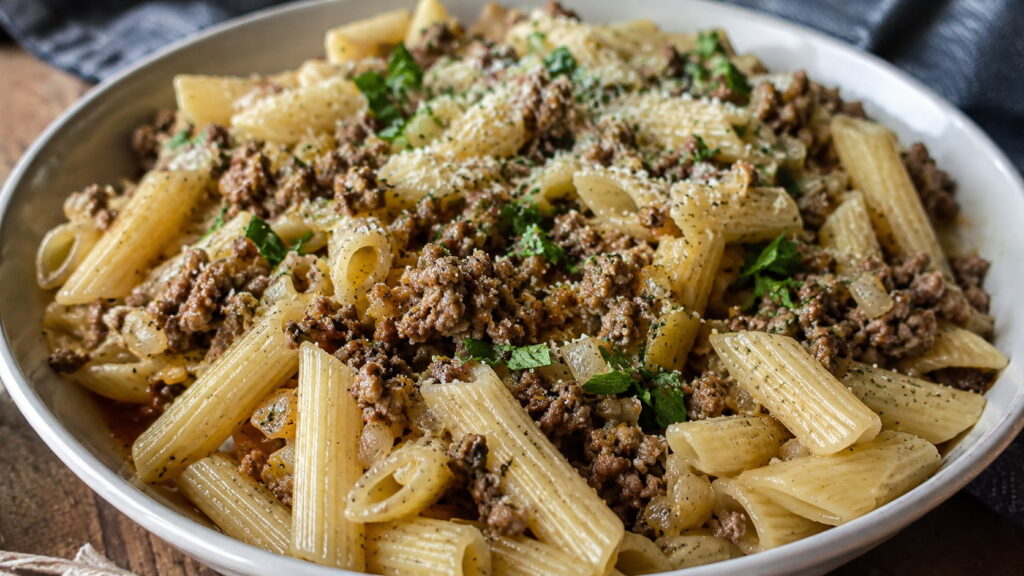
Craving ground beef pasta recipes with no tomato sauce? A creamy, cheesy beef pasta is one of the easiest ways to turn everyday ingredients into a rich, satisfying weeknight dinner—without using marinara, canned tomatoes, or tomato paste.
The recipe below focuses on deeply browned ground beef, tender pasta, garlic, onion, beef broth, cream, and Parmesan for a savory sauce that clings beautifully to every bite. You’ll also learn which pasta and dairy ingredients work best, how to build a smooth sauce, how to avoid dry pasta, and how to adapt the recipe with mushrooms, spinach, extra cheese, or different seasonings.
In This Article
Ground Beef Pasta Recipes No Tomato Sauce: Why They Work So Well
Tomato sauce is often the default partner for ground beef and pasta, but plenty of flavorful alternatives can deliver just as much comfort. A creamy beef sauce relies on browning, aromatics, broth, dairy, and cheese to create depth rather than tomato acidity.
Ground beef brings savory richness and a hearty texture. Browning the meat properly develops flavorful browned bits on the bottom of the pan, while onion and garlic provide sweetness and aromatic depth.
Cream and Parmesan create the silky finish. Beef broth keeps the sauce savory and adds enough liquid to coat the pasta without making the dish taste overly rich.
What Makes a Great Tomato-Free Beef Pasta?
A successful ground beef pasta without tomato sauce should have several elements working together:
- Well-browned beef for deep, savory flavor
- Al dente pasta that holds its shape and texture
- Garlic and onion for aromatic sweetness
- Beef broth to strengthen the meat flavor
- Cream or another dairy ingredient for body
- Parmesan cheese for saltiness and umami
- Reserved pasta water to help loosen and bind the sauce
- Fresh herbs to brighten the finished dish
The goal isn’t simply to remove tomatoes. The sauce needs enough seasoning and savory ingredients to make the pasta satisfying on its own.
The Best Ingredients for Creamy Ground Beef Pasta Without Tomato Sauce
Simple ingredients work beautifully here, but choosing the right versions can make a noticeable difference.
Ground Beef
Use 80/20 or 85/15 ground beef for the richest flavor. Leaner beef can also work, especially if you prefer a lighter meal, but very lean ground beef may need a little extra butter or olive oil to prevent the sauce from tasting dry.
Break the beef into small pieces while cooking. Allow some contact with the hot pan before stirring so the meat develops browned edges rather than simply steaming.
Pasta
Choose a short or medium pasta with plenty of ridges and curves to hold the creamy sauce.
Good choices include:
- Penne
- Rigatoni
- Rotini
- Fusilli
- Shells
- Cavatappi
Spaghetti can work too, although shorter shapes tend to distribute the ground beef more evenly throughout each serving.
Cook the pasta about 1 minute shy of the package’s recommended time. Finishing the pasta in the sauce gives the noodles a better texture and allows them to absorb some of the savory sauce.
Cream or Half-and-Half
Heavy cream produces the richest sauce, while half-and-half creates a slightly lighter consistency. Whole milk can work, but the sauce will be thinner and less luxurious.
For a thicker tomato-free beef pasta, cream cheese is another useful option. A small amount melts into the broth and gives the sauce a pleasantly tangy, creamy texture.
Parmesan Cheese
Freshly grated Parmesan melts more smoothly than pre-shredded varieties and contributes both salt and umami.
Add Parmesan gradually over low heat. Excessive heat can cause cheese to clump or produce a greasy sauce.
Onion and Garlic
Yellow onion works particularly well because its mild sweetness balances the savory beef. Fresh garlic adds a sharper aromatic note and should be cooked briefly after the beef and onion have started browning.
Beef Broth
Beef broth gives the sauce a stronger foundation than water. Choose a lower-sodium variety when possible so you have more control over the final seasoning.
Broth also helps loosen browned bits from the bottom of the skillet, turning those concentrated bits of flavor into part of the sauce.
Butter, Herbs, and Seasonings
Butter adds richness and helps round out the sauce. Italian seasoning, black pepper, paprika, parsley, and a small amount of garlic powder can all work well.
Avoid relying heavily on seasoning blends without checking their salt content. Parmesan, broth, and seasoned ground beef can quickly push the dish from well-seasoned to overly salty.
How to Make a Creamy Ground Beef Pasta Without Tomato Sauce
The complete recipe takes roughly 10 minutes of preparation and 25 minutes of cooking, making the dish practical for a weeknight dinner.
Yield: 4–6 servings
Prep time: 10 minutes
Cook time: 25 minutes
Total time: About 35 minutes
Equipment: Large pot, large skillet or sauté pan, colander, wooden spoon, measuring cups and spoons
Ingredients
- 1 pound ground beef
- 12 ounces penne, rotini, or another short pasta
- 1 tablespoon butter
- 1 small yellow onion, finely diced
- 3 cloves garlic, minced
- 1 cup beef broth
- 1 cup heavy cream or half-and-half
- ¾ cup freshly grated Parmesan cheese
- 1 teaspoon Italian seasoning
- ½ teaspoon paprika
- ½ teaspoon black pepper
- Salt, to taste
- 2 tablespoons chopped fresh parsley
- ½ cup reserved pasta water, as needed
Step 1: Cook the Pasta
Bring a large pot of salted water to a boil. Cook the pasta until just al dente, following the package directions as a guide.
Before draining, reserve about ½ cup of pasta water. Drain the pasta and set it aside.
The starchy water is useful later if the sauce becomes too thick. Don’t skip the step—cream sauces can tighten quickly once pasta is added.
Step 2: Brown the Ground Beef
Heat a large skillet over medium-high heat. Add the ground beef and cook for about 5–7 minutes, breaking the meat into small crumbles.
Look for browned edges and no visible raw meat. If the beef releases a large amount of fat, carefully drain some while leaving enough behind to flavor the sauce.
Don’t rush the browning stage. A little extra color on the beef creates much more flavor than simply cooking the meat until no longer pink.
Step 3: Add the Onion and Garlic
Lower the heat to medium and add the diced onion. Cook for approximately 3–4 minutes, stirring occasionally, until softened and lightly golden.
Add the minced garlic, Italian seasoning, paprika, and black pepper. Cook for another 30–60 seconds, just until the garlic becomes fragrant.
Garlic can turn bitter when left over high heat, so keep the cooking time short at this stage.
Step 4: Build the Creamy Sauce
Add the beef broth and scrape the bottom of the skillet with a wooden spoon. Those browned pieces should loosen into the liquid.
Pour in the cream and stir well. Bring the mixture to a gentle simmer rather than a vigorous boil.
Simmer for approximately 3–5 minutes, allowing the liquid to reduce slightly.
Step 5: Melt in the Parmesan
Reduce the heat to low. Add the Parmesan gradually, stirring continuously until the cheese melts into the sauce.
The finished sauce should look creamy and lightly thickened. A spoon dragged through the skillet should leave a brief trail before the sauce flows back together.
Avoid boiling the sauce after adding Parmesan. Gentle heat gives the cheese a smoother texture.
Step 6: Combine the Pasta and Beef Sauce
Add the drained pasta to the skillet. Toss thoroughly so the sauce coats the noodles and the beef distributes evenly.
If the sauce looks too thick, add reserved pasta water 1 tablespoon at a time, tossing after each addition.
Continue cooking for about 1–2 minutes until the pasta is fully coated and has absorbed some of the sauce.
Step 7: Finish and Serve
Taste the pasta before adding more salt. Parmesan and beef broth already contribute considerable seasoning.
Stir in fresh parsley and finish with extra Parmesan and freshly cracked black pepper if desired.
Serve immediately while the sauce is creamy and loose. Cream-based pasta thickens as it sits, so a small splash of warm broth or reserved pasta water can restore the consistency if needed.
The Secret to Rich Flavor Without Marinara
Creating flavorful ground beef pasta recipes with no tomato sauce comes down to building layers of savory flavor. Without tomatoes providing acidity and sweetness, the cooking technique becomes especially important.
Brown the Beef Until Deeply Golden
Ground beef should develop noticeable browned spots before the other ingredients go into the skillet. Browning creates concentrated savory flavor and gives the finished pasta a much richer taste.
Avoid overcrowding the pan. If the beef sits in a deep, crowded layer, moisture can collect and cause the meat to steam instead of brown.
Let the Onion Develop Some Color
Onion does more than add aroma. Cooking the onion until soft and lightly golden brings out natural sweetness that helps balance the salty, savory ingredients.
For a deeper flavor, give the onion another minute or two of cooking time before adding the garlic.
Use Beef Broth Instead of Water
Beef broth strengthens the meaty character of the sauce and helps create a flavorful base for the cream and Parmesan.
Low-sodium beef broth is usually the best choice. Parmesan adds plenty of salt later, so starting with a less salty broth makes the final seasoning easier to control.
Take Advantage of the Browned Bits
After browning the beef and cooking the onion, pour in the broth while the skillet is still hot. Scrape the bottom with a wooden spoon to release the caramelized bits.
Those browned pieces dissolve into the liquid and become part of the sauce rather than getting left behind in the pan.
Use Cheese for Savory Depth
Parmesan contributes more than creaminess. The naturally savory, nutty flavor helps replace some of the depth commonly associated with tomato-based sauces.
Freshly grated Parmesan works particularly well. Add the cheese over low heat and stir until completely incorporated.
Add a Small Flavor Boost When Needed
A tiny amount of Worcestershire sauce or Dijon mustard can add complexity to a tomato-free beef pasta without turning the dish into something completely different.
Use restraint. About ½–1 teaspoon of Worcestershire sauce or ½ teaspoon of Dijon mustard is enough for a standard skillet. Taste before adding more.
Smoked paprika can also provide warmth and a subtle smoky character, while freshly cracked black pepper keeps the creamy sauce from tasting flat.
5 Delicious Ground Beef Pasta Recipes No Tomato Sauce Variations to Try
One creamy beef pasta base can lead to several completely different dinners. The variations below keep the essential tomato-free approach while changing the texture, richness, and flavor profile.
Creamy Garlic Beef Pasta
Extra garlic, Parmesan, cream, and fresh parsley create a simple combination with plenty of savory flavor.
For a stronger garlic flavor, sauté an additional clove or two with the onion. A small knob of butter stirred into the finished sauce makes the pasta especially silky.
Best pasta: Fettuccine, penne, or rotini.
Cheesy Ground Beef Pasta
Cheddar or Monterey Jack creates a softer, more familiar cheese-sauce profile.
Sharp cheddar gives the dish stronger flavor, while Monterey Jack melts smoothly and produces a milder result. Parmesan can still be added for extra savory depth.
Tip: Reduce the heat to low before adding shredded cheese. High heat can make cheese sauces greasy or grainy.
Cream Cheese Beef Pasta
Cream cheese provides a thick, creamy texture with a slight tang. The ingredient works particularly well when you want a sauce that feels rich without needing a large amount of heavy cream.
Soften the cream cheese before adding it to the skillet. Cut the cheese into small pieces and whisk it into warm broth or cream until smooth.
Best pasta: Shells, rotini, or penne because the shapes capture the thick sauce.
Beef and Mushroom Pasta
Mushrooms pair naturally with ground beef because both ingredients have strong savory qualities.
Slice the mushrooms fairly thin and cook them until their moisture evaporates and the edges become golden. Adding mushrooms before the cream sauce develops more flavor than simply simmering raw mushrooms in the finished sauce.
A little thyme works beautifully here, especially alongside garlic, black pepper, Parmesan, and beef broth.
Best pasta: Rigatoni, fettuccine, or wide egg noodles.
Garlic Butter Ground Beef Pasta
Garlic butter offers a less cream-heavy alternative while still producing a satisfying, glossy sauce.
Brown the beef, sauté garlic in butter, add a small amount of beef broth, then toss with pasta and Parmesan. Reserved pasta water provides enough starch to help the butter and broth coat the noodles.
Fresh parsley, chives, or a little grated Parmesan make a bright finishing touch.
Best pasta: Spaghetti, linguine, or angel hair.
Quick Comparison of the Variations
| Variation | Main Flavor | Creaminess | Best Pasta |
| Creamy Garlic Beef | Garlic, Parmesan, herbs | High | Penne or rotini |
| Cheesy Beef Pasta | Cheddar, beef, cheese | Very high | Shells or cavatappi |
| Cream Cheese Beef | Tangy and creamy | Very high | Rotini or penne |
| Beef & Mushroom | Earthy and savory | High | Rigatoni or egg noodles |
| Garlic Butter Beef | Buttery, garlicky, savory | Medium | Spaghetti or linguine |
Each version keeps the focus firmly on ground beef pasta without tomato sauce, making the variations useful for different preferences without requiring a completely new cooking method.
Cooking Tips That Keep Tomato-Free Beef Pasta Creamy, Not Dry
A creamy sauce can go from silky to thick surprisingly quickly once pasta is added. A few small technique adjustments make a major difference when preparing ground beef pasta recipes with no tomato sauce.
Cook the Pasta Just Until Al Dente
Slightly undercooked pasta is ideal because the noodles continue cooking when tossed with the hot sauce.
Reserve at least ½ cup of pasta water before draining. The starchy water can loosen a thick sauce while helping the sauce cling to the pasta.
Avoid rinsing the pasta after draining. The starch left on the surface helps the creamy beef sauce adhere to the noodles.
Don’t Skip Proper Beef Browning
Medium-high heat is useful during the initial browning stage. Spread the beef across the skillet and let the meat cook undisturbed for a minute or two before stirring.
Look for browned edges rather than uniformly gray meat. Deep browning adds much more flavor to a tomato-free pasta dish.
Keep the Cream Sauce at a Gentle Simmer
Heavy boiling can reduce the sauce too aggressively and may cause dairy to separate.
Once the broth and cream are combined, maintain a gentle simmer over medium-low heat. The sauce should bubble softly around the edges rather than rapidly across the entire skillet.
Add Parmesan Over Low Heat
Parmesan melts best when the sauce isn’t boiling.
Turn the heat down before adding cheese and sprinkle the Parmesan in gradually while stirring. Freshly grated cheese generally blends more smoothly than large handfuls of pre-shredded cheese.
Adjust the Sauce After Adding Pasta
Pasta absorbs liquid quickly, especially during the first few minutes after entering the skillet.
If the finished dish looks too thick, add reserved pasta water one tablespoon at a time. If the sauce seems too loose, allow the pasta and sauce to simmer together for another minute or two.
Aim for a sauce that looks slightly looser than your desired final consistency. The pasta will continue absorbing moisture as the dish rests.
Common Mistakes to Avoid With Ground Beef Pasta Without Tomato Sauce
Creamy beef pasta is fairly forgiving, but a handful of mistakes can affect the final texture and flavor.
| Common problem | Why it happens | How to fix it |
| Dry pasta | Too little sauce or excessive reduction | Add warm pasta water or broth gradually |
| Bland flavor | Beef wasn’t browned or sauce wasn’t seasoned enough | Brown the beef well and taste before serving |
| Grainy cheese sauce | Cheese added over excessive heat | Lower heat before adding Parmesan |
| Watery sauce | Too much liquid or insufficient simmering | Simmer briefly before adding pasta |
| Greasy sauce | High-fat beef combined with excessive butter or cheese | Drain excess beef fat and balance with broth |
| Mushy pasta | Pasta cooked completely before combining with sauce | Cook until just al dente |
| Overly salty pasta | Salty broth combined with Parmesan and added salt | Use low-sodium broth and season gradually |
Don’t Overcook the Pasta
Pasta should still have a slight firmness when drained. Completely soft pasta can become mushy during the final mixing stage.
Don’t Add All the Cheese at Once
Large amounts of cheese dropped into a hot skillet can form clumps instead of melting smoothly.
Add Parmesan in smaller portions while stirring continuously over low heat.
Don’t Season Before Tasting
Beef broth, Parmesan, butter, and seasoning blends can all contain sodium.
Taste the completed sauce before adding additional salt. A few grinds of black pepper or a handful of fresh parsley may improve the flavor without increasing the saltiness.
Don’t Let the Finished Pasta Sit in a Hot Pan Too Long
Residual heat continues reducing the sauce. Once the pasta is coated and the texture looks right, remove the skillet from the heat and serve.
What to Serve With Ground Beef Pasta
Rich ground beef pasta without tomato sauce pairs best with sides that add freshness, crunch, or vegetables without competing with the creamy beef flavor.
Fresh Green Salad
A crisp green salad with lettuce, cucumber, and a light vinaigrette provides a refreshing contrast to the rich pasta.
A vinaigrette with a modest amount of acidity can also help balance the creamy main dish.
Roasted or Steamed Broccoli
Broccoli works especially well with creamy beef pasta. Roasting gives the vegetable browned edges and a slightly nutty flavor, while steaming keeps the side light and fresh.
Toss cooked broccoli with a little olive oil, black pepper, and Parmesan for an easy pairing.
Garlic Bread or Crusty Bread
Crusty bread is useful when the pasta has plenty of creamy sauce left in the skillet. Garlic bread adds another layer of savory flavor, while plain crusty bread keeps the meal from becoming overly rich.
Green Beans, Asparagus, or Spinach
Green vegetables bring color and freshness to the plate.
- Green beans: crisp and simple
- Asparagus: slightly earthy with a pleasant bite
- Spinach: quick-cooking and easy to fold into the pasta
- Broccoli: hearty enough to make the meal feel substantial
A Simple Finishing Touch
Fresh parsley is one of the easiest ways to brighten creamy beef pasta. Sprinkle it over individual servings just before eating.
Freshly grated Parmesan and cracked black pepper can also be added at the table for extra savory flavor.
The best pairing strategy is simple: keep the pasta rich and comforting, then choose a lighter vegetable or salad to balance the plate.
Make-Ahead, Storage, and Reheating Tips
Creamy ground beef pasta recipes with no tomato sauce are excellent for leftovers, although the sauce naturally thickens as the pasta absorbs moisture. Proper storage and gentle reheating help bring the creamy texture back.
How to Refrigerate Ground Beef Pasta
Allow the pasta to cool slightly before transferring it to shallow airtight containers. Refrigerate leftovers promptly rather than leaving the dish at room temperature for an extended period.
For best quality, enjoy refrigerated pasta within 3–4 days.
If you know you will have leftovers, slightly undercooking the pasta during the original preparation can help preserve its texture.
How to Reheat Creamy Beef Pasta
The stovetop provides the best control over texture.
- Place the pasta in a skillet over low to medium-low heat.
- Add 1–2 tablespoons of milk, cream, or beef broth.
- Stir gently as the pasta warms.
- Add another splash of liquid if the sauce remains too thick.
- Remove from the heat as soon as the pasta is heated through.
For microwave reheating, place one serving in a microwave-safe bowl and add a small splash of milk or broth. Cover loosely and heat in 30–45 second intervals, stirring between each interval.
Avoid reheating creamy pasta at very high heat. Excessive heat can cause the dairy and cheese sauce to separate.
Can You Freeze Ground Beef Pasta?
Creamy pasta can be frozen, although the texture may change slightly after thawing. Sauces made with heavy cream generally hold up better than sauces based primarily on milk.
For better results, cool the pasta completely, divide it into airtight freezer-safe containers, and freeze for up to 2–3 months for best quality.
Thaw overnight in the refrigerator, then reheat slowly with a splash of broth, milk, or cream.
How to Turn Tomato-Free Ground Beef Pasta Into an Easy Meal-Prep Dinner
Meal prep works particularly well when the beef sauce is prepared separately from the pasta.
Prep the Beef Sauce Ahead
Cook the ground beef, onion, garlic, seasonings, and broth-based sauce ahead of time. Refrigerate the sauce in an airtight container and prepare fresh pasta when you’re ready to serve.
Separating the components helps prevent the pasta from absorbing too much sauce during storage.
Portion Individual Meals
Divide cooked pasta and beef sauce into meal-prep containers. Keep fresh parsley and additional Parmesan separate when possible so the toppings remain fresh.
A small container of extra broth or milk can also be useful for reheating.
Keep the Pasta Slightly Firm
Meal-prep pasta benefits from being cooked just shy of fully tender. The noodles will soften further when reheated.
Don’t intentionally undercook the pasta by several minutes. Aim for just under al dente rather than firm or crunchy.
Easy Meal-Prep Additions
Add vegetables directly to individual portions for more variety:
- Sautéed mushrooms
- Steamed broccoli
- Baby spinach
- Peas
- Roasted zucchini
- Green beans
The additions can be mixed into the beef pasta before storing or served separately.
Frequently Asked Questions About Ground Beef Pasta Recipes No Tomato Sauce
Can you make ground beef pasta without tomato sauce?
Absolutely. Ground beef pairs well with cream, cheese, butter, broth, mushrooms, and garlic. A creamy Parmesan-based sauce creates a particularly rich alternative to marinara.
What sauce goes well with ground beef and pasta besides tomato sauce?
Creamy Parmesan sauce, garlic butter sauce, cheese sauce, cream cheese sauce, and mushroom cream sauce all work well with ground beef.
What is the best pasta for creamy ground beef?
Penne, rotini, rigatoni, shells, and cavatappi are excellent choices because their ridges and curves hold creamy sauce and small pieces of ground beef.
Can I use milk instead of heavy cream?
Yes. Whole milk produces a lighter sauce, although the finished dish will be less rich and may need a little more Parmesan or cream cheese for body.
How do I keep ground beef pasta from becoming dry?
Reserve pasta water and add a few tablespoons to the sauce when needed. Avoid over-reducing the cream sauce, and remember that pasta continues absorbing liquid after cooking.
Can I use cream cheese instead of Parmesan?
Cream cheese can replace part of the creamy base, but Parmesan provides a different savory, nutty flavor. Combining both creates a particularly rich sauce.
How long does cooked ground beef pasta last in the refrigerator?
Store leftovers in airtight containers and use them within about 3–4 days. Reheat gently with a splash of milk, cream, or broth to loosen the sauce.
Can I freeze creamy ground beef pasta?
Yes, although the sauce may change slightly in texture after thawing. Cool the pasta completely, freeze in airtight containers, and use within about 2–3 months for the best quality.
How do I reheat creamy beef pasta without separating the sauce?
Use low heat and add a small splash of broth, milk, or cream. Stir frequently and stop heating once the pasta is hot.
Can I make ground beef pasta ahead of time?
Yes. Preparing the beef sauce ahead and cooking the pasta closer to serving time gives the best texture. Fully assembled leftovers can also be refrigerated and reheated gently.
What vegetables go well with tomato-free ground beef pasta?
Mushrooms, spinach, broccoli, peas, zucchini, asparagus, and green beans all pair nicely with creamy beef pasta.
The Best Way to Customize Ground Beef Pasta Without Tomatoes
Once you have the basic creamy beef sauce mastered, changing the flavor is easy without introducing tomato-based ingredients.
For a richer pasta, use heavy cream, extra Parmesan, and a small amount of butter. For a lighter version, use half-and-half, leaner ground beef, and plenty of vegetables.
Garlic lovers can increase the fresh garlic, while smoked paprika adds gentle warmth. Mushrooms create an earthy variation, spinach adds color and tenderness, and broccoli turns the dish into a more substantial one-pan-style meal.
Cheese can also change the personality of the recipe. Parmesan keeps the flavor nutty and savory, cheddar makes the dish more familiar and family-friendly, while Monterey Jack gives the sauce a mild, smooth finish.
Keep the core formula in mind: browned ground beef + aromatics + flavorful broth + creamy element + cheese + pasta. Once those components are balanced, you can create countless satisfying ground beef pasta recipes without tomato sauce.
Whether you’re making a quick weeknight dinner, preparing lunches ahead, or simply looking for a comforting alternative to spaghetti with marinara, creamy tomato-free beef pasta is a dependable choice. Try the classic Parmesan version first, then experiment with mushrooms, cream cheese, cheddar, garlic butter, or your favorite vegetables. Save the recipe for your next busy evening and make it your own.
