
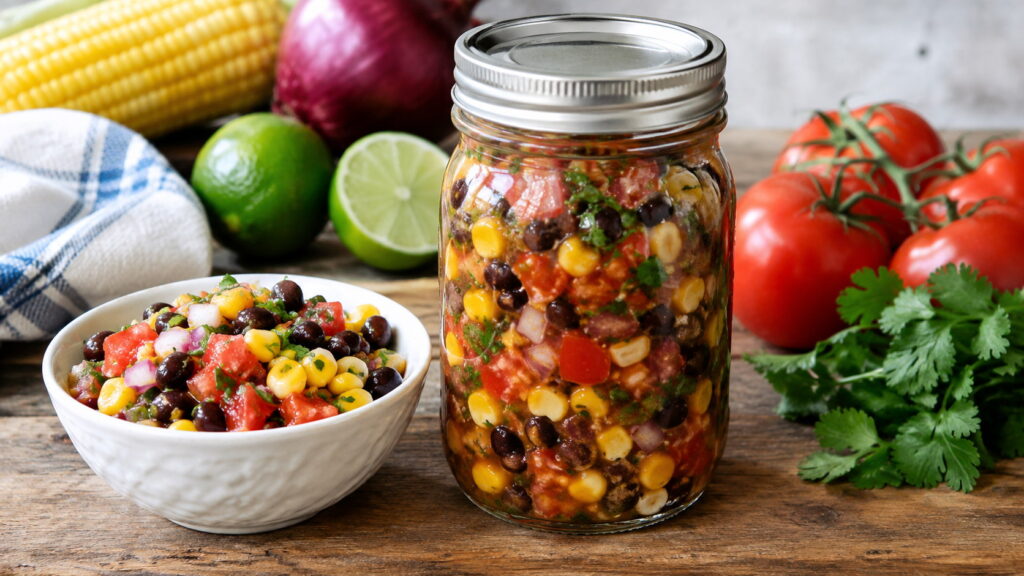
A canning black bean and corn salsa recipe sounds like the perfect way to preserve the fresh, bold flavors of sweet corn, hearty black beans, juicy tomatoes, and spicy peppers for future meals. Homemade salsa is wonderfully versatile, adding color and flavor to tacos, burrito bowls, grilled meats, and easy weeknight dinners.
Before filling your pantry with jars, though, there is one important detail to understand: black beans and corn are low-acid ingredients, so a homemade salsa containing them cannot be safely canned using an improvised recipe. The ingredient proportions, acidity, preparation method, and processing instructions must come from a scientifically tested home-canning formula.
In this guide, you’ll learn how to choose appropriate ingredients, understand safe canning methods, prepare your salsa ingredients, and avoid common preservation mistakes. You’ll also discover practical flavor variations, serving ideas, and storage tips for enjoying black bean and corn salsa at its best.
Whether you’re planning a pantry-friendly homemade salsa or simply want a fresh version to serve with tortilla chips, understanding the difference between refrigerated salsa and shelf-stable canned salsa will help you get delicious results without compromising food safety.
In This Article
Why Make Black Bean and Corn Salsa at Home?
Black bean and corn salsa combines sweet, savory, tangy, and spicy flavors in one colorful mixture. The beans provide a satisfying, hearty texture, while corn adds natural sweetness. Tomatoes contribute juiciness and acidity, and peppers, onions, and seasonings round out the flavor.
Preparing salsa at home also gives you greater control over the ingredients. You can select your preferred level of heat, adjust permitted seasonings, and make a batch that suits your family’s favorite meals.
A Versatile Salsa for Everyday Meals
Black bean and corn salsa works as much more than a dip. Keep a refrigerated batch ready for quick meals, or use properly preserved salsa from a validated canning recipe when available.
Here are a few delicious ways to serve it:
- With tortilla chips: Offer the salsa as a colorful appetizer for gatherings, game days, or casual family dinners.
- Over tacos and burrito bowls: Spoon salsa over rice, beans, grilled chicken, or roasted vegetables.
- Inside quesadillas and wraps: Combine a drained portion with cheese, cooked vegetables, or other fillings.
- Alongside grilled food: Serve with grilled chicken, fish, or vegetables for a bright, tangy contrast.
- On baked potatoes: Add a spoonful with avocado or a dollop of sour cream for an easy lunch.
Why Homemade Salsa Needs Careful Preparation
Fresh salsa and shelf-stable canned salsa may contain similar ingredients, but they require different preparation and storage approaches.
Fresh salsa can be refrigerated and enjoyed without undergoing a canning process. Shelf-stable salsa, however, must follow an approved preservation method that controls the risks associated with low-acid ingredients.
The key takeaway: Never assume a favorite fresh salsa recipe is suitable for canning. Use a tested formula specifically validated for the intended ingredients and processing method. If no validated formula matches your desired black bean and corn combination, prepare the salsa for refrigeration instead.
Is Black Bean and Corn Salsa Safe to Can at Home?
Safe home canning starts with a tested recipe, not simply a clean jar and a tightly sealed lid. Black beans and corn have low acidity, which means harmful microorganisms can survive if the mixture is not processed under appropriate conditions.
The acidity and density of a salsa mixture affect how heat moves through the jar and whether the preservation process can control dangerous microorganisms. Changing the quantities of beans, corn, tomatoes, peppers, or acid can alter those conditions.
Why Beans and Corn Need Special Attention
Black beans and corn are nutritious, flavorful ingredients, but neither should be treated as an acidic ingredient when planning a shelf-stable salsa.
Tomatoes, vinegar, and bottled lemon juice can contribute acidity, yet adding some acid to an untested mixture does not automatically make the recipe safe. The precise ingredients, proportions, preparation steps, and processing conditions all matter.
A recipe that is safe for fresh serving or short-term refrigeration is not necessarily safe for pantry storage.
Which Canning Method Should You Use?
The appropriate method depends on the specific tested recipe.
| Preparation method | Is it suitable? | Important consideration |
| Water-bath canning | Not for an untested black bean and corn salsa | Ordinary boiling-water processing does not provide the conditions needed for an unvalidated low-acid mixture. |
| Pressure canning | Only when specifically validated for the exact recipe | Pressure canning is not automatically safe for every combination of beans, corn, and salsa ingredients. |
| Refrigerated salsa | Yes, with appropriate food handling | Store promptly in the refrigerator and follow safe storage practices. |
| Frozen salsa | Often practical for an untested recipe | Freezing avoids the need to establish shelf-stable canning safety, although texture may change after thawing. |
Before preparing a batch for pantry storage, consult the National Center for Home Food Preservation for authoritative home-canning guidance. Choose a tested recipe that explicitly supports the intended ingredients, jar size, and processing method.
Never reduce the specified vinegar or bottled lemon juice, add extra beans or corn, or borrow processing times from another salsa recipe. If the exact combination has not been validated, refrigeration or freezing is the safer option.
What About Sealed Jars That Look Fine?
A jar can form a tight vacuum seal without having been processed safely. A sealed lid is therefore not proof that the contents are safe to eat.
Never taste salsa to check whether it has spoiled. If a jar has leaked, developed a bulging lid, spurts liquid when opened, or shows other signs of spoilage, handle it cautiously and do not consume the contents. Remember that some dangerous contamination may not produce obvious changes in smell or appearance.
Following an appropriate tested process from the beginning is much more reliable than trying to judge safety after canning.
Ingredients That Give Black Bean and Corn Salsa Its Best Flavor
The best black bean and corn salsa balances hearty beans, sweet corn, tangy tomatoes, crisp vegetables, and well-chosen seasonings. Each ingredient contributes something different to the finished mixture.
The quantities below are ingredient-planning guidance, not a validated canning formula. Use the exact amounts and preparation instructions from a tested recipe if you intend to preserve salsa at room temperature. For an untested combination, prepare a fresh or refrigerated version instead.
Black Beans: The Hearty Foundation
Black beans give salsa its substantial texture and earthy flavor. Their dark color also contrasts beautifully with yellow corn, red tomatoes, and green peppers.
For a fresh or refrigerated salsa, cooked black beans are convenient. Drain and rinse canned beans to remove excess packing liquid and reduce surface starch, then let them drain thoroughly before mixing.
Dried beans can also be cooked for a fresh salsa. Follow the appropriate cooking directions until the beans are tender but not falling apart.
Canning note: Bean type, preparation, quantity, and cooking method must match the tested preservation recipe. Do not substitute cooked or canned beans in a canning formula unless the recipe explicitly permits the change.
Corn: Sweetness and a Pleasant Bite
Corn balances the earthy flavor of black beans with a natural sweetness. Yellow corn creates a bright visual contrast, while the kernels add texture to every spoonful.
Fresh corn offers a sweet, crisp flavor when in season. Frozen or canned corn can be convenient for refrigerated salsa, depending on the texture you prefer.
Drain corn thoroughly before mixing fresh salsa. Excess liquid can dilute the seasoning and make the finished mixture watery.
For shelf-stable canning, use only the corn form and quantity allowed by the validated recipe. Switching between fresh, frozen, and canned corn may change the preparation requirements.
Tomatoes: Juiciness and Tang
Tomatoes bring moisture, acidity, and a familiar salsa flavor. Their juicy texture helps the seasonings coat the beans and corn.
Choose ripe, flavorful tomatoes for a fresh batch. Roma tomatoes can be useful when you prefer a less watery mixture, while other ripe varieties provide a juicier result.
Removing excess seeds and liquid may improve the consistency of a refrigerated salsa, although the choice depends on your preferred texture.
For canning, never assume that tomatoes provide enough acidity to make the entire mixture safe. Tomato variety, ripeness, proportions, and the other vegetables in the recipe all affect the preservation formula.
Bell Peppers, Hot Peppers, and Onions
Bell peppers contribute crunch and a mild sweetness. Red peppers offer a slightly sweeter flavor, while green peppers have a more pronounced vegetal taste.
Jalapeños or other hot peppers can add a pleasant kick. Remove some seeds and inner membranes for a milder fresh salsa, or retain more of them if you prefer extra heat.
Onions provide savory depth and balance the sweetness of the corn. Red, white, and yellow onions each bring a slightly different flavor.
For a refrigerated salsa, these ingredients can be adjusted to personal taste. For canning, follow the tested recipe’s exact quantities and permitted substitutions rather than adding extra vegetables.
Vinegar, Bottled Lemon Juice, and Seasonings
Acid and seasonings serve different purposes, and both deserve attention.
- Vinegar: Contributes sharp tang and is often used in tested salsa-canning formulas.
- Bottled lemon juice: Provides consistent acidity when specifically called for by a validated recipe.
- Cumin: Adds warm, earthy flavor that complements black beans.
- Chili powder: Contributes a gentle chili flavor and can deepen the overall seasoning.
- Cilantro: Adds a fresh, herbal note to salsa served immediately or after refrigeration.
- Salt: Enhances the flavors of the beans, corn, and vegetables.
For fresh salsa, lime juice and fresh cilantro can brighten the flavor just before serving. For shelf-stable canning, use the exact acid specified by the tested recipe. Do not substitute fresh lime juice for vinegar or bottled lemon juice unless the validated instructions expressly allow it.
Ingredient Notes at a Glance
| Ingredient | What it contributes | Practical tip |
| Black beans | Hearty texture and earthy flavor | Drain thoroughly for fresh salsa. |
| Corn | Natural sweetness and color | Drain well to avoid excess liquid. |
| Tomatoes | Juiciness and tang | Choose flavorful tomatoes for fresh salsa. |
| Bell peppers | Crunch and mild sweetness | Select colors based on your flavor preference. |
| Hot peppers | Heat and complexity | Adjust freely for fresh salsa, not beyond tested canning limits. |
| Onions | Savory depth | Chop evenly for a consistent texture. |
| Vinegar or bottled lemon juice | Acidity and tang | Use the specified type and quantity in a tested canning formula. |
| Cumin and chili powder | Warm, savory seasoning | Add gradually when making fresh salsa. |
| Cilantro | Fresh herbal flavor | Stir into refrigerated salsa shortly before serving. |
Choosing good ingredients is the first step toward flavorful black bean and corn salsa. The next priority is matching those ingredients to the right preparation method, especially when the goal is long-term pantry storage.
I’ll wait for your next instruction before continuing with Section 4, covering how to choose a tested recipe before canning black bean and corn salsa.
Choosing a Tested Recipe Before You Start Canning Black Bean and Corn Salsa
Finding the right recipe is the most important step when preparing black bean and corn salsa for long-term storage. A flavorful combination of beans, corn, tomatoes, peppers, and spices may work beautifully as a fresh dip, but shelf-stable canning requires a preservation formula that has been scientifically tested.
Rather than adapting a favorite salsa recipe and guessing at the processing time, look for an established home-canning recipe that specifically supports the ingredients and method you plan to use.
How to Identify a Reliable Canning Recipe
Start with a trusted food-preservation resource, such as the National Center for Home Food Preservation or a university Extension program. Read the complete recipe before buying ingredients or preparing your jars.
Check for the following details:
- Exact ingredient quantities: The recipe should specify the amounts and preparation methods for the vegetables, beans, corn, and acidic ingredients.
- Approved canning method: Confirm whether the formula has been validated for pressure canning or another specific preservation method.
- Jar size: Use only the jar size covered by the recipe’s instructions.
- Processing time and conditions: The recipe should provide the appropriate processing requirements, including pressure when applicable.
- Altitude adjustments: Higher elevations can require different processing instructions.
- Preparation details: Follow directions for chopping, draining, cooking, and packing the ingredients.
A recipe that simply says to fill jars with salsa and boil them for a certain number of minutes is not enough to establish safety for a mixture containing low-acid ingredients.
Can You Adapt a Favorite Black Bean and Corn Salsa Recipe?
You can personalize a fresh salsa much more freely than a canned one. Adding extra jalapeños, increasing the amount of corn, reducing the vinegar, or replacing one vegetable with another may change the acidity, density, and heat penetration of a canned mixture.
Even apparently small changes can affect the validity of the preservation process.
For a shelf-stable batch, follow the tested recipe without altering its ingredient ratios or processing instructions. If you cannot find a validated formula for the exact combination you want, prepare the salsa for refrigeration or freezing instead.
A Quick Checklist Before You Begin
Use this checklist before starting any home-canning project involving black beans and corn.
- The recipe comes from a reliable food-preservation authority.
- The exact combination of ingredients is supported by the tested formula.
- The required canner and jar size are available.
- Processing instructions and altitude adjustments are clear.
- All ingredients can be measured and prepared as directed.
- No unapproved substitutions or reductions in acidity are planned.
The goal is to preserve a delicious salsa without guessing about food safety. Choosing the right formula first makes the remaining preparation steps easier and more reliable.
Essential Equipment for Preparing and Canning Salsa
Having the right equipment ready before cooking helps keep the preparation process organized. You’ll need basic kitchen tools for making the salsa, along with the appropriate preservation equipment if you’re following a validated canning recipe.
Kitchen Equipment for Preparing the Ingredients
Essential tools for fresh salsa preparation and tested canning recipes
- Large cutting board and sharp knife: Make chopping tomatoes, peppers, and onions easier and more consistent.
- Large nonreactive cooking pot: Useful for simmering salsa when the selected recipe requires cooking.
- Measuring cups and spoons: Help you follow ingredient quantities accurately.
- Colander: Drains rinsed beans and excess liquid from corn for fresh salsa preparation.
- Large mixing spoon or ladle: Makes combining and portioning ingredients easier.
- Kitchen timer: Helps you keep track of cooking and other timed preparation steps.
A stainless-steel pot is a practical choice for acidic mixtures. Avoid reactive cookware that may interact with acidic ingredients and affect flavor.
Equipment for Home Canning
If a validated recipe is available for your specific salsa, gather the equipment required by its instructions.
- Approved canning jars: Use the size specified in the tested recipe, checking each jar for chips and cracks.
- Compatible lids and bands: Follow the lid manufacturer’s instructions for preparation and use.
- The specified canner: Use the canner type required by the validated recipe.
- Jar lifter: Helps move hot jars safely.
- Canning funnel: Reduces spills while filling jars.
- Bubble-removal tool: Useful when the recipe calls for removing trapped air.
- Clean cloth or paper towel: Helps clean jar rims before applying lids.
Not every tool is essential for every recipe, so prioritize the equipment specified by the preservation instructions.
Prepare Your Workspace Before Cooking
Set out the ingredients, utensils, jars, and canning equipment before beginning. A clean, uncluttered workspace reduces interruptions when the salsa is ready to portion.
Wash your hands and clean the preparation surfaces thoroughly. Inspect the jars and make sure the lids are compatible with them.
Important: Do not begin filling jars until you’ve confirmed the exact processing instructions for the recipe. A clean jar and proper equipment cannot compensate for an untested canning formula.
How to Prepare the Black Bean and Corn Salsa Ingredients
Good preparation helps create a salsa with balanced flavor and an appealing texture. The process differs slightly depending on whether you’re making a fresh refrigerated batch or following a tested recipe intended for canning.
The ingredient-preparation steps below are appropriate for a fresh salsa, while any shelf-stable version must follow the exact preparation instructions of its validated formula.
Step 1: Prepare the Black Beans
For fresh salsa, canned black beans offer a convenient starting point.
- Open the can and transfer the beans to a colander.
- Rinse under cool running water.
- Drain thoroughly to remove excess liquid.
- Check the beans and remove any damaged pieces or remaining debris.
Allow the beans to drain while you prepare the vegetables. Excess liquid can make the salsa watery and dilute its seasoning.
If using dried beans for a fresh batch, cook them according to appropriate food-safety guidance until tender. Avoid using beans that are still firm in the center.
For canning, use only the bean type, preparation method, and quantity specified in the tested recipe. Ordinary cooked beans cannot automatically be substituted for the form of beans required by a preservation formula.
Step 2: Prepare the Corn
Corn brings sweetness and a pleasant bite to the salsa.
Fresh corn should be husked and cleaned before the kernels are removed from the cob. Frozen corn can be convenient for fresh salsa, while canned corn is useful when you want to save preparation time.
Drain canned corn well before mixing. If using frozen corn, follow the package directions for preparation and drain away excess liquid when necessary.
Choose kernels that retain their shape rather than turning mushy. Firm kernels provide a better contrast with the softer black beans.
For shelf-stable canning, use only the type and amount of corn permitted by the tested recipe.
Step 3: Chop the Tomatoes, Peppers, and Onions
Consistent chopping helps distribute the ingredients throughout the salsa.
- Tomatoes: Cut into evenly sized pieces. For fresh salsa, remove excess watery pulp if you prefer a thicker consistency.
- Bell peppers: Remove the stems, seeds, and inner membranes before chopping.
- Hot peppers: Wear gloves if handling particularly hot varieties, and avoid touching your eyes.
- Onions: Peel and dice into small, even pieces so their flavor spreads throughout the mixture.
Smaller pieces make fresh salsa easier to scoop with tortilla chips, while slightly larger pieces create a chunkier texture.
However, chopping size and preparation methods can affect how heat moves through a canned mixture. Follow the validated recipe’s specified cutting sizes and preparation instructions instead of making adjustments based on personal preference.
Step 4: Measure the Acid and Seasonings
Vinegar or bottled lemon juice may be essential to a tested salsa-canning formula. Measure the specified acid accurately, using the type and strength required by the recipe.
For fresh salsa, lime juice can provide a bright, citrusy flavor. Cumin, chili powder, salt, and fresh cilantro can also be adjusted to taste.
A useful approach for refrigerated salsa is to begin with modest seasoning, combine the ingredients, and taste before adding more salt, spice, or citrus.
Never reduce the required acid in a canning recipe or substitute another acidic ingredient unless the tested instructions explicitly permit the change. Flavor adjustments that are harmless in a fresh salsa may not be appropriate for a shelf-stable product.
Step 5: Organize the Ingredients Before Mixing
Place each prepared ingredient in a separate bowl or measuring container. Check the quantities against your recipe before combining anything.
For fresh salsa, mix the black beans, corn, chopped vegetables, and seasonings in a large bowl. Stir gently to distribute the ingredients without crushing the beans.
Allowing refrigerated salsa to rest briefly can help the flavors blend. Keep the mixture refrigerated during storage, and avoid leaving it at room temperature for extended periods.
For a canned version, do not use this fresh-salsa mixing process as a substitute for the validated recipe’s cooking, filling, and processing instructions.
What Should the Prepared Ingredients Look Like?
Before combining the ingredients for fresh salsa, check for these signs of good preparation:
| Ingredient | Desired result |
| Black beans | Tender, intact, and well drained |
| Corn | Firm kernels with minimal excess liquid |
| Tomatoes | Fresh, flavorful pieces without excessive watery pulp |
| Bell peppers | Clean, evenly chopped pieces |
| Onions | Evenly diced pieces with no spoiled areas |
| Seasonings and acid | Measured and ready to incorporate |
Properly prepared ingredients give fresh salsa a balanced texture and help prevent a watery result. For a shelf-stable black bean and corn salsa, however, ingredient preparation must remain consistent with the validated canning formula.
Once your ingredients are ready, you’re set up for the next stage: understanding the correct cooking, jar-filling, and processing sequence for the recipe you’ve chosen.
Step-by-Step: Making and Canning Black Bean and Corn Salsa
Preparing black bean and corn salsa involves more than combining vegetables and filling jars. The cooking method, acidity, jar preparation, and processing conditions all affect whether the finished product is safe to store.
Important safety note: The following steps explain the general workflow, not a validated canning recipe. Because black beans and corn are low-acid ingredients, do not use these general instructions to produce shelf-stable jars. Follow a scientifically tested formula that specifically supports the ingredients and processing method. If no suitable formula is available, make a fresh salsa for refrigeration instead.
Step 1: Prepare Your Equipment and Ingredients
Begin by cleaning your work surfaces and gathering the ingredients and equipment specified by your chosen recipe.
For fresh salsa, rinse and drain the black beans, prepare the corn, chop the vegetables, and measure your seasonings. Keep the ingredients refrigerated when necessary until you’re ready to combine them.
For a tested canning recipe, prepare the jars, lids, and canner according to the recipe’s directions and the equipment manufacturer’s instructions.
Check each jar for chips or cracks, especially around the rim. Damaged jars may not seal correctly and should not be used for canning.
Step 2: Prepare the Salsa Mixture
Combine the ingredients in the order directed by your recipe.
A fresh black bean and corn salsa can be mixed in a large bowl. Stir gently to distribute the beans, corn, tomatoes, peppers, and seasonings without crushing the softer ingredients.
If you’re following a validated canning recipe, use its specified cooking method, ingredient quantities, and preparation sequence. Some recipes require heating the mixture before filling jars, but the method must come from the tested instructions.
Avoid adding extra vegetables or changing the quantity of vinegar or bottled lemon juice to adjust the flavor of a canning batch.
Step 3: Fill the Jars Correctly
Jar filling is an important part of the canning process because the amount of space left above the food affects the final seal and processing performance.
When following a validated recipe:
- Use the approved jar size.
- Fill each jar using the specified hot- or raw-pack method.
- Leave the exact headspace required by the recipe.
- Remove air bubbles if directed.
- Wipe the jar rims clean before applying the lids.
- Apply the lids and bands according to the manufacturer’s instructions.
Never guess the headspace or assume every salsa recipe uses the same filling method. Follow the precise directions provided for the specific formula.
Fresh salsa intended for refrigeration does not need to be placed in canning jars or processed in a canner. A clean, covered food-storage container is sufficient.
Step 4: Follow the Correct Processing Instructions
Processing is the stage where the appropriate heat treatment is applied to food in sealed jars.
The correct procedure depends on the tested recipe, canner type, jar size, and altitude. A processing time used for tomato salsa cannot automatically be applied to a mixture containing black beans and corn.
For a validated canning recipe, follow the instructions for:
- The approved canner and preparation method.
- The required processing time and conditions.
- Pressure adjustments, if applicable.
- Altitude-specific directions.
- Any instructions for restarting the processing time after a loss of pressure or interruption.
Do not use an ordinary boiling-water canning process for an untested black bean and corn salsa mixture. Pressure canning is not automatically safe for every combination of beans, corn, and vegetables either; the exact formula and processing procedure must be validated.
Step 5: Cool the Jars and Check the Seals
After processing a validated recipe, follow the specified cooling procedure.
Allow the jars to cool undisturbed for the recommended period. Avoid tightening the bands, pressing the lids, or moving the jars unnecessarily while they cool.
Once the recommended cooling period has passed, check the seals according to the jar manufacturer’s instructions. A properly sealed lid should remain firmly attached without flexing when checked as directed.
A failed seal does not automatically mean the food has spoiled, but a sealed jar does not prove that the food was processed safely.
If a jar fails to seal, follow authoritative guidance for handling it. Do not simply place it in the pantry or assume that reheating will make an improperly processed product safe.
Step 6: Label and Store Properly Processed Jars
For jars made using an appropriate validated recipe, add a label with the product name and preparation date.
Store properly processed jars in a cool, dry, dark location, following the preservation guidance for the specific product. Avoid areas exposed to direct sunlight, temperature extremes, or moisture.
Keep jars organized so older batches are used first. Inspect stored jars before opening, and never taste food from a jar showing suspicious signs of spoilage.
What If You Cannot Find a Tested Canning Recipe?
You can still enjoy homemade black bean and corn salsa without attempting shelf-stable preservation.
Prepare a fresh batch, transfer it to a clean covered container, and refrigerate it promptly. You can also freeze suitable portions for later use, keeping in mind that tomatoes and other vegetables may become softer after thawing.
Choosing refrigeration or freezing is much better than risking an unsafe canning process.
Canning Tips for Better Texture, Flavor, and Consistent Results
A delicious black bean and corn salsa should have distinct beans and corn kernels, balanced seasoning, and enough moisture to coat the ingredients without becoming watery. Good preparation helps achieve those qualities, while careful adherence to a tested preservation formula is essential for canning.
Measure Ingredients Carefully
Accurate measurements are especially important when preparing salsa for shelf-stable storage.
Beans, corn, tomatoes, peppers, onions, and acidic ingredients all contribute to the final mixture. Changing their proportions may alter its density, acidity, and ability to heat properly during processing.
For fresh salsa, you have more flexibility. Add extra corn for sweetness or adjust the amount of jalapeño to suit your taste.
For canning, follow the tested formula exactly. Keep a copy of the recipe nearby and measure ingredients before beginning.
Drain Ingredients to Avoid Watery Fresh Salsa
Excess liquid can dilute the flavor of a fresh black bean and corn salsa.
- Drain rinsed black beans thoroughly.
- Allow canned corn to drain before mixing.
- Remove excess tomato liquid if a thicker fresh salsa is desired.
- Avoid adding too much citrus juice or other liquid at once.
The finished fresh salsa should be moist enough to scoop easily without leaving a large pool of liquid at the bottom of the bowl.
For canned salsa, however, do not drain, reduce, or alter ingredients beyond what the validated recipe instructs. The required preparation method may differ from the approach used for fresh salsa.
Balance Sweet, Tangy, and Spicy Flavors
Black beans have a mild, earthy taste, while corn adds sweetness. Tomatoes contribute tang, onions add savory depth, and hot peppers bring heat.
For fresh salsa, taste the mixture before serving and make small adjustments:
- Add a little lime juice for brightness.
- Stir in additional cilantro for a fresh herbal note.
- Add finely chopped jalapeño for more heat.
- Use cumin for a warmer, earthier flavor.
- Add salt gradually to bring the ingredients together.
Let the salsa rest in the refrigerator briefly before serving so the flavors have time to mingle.
For a shelf-stable batch, make only the flavor adjustments permitted by the tested canning recipe. Fresh garnishes can be added after opening a properly preserved jar.
Maintain Consistent Preparation and Food Handling
Evenly prepared ingredients create a more uniform fresh salsa. Consistent chopping also makes the mixture easier to scoop and serve.
Wash vegetables thoroughly, use clean utensils, and avoid cross-contamination between raw ingredients and ready-to-eat food. Refrigerate perishable ingredients promptly and keep prepared salsa out of the temperature danger zone.
For canning, follow the specified preparation and processing instructions rather than relying on visual appearance, taste, or jar-seal checks to determine safety.
Avoid Rushing the Process
Canning requires careful attention to detail. Rushing ingredient preparation, improvising the processing method, or assuming that all salsa recipes use similar instructions can lead to poor results or unsafe food.
Before beginning, make sure you have enough time to complete the recipe, process the jars as directed, and let them cool properly.
The most reliable approach is simple: use precise measurements, follow a validated canning recipe, and choose refrigeration or freezing whenever the desired mixture has not been approved for shelf-stable storage.
Common Canning Mistakes That Can Compromise Your Salsa
Black bean and corn salsa may look straightforward, but low-acid ingredients make preservation more complicated than preparing a fresh dip. Understanding common mistakes can help you avoid wasting ingredients and, more importantly, prevent unsafe storage.
Mistakes to Avoid
| Common mistake | Why it matters | Better approach |
| Using a fresh salsa recipe for canning | Fresh recipes may not have been tested for shelf-stable preservation. | Find a validated formula for the exact ingredient combination. |
| Reducing vinegar or bottled lemon juice | Lowering the specified acidity can compromise safety. | Use the exact acid and quantity required by the tested recipe. |
| Adding extra beans or corn | Changes can affect density and heat penetration. | Keep ingredient proportions unchanged. |
| Using an unrelated processing time | Different formulas may require different processing conditions. | Follow the complete instructions for the specific recipe. |
| Assuming pressure canning makes every recipe safe | Pressure alone does not validate an untested formula. | Use only an approved process for the exact mixture. |
| Ignoring altitude adjustments | Processing requirements can change with elevation. | Follow the recipe’s altitude-specific instructions. |
| Overfilling jars or guessing headspace | Incorrect filling can interfere with processing and sealing. | Use the specified jar size and headspace. |
| Treating a sealed lid as proof of safety | A vacuum seal does not establish that the food was processed correctly. | Verify the process as well as the seal. |
| Storing jars that show suspicious signs | Spoiled or compromised food may be unsafe to consume. | Do not taste questionable food; follow authoritative disposal guidance. |
What Should You Do If a Jar Fails to Seal?
A failed seal requires careful handling. The appropriate response depends on how the food was prepared, how long it has been held, and whether the validated recipe’s instructions provide a safe remedy.
For a correctly processed product, follow current home-canning guidance for handling an unsealed jar. Depending on the circumstances, the options may include prompt refrigeration, freezing, or reprocessing within the specified safe time window.
Never place an unsealed jar directly into pantry storage. Do not assume that applying a new lid alone makes the food safe.
If the salsa was prepared using an untested formula or processed incorrectly, do not rely on reprocessing or a successful seal to correct the problem. Seek guidance from a trusted food-preservation authority.
Why Smell and Appearance Are Not Enough
Foodborne hazards are not always detectable by sight, smell, or taste. A jar may appear normal even when the food inside has been preserved incorrectly.
Discard food that shows signs such as leaking, a bulging lid, spurting liquid, or other suspicious changes without tasting it. When the safety of improperly canned food is uncertain, do not eat it.
Preventing the problem is far more dependable than trying to identify unsafe food afterward. Choose a tested recipe before preparing your black bean and corn salsa, follow the processing instructions carefully, and use refrigerated or frozen storage when a suitable canning formula is unavailable.
Flavor Variations and Ingredient Swaps: What Can You Change?
Black bean and corn salsa is easy to customize when you’re preparing a fresh batch for immediate serving or refrigeration. The combination of sweet corn, hearty beans, juicy tomatoes, and peppers provides a flexible starting point for different flavor profiles.
The important distinction is between changing a fresh salsa and changing a canning recipe. For shelf-stable preservation, keep the tested formula unchanged unless its instructions explicitly permit a particular substitution.
Make a Mild Black Bean and Corn Salsa
A mild version is ideal for family meals, potlucks, or serving alongside spicy dishes.
For fresh salsa, use sweet bell peppers instead of hot peppers, and add a little lime juice for brightness. Finely diced tomatoes and onions create a balanced mixture without overwhelming the natural sweetness of the corn.
Fresh cilantro can also add flavor without increasing the heat. Serve the salsa with tortilla chips, grilled chicken, or a simple rice bowl.
Turn Up the Heat With Jalapeños
If you enjoy spicy salsa, jalapeños provide a fresh pepper flavor with noticeable heat.
For a refrigerated batch, remove the seeds and inner membranes for a milder result, or leave more of them intact for a spicier mixture. A pinch of chili powder or cayenne pepper can add another layer of warmth.
Taste as you go, since the heat of individual peppers varies considerably.
For canned salsa, use only the peppers and quantities permitted by the tested formula. Adding extra hot peppers may alter the mixture’s proportions and processing characteristics.
Add Fresh Lime and Cilantro After Opening
Fresh lime juice and cilantro are excellent finishing ingredients for salsa served immediately or after opening a properly preserved jar.
The lime contributes a bright citrus note, while cilantro provides a fresh, herbal flavor. Diced avocado can make the salsa creamier and more substantial.
Add these ingredients immediately before serving rather than incorporating unapproved quantities into a canning recipe. Avocado is best added fresh because its texture and color deteriorate during storage.
Can You Substitute Fresh, Frozen, or Canned Corn?
For fresh or refrigerated salsa, the choice depends on availability and personal preference.
- Fresh corn: Offers a sweet flavor and pleasant texture when in season.
- Frozen corn: Provides convenience and consistent kernels throughout the year.
- Canned corn: Saves preparation time, although draining is important to avoid excess liquid.
For shelf-stable canning, use the type of corn specified by the tested recipe. The different forms are not automatically interchangeable, even when they appear similar in the finished salsa.
What About Changing the Beans or Tomatoes?
Black beans are particularly appealing because their earthy flavor complements sweet corn. Kidney beans, pinto beans, or other varieties may work in a fresh salsa, but they should not replace black beans in a tested canning formula unless the recipe specifically permits the substitution.
Tomato varieties can also affect the consistency of fresh salsa. Roma tomatoes often produce a thicker mixture, while juicier varieties contribute more liquid.
For canning, follow the specified tomato preparation and proportions. Avoid assuming that a thicker or more acidic-looking salsa is necessarily safe for pantry storage.
How to Serve Black Bean and Corn Salsa After Opening a Jar
Black bean and corn salsa adds color, texture, and bold flavor to everyday meals. Its combination of beans and corn makes it hearty enough to complement simple dishes while remaining light and refreshing when served as a dip.
For properly preserved salsa, inspect the jar before opening and use the product only when it was prepared using a validated process and shows no signs of spoilage.
Serve It With Tortilla Chips
Tortilla chips are a natural pairing for black bean and corn salsa. Choose sturdy chips that can scoop up the beans, corn, and diced vegetables without breaking.
Transfer the desired amount to a serving bowl rather than repeatedly dipping into the storage container. Garnish a fresh serving with chopped cilantro or a squeeze of lime if desired.
Add Salsa to Tacos and Burrito Bowls
A spoonful of salsa can make a simple meal more flavorful without requiring a separate sauce.
Try serving it with:
- Chicken or beef tacos.
- Rice and black bean burrito bowls.
- Cheese and vegetable quesadillas.
- Grilled fish or roasted chicken.
- Baked potatoes topped with sour cream or avocado.
For burrito bowls, combine warm rice, your preferred protein, lettuce, and salsa. The contrast between warm ingredients and cool salsa creates a satisfying meal with minimal extra preparation.
Use It in Wraps and Quick Lunches
Black bean and corn salsa works well in wraps because the beans and corn add texture while the vegetables contribute moisture and flavor.
Drain a portion if needed to prevent tortillas from becoming soggy. Pair the salsa with shredded lettuce, cheese, grilled chicken, or roasted vegetables.
For a meat-free lunch, combine fresh salsa with rice, greens, and avocado. The beans make the meal more substantial, while the corn and tomatoes keep the flavors bright.
Pair It With Grilled Foods
The tangy, sweet, and savory notes of black bean and corn salsa complement grilled dishes particularly well.
Serve it alongside grilled chicken, fish, shrimp, or vegetables. For a simple summer meal, pair the salsa with grilled chicken and warm tortillas.
Water with lime, iced tea, or sparkling water also makes a refreshing beverage pairing, especially when the salsa contains hot peppers.
Serving tip: Add avocado, fresh cilantro, and extra lime juice just before eating. Fresh garnishes provide a brighter flavor and better texture than adding them to the salsa during long-term storage.
Storage, Shelf Life, and What to Do After Opening
Proper storage depends on whether your black bean and corn salsa is fresh, refrigerated, frozen, or safely canned using a validated recipe. Each method has different requirements.
How to Store Fresh Black Bean and Corn Salsa
Fresh salsa should be transferred to a clean, covered container and refrigerated promptly at 40°F (4°C) or below.
For the best flavor and texture:
- Keep the container covered to reduce exposure to air and other refrigerator odors.
- Use a clean spoon each time you serve the salsa.
- Refrigerate leftovers promptly rather than leaving them on the counter.
- Follow appropriate food-safety guidance for the ingredients used and discard salsa that has been held too long or handled unsafely.
Fresh salsa is usually best enjoyed while the vegetables retain their texture and the flavors remain bright. Tomatoes release liquid as they sit, so stir the mixture before serving.
How to Store Properly Canned Salsa
Shelf-stable storage is appropriate only when the salsa has been prepared using a validated canning recipe and processed exactly as directed.
Store properly processed, sealed jars in a cool, dry, dark location. Avoid areas near ovens, heating equipment, direct sunlight, or moisture.
Label each jar with its contents and preparation date. For best quality, use home-canned foods within the storage period recommended by the relevant food-preservation authority. A longer storage period does not necessarily mean the food is safe indefinitely, and a sealed lid alone does not guarantee safe processing.
Never store an untested black bean and corn salsa recipe at room temperature simply because the jars have sealed.
What Should You Do After Opening a Jar?
Once a properly preserved jar is opened, the contents should be treated as perishable food.
- Transfer any remaining salsa to a clean, covered container if needed.
- Refrigerate promptly at 40°F (4°C) or below.
- Use a clean utensil when serving.
- Follow the tested recipe’s instructions and authoritative food-safety guidance for storage after opening.
Discard salsa if it shows signs of spoilage, or if you have reason to believe the food was not processed safely. Never taste suspicious food to determine whether it is safe.
Can You Freeze Black Bean and Corn Salsa?
Freezing is a practical option for fresh salsa that has not been validated for shelf-stable canning.
Use a freezer-safe container, leaving enough room for expansion. Small portions are convenient because you can thaw only what you need.
For the best results:
- Transfer freshly prepared salsa to a clean freezer-safe container.
- Label it with the date.
- Freeze promptly.
- Thaw in the refrigerator rather than at room temperature.
- Stir after thawing and drain excess liquid if necessary.
Tomatoes and peppers may soften after freezing, so thawed salsa generally works better in cooked dishes, burrito bowls, and wraps than as a crisp, fresh dip.
How to Use Thawed Salsa
Thawed black bean and corn salsa can add flavor to quesadillas, taco fillings, rice bowls, soups, or cooked vegetable dishes.
Stir the mixture thoroughly before using it. If the texture is too soft for dipping, combine a portion with freshly chopped tomatoes or peppers immediately before serving, provided the fresh ingredients are handled safely.
Avoid repeatedly thawing and refreezing the same batch. Dividing salsa into meal-sized portions before freezing makes storage and serving more convenient.
Frequently Asked Questions About Canning Black Bean and Corn Salsa
Can you safely can black bean and corn salsa at home?
Only if a scientifically tested recipe specifically validates the complete ingredient combination and processing method. Black beans and corn are low-acid ingredients, so an ordinary fresh salsa recipe cannot automatically be used for shelf-stable canning. If no suitable tested formula is available, refrigerate or freeze the salsa.
Can I use a water-bath canner for black bean and corn salsa?
Do not use ordinary water-bath canning for an untested salsa containing black beans and corn. The appropriate method must come from a validated recipe for the exact mixture. Adding vinegar or lemon juice without following a tested formula does not establish safety.
Do black beans need to be cooked before canning salsa?
Bean preparation must follow the tested recipe exactly. Instructions for cooking beans for a fresh salsa are not interchangeable with preparation requirements for shelf-stable canned food. Do not assume that canned beans, freshly cooked beans, and dried beans can be substituted for one another.
Can I use frozen or canned corn instead of fresh corn?
For fresh or refrigerated salsa, any of these options may work depending on the desired texture and the preparation instructions. For shelf-stable canning, use only the form of corn specified in the tested formula.
Can I reduce the vinegar in a salsa canning recipe?
No, not unless the tested recipe explicitly allows the change. Vinegar or bottled lemon juice may be essential to controlling acidity. Reducing the required amount or substituting a different acid can compromise the safety of the finished product.
How long does home-canned black bean and corn salsa last?
The storage period depends on the validated recipe, processing method, storage conditions, and product quality. Properly processed home-canned foods are generally best used within the recommended quality-storage period, often around one year. That guideline does not make improperly canned food safe or guarantee indefinite safety.
Why did my salsa jars fail to seal?
Possible causes include damaged jar rims, incorrect headspace, food residue on the sealing surface, or problems with the lid or closure process. Follow the manufacturer’s instructions and authoritative canning guidance for handling unsealed jars. Never place a failed jar directly into pantry storage.
Can I make black bean and corn salsa without canning it?
Absolutely. Combine cooked black beans, drained corn, chopped tomatoes, peppers, onions, lime juice, and seasonings for a fresh version. Refrigerate the salsa promptly in a covered container and enjoy it as a dip, taco topping, or addition to rice bowls.
Can I double a tested salsa canning recipe?
Do not assume that doubling a recipe will produce the same results. Follow the tested instructions for ingredient quantities, preparation, heating, jar filling, and processing. If the recipe does not address batch scaling, prepare separate batches according to its directions rather than improvising.
Can I make black bean and corn salsa ahead of time?
Yes. A fresh salsa can be prepared ahead and refrigerated in a covered container. Allowing the ingredients to rest briefly can help the flavors blend, although the tomatoes may release additional liquid. For the freshest texture, add delicate garnishes such as avocado and cilantro just before serving.
Can I reheat black bean and corn salsa?
Reheating is unnecessary when serving salsa as a dip or cold topping. If using refrigerated or thawed salsa in a cooked dish, heat it as part of the recipe until the dish reaches a safe temperature. Reheating does not make improperly canned salsa safe for consumption.
How can I keep black bean and corn salsa from becoming watery?
For fresh salsa, drain the beans and corn thoroughly, remove excess tomato liquid if desired, and avoid adding too much citrus juice. Stir before serving because tomatoes naturally release moisture over time. For canned salsa, never change the specified ingredients or preparation method merely to achieve a thicker texture.
Make Black Bean and Corn Salsa Part of Your Next Meal
Black bean and corn salsa is a flavorful, versatile addition to everything from tortilla chips and tacos to grilled chicken and quick lunch bowls. With hearty beans, sweet corn, juicy tomatoes, and your favorite permitted seasonings, the combination offers plenty of ways to bring fresh flavor to everyday meals.
The most important step when planning a canning black bean and corn salsa recipe is choosing the right preservation method before preparing the ingredients. Follow a validated canning formula exactly if one is available for your intended mixture, or choose refrigeration or freezing for a fresh variation that has not been tested for shelf-stable storage.
Try a fresh batch with lime and cilantro, adjust the heat to suit your taste, and serve it with your favorite Mexican-inspired dishes. Save this guide for your next salsa-making day, and share it with anyone who wants to enjoy homemade salsa while keeping food safety a priority.
