
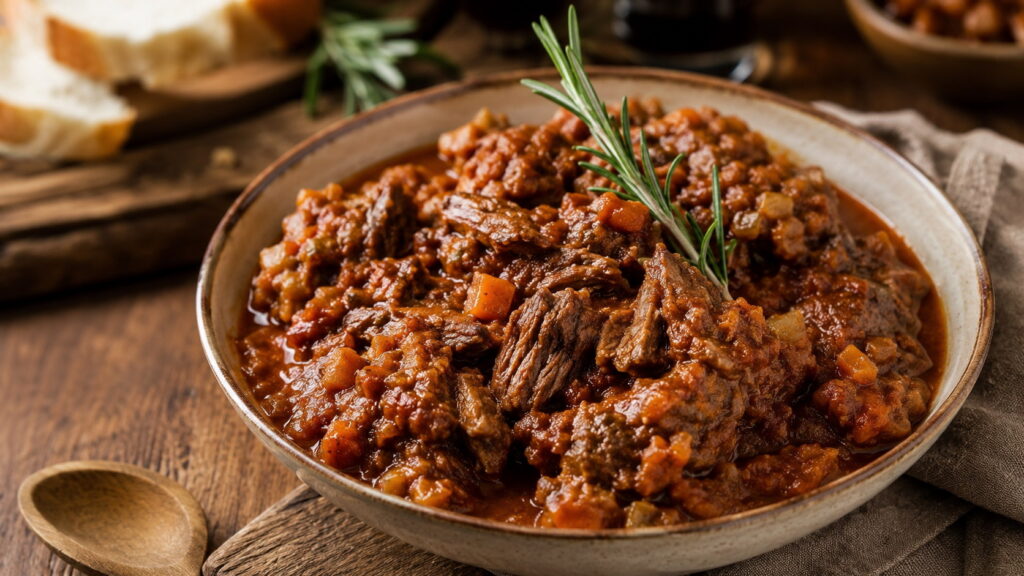
This lamb ragu d’Abruzzo rosemary recipe brings together slow-cooked tenderness, rich tomato depth, and the unmistakable aroma of fresh rosemary. Inspired by the rustic cooking traditions of central Italy, this dish transforms simple ingredients into something deeply satisfying and full of character.
Expect a sauce that’s hearty without feeling heavy. Lamb provides a naturally rich flavor, while rosemary adds a slightly piney, aromatic note that cuts through the richness beautifully. The result is a balanced, comforting ragu that pairs perfectly with wide pasta or even creamy polenta.
In this guide, you’ll learn:
- How to choose the best cut of lamb for ragu
- The exact steps to build deep, layered flavor
- Practical tips to avoid common mistakes
- Variations and serving ideas to suit your kitchen
Whether you’re cooking for a cozy dinner or planning a make-ahead meal, this recipe is designed to deliver consistent, restaurant-quality results at home.
In This Article
What Is Lamb Ragu d’Abruzzo? (A Quick Cultural Insight)
Lamb ragu d’Abruzzo comes from the mountainous Abruzzo region of Italy, where lamb has long been a staple ingredient due to the area’s strong shepherding traditions. Unlike the more widely known beef-based ragùs from northern Italy, this version highlights the bold, earthy flavor of lamb.
Traditional Abruzzese cooking focuses on simplicity and quality. Ingredients are kept minimal, allowing each element to shine. A typical lamb ragu in this style includes:
- Lamb (often shoulder or leg)
- Tomatoes or tomato passata
- Aromatics like garlic and onion
- Fresh herbs, especially rosemary
Compared to classic beef ragu:
- Lamb ragu is more aromatic due to herbs like rosemary
- The flavor is deeper and slightly gamey, in a pleasant, savory way
- Cooking methods remain slow and gentle, ensuring tender meat and a well-developed sauce
This dish reflects a “less is more” philosophy—when ingredients are treated with care, the results are naturally rich and satisfying.
Ingredients Breakdown for the Best Lamb Ragu d’Abruzzo Rosemary Recipe
A great ragu starts with well-chosen ingredients. Each component plays a specific role in building flavor, texture, and balance.
Core Ingredients
- Lamb (shoulder or leg, diced or ground) – The star of the dish; provides richness and body
- Tomato passata or crushed tomatoes – Creates the base of the sauce with mild acidity
- Onion (finely chopped) – Adds sweetness and depth
- Garlic (minced) – Enhances aroma and savory notes
- Fresh rosemary – Brings a signature herbal fragrance
Supporting Ingredients
- Olive oil – Used for sautéing and building flavor
- Dry white or red wine – Helps deglaze the pan and adds complexity
- Beef or chicken broth – Keeps the sauce moist during long simmering
Optional Flavor Boosters
- Red chili flakes – Adds a gentle heat
- Parmesan rind – Infuses umami richness during simmering
- Fresh parsley (for garnish) – Brightens the final dish
Ingredient Quality Tips
- Choose well-marbled lamb for the best flavor and tenderness
- Fresh rosemary is strongly recommended over dried for a cleaner aroma
- Use high-quality canned tomatoes or passata for a smoother, balanced sauce
For more insight into selecting quality meat and handling it safely, you can refer to this trusted resource from the USDA: https://www.fsis.usda.gov/food-safety
Getting these ingredients right sets the foundation for a ragu that tastes slow-cooked, balanced, and deeply satisfying.
Choosing the Right Cut of Lamb for Tender, Flavorful Ragu
The success of your lamb ragu d’Abruzzo rosemary recipe depends heavily on the cut of lamb you choose. The goal is tender meat that breaks down beautifully during slow cooking while enriching the sauce with deep flavor.
Best Cuts for Lamb Ragu
- Lamb shoulder (recommended)
Rich in connective tissue and fat, which melts during cooking and creates a silky, flavorful sauce - Lamb leg
Leaner than shoulder but still works well when cooked low and slow - Ground lamb
A quicker alternative, though slightly less complex in texture
Bone-In vs Boneless
- Bone-in cuts add extra flavor thanks to marrow and collagen
- Boneless cuts are easier to prepare and shred
- If using bone-in, remove bones before serving for convenience
Fat Content Matters
Lamb fat carries flavor. Trimming too much can lead to a dry or flat-tasting ragu.
Tip: Leave some fat intact, then skim excess oil from the surface after cooking if needed.
Preparation Tips Before Cooking
- Cut lamb into small, even chunks (2–3 cm) for consistent cooking
- Pat the meat dry before browning to achieve a better sear
- Season lightly with salt before cooking to start building flavor early
Choosing the right cut ensures your ragu develops that signature melt-in-your-mouth texture.
Step-by-Step: How to Cook Lamb Ragu d’Abruzzo with Rosemary
This method focuses on building layers of flavor gradually. Take your time—rushing will compromise the depth that makes this dish special.
Quick Recipe Overview
- Prep time: 15–20 minutes
- Cook time: 1.5–2 hours
- Total time: About 2 hours
- Servings: 4–6
Kitchen Equipment
- Heavy-bottomed pot or Dutch oven
- Wooden spoon
- Sharp knife and cutting board
Cooking Instructions
1. Brown the Lamb Properly
Heat 2–3 tablespoons of olive oil over medium-high heat.
Add lamb in batches and sear until deeply browned on all sides.
Important:
- Avoid overcrowding the pan
- Browning = flavor foundation
Transfer browned lamb to a plate and set aside.
2. Build the Flavor Base (Soffritto)
Reduce heat to medium. In the same pot:
- Add chopped onion
- Cook until soft and slightly golden (5–7 minutes)
- Stir in minced garlic and cook for 30–60 seconds
This step creates the aromatic backbone of the ragu.
3. Deglaze with Wine
Pour in about ½ cup of dry wine.
Scrape up the browned bits from the bottom of the pot.
Let it simmer for 2–3 minutes until slightly reduced.
These bits are packed with flavor—don’t skip this step.
4. Add Tomatoes and Herbs
Return the lamb to the pot. Then add:
- Tomato passata or crushed tomatoes
- 1–2 sprigs of fresh rosemary
- Optional parmesan rind
Stir everything together until well combined.
5. Simmer Low and Slow
Add enough broth to lightly cover the meat.
Bring to a gentle simmer, then reduce heat to low.
Cover partially and cook for 1.5 to 2 hours, stirring occasionally.
You’ll know it’s ready when:
- The lamb is fork-tender
- The sauce is thick and rich
- The oil slightly separates on top
6. Final Adjustments
- Remove rosemary stems and parmesan rind
- Taste and adjust salt and pepper
- If too thick, add a splash of broth
- If too thin, simmer uncovered for 10–15 minutes
For a rustic texture, lightly shred the lamb with a spoon.
Pro Cooking Tips for a Perfect Lamb Ragu d’Abruzzo Rosemary Recipe
Small details can take your ragu from good to exceptional.
Master the Simmer
- Keep the heat low and steady
- A rapid boil will toughen the meat and break the sauce
Use Rosemary Carefully
- Fresh rosemary is potent
- 1–2 sprigs are enough
- Too much can overpower the dish
Balance the Flavor
- If the sauce tastes too acidic → add a pinch of sugar
- If too rich → a splash of wine or a squeeze of lemon can brighten it
Texture Control
- Prefer a thicker ragu? Simmer uncovered near the end
- Want it looser for pasta? Add reserved pasta water before serving
Timing Tip
Ragu often tastes even better the next day.
Make it ahead if possible to allow flavors to fully develop.
Pasta Integration Tip
Before serving, toss the sauce with cooked pasta for 1–2 minutes.
This helps the sauce cling better and creates a more cohesive dish.
Common Mistakes to Avoid When Making Lamb Ragu
Even a well-written lamb ragu d’Abruzzo rosemary recipe can go wrong if a few key steps are overlooked. Avoid these common pitfalls to ensure rich flavor and tender meat every time.
Skipping the Browning Step
Browning the lamb isn’t optional—it creates the deep, savory base of the sauce.
Without it, the ragu will taste flat and less complex.
Cooking at Too High Heat
A fast boil might seem efficient, but it toughens the meat and separates the sauce.
Keep the ragu at a gentle simmer for best texture and flavor.
Using Too Much Liquid
Adding excess broth or tomatoes can dilute the flavor.
- The sauce should be thick and clingy, not watery
- Add liquid gradually and adjust as it cooks
Overpowering with Rosemary
Rosemary defines this dish, but too much turns it bitter and medicinal.
Stick to 1–2 sprigs, and remove them once the flavor is infused.
Not Tasting Along the Way
Seasoning at the end alone isn’t enough.
Taste periodically and adjust salt, acidity, and richness as the ragu develops.
Rushing the Cooking Time
Lamb needs time to break down properly.
Cutting the simmer short results in chewy meat and underdeveloped flavor.
Best Pasta Pairings for Lamb Ragu d’Abruzzo
Pairing your ragu with the right base makes a noticeable difference. This hearty sauce needs something that can hold its weight and capture every bit of flavor.
Traditional Pasta Choices
- Pappardelle – Wide ribbons that catch chunks of lamb beautifully
- Tagliatelle – Slightly thinner but still sturdy enough for rich sauces
These pasta types are commonly used in Italian kitchens for meat-based ragùs.
Why Wide Pasta Works Best
Wide, flat noodles:
- Provide more surface area for the sauce
- Hold onto thick, chunky textures better than thin pasta
- Create a balanced bite with every forkful
Alternative Pairings
- Rigatoni or penne – Great for trapping sauce inside the tubes
- Gnocchi – Soft and pillowy, perfect for soaking up flavor
- Creamy polenta – A traditional, comforting option instead of pasta
Serving Tip
Always finish cooking the pasta in the sauce for 1–2 minutes.
This helps the ragu cling better and enhances overall flavor integration.
Flavor Variations: Customize Your Lamb Ragu d’Abruzzo Rosemary Recipe
Once you’ve mastered the base lamb ragu d’Abruzzo rosemary recipe, it’s easy to adapt it to your taste or ingredients on hand.
Tomato-Forward vs Lighter Versions
- Tomato-rich version – Use more passata for a deeper red sauce
- Lighter version – Reduce tomatoes and increase broth for a more delicate finish
Add More Vegetables
Enhance sweetness and complexity by adding:
- Finely chopped carrots
- Celery for a classic soffritto base
Cook them with the onions for best results.
Spicy Twist
Add red chili flakes during the sauté stage for gentle heat.
Adjust quantity depending on your spice preference.
Wine Variations
- Red wine – Adds depth and richness
- White wine – Keeps the sauce lighter and slightly brighter
Both work well, so choose based on your flavor goal.
Herb Adjustments
- Add a touch of thyme alongside rosemary for more complexity
- Finish with fresh parsley to brighten the dish before serving
Make It Creamier (Optional)
Stir in a small amount of cream or butter at the end for a richer, silkier texture.
This is not traditional, but it creates a luxurious variation.
Make-Ahead, Storage, and Reheating Tips
One of the best things about this lamb ragu d’Abruzzo rosemary recipe is how well it keeps. In fact, the flavor improves over time as the ingredients meld together.
Make-Ahead Tips
- Prepare the ragu 1 day in advance for deeper flavor
- Let it cool completely before storing
- Reheat gently before serving and adjust seasoning if needed
Refrigeration
- Store in an airtight container
- Keeps well in the fridge for 3–4 days
- The fat may solidify on top—this is normal and melts when reheated
Freezing Instructions
- Freeze in portion-sized containers for convenience
- Lasts up to 2–3 months
- Label with date for easy tracking
Reheating Tips
- Reheat on the stovetop over low heat
- Add a splash of broth or water to loosen the sauce
- Stir occasionally to prevent sticking
Tip: Reheat only what you need to maintain the best texture and flavor.
What to Serve with Lamb Ragu d’Abruzzo
A rich dish like this benefits from simple, complementary sides that balance its depth.
Classic Side Dishes
- Crusty Italian bread – Perfect for soaking up extra sauce
- Simple green salad – Adds freshness and contrast
- Roasted vegetables – Such as zucchini, eggplant, or carrots
Cheese Pairings
- Pecorino Romano – Salty and sharp, traditional choice
- Parmesan – Milder and widely available
Grate generously just before serving for maximum flavor.
Complete Meal Ideas
- Pasta with lamb ragu + salad + bread
- Polenta with ragu + roasted vegetables
- Family-style dinner with shared sides and wine
Nutrition Snapshot (Per Serving Estimate)
| Nutrient | Amount (Approx.) |
| Calories | 450–550 kcal |
| Protein | 25–30 g |
| Fat | 25–35 g |
| Carbohydrates | 15–25 g |
| Fiber | 3–5 g |
Nutritional Notes
- Lamb is a rich source of protein, iron, and B vitamins
- Fat content contributes to flavor but can be adjusted by trimming
- Pairing with vegetables or whole-grain pasta can create a more balanced meal
Frequently Asked Questions About Lamb Ragu d’Abruzzo Rosemary Recipe
Can I use ground lamb instead of chunks?
Yes. Ground lamb works well and reduces cooking time. Expect a slightly different texture—less chunky but still flavorful.
How long should I simmer lamb ragu?
Ideally 1.5 to 2 hours on low heat. The meat should be fork-tender and the sauce thick.
Can I make this in a slow cooker or Instant Pot?
- Slow cooker: Brown the meat first, then cook on low for 6–8 hours
- Instant Pot: Use sauté mode for browning, then pressure cook for about 35–40 minutes
What can I substitute for rosemary?
Thyme is the closest alternative. Use a smaller amount since flavors differ slightly.
Can I make it ahead for meal prep?
Absolutely. This ragu is ideal for meal prep and tastes even better the next day.
Why is my ragu too watery?
It likely has too much liquid or hasn’t reduced enough.
Fix: Simmer uncovered until it thickens.
Why does my lamb taste tough?
It hasn’t cooked long enough.
Solution: Continue simmering on low heat until the meat softens.
Final Thoughts: Bringing Abruzzo Flavors to Your Kitchen
This lamb ragu d’Abruzzo rosemary recipe delivers everything you want from a classic Italian comfort dish—rich flavor, tender meat, and a sauce that feels both rustic and refined. With the right ingredients, proper technique, and a little patience, you can recreate an authentic, restaurant-quality meal right at home.
Try it with your favorite pasta, experiment with variations, and don’t hesitate to make it your own. Save this recipe for cozy dinners, share it with family, or prepare it ahead for a stress-free meal that only gets better with time.
