
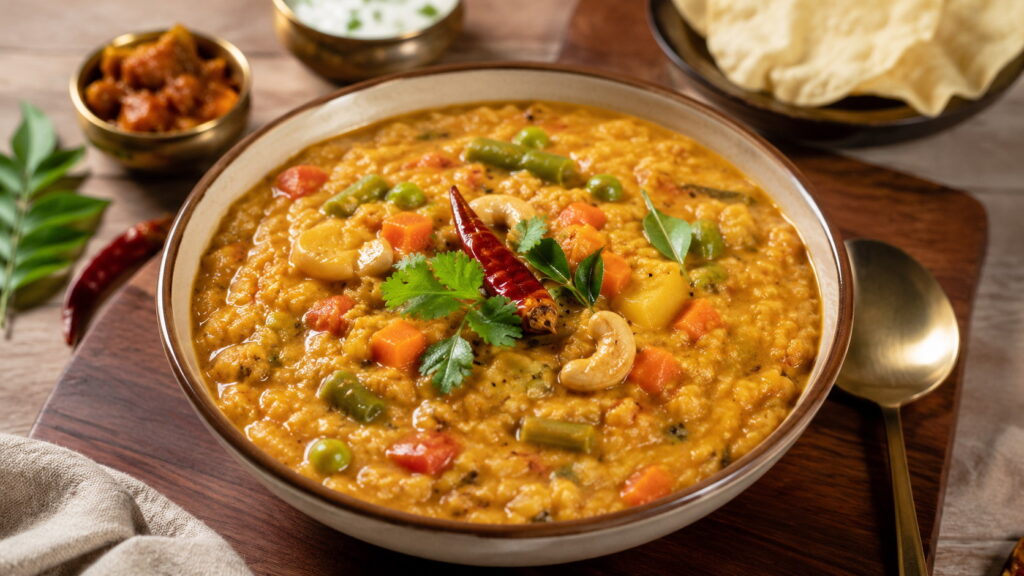
A Pure and Sure Bisi Bele Bath recipe brings together rice, lentils, vegetables, tamarind, and aromatic spices into one deeply satisfying meal that’s both nourishing and full of traditional South Indian flavor. Whether you’re making Bisi Bele Bath for the first time or looking to recreate the comforting taste of a homemade Karnataka classic, mastering a few key techniques makes all the difference.
Every step below is designed to help you cook with confidence. You’ll discover the role of each ingredient, how to achieve the signature creamy consistency, practical substitutions, preparation tips, and common pitfalls to avoid. Helpful serving ideas, storage guidance, and variations later in the guide will make the recipe suitable for both weeknight dinners and festive meals.
In This Article
Pure and Sure Bisi Bele Bath Recipe: A Traditional Karnataka Comfort Dish
Bisi Bele Bath translates to “hot lentil rice” in Kannada, yet the dish offers far more than its simple name suggests. Rich layers of flavor develop through slow cooking, balanced spices, tangy tamarind, naturally sweet vegetables, and a fragrant tempering that ties everything together.
Unlike plain rice dishes, Bisi Bele Bath combines grains, protein-rich lentils, and vegetables into one complete meal. Every spoonful delivers creamy rice, tender vegetables, warming spices, and a subtle sweetness that balances the tanginess of tamarind.
Pure and Sure’s Bisi Bele Bath Masala makes preparing authentic flavors much more approachable for home cooks. Rather than sourcing and roasting numerous spices individually, the ready-made blend provides a consistent flavor profile inspired by traditional Karnataka cooking.
Why Home Cooks Love Pure and Sure Bisi Bele Bath
Several qualities make the recipe especially appealing:
- One-pot comfort food that’s filling and nutritious.
- Balanced flavors featuring spicy, tangy, savory, and mildly sweet notes.
- Flexible vegetable choices based on seasonal availability.
- Excellent meal-prep option because flavors deepen after resting.
- Naturally vegetarian with plenty of protein from toor dal.
What Makes Authentic Bisi Bele Bath Different?
Traditional Bisi Bele Bath isn’t simply rice mixed with sambar.
Authentic preparation creates a softer, creamier consistency where rice and lentils almost melt together while vegetables remain intact. Tamarind provides brightness, jaggery rounds out acidity, and the spice blend contributes warmth rather than overwhelming heat.
Proper tempering with mustard seeds, curry leaves, dried chilies, and cashews adds aroma, crunch, and richness just before serving.
Recipe Snapshot
| Detail | Information |
| Preparation Time | 20 minutes |
| Cooking Time | 35–40 minutes |
| Total Time | About 1 hour |
| Servings | 4–6 |
| Difficulty | Easy to Moderate |
| Cuisine | South Indian (Karnataka) |
| Main Equipment | Pressure cooker or Instant Pot, heavy-bottomed pot, skillet |
Readers interested in the regional history of Bisi Bele Bath and other traditional Indian dishes can explore the culinary resources available through the Sahapedia cultural archive: https://www.sahapedia.org.
Ingredients for the Perfect Pure and Sure Bisi Bele Bath Recipe
Every ingredient contributes a specific purpose. Choosing good-quality pantry staples creates noticeable improvements in flavor, texture, and aroma.
Main Ingredients
Rice
Use short-grain rice or sona masuri rice for the most authentic texture.
Long-grain basmati remains usable, though shorter grains produce the creamy consistency traditionally associated with Bisi Bele Bath.
Quantity: 1 cup
Toor Dal (Split Pigeon Peas)
Toor dal forms the protein-rich foundation of the dish.
Cooking until completely soft allows the lentils to blend naturally into the rice, creating the signature silky texture.
Quantity: ¾ cup
Mixed Vegetables
A colorful assortment provides sweetness, texture, and nutrition.
Popular choices include:
- Carrots
- Green beans
- Green peas
- Potato
- Drumsticks (moringa pods)
- Pumpkin
- Capsicum (optional)
Fresh vegetables generally hold their shape better than frozen varieties.
Flavor Builders
Pure and Sure Bisi Bele Bath Masala
Key ingredient for authentic flavor.
The spice blend usually contains roasted coriander, cumin, dried chilies, cinnamon, cloves, fenugreek, black pepper, cardamom, and additional aromatic spices carefully balanced for traditional Karnataka cuisine.
Using the recommended amount first allows you to adjust spice levels during the final simmer.
Tamarind
Tamarind introduces the bright acidity that balances both lentils and vegetables.
Use:
- 2 tablespoons tamarind pulp, or
- A small lemon-sized ball soaked in warm water.
Jaggery
Only a small amount is needed.
One teaspoon of jaggery softens tamarind’s sharpness without making the dish taste sweet.
Tempering Ingredients
Fresh tempering transforms good Bisi Bele Bath into an exceptional one.
You’ll need:
- Ghee (or oil for a vegan version)
- Mustard seeds
- Curry leaves
- Dried red chilies
- Asafoetida (hing)
- Cashews
- Turmeric
- Fresh coriander leaves
Cooking Tip: Roast cashews until golden before adding them to the finished dish. Their buttery crunch contrasts beautifully with the creamy rice.
Understanding the Key Ingredients That Build Authentic Flavor
Great Bisi Bele Bath depends less on complicated cooking techniques than on understanding how each ingredient supports the finished dish.
Why Toor Dal Creates the Signature Texture
Toor dal breaks down beautifully during pressure cooking.
Completely softened lentils blend naturally with cooked rice, creating the luxurious consistency expected in authentic Bisi Bele Bath. Undercooked dal leaves the dish grainy instead of creamy.
Visual cue: Lentils should mash effortlessly when pressed with the back of a spoon.
Choosing Vegetables That Cook Evenly
Vegetables should become tender without falling apart.
Excellent combinations include:
- Carrots for sweetness
- Beans for freshness
- Potatoes for body
- Drumsticks for traditional flavor
- Green peas for color
- Pumpkin for subtle natural sweetness
Cut vegetables into similar-sized pieces to ensure even cooking.
Why Tamarind and Jaggery Work Together
Many first-time cooks wonder why sweetness belongs in a savory rice dish.
Small amounts of jaggery don’t make Bisi Bele Bath sweet.
Instead, sweetness balances tamarind’s acidity while allowing the roasted spices to taste fuller and more rounded. Removing either ingredient changes the classic flavor profile significantly.
Fresh Tempering Makes a Noticeable Difference
Tempering should always happen near the end of cooking.
Hot ghee extracts aromatic oils from mustard seeds, curry leaves, dried chilies, and hing before pouring the sizzling mixture over the rice.
Don’t skip the final tempering. Freshly bloomed spices provide the unmistakable aroma associated with restaurant-quality and homemade Karnataka-style Bisi Bele Bath.
Ingredient Balance at a Glance
| Ingredient | Purpose | What Happens if Too Much Is Used |
| Rice | Body and creaminess | Dish becomes overly thick |
| Toor dal | Rich texture and protein | Can become pasty |
| Tamarind | Bright acidity | Overly sour flavor |
| Jaggery | Balances acidity | Dish tastes sweet instead of savory |
| Bisi Bele Bath Masala | Signature spice profile | Overpowers vegetable flavors |
| Ghee | Aroma and richness | Heavy finish if overused |
| Water | Creamy consistency | Too little creates a dry texture; too much makes the dish watery |
Step-by-Step Pure and Sure Bisi Bele Bath Recipe
Preparing Bisi Bele Bath is straightforward when each component is cooked separately before being combined. Following the sequence below helps develop the rich, layered flavor and creamy texture that make the dish so satisfying.
Kitchen Equipment
Gather everything before you begin:
- Pressure cooker or Instant Pot
- Large heavy-bottomed pot or Dutch oven
- Small skillet for tempering
- Mixing spoon or ladle
- Measuring cups and spoons
Ingredients
- 1 cup sona masuri rice
- ¾ cup toor dal
- 3 to 4 cups mixed vegetables (carrots, beans, peas, potato, pumpkin, drumsticks)
- 2 tablespoons tamarind pulp
- 2½ to 3 tablespoons Pure and Sure Bisi Bele Bath Masala
- 1 teaspoon jaggery
- ½ teaspoon turmeric
- Salt to taste
- 7 to 8 cups water (adjust as needed)
- 2 tablespoons ghee
For the tempering
- 1 teaspoon mustard seeds
- 8–10 curry leaves
- 2 dried red chilies
- ¼ teaspoon asafoetida (hing)
- 10–12 cashews
- 2 tablespoons chopped fresh coriander
Prepare the Rice and Dal
Wash the rice and toor dal separately until the water runs mostly clear.
Soak both for about 20 minutes if time allows. Soaking promotes even cooking and shortens the pressure-cooking time.
Cook the rice and dal until very soft.
- Pressure cooker: 4–5 whistles on medium heat.
- Instant Pot: High Pressure for 12 minutes with a natural pressure release.
Mash the cooked dal lightly with the back of a spoon while leaving the rice mostly intact.
Cook the Vegetables
Place the chopped vegetables into a pot with enough water to cover them.
Add:
- Turmeric
- A small pinch of salt
Cook until the vegetables are tender but still hold their shape.
Texture cue: A fork should slide easily into potatoes and carrots without causing them to crumble.
Build the Flavor Base
Stir the tamarind pulp into the cooked vegetables.
Mix in:
- Pure and Sure Bisi Bele Bath Masala
- Jaggery
- Salt
Allow the mixture to simmer gently for 8–10 minutes. Gentle simmering softens the raw flavor of tamarind while allowing the spice blend to bloom.
Combine Everything
Add the cooked rice and mashed dal to the vegetable mixture.
Mix gently until evenly combined.
Gradually pour in additional hot water while stirring. Authentic Bisi Bele Bath should have a loose, creamy consistency rather than resembling dry pulao.
Simmer for another 10 minutes, stirring occasionally to prevent sticking.
Expert Tip: Bisi Bele Bath naturally thickens as it rests. Keeping the mixture slightly thinner than your desired serving consistency produces the best final texture.
Finish with the Tempering
Heat the ghee in a small skillet.
Add in order:
- Mustard seeds
- Cashews
- Dried red chilies
- Curry leaves
- Asafoetida
Cook until the mustard seeds crackle and the cashews turn golden.
Immediately pour the hot tempering over the cooked Bisi Bele Bath.
Finish with chopped coriander and gently stir once before serving.
Allow the dish to rest for 5 minutes so the flavors meld together.
Pro Tips for Making Restaurant-Quality Pure and Sure Bisi Bele Bath at Home
Small adjustments throughout the cooking process create a noticeable difference in both texture and flavor.
Cook Rice and Dal Until Very Soft
Unlike fried rice or biryani, Bisi Bele Bath depends on softness.
Slightly overcooked rice actually contributes to the creamy consistency. Firm grains prevent the dish from developing the traditional comforting texture.
Balance the Four Core Flavors
Excellent Bisi Bele Bath always balances:
- Spice from the masala
- Tanginess from tamarind
- Sweetness from jaggery
- Richness from ghee
Taste before the final simmer and adjust gradually. Small changes often have a significant impact.
Use Hot Water While Adjusting Consistency
Adding cold water near the end interrupts cooking and can dull the flavors.
Hot water blends seamlessly while maintaining a steady simmer.
Simmer Instead of Boiling Vigorously
Gentle simmering allows flavors to combine without breaking the vegetables apart.
Slow cooking also gives the spice blend time to fully develop.
Fresh Curry Leaves Matter
Fresh curry leaves release aromatic oils that dried leaves cannot replicate.
Adding them directly to hot ghee produces the unmistakable fragrance associated with authentic South Indian cooking.
Let the Dish Rest Before Serving
Resting for five to ten minutes helps the rice absorb the seasoned liquid evenly.
Many experienced home cooks find the flavor even better after a short resting period.
Final Consistency Check
| Desired Result | What to Look For |
| Creamy texture | Rice and dal blend smoothly while vegetables remain visible |
| Balanced seasoning | Mild sweetness, pleasant tanginess, warming spice |
| Proper thickness | Spoonable but not dry or stiff |
| Rich aroma | Fresh ghee, curry leaves, roasted spices, and tamarind are all noticeable |
Common Mistakes That Can Affect the Final Dish
Even a traditional recipe can produce inconsistent results when a few important details are overlooked.
Using Too Little Water
Bisi Bele Bath should never resemble plain mixed rice.
Insufficient liquid produces a dense, heavy texture instead of the soft, comforting consistency that defines the dish.
Fix: Stir in hot water gradually while simmering until the mixture becomes creamy.
Adding Too Much Tamarind
Excess tamarind masks the delicate sweetness of the vegetables and overpowers the spice blend.
Always begin with a smaller quantity and adjust after tasting.
Overcooking the Vegetables
Vegetables should contribute texture as well as flavor.
Cooking them until mushy causes them to disappear into the rice instead of providing pleasant bites throughout the dish.
Skipping the Jaggery
Some cooks leave out jaggery, assuming sweetness doesn’t belong in a savory meal.
A small amount doesn’t make the recipe sweet. Rather, jaggery balances acidity and enhances the complexity of the spices.
Using Old Spice Mix
Ground spices lose aroma over time.
Fresh Pure and Sure Bisi Bele Bath Masala delivers brighter, more vibrant flavors than an older package that’s been open for months.
Forgetting the Final Tempering
Fresh tempering is not merely a garnish.
Hot ghee infused with mustard seeds, curry leaves, hing, and cashews creates the signature aroma that distinguishes homemade Bisi Bele Bath from ordinary rice-and-lentil dishes.
Troubleshooting Guide
| Problem | Likely Cause | Easy Solution |
| Too thick | Rice absorbed excess liquid | Stir in hot water while simmering |
| Too watery | Excess water added | Simmer uncovered until slightly reduced |
| Too sour | Too much tamarind | Add a little more jaggery and cooked dal |
| Too spicy | Excess masala | Mix in more cooked rice and dal |
| Bland flavor | Insufficient salt or spice | Adjust seasoning gradually and simmer for 5 more minutes |
| Vegetables falling apart | Overcooked vegetables | Add delicate vegetables later during cooking next time |
Easy Ingredient Substitutions Without Losing Authentic Taste
One of the best things about Bisi Bele Bath is how adaptable it is. While a few core ingredients define the dish, thoughtful substitutions can help you work with what you already have without sacrificing too much authenticity.
Rice Alternatives
Traditional sona masuri rice creates the soft, creamy texture most people associate with Karnataka-style Bisi Bele Bath. Other varieties can also work well.
| Original Ingredient | Good Substitute | Notes |
| Sona masuri rice | Short-grain white rice | Closest texture |
| Sona masuri rice | Jasmine rice | Slightly more aromatic and softer |
| Sona masuri rice | Brown rice | Nutty flavor; increase cooking time |
| Sona masuri rice | Little millet or foxtail millet | Adds extra fiber and a wholesome taste |
Tip: Whole grains and millets absorb more water than white rice, so adjust the liquid accordingly.
Lentil Options
Toor dal remains the traditional choice because of its mild flavor and creamy consistency.
Suitable alternatives include:
- Masoor dal (red lentils): Cooks quickly and produces a smoother texture.
- Moong dal: Lighter and slightly sweeter.
- Combination of toor and moong dal: Creates a rich yet delicate flavor.
Changing the lentil variety will slightly alter the taste but still results in a comforting one-pot meal.
Vegetable Substitutions
Seasonal vegetables work beautifully in Bisi Bele Bath.
Excellent options include:
- Sweet potato
- Chayote squash
- Zucchini
- Eggplant
- Corn kernels
- Bell peppers
- Green beans
- Fresh peas
Aim for a colorful mix of vegetables with varying textures rather than relying on only one or two.
No Pure and Sure Bisi Bele Bath Masala?
Homemade spice blends are a great alternative if the packaged masala isn’t available.
A basic homemade version typically includes roasted:
- Coriander seeds
- Chana dal
- Urad dal
- Cumin seeds
- Dried red chilies
- Fenugreek seeds
- Cinnamon
- Cloves
- Cardamom
- Black pepper
- Grated dry coconut (optional)
Grind everything into a fine powder and store in an airtight container.
Vegan and Allergy-Friendly Adjustments
Simple swaps make the recipe suitable for different dietary needs.
- Replace ghee with coconut oil or neutral vegetable oil for a vegan version.
- Omit cashews if preparing the dish for someone with a tree nut allergy.
- Double-check that your asafoetida (hing) is gluten-free if cooking for someone with gluten sensitivity, since some commercial brands contain wheat flour.
Delicious Variations of Bisi Bele Bath to Try
Once you’ve mastered the classic recipe, experimenting with regional and modern variations keeps the dish exciting while staying true to its comforting character.
Traditional Temple-Style Bisi Bele Bath
Temple-style versions often have a milder spice level and emphasize the natural sweetness of vegetables.
Expect:
- More ghee
- Slightly softer texture
- Gentle spice profile
- Extra cashews
- Fragrant curry leaves
Many families prepare this variation during festivals and special gatherings.
Spicier Karnataka-Style Version
Home cooks who enjoy bold flavors can increase the heat without overwhelming the dish.
Try adding:
- Extra dried red chilies in the tempering
- Fresh green chilies while cooking the vegetables
- A small pinch of black pepper
- Additional Pure and Sure Bisi Bele Bath Masala near the end of cooking
Always taste before adding more spice, since the masala blend already contains roasted chilies.
Millet Bisi Bele Bath
Replacing rice with millet creates a wholesome version packed with extra fiber.
Popular choices include:
- Foxtail millet
- Little millet
- Barnyard millet
Millets absorb flavors exceptionally well while adding a pleasant nutty taste.
Instant Pot Version
Busy weeknights become much easier with pressure cooking.
A simplified method:
- Sauté the tempering ingredients using the sauté function.
- Add vegetables, rice, dal, spices, tamarind, and water.
- Pressure cook on High for 12 minutes.
- Allow natural pressure release.
- Stir gently, adjust consistency with hot water if needed, and garnish.
One-pot preparation also means fewer dishes to wash.
Extra-Rich Celebration Version
Special occasions call for a little indulgence.
Enhance the finished dish with:
- Additional roasted cashews
- A spoonful of melted ghee
- Fresh grated coconut
- Finely chopped coriander
- Crispy fried curry leaves for garnish
Rich garnishes elevate both presentation and flavor without changing the traditional character of the recipe.
What to Serve with Pure and Sure Bisi Bele Bath
Pure and Sure Bisi Bele Bath is satisfying enough to enjoy on its own, but a few carefully chosen accompaniments create a complete South Indian meal with contrasting textures and flavors.
Crispy Sides
Crunchy accompaniments balance the creamy rice beautifully.
Popular choices include:
- Roasted or fried papad
- Potato chips
- Banana chips
- Crispy fryums
Every bite becomes more interesting with a little crunch.
Cooling Accompaniments
Tangy and spicy flavors pair wonderfully with cool dairy-based sides.
Serve alongside:
- Plain yogurt
- Homemade curd
- Onion raita
- Boondi raita
Creamy yogurt also helps balance the warmth of the spices.
Pickles and Chutneys
Small portions add brightness without overpowering the main dish.
Great options include:
- Mango pickle
- Lemon pickle
- Coconut chutney
- Mint-coriander chutney
Use pickles sparingly since Bisi Bele Bath already contains plenty of seasoning.
Fresh Garnishes
Finish each serving with:
- Fresh coriander leaves
- Extra roasted cashews
- A drizzle of warm ghee
- A squeeze of fresh lime, if you enjoy a brighter finish
Beverage Pairings
Refreshing drinks complement the hearty flavors exceptionally well.
| Beverage | Why It Works |
| Traditional buttermilk | Cools the palate and aids digestion |
| Fresh lime water | Bright, refreshing contrast |
| Unsweetened coconut water | Light and hydrating |
| Masala chaas | Enhances the South Indian meal experience |
Serving Tips
Serve Bisi Bele Bath hot, when the rice is creamy and the tempering is still aromatic.
Arrange the meal with papad on the side, a bowl of yogurt, your favorite pickle, and a sprinkle of fresh coriander for a comforting spread suitable for everyday lunches, weekend family dinners, or festive celebrations.
Storage, Reheating, and Make-Ahead Tips
Bisi Bele Bath is one of those dishes that often tastes even better the next day. The rice, lentils, vegetables, and spices continue to meld together, creating a deeper, more rounded flavor. Proper storage and reheating help preserve the creamy consistency that makes the dish so comforting.
How to Store Leftovers
Allow the Bisi Bele Bath to cool to room temperature before transferring it to airtight containers.
Refrigerator storage:
- Store in an airtight container.
- Refrigerate within 2 hours of cooking.
- Best enjoyed within 3 to 4 days.
Because the rice continues to absorb liquid during storage, expect the mixture to become noticeably thicker.
Can You Freeze Bisi Bele Bath?
Yes. Freezing works well if you want ready-to-heat meals for busy days.
For the best results:
- Divide into individual meal-sized portions.
- Use freezer-safe containers or heavy-duty freezer bags.
- Leave a little space for expansion.
- Label with the preparation date.
Freezer life: Up to 2 months for the best flavor and texture.
Best Ways to Reheat
Adding a little moisture is the secret to restoring the original consistency.
Stovetop Method
- Place the desired portion in a saucepan.
- Add a splash of hot water.
- Stir frequently over low to medium heat.
- Heat until piping hot.
- Finish with a teaspoon of fresh ghee if desired.
Microwave Method
- Transfer to a microwave-safe bowl.
- Stir in 2–3 tablespoons of water.
- Cover loosely.
- Heat in 1-minute intervals, stirring between each interval until evenly heated.
Tip: Avoid overheating, which can make the vegetables overly soft.
Make-Ahead Meal Prep Tips
Preparing a few components in advance saves valuable time.
You can:
- Chop vegetables one day ahead.
- Cook rice and dal in advance.
- Prepare tamarind extract and refrigerate it.
- Measure the spice blend before cooking.
- Roast cashews ahead of time and store them in an airtight container.
Leave the final tempering until just before serving to preserve the fresh aroma.
Frequently Asked Questions About Pure and Sure Bisi Bele Bath Recipe
Can I make Pure and Sure Bisi Bele Bath without the packaged masala?
Yes. A homemade Bisi Bele Bath spice blend made from roasted coriander, cumin, dried chilies, fenugreek, cinnamon, cloves, cardamom, black pepper, and a little dry coconut can produce excellent results. The flavor will vary slightly but still remain authentic.
Which rice works best for Bisi Bele Bath?
Sona masuri rice is traditionally preferred because it cooks into a soft, creamy texture without becoming sticky. Short-grain white rice is the next best alternative.
Can I use frozen vegetables?
Absolutely. Frozen peas, carrots, beans, and mixed vegetables are convenient options. Add them during the final stages of vegetable cooking since they soften more quickly than fresh vegetables.
Why did my Bisi Bele Bath become too thick?
Rice and lentils continue absorbing liquid even after cooking. Stirring in hot water while gently reheating restores the desired creamy consistency.
How spicy should Bisi Bele Bath be?
Traditional Bisi Bele Bath has a pleasant warmth rather than intense heat. Adjust the amount of Pure and Sure Bisi Bele Bath Masala or dried chilies to suit your preference while maintaining the balance of tangy, savory, and mildly sweet flavors.
Can I prepare Bisi Bele Bath ahead for a party?
Yes. Prepare the dish several hours ahead or even the day before. Reheat gently with a little hot water and finish with freshly made tempering just before serving for the best flavor and aroma.
Is Bisi Bele Bath healthy?
Bisi Bele Bath provides carbohydrates from rice, plant-based protein from toor dal, fiber from vegetables, and healthy fats from ghee or oil. Choosing plenty of vegetables and controlling the amount of ghee creates a well-balanced meal.
Can leftovers be frozen?
Yes. Portion the cooled Bisi Bele Bath into freezer-safe containers and freeze for up to two months. Thaw overnight in the refrigerator whenever possible before reheating.
What can I serve with Pure and Sure Bisi Bele Bath?
Popular accompaniments include crispy papad, potato chips, plain yogurt, boondi raita, mango pickle, coconut chutney, and a glass of chilled buttermilk.
Enjoy Your Homemade Pure and Sure Bisi Bele Bath Recipe
A well-made Pure and Sure Bisi Bele Bath recipe delivers everything a comforting meal should offer—soft rice, creamy lentils, colorful vegetables, warming spices, and the unmistakable aroma of fresh tempering. Paying attention to ingredient balance, cooking the rice and dal until tender, and finishing with sizzling mustard seeds, curry leaves, and cashews will reward you with authentic Karnataka flavors in every bowl.
Don’t hesitate to make the recipe your own by trying seasonal vegetables, adjusting the spice level, or experimenting with wholesome grains like millet. Every batch helps you refine the texture and seasoning to suit your family’s preferences.
If you enjoyed this recipe, save it for your next comfort-food craving, share it with fellow South Indian food lovers, and serve it at everything from simple weeknight dinners to festive family gatherings. Once you’ve mastered the basics, homemade Bisi Bele Bath is sure to become a regular favorite on your menu.
