
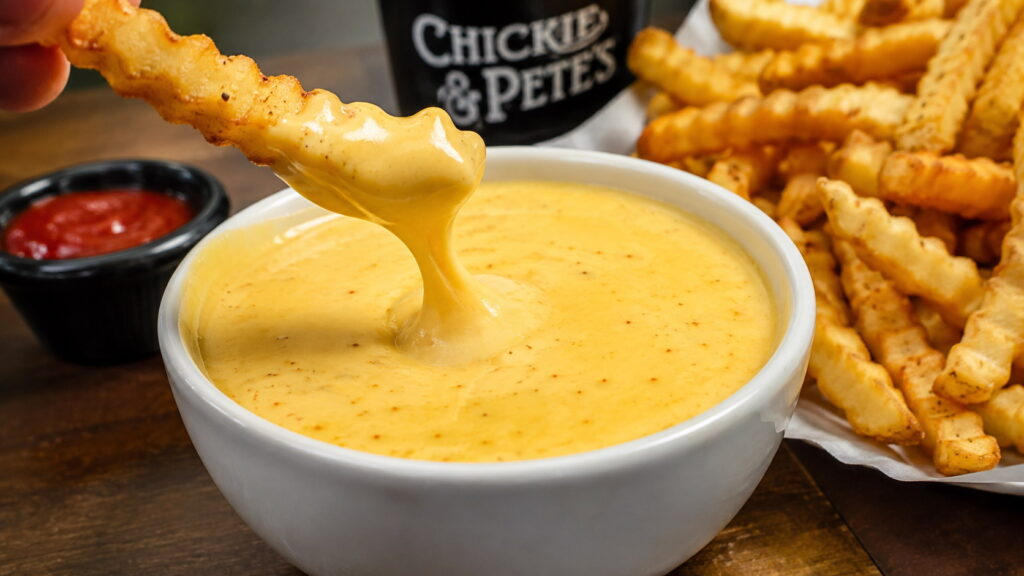
Craving the creamy, savory dip served with Chickie’s & Pete’s famous fries? This Chickie and Pete’s cheese sauce recipe gives you a rich, smooth homemade version with the right balance of cheesy flavor and scoopable texture. The sauce comes together with simple ingredients and a gentle cooking method that helps prevent graininess or separation.
Whether you want cheese sauce for fries, chicken tenders, cheesesteaks, pretzels, or game-day snacks, the method below focuses on getting the consistency right from the start. You’ll learn which cheeses work best, how to build the sauce, how to adjust thickness, and how to keep the finished sauce creamy when served warm.
In This Article
What Makes Chickie and Pete’s Cheese Sauce So Addictive?
The appeal of Chickie and Pete’s-style cheese sauce comes down to texture as much as flavor. Good cheese sauce should be creamy enough to coat a fry without becoming stiff, yet thick enough to cling rather than run immediately off the food.
A homemade version works best when the cheese is incorporated gradually into a warm, stable base. Gentle heat keeps the dairy and cheese from separating, while the right amount of thickener gives the sauce body without making it taste floury.
The Texture to Aim For
Freshly prepared sauce should have a smooth, glossy, spoonable consistency. When lifted with a spoon, the sauce should fall in a slow ribbon rather than pour like milk.
For fries and other dipping foods, aim for a slightly thicker texture. A thinner consistency works better for drizzling over cheesesteaks, potatoes, chicken, or vegetables.
Why Temperature Matters
Cheese can become oily or grainy when exposed to excessive heat. Once the cheese enters the sauce, gentle cooking is more important than speed.
Never bring the finished cheese sauce to a hard boil. Low to medium-low heat gives the cheese time to melt evenly while preserving the creamy texture.
The Key to a Great Chickie and Pete’s Cheese Sauce
Several small details make a noticeable difference when recreating a restaurant-style cheese sauce at home.
Start With a Stable Creamy Base
Butter and flour can create a simple roux that gives the sauce enough structure to hold the melted cheese. Milk or another dairy component then turns the roux into a smooth white base.
Whisking continuously while the dairy is added helps prevent flour lumps. Once the base has thickened slightly, the cheese can be incorporated without requiring aggressive heat.
Add Cheese Gradually
Dumping all the cheese into the saucepan at once can make melting uneven. A better approach is to add small handfuls, whisking after each addition until the previous portion has melted.
Freshly grated cheese is especially useful because shredded cheese melts more evenly and usually incorporates more smoothly than large chunks.
Taste Before Adding More Seasoning
Cheese naturally contributes salt and savory flavor, so seasoning should happen toward the end. Taste the finished sauce before adding additional salt.
A small amount of garlic, onion, paprika, or another complementary seasoning can add depth without overwhelming the cheese.
Keep the Sauce Warm, Not Hot
Serving temperature matters. Warm cheese sauce remains fluid and creamy, while cooling causes the sauce to thicken.
If the sauce becomes too thick during serving, gently loosen it with a small splash of warm milk. Avoid turning the burner high to force the sauce back to a thinner consistency.
Ingredients for This Chickie and Pete’s Cheese Sauce Recipe
The ingredient list is intentionally straightforward. The goal is a creamy, flavorful cheese sauce that works especially well with fries and other savory foods.
Ingredients
- 2 tablespoons unsalted butter
- 2 tablespoons all-purpose flour
- 1 cup whole milk
- ½ cup half-and-half
- 8 ounces freshly grated mild or medium cheddar cheese
- 2 ounces American cheese, torn or chopped into small pieces
- ½ teaspoon garlic powder
- ¼ teaspoon onion powder
- ¼ teaspoon paprika
- ¼ teaspoon salt, or to taste
- ⅛ teaspoon freshly ground black pepper
- 1–2 tablespoons milk, if needed for thinning
Why Each Ingredient Matters
Butter: Creates the foundation for the roux and contributes richness.
All-purpose flour: Thickens the dairy base so the finished sauce can cling to fries and other foods.
Whole milk: Provides the liquid needed to create a creamy sauce without making the mixture excessively heavy.
Half-and-half: Adds extra richness and helps create a smoother, more indulgent texture.
Cheddar cheese: Supplies the primary cheesy flavor. Mild or medium cheddar keeps the sauce balanced and versatile.
American cheese: A small amount helps encourage a particularly smooth, creamy texture. Processed cheese contains emulsifying ingredients that can help the cheese sauce remain cohesive.
Garlic powder and onion powder: Add savory depth without introducing chunks of fresh aromatics.
Paprika: Provides subtle warmth and a little extra flavor.
Salt and black pepper: Finish the seasoning. Start conservatively because the cheese already contains salt.
Ingredient Substitutions
| Ingredient | Possible Substitute | What to Expect |
| Whole milk | 2% milk | Slightly lighter sauce |
| Half-and-half | Whole milk | Less rich but still creamy |
| Mild cheddar | Medium cheddar | More pronounced cheese flavor |
| American cheese | Monterey Jack | Good melt, slightly different texture |
| Unsalted butter | Salted butter | Reduce added salt |
| All-purpose flour | Cornstarch slurry | Gluten-free option with a slightly different texture |
Readers following a gluten-free diet can replace the flour with a carefully prepared cornstarch slurry. The thickening method changes, so add the slurry gradually and stop once the sauce reaches the desired consistency.
For general food-safety guidance on handling and storing dairy-based foods, the USDA Food Safety and Inspection Service provides reliable recommendations.
Kitchen Equipment
You don’t need specialized equipment to make the sauce. Prepare the recipe with:
- Medium heavy-bottomed saucepan
- Whisk
- Measuring cups and spoons
- Box grater
- Heat-resistant spatula or spoon
- Serving bowl or dipping cups
A heavy-bottomed saucepan is worth using because it distributes heat more evenly and reduces the chance of scorching the milk-based sauce.
Choosing the Right Cheese for a Smooth, Creamy Sauce
Cheese selection can make or break a homemade Chickie and Pete’s cheese sauce recipe. The best combination needs to melt smoothly while delivering enough flavor to stand up to salty fries, chicken, sandwiches, and other hearty foods.
Cheddar Brings the Main Flavor
Mild or medium cheddar makes a dependable foundation because the cheese melts well and provides a familiar savory flavor without becoming overpowering.
Sharp cheddar can also work, especially if you prefer a more pronounced cheese taste. Stronger cheddar tends to create a bolder sauce, so balancing it with a milder melting cheese can produce a smoother overall flavor.
Why American Cheese Helps
A small amount of American cheese can be particularly useful in homemade cheese sauce. Unlike natural cheese alone, processed American cheese contains emulsifying salts that help keep melted cheese and dairy together.
The goal isn’t to make the sauce taste like American cheese. Using a modest amount simply helps create the silky texture associated with many restaurant-style cheese sauces.
Freshly Grated Cheese Is Worth the Extra Minute
Grating cheese directly from a block gives you more control over melting. Some packaged shredded cheeses contain anti-caking ingredients that can interfere with the smoothest possible sauce.
For the best result:
- Chill the cheese briefly if needed.
- Grate it using the medium side of a box grater.
- Keep the grated cheese ready beside the stove.
- Add small handfuls to the warm sauce rather than dumping everything in at once.
Cheese Combinations to Try
| Cheese combination | Flavor | Best use |
| Mild cheddar + American | Classic and creamy | Fries and dipping |
| Medium cheddar + American | Balanced and savory | Fries, chicken, pretzels |
| Sharp cheddar + American | Bolder and richer | Cheesesteaks and sandwiches |
| Cheddar + Monterey Jack | Mild and very melty | Nachos and loaded fries |
Avoid using pre-shredded cheese as your first choice when maximum smoothness matters. Freshly grated cheese generally gives you a more predictable melt.
How to Make Chickie and Pete’s Cheese Sauce Step by Step
Making the sauce is straightforward, but the order of the steps matters. Controlled heat and gradual cheese incorporation are the two biggest factors in achieving a creamy texture.
Step 1: Prepare the Cheese and Dairy
Grate the cheddar and cut or tear the American cheese into small pieces. Measure the milk and half-and-half before turning on the stove.
Having everything ready prevents the roux from sitting over heat while you search for ingredients.
Step 2: Make the Butter-Flour Base
Melt the butter in a medium heavy-bottomed saucepan over medium-low heat.
Once the butter has melted, whisk in the flour. Continue whisking for about 60–90 seconds.
The mixture should look smooth and lightly foamy. Avoid browning the flour heavily because the goal is a creamy cheese sauce rather than a deeply toasted roux.
Step 3: Add the Milk and Half-and-Half
Gradually pour in the milk while whisking constantly. Add the half-and-half and continue whisking until no visible flour lumps remain.
Raise the heat slightly to medium and cook for approximately 3–5 minutes, stirring frequently.
The mixture should become lightly thickened. A thin coating should remain on the back of a spoon when the sauce base is ready.
Do not let the dairy mixture reach a vigorous boil.
Step 4: Add the Cheese Gradually
Reduce the heat to low.
Add a small handful of cheddar and whisk until almost completely melted before adding more. Continue with the remaining cheddar, followed by the American cheese.
The sauce should become progressively smoother and thicker as each addition melts.
If the cheese seems reluctant to melt, resist the temptation to crank up the heat. Keep the saucepan over low heat and stir patiently.
Step 5: Season the Sauce
Add the garlic powder, onion powder, paprika, black pepper, and a small amount of salt.
Whisk thoroughly and taste.
Season gradually. Fries, pretzels, chicken, and other foods commonly served with cheese sauce can already contain plenty of salt.
Step 6: Adjust the Consistency
Remove the saucepan from the heat once the cheese has completely melted.
Check the texture with a spoon. The sauce should be thick enough to coat the spoon while remaining fluid enough for dipping.
If the sauce is too thick, whisk in 1 tablespoon of warm milk at a time until the desired consistency is reached.
If the sauce is too thin, return it to low heat and stir for another minute or two. Avoid adding a large amount of flour directly to the finished sauce because flour can create unpleasant lumps.
Step 7: Serve While Warm
Transfer the finished cheese sauce to a serving bowl and serve immediately.
For a classic restaurant-style experience, pair the sauce with crispy seasoned fries. Chicken tenders, soft pretzels, potato wedges, cheesesteaks, and tater tots are also excellent choices.
Chickie and Pete’s Cheese Sauce Cooking Timeline
| Stage | Approximate time | What to look for |
| Melt butter | 1 minute | Completely melted |
| Cook flour | 1–1½ minutes | Smooth, lightly foamy roux |
| Thicken dairy | 3–5 minutes | Lightly coats spoon |
| Melt cheese | 3–5 minutes | Completely smooth |
| Final adjustment | 1–2 minutes | Creamy, pourable texture |
| Total cooking time | 10–15 minutes | Ready to serve |
Total time: About 15–20 minutes, including ingredient preparation
Yield: Approximately 2 cups
Servings: About 6–8 dipping portions, depending on how generously the sauce is served
Chickie and Pete’s Cheese Sauce Recipe: How to Get the Texture Just Right
The ideal texture depends partly on how the sauce will be served. Dipping sauce needs enough body to cling to food, while a sauce for cheesesteaks or loaded fries can be slightly more fluid.
For a Thick Dipping Sauce
Keep the dairy-to-thickener ratio close to the recipe. Allow the finished sauce to sit for 1–2 minutes after removing it from the heat.
Cooling slightly naturally increases the thickness.
Serve the sauce in a small bowl alongside hot fries, chicken tenders, or pretzels.
For a Thinner Drizzling Sauce
Whisk in warm milk gradually, starting with one tablespoon.
Continue adding small amounts until the sauce flows easily from a spoon. Never add a large amount of cold liquid all at once, since a sudden temperature change can affect the texture.
If the Sauce Becomes Too Thick
Cheese sauce naturally thickens as it cools. A small amount of warm milk can bring the sauce back to a smoother dipping consistency.
Place the saucepan over low heat and whisk continuously while adding the milk.
If the Sauce Becomes Grainy
Graininess usually means the cheese has been exposed to too much heat or has melted unevenly.
Remove the pan from the burner immediately and whisk gently. A tablespoon or two of warm milk may help loosen the sauce.
For future batches, lower the heat before adding the cheese and incorporate the cheese gradually.
If the Sauce Looks Oily
Excessive heat can cause the fat in the cheese to separate from the dairy.
Take the saucepan off the heat and whisk gently. Avoid boiling or aggressively heating the mixture. Adding a small amount of warm milk while whisking can sometimes help bring the sauce back together.
The Best Texture Test
Dip a spoon into the finished sauce and lift it above the pan.
A successful Chickie and Pete’s cheese sauce copycat should coat the back of the spoon in a smooth layer. Drag a fingertip through the coating; the line should remain visible briefly before slowly closing.
That simple test is more useful than relying on an exact temperature because cheese brands and dairy products can behave differently.
Common Mistakes That Can Ruin Homemade Cheese Sauce
A creamy cheese sauce doesn’t require complicated techniques, but a few small mistakes can turn a smooth sauce into something lumpy, greasy, or overly thick. Knowing what to watch for makes the Chickie and Pete’s cheese sauce recipe much more reliable.
Using Heat That Is Too High
High heat is one of the biggest problems when melting cheese into a dairy-based sauce. Excessive heat can cause the cheese proteins to tighten and release fat, leaving an oily or grainy mixture.
Keep the heat low once the cheese goes into the pan. Gentle heat gives each addition time to melt without stressing the sauce.
Adding All the Cheese at Once
Large amounts of cheese can cool the sauce suddenly and melt unevenly. Clumps may form before the cheese has a chance to incorporate.
Add cheese one small handful at a time, whisking until mostly melted before adding the next portion.
Letting the Sauce Boil
A gentle simmer during the thickening stage is acceptable, but the finished cheese sauce should never be allowed to boil vigorously.
Boiling can destabilize the dairy and cheese, increasing the chance of separation.
Using Too Much Flour
Flour provides structure, but excessive amounts can produce a heavy sauce with a noticeable floury taste.
Measure the flour carefully and cook the roux briefly before adding the dairy. The finished base should be lightly thickened rather than stiff.
Adding Cold Liquid to a Very Hot Sauce
A sudden temperature change can make the sauce harder to keep smooth. Warm milk works better when thinning a finished cheese sauce.
Add the liquid one tablespoon at a time, whisking continuously.
Over-Seasoning Too Early
Cheddar and American cheese already contribute salt. Fries and other serving foods may also be seasoned.
Taste the finished sauce before adding extra salt. A small amount of garlic powder, onion powder, paprika, and pepper is usually enough to build a savory flavor without masking the cheese.
Quick Cheese Sauce Troubleshooting Guide
| Problem | Likely cause | Best fix |
| Sauce is too thick | Too much thickener or cooling | Whisk in warm milk |
| Sauce is too thin | Dairy base hasn’t thickened enough | Cook gently for another 1–2 minutes |
| Sauce is grainy | Excessive heat | Remove from heat and whisk gently |
| Sauce is oily | Cheese overheated | Remove from heat and gently whisk |
| Sauce has lumps | Cheese added too quickly | Lower heat and whisk thoroughly |
| Sauce tastes floury | Roux wasn’t cooked enough | Cook the butter-flour mixture slightly longer next time |
| Sauce tastes too salty | Cheese and seasoning combined | Add more unsalted dairy gradually |
Easy Ingredient Swaps and Flavor Variations
The basic recipe creates a creamy, savory sauce, but a few controlled substitutions can change the flavor or accommodate ingredients already available in your kitchen.
Make a Richer Cheese Sauce
Replace part of the whole milk with additional half-and-half for a richer result.
Keep the total dairy quantity approximately the same so the sauce doesn’t become excessively thick. Extra creaminess works particularly well with crispy fries and loaded potato dishes.
Use a Stronger Cheddar
Sharp cheddar gives the sauce a more pronounced cheese flavor.
For the smoothest result, combine sharp cheddar with American cheese or another reliable melting cheese rather than relying entirely on very sharp cheddar.
Try Monterey Jack
Monterey Jack melts smoothly and has a mild flavor. A cheddar-Monterey Jack combination creates a softer, creamier cheese profile.
The variation works especially well with chicken tenders, tortilla chips, potato wedges, and sandwiches.
Add Some Heat
A spicy version can be made without changing the basic cooking method.
Try adding:
- A pinch of cayenne pepper
- ¼ teaspoon crushed red pepper flakes
- A few dashes of hot sauce
- Finely chopped pickled jalapeños
- A small amount of chili powder
Add spicy ingredients gradually. The cheese sauce should remain creamy and savory rather than becoming dominated by heat.
Create a Garlic-Forward Version
For extra savory character, slightly increase the garlic powder or add a small amount of roasted garlic paste.
Roasted garlic gives a softer, sweeter flavor than raw garlic and blends naturally into the creamy sauce.
Make a Peppery Version
Freshly ground black pepper adds a simple finishing touch. A slightly heavier amount works particularly well when serving the sauce with steak sandwiches or cheesesteak-inspired dishes.
Gluten-Free Option
The flour-based roux can be replaced with a cornstarch slurry.
Mix cornstarch with a small amount of cold milk before adding the mixture to the warm dairy base. Cook gently until the sauce reaches the desired consistency.
Never sprinkle dry cornstarch directly into the hot sauce, since it can form stubborn lumps.
What to Serve With Chickie and Pete’s Cheese Sauce
The creamy texture makes the sauce especially versatile, but crispy potatoes are the natural starting point.
Crispy Fries
Serve the warm sauce alongside seasoned French fries for the most recognizable pairing.
Extra-crispy fries work especially well because their surface provides plenty of texture for the creamy cheese sauce to cling to.
For a loaded version, drizzle the sauce over fries and add chopped chicken, bacon, green onions, or other savory toppings.
Chicken Tenders and Wings
Chicken tenders provide a mild, crispy base that lets the cheese flavor stand out.
Serve the sauce in a dipping bowl or drizzle a small amount over sliced chicken. Spicy chicken pairs particularly well with the creamy sauce because the dairy helps balance the heat.
Cheesesteaks and Sandwiches
A thinner version of the sauce works beautifully on steak sandwiches.
Warm the cheese sauce until fluid enough to drizzle, then spoon it over thinly sliced beef and sautéed onions. Avoid making the sauce excessively thick because a heavy layer can overpower the sandwich.
Soft Pretzels
Warm pretzels and cheese sauce are a natural combination. The salty exterior of the pretzel contrasts with the creamy, rich dip.
Cut pretzels into bite-sized pieces for parties or game-day gatherings and serve the sauce warm in the center of a dipping platter.
Tater Tots and Potato Wedges
Tater tots and potato wedges have enough crispness and surface area to hold plenty of sauce.
For an easy loaded potato appetizer, pile hot tots or wedges onto a plate, drizzle with cheese sauce, and finish with chopped green onions or cooked bacon.
Vegetables
Broccoli, cauliflower, and roasted potatoes can all benefit from a spoonful of creamy cheese sauce.
Use a thinner consistency for vegetables so the sauce coats rather than overwhelms them.
Best Serving Matches at a Glance
| Food | Recommended sauce texture | Serving style |
| French fries | Medium-thick | Dip or drizzle |
| Chicken tenders | Thick | Dipping sauce |
| Cheesesteak | Thin-medium | Drizzle |
| Soft pretzels | Thick | Dip |
| Tater tots | Medium-thick | Drizzle |
| Potato wedges | Medium-thick | Dip or drizzle |
| Vegetables | Thin-medium | Spoon or drizzle |
Serve the cheese sauce while warm for the best texture. Once cooled, the sauce naturally becomes thicker, so a small amount of gentle reheating or warm milk can restore the consistency when needed.
Can You Make Chickie and Pete’s Cheese Sauce Ahead of Time?
Yes, you can prepare this Chickie and Pete’s cheese sauce recipe ahead of serving. Freshly made sauce has the smoothest texture, but proper storage and gentle reheating can bring a refrigerated batch back to a creamy consistency.
Allow the sauce to cool slightly, then transfer it to an airtight container. Refrigerate promptly rather than leaving a dairy-based sauce at room temperature for an extended period.
How Long Does Homemade Cheese Sauce Last?
For best quality, use refrigerated cheese sauce within 3–4 days.
Before serving, check the sauce for any unusual odor, appearance, or texture. When in doubt, discard the sauce rather than trying to rescue it.
Make-Ahead Tip
Prepare the sauce earlier on the same day when possible. Refrigeration causes the cheese sauce to firm up considerably, so the texture will not look the same when cold.
Don’t worry if the refrigerated sauce looks very thick. Gentle reheating and a small amount of milk can restore its creamy consistency.
Can You Freeze Cheese Sauce?
Freezing isn’t the preferred storage method for this recipe.
Dairy-based cheese sauces can separate or become grainy after freezing and thawing, particularly when made with natural cheese. Refrigeration provides a much better texture.
If freezing is necessary, freeze a small portion first as a test. Thaw slowly in the refrigerator and reheat gently while whisking. The resulting texture may be less smooth than freshly prepared sauce.
How to Reheat Chickie and Pete’s Cheese Sauce Without Making It Grainy
Gentle reheating is the key to bringing refrigerated cheese sauce back to life. High temperatures can cause separation, so patience produces a better result.
Stovetop Reheating Method
Place the refrigerated sauce in a small saucepan over low heat.
Stir frequently with a whisk or heat-resistant spatula. Once the sauce begins to loosen, add 1 tablespoon of milk or half-and-half and whisk until incorporated.
Continue heating slowly until the sauce becomes smooth and spoonable.
Never bring reheated cheese sauce to a boil.
Microwave Reheating Method
Microwave reheating works well for smaller portions.
- Transfer the desired amount to a microwave-safe bowl.
- Heat for 15–20 seconds.
- Stir thoroughly.
- Continue heating in short intervals.
- Add a small splash of milk if the sauce remains too thick.
- Stir again before serving.
Short intervals are much safer than microwaving the sauce continuously for a minute or two.
What If the Reheated Sauce Looks Separated?
Remove the sauce from the heat and whisk gently.
Add a small amount of warm milk while continuing to whisk. Avoid adding too much liquid at once.
Some separation can be difficult to completely reverse, particularly if the sauce has been overheated, so low-temperature reheating is the best prevention.
Chickie and Pete’s Cheese Sauce Recipe FAQ
What cheese is best for a Chickie and Pete’s cheese sauce copycat?
Medium or mild cheddar provides the primary cheese flavor, while a small amount of American cheese helps create a smooth, creamy texture. Freshly grated cheddar generally melts more predictably than heavily processed pre-shredded cheese.
How long does Chickie and Pete’s cheese sauce take to make?
Plan on approximately 15–20 minutes from preparation to serving. Most of the cooking time involves making the dairy base and gradually melting the cheese.
Why did my cheese sauce turn grainy?
Excessive heat is the most common reason. Cheese should be melted over low heat after the dairy base has thickened. Adding cheese gradually also helps maintain a smooth texture.
How do I thin homemade cheese sauce?
Whisk warm milk into the sauce one tablespoon at a time. Stop as soon as the sauce reaches the desired consistency. Adding too much liquid can make the sauce overly thin.
Can I make Chickie and Pete’s cheese sauce ahead of time?
Yes. Prepare the sauce earlier in the day or refrigerate it for later use. Store the sauce in an airtight container and reheat gently before serving.
How long does homemade cheese sauce last in the refrigerator?
Use refrigerated cheese sauce within 3–4 days for best quality. Keep the sauce refrigerated in an airtight container and reheat only the portion you plan to serve.
Can I freeze cheese sauce?
Freezing is not recommended when the smoothest texture is important. Thawed dairy-based cheese sauces can become grainy or separate. Refrigeration generally produces better results.
What is the best way to reheat cheese sauce?
Low heat on the stovetop is the most reliable method. Stir frequently and add a small amount of milk if needed. Microwave reheating also works when performed in short intervals with frequent stirring.
How do I keep cheese sauce warm for a party?
Use very gentle heat and stir periodically. A small slow cooker set to its lowest appropriate setting can help with serving, but excessive heat should be avoided because prolonged high temperatures can cause separation.
Can I make the recipe gluten-free?
Yes. Replace the flour-based roux with a cornstarch slurry. Mix the cornstarch with cold milk first, then add it gradually to the warm dairy mixture and cook until thickened.
What should I serve with Chickie and Pete’s cheese sauce?
French fries are the classic choice, but chicken tenders, soft pretzels, cheesesteaks, tater tots, potato wedges, and roasted vegetables also pair well with the creamy sauce.
How do I make the cheese sauce spicier?
Add cayenne, crushed red pepper flakes, hot sauce, or finely chopped pickled jalapeños. Add spicy ingredients gradually so the heat complements rather than overwhelms the cheese.
Recipe Card: Chickie and Pete’s Cheese Sauce
Quick Recipe Details
- Prep time: 5–10 minutes
- Cook time: 10–15 minutes
- Total time: About 15–20 minutes
- Yield: Approximately 2 cups
- Servings: 6–8
- Best served: Warm
Ingredients
- 2 tablespoons unsalted butter
- 2 tablespoons all-purpose flour
- 1 cup whole milk
- ½ cup half-and-half
- 8 ounces freshly grated mild or medium cheddar cheese
- 2 ounces American cheese, chopped or torn
- ½ teaspoon garlic powder
- ¼ teaspoon onion powder
- ¼ teaspoon paprika
- ¼ teaspoon salt, or to taste
- ⅛ teaspoon black pepper
- 1–2 tablespoons warm milk, as needed
Instructions
- Melt the butter in a medium saucepan over medium-low heat.
- Whisk in the flour and cook for 60–90 seconds.
- Gradually whisk in the whole milk and half-and-half.
- Cook for 3–5 minutes, stirring regularly, until the mixture lightly coats a spoon.
- Reduce the heat to low.
- Add the cheddar a small handful at a time, whisking until melted before adding more.
- Add the American cheese and continue whisking until completely smooth.
- Stir in garlic powder, onion powder, paprika, black pepper, and salt.
- Remove from the heat and check the consistency.
- Add warm milk one tablespoon at a time if the sauce needs thinning.
- Serve warm with fries, chicken, pretzels, cheesesteaks, or your favorite dipping foods.
Nutrition Information
Nutrition will vary depending on the specific cheese, dairy products, serving size, and substitutions used.
| Nutrient | Approximate per serving* |
| Calories | 220–250 |
| Protein | 10–12 g |
| Carbohydrates | 6–8 g |
| Fat | 17–20 g |
| Saturated fat | 10–12 g |
| Sodium | 350–500 mg |
*Values are estimates and should be recalculated according to the exact ingredients and portion size used.
Final Tips for a Better Chickie and Pete’s Cheese Sauce at Home
The best Chickie and Pete’s cheese sauce recipe doesn’t depend on complicated ingredients. The technique makes the biggest difference.
Use freshly grated cheese, build a smooth dairy base, and lower the heat before adding the cheese. Gradual incorporation prevents clumps, while gentle reheating protects the creamy consistency.
Serve the sauce warm alongside crispy fries for the classic experience, or use a thinner version for cheesesteaks, chicken, pretzels, and loaded potatoes. A touch of cayenne or hot sauce can also turn the basic recipe into a spicy variation without changing the core method.
Save the recipe for your next game-day spread, casual dinner, or homemade snack night. Once you master the low-heat cheese-melting technique, this restaurant-style sauce becomes an easy homemade favorite.

1 thought on “Chickie and Pete’s Cheese Sauce Recipe”