
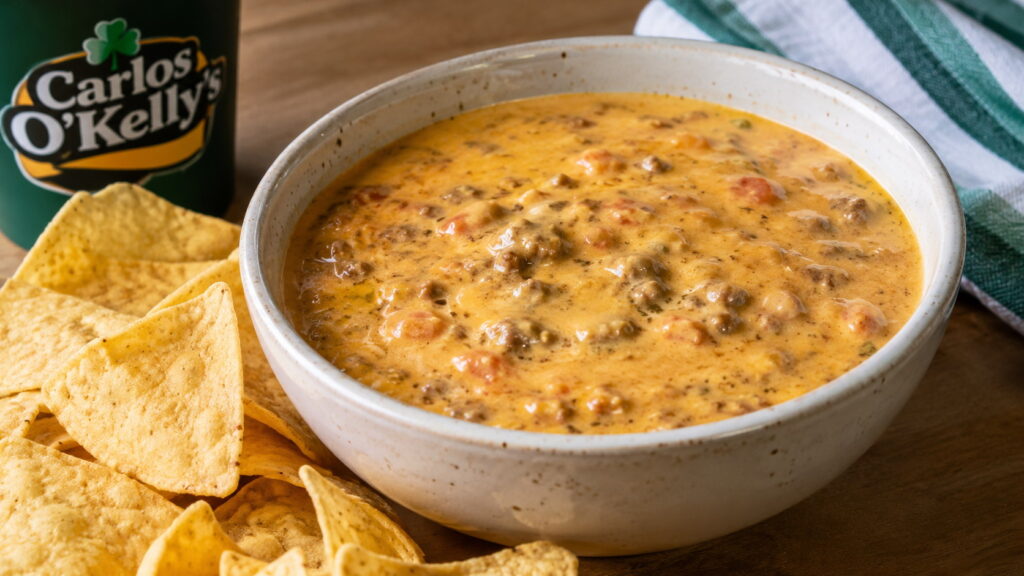
Carlos O’Kelly’s chili con queso recipe is the kind of creamy, cheesy dip that can turn a simple bowl of tortilla chips into a restaurant-style appetizer. Rich melted cheese, mild chilies, tomatoes, and savory seasonings come together in a smooth queso that is easy to serve for game days, parties, or a Tex-Mex-inspired dinner at home.
The key to a successful copycat chili con queso is more than simply melting cheese. Cheese selection, gentle heat, ingredient proportions, and timing all affect the final texture. Below, you’ll learn how to choose the right ingredients, create a smooth queso, avoid common problems, customize the heat level, and keep the dip creamy from the first scoop to the last.
In This Article
Carlos O’Kelly’s Chili Con Queso Recipe: What Makes This Copycat So Creamy?
Carlos O’Kelly’s-style chili con queso has a distinctly comforting texture: thick enough to cling to a tortilla chip but soft enough to pour over nachos or other Tex-Mex dishes. The flavor should be cheesy and savory without allowing the chilies or seasonings to overpower the dairy base.
The homemade version works best when the cheese is melted gradually rather than cooked aggressively. High heat can cause cheese to separate, leaving an oily surface and a grainy texture. Gentle cooking gives the ingredients time to blend into a cohesive sauce.
The Flavor Balance to Aim For
Good chili con queso should have several flavors working together:
- Creamy cheese: Provides the rich foundation and body.
- Green chilies: Add mild pepper flavor and a little warmth.
- Tomatoes: Bring acidity, color, and a subtle sweetness.
- Seasonings: Add savory depth without masking the cheese.
- Dairy: Helps create the smooth, spoonable consistency associated with restaurant queso.
- Optional ground beef: Adds a heartier chili character and makes the dip more substantial.
The finished queso should taste rich but not overwhelmingly salty. Pepper flavor should be noticeable without turning the dip into a fiery sauce.
What Makes Restaurant-Style Queso Different?
Restaurant queso is generally designed to remain soft and scoopable while being served warm. Homemade cheese dips often become stiff shortly after leaving the stove because melted cheese naturally firms as its temperature drops.
Serving temperature matters almost as much as the recipe itself. Warm queso should flow slowly from a spoon and coat a tortilla chip rather than breaking into chunks.
A useful test is to lift a spoonful several inches above the pan. The queso should fall in a smooth, continuous ribbon. Excessively thick queso needs a little more liquid, while watery queso needs additional cooking or a carefully chosen thickening adjustment.
The Key Ingredients Behind Carlos O’Kelly’s Chili Con Queso
A good Carlos O’Kelly’s chili con queso recipe depends on a relatively short list of ingredients, but each component has a specific job. Using the right proportions is more important than adding a long list of seasonings.
Cheese: The Most Important Ingredient
Choose cheese based on meltability as well as flavor. A combination of mild cheddar and Monterey Jack can provide both familiar cheesy flavor and a smooth melt.
Processed melting cheese can also be useful when a very stable queso texture is the priority. Such cheeses contain emulsifying ingredients that help keep the fat and dairy proteins together during heating.
Freshly shredded cheese generally melts more smoothly than many pre-shredded varieties because packaged shredded cheese can contain anti-caking agents.
Green Chilies and Tomatoes
Canned diced green chilies are convenient and provide consistent pepper flavor throughout the year. Mild varieties work well for a family-friendly queso, while hotter chilies can be added when more heat is desired.
Tomatoes contribute more than color. Their acidity helps balance the richness of the cheese, while their natural sweetness rounds out the savory flavors.
Drain excess liquid when necessary. Too much tomato or chili liquid can make the queso thinner than intended.
Dairy for a Smooth Consistency
Milk, evaporated milk, or cream can be used depending on the desired richness and texture. Dairy helps loosen the melted cheese and makes the queso easier to scoop.
Evaporated milk is particularly useful when you want a creamy sauce without adding as much heavy cream. Heavy cream produces a richer result but can make the finished dip feel heavier.
Seasonings That Build Flavor
Keep the seasoning profile relatively restrained. Chili con queso should taste primarily like cheese and chilies rather than a heavily spiced dip.
Useful additions can include:
- Garlic powder
- Onion powder
- Ground cumin
- Mild chili powder
- Black pepper
- A small amount of salt, added gradually
Taste before adding extra salt. Cheese and canned ingredients can already contribute considerable sodium.
Ground Beef: Optional but Flavorful
Some versions of chili con queso include seasoned ground beef, creating a more substantial dip with a stronger chili profile. Lean ground beef works well because excessive rendered fat can make the cheese sauce greasy.
Brown the beef thoroughly, drain excess fat, and season it before incorporating it into the queso. Keeping the meat relatively dry helps preserve the creamy consistency.
Ingredient Guide
| Ingredient | Purpose | Helpful Tip |
| Melting cheese | Creates the creamy base | Use cheeses known to melt smoothly |
| Green chilies | Adds pepper flavor and mild heat | Drain if the mixture contains excess liquid |
| Tomatoes | Adds acidity and sweetness | Choose diced tomatoes with moderate liquid |
| Milk or evaporated milk | Loosens the cheese | Add gradually |
| Seasonings | Builds savory depth | Season conservatively |
| Ground beef | Adds hearty chili flavor | Drain excess fat before combining |
How to Choose the Right Cheese for Carlos O’Kelly’s Chili Con Queso
Cheese selection can make or break a homemade queso. The best cheese is not necessarily the strongest-tasting cheese; the best choice is one that melts smoothly while providing the flavor and consistency you want.
Best Cheese Options for Smooth Queso
Monterey Jack melts easily and has a mild, buttery flavor. The relatively gentle flavor allows the chilies and seasonings to remain noticeable.
Cheddar contributes a more recognizable cheese flavor and attractive color. Mild or medium cheddar is generally easier to balance than a very sharp variety.
American-style melting cheese is useful when a particularly smooth, stable queso is the goal. The emulsifying salts help produce a silky sauce that stays cohesive when warmed.
A combination of cheeses can offer the best overall result. Monterey Jack can provide smooth melting while cheddar supplies a stronger cheese flavor.
Freshly Shredded vs. Pre-Shredded Cheese
Freshly shredded cheese is usually preferable for homemade queso. Shredding directly from a block gives the cheese a cleaner melting profile and makes it easier to control the blend.
Pre-shredded cheese can still work, especially when convenience matters, but the added anti-caking ingredients may slightly affect the texture.
Should You Use Very Sharp Cheddar?
Sharp cheddar can add excellent flavor, but too much can make the queso taste stronger and less creamy. Combining sharp cheddar with a mild melting cheese gives you more control.
For the smoothest Carlos O’Kelly’s chili con queso recipe, prioritize a good melting cheese and use stronger cheese varieties as flavor accents rather than relying on them for the entire sauce.
A Simple Cheese Strategy
For a balanced homemade queso, consider:
- Mild cheddar + Monterey Jack for classic flavor and smooth melting
- Medium cheddar + Monterey Jack for a slightly more pronounced cheese taste
- Melting cheese + cheddar when maximum smoothness and stability are important
Avoid relying heavily on cheeses that become stringy, oily, or grainy when heated. Queso should remain creamy and spoonable rather than turning into a stretchy cheese pull.
How to Make Carlos O’Kelly’s Chili Con Queso Step by Step
Once the ingredients are prepared, making Carlos O’Kelly’s chili con queso is relatively straightforward. The most important part is controlling the heat while the cheese melts. Gentle cooking produces a much smoother queso than rushing the process over high heat.
What You’ll Need
Equipment:
- Medium or large heavy-bottomed saucepan
- Wooden spoon or silicone spatula
- Cutting board and knife
- Cheese grater, if using block cheese
- Measuring cups and spoons
- Serving bowl or small slow cooker for keeping the queso warm
Approximate timing:
- Prep time: 10–15 minutes
- Cooking time: 15–20 minutes
- Total time: About 25–35 minutes
- Servings: About 6–8 appetizer portions
Prepare the Ingredients First
Shred the cheese before turning on the stove. Drain the tomatoes and green chilies if they contain a large amount of liquid, and measure the seasonings before cooking.
Ground beef, when included, should be browned separately. Break the meat into small pieces as it cooks, then drain excess grease. Smaller pieces distribute more evenly through the queso and make the dip easier to scoop.
Build the Savory Base
Place the saucepan over low to medium-low heat and add the dairy component. Warm the liquid gradually until it is hot but not boiling.
Add the seasonings and stir well so the garlic, onion, cumin, chili powder, and pepper are distributed throughout the liquid.
Fold in the tomatoes and green chilies. Allow the mixture to warm for a few minutes so the flavors begin to blend.
Add the Cheese Gradually
Reduce the heat to low before adding the cheese.
Add a small handful of shredded cheese at a time, stirring continuously. Wait until each addition has mostly melted before adding more.
Never dump all of the cheese into a very hot pan at once. Sudden exposure to high heat can encourage the cheese proteins to tighten and release fat, creating a separated or grainy sauce.
Continue stirring until the queso becomes completely smooth.
Add Ground Beef if Using
Fold cooked, drained ground beef into the finished cheese mixture. Stir gently until the meat is evenly distributed.
Allow the queso to warm for another minute or two, but avoid prolonged simmering. The goal is to heat everything together without reducing the dairy too aggressively.
Check the Consistency
Lift a spoonful of queso and let it fall back into the saucepan. Properly prepared queso should flow slowly and smoothly.
If the mixture feels too thick, stir in a small amount of warm milk. Add only a tablespoon or two at a time until the desired consistency is reached.
If the queso seems too thin, allow it to cook gently for a short period while stirring frequently. Avoid trying to fix a thin queso with excessive heat.
Serve While Warm
Transfer the finished Carlos O’Kelly’s chili con queso to a warm serving bowl. Tortilla chips are the classic choice, but the queso can also be spooned over nachos, tacos, burritos, or other Tex-Mex dishes.
Keep the queso warm rather than piping hot. Excessive heat can eventually cause the cheese sauce to separate.
The Secret to Smooth, Restaurant-Style Carlos O’Kelly’s Chili Con Queso
The signature quality of restaurant queso is its silky texture. Achieving a similar result at home comes down to managing heat, moisture, and cheese emulsification.
Keep the Heat Low
Cheese does not need intense heat to melt. Excessive temperatures can cause the fat and protein components to separate.
A gentle low-temperature setting gives the cheese time to melt into the dairy base without scorching the bottom of the saucepan.
If you see vigorous bubbling, the heat is probably too high. Queso should become warm and fluid rather than boil like a soup or sauce.
Add Cheese in Small Amounts
Gradual additions are one of the easiest ways to improve homemade queso.
Add a little cheese, stir until nearly smooth, then continue with another small addition. Repeating the process creates a more uniform emulsion and prevents large clumps from forming.
Freshly shredded cheese also tends to incorporate more predictably than large chunks.
Control the Moisture
Too much liquid produces a thin queso, while too little liquid can leave the sauce excessively thick and difficult to scoop.
Tomatoes and green chilies contribute their own moisture, so account for their liquid when adjusting the dairy.
Drain watery canned ingredients when necessary, but do not remove every bit of moisture. Some of the tomato and chili juices contribute useful flavor.
Keep the Queso Moving
Frequent stirring serves two purposes: it prevents the bottom from scorching and distributes heat evenly.
Use a wooden spoon or silicone spatula to scrape along the bottom and corners of the saucepan. Gentle, consistent stirring is especially important once the cheese begins melting.
How to Tell When the Queso Is Ready
Look for these signs:
- The cheese has completely melted
- No visible cheese clumps remain
- The sauce looks glossy and cohesive
- The queso falls from a spoon in a slow ribbon
- Tomatoes, chilies, and meat are evenly distributed
- No pool of oil appears on the surface
A glossy appearance is particularly useful. A dull, greasy surface can indicate that the cheese has begun separating.
Keeping Queso Warm for Serving
A small slow cooker can be useful when serving the dip at a party. Use the lowest warming setting available and stir occasionally.
Avoid leaving queso on high heat for an extended period. Even a well-emulsified cheese sauce can become thick, oily, or grainy when exposed to excessive heat.
Common Chili Con Queso Mistakes That Can Ruin the Texture
Even a simple queso recipe can go wrong when the cooking temperature or ingredient balance is off. Understanding the most common problems makes the recipe much easier to master.
Using Too Much Heat
High heat is one of the biggest enemies of creamy queso. Boiling can cause the dairy and cheese to separate, producing an oily or grainy sauce.
Solution: Keep the burner low and remove the pan from the heat temporarily if the mixture starts bubbling aggressively.
Adding All the Cheese at Once
A large amount of cheese added simultaneously can melt unevenly and form stubborn clumps.
Solution: Add shredded cheese gradually while stirring continuously.
Choosing a Poor-Melting Cheese
Some cheeses taste delicious but do not create a smooth sauce when heated. Excessively aged or crumbly cheeses can become oily, grainy, or stringy.
Solution: Build the queso around reliable melting cheeses such as Monterey Jack or a suitable processed melting cheese, then add stronger cheeses for flavor.
Adding Too Much Liquid
Tomatoes, green chilies, milk, and other dairy ingredients all contribute moisture. Adding extra liquid without accounting for those ingredients can leave the queso runny.
Solution: Drain excessively watery canned ingredients and add additional milk gradually rather than all at once.
Over-Seasoning Before the Cheese Is Finished
Cheese, canned chilies, tomatoes, and other prepared ingredients can already contain salt. Seasoning heavily at the beginning can make the finished queso overly salty.
Solution: Start with modest seasoning and taste near the end. Adjust salt only after all major ingredients have been incorporated.
Letting the Queso Sit Uncovered
Warm cheese sauce naturally thickens as it cools. Leaving the surface exposed can accelerate moisture loss and create a skin.
Solution: Serve immediately or keep the queso covered and gently warm. Stir occasionally to maintain an even consistency.
Trying to Fix Grainy Queso With More Heat
More heat rarely solves a cheese sauce that has already begun separating. Higher temperatures can make the problem worse.
Solution: Remove the pan from the burner, whisk or stir gently, and gradually introduce a small amount of warm dairy if needed. Rewarming should happen slowly.
Overcooking After the Cheese Has Melted
Once the queso is smooth, prolonged cooking provides little benefit. Extended heating can reduce moisture and gradually change the texture.
The best Carlos O’Kelly’s chili con queso is finished as soon as the cheese is fully melted, the ingredients are evenly combined, and the sauce reaches a smooth dipping consistency.
Easy Ways to Customize Carlos O’Kelly’s Chili Con Queso
A good Carlos O’Kelly’s chili con queso recipe should be creamy and savory first, but the heat level and texture can easily be adjusted to suit your table. Small changes are usually enough to create a milder family-friendly dip or a spicier version for chili lovers.
Make a Mild Chili Con Queso
Choose mild green chilies and keep the seasoning relatively gentle for a family-friendly version. Mild cheddar paired with Monterey Jack also keeps the cheese flavor balanced without introducing excessive sharpness.
Reducing the amount of chili powder can further soften the heat while allowing the green chile flavor to remain.
Turn Up the Heat
Spicy queso can be made without changing the basic recipe. Add one or more of the following:
- Finely diced jalapeños
- Hot green chilies
- A pinch of cayenne pepper
- Extra chili powder
- Diced serrano peppers
- A few dashes of your favorite hot sauce
Add spicy ingredients gradually. Cheese and dairy soften perceived heat, so the finished queso can taste different after everything has been combined.
Make a Meatier Version
Cooked ground beef gives the queso a heartier chili character. Brown the meat separately, drain excess fat, and break it into small pieces before folding it into the cheese sauce.
Ground beef is not the only option. Seasoned ground sausage can provide a richer flavor, although the additional fat should be considered when adjusting the rest of the recipe.
Make the Queso Extra Cheesy
For a richer cheese flavor, increase the proportion of cheese slightly while keeping enough dairy available to maintain a smooth consistency.
A combination of Monterey Jack and cheddar works especially well because the Jack contributes smooth melting while the cheddar provides more pronounced cheese flavor.
Avoid adding a large amount of extra cheese without adjusting the liquid. Queso can become stiff very quickly as the cheese-to-liquid ratio increases.
Create a Thinner Queso for Nachos
Nacho topping benefits from a more fluid consistency than a dip intended for tortilla chips. Add warm milk a tablespoon at a time until the queso flows easily from a spoon.
Keep the sauce warm while serving because cooling will naturally make the cheese mixture thicker.
Make a Thicker Dip
Reduce the amount of additional dairy or allow the finished queso to cool slightly before serving. A thicker queso works particularly well with sturdy tortilla chips that need a substantial coating.
Avoid excessive reduction because prolonged cooking can eventually damage the texture.
What to Serve With Carlos O’Kelly’s Chili Con Queso
Carlos O’Kelly’s chili con queso is naturally suited to tortilla chips, but the creamy cheese sauce can do much more than serve as a dip. The best pairings are foods with enough texture and flavor to complement the rich queso without competing with it.
Tortilla Chips: The Classic Choice
Fresh, sturdy tortilla chips are ideal because they can hold a generous scoop without breaking.
Choose thicker restaurant-style chips when possible. Thin chips may become soggy if the queso is particularly warm or fluid.
For a party, place the tortilla chips in a wide serving basket or bowl and keep extra chips nearby. Queso disappears quickly when served warm.
Build Restaurant-Style Nachos
Use the queso as the creamy foundation for loaded nachos.
Layer tortilla chips with toppings such as:
- Seasoned ground beef
- Black beans
- Diced tomatoes
- Jalapeños
- Sliced green onions
- Shredded lettuce
- Sour cream
- Fresh cilantro
Pour the warm queso over the chips shortly before serving. Adding the cheese sauce too early can soften the chips.
Use Queso With Tacos and Burritos
Warm queso makes an easy topping for tacos, burritos, and quesadillas. A small spoonful can add richness without overwhelming the other fillings.
Ground beef tacos pair particularly well with the chili-forward flavor of the queso. Chicken or bean-filled burritos also benefit from the creamy sauce.
Spoon It Over Fajitas
Grilled chicken, steak, peppers, and onions provide smoky flavors that contrast nicely with creamy cheese sauce.
Drizzle a modest amount of queso over the finished fajitas rather than completely covering the grilled ingredients. Keeping some of the vegetables exposed preserves their roasted flavor and texture.
Turn Fries or Potatoes Into a Cheesy Side
Crispy fries, potato wedges, and baked potatoes can all be topped with warm chili con queso.
Add seasoned ground beef, green onions, or jalapeños for a more substantial loaded-potato-style dish.
Party Pairings
A casual Tex-Mex spread can include:
| Pairing | Why It Works |
| Tortilla chips | Classic crunchy dipper |
| Nachos | Queso adds creamy richness |
| Tacos | Complements seasoned fillings |
| Quesadillas | Adds extra moisture and cheese flavor |
| Fajitas | Balances grilled meat and vegetables |
| Potato wedges | Creates a hearty cheesy appetizer |
| Black beans | Adds texture and earthy flavor |
Keep additional toppings relatively fresh and acidic. Tomatoes, jalapeños, salsa, and fresh herbs help balance the richness of the cheese.
Can You Make Carlos O’Kelly’s Chili Con Queso Ahead of Time?
Yes, Carlos O’Kelly’s chili con queso can be prepared ahead, although freshly made queso generally has the smoothest texture. Refrigeration causes the cheese sauce to firm up, so reheating needs to be gentle.
Making the Queso Ahead
Prepare the queso according to the recipe, then allow it to cool slightly before transferring it to a covered container.
Refrigerate promptly rather than leaving the finished dip at room temperature for an extended period.
Store the queso in a shallow airtight container for faster, more even cooling. A properly chilled cheese dip can generally be kept refrigerated for several days when handled and stored safely.
What Happens to Queso in the Refrigerator?
Cold temperatures cause the cheese and fat to firm, so refrigerated queso may look much thicker than it did when freshly cooked.
The texture can also appear slightly uneven after chilling. Proper reheating usually restores much of the original creaminess.
Do not judge the final consistency while the queso is cold. Reheat it gently before deciding whether additional liquid is needed.
How to Reheat Carlos O’Kelly’s Chili Con Queso
The stovetop is one of the easiest methods.
- Place the refrigerated queso in a saucepan.
- Set the burner to low heat.
- Stir frequently as the cheese begins to loosen.
- Add a small splash of milk if the queso remains too thick.
- Continue heating until the sauce becomes smooth and fully warm.
- Remove from the heat once the desired consistency returns.
Microwave reheating can also work, but short intervals are important. Heat for roughly 20–30 seconds at a time, stirring between intervals.
Avoid reheating queso on high power for several minutes at once. Uneven heating can cause the cheese to separate before the center has warmed completely.
Can You Freeze Chili Con Queso?
Freezing is generally not the first choice for a cheese-based dip because freezing and thawing can alter the texture. Dairy and cheese sauces may become grainy or separate after thawing.
If freezing is necessary, portion the queso into airtight freezer-safe containers and leave a little room for expansion. Thaw the container in the refrigerator rather than on the counter.
Reheat slowly over low heat and stir frequently. A small amount of warm milk may help bring the sauce back together.
Fresh preparation or refrigerated make-ahead storage will usually provide a better texture than freezing.
Keeping Queso Warm for a Party
A small slow cooker or warming appliance can keep the dip at serving temperature. Use the lowest practical setting and stir periodically.
If the queso becomes thicker while sitting, add a small amount of warm milk and stir until smooth again.
Avoid leaving the dip on a high setting for hours. Gentle warmth preserves the creamy texture far better than aggressive heat.
Carlos O’Kelly’s Chili Con Queso Recipe: Troubleshooting Guide
Even with the right ingredients, queso can occasionally turn out thicker, thinner, spicier, or saltier than expected. Most problems are easy to correct when addressed before the sauce becomes overheated.
If the Queso Is Too Thick
Add warm milk one tablespoon at a time while stirring over low heat. Give each addition time to blend before adding more.
Avoid pouring in a large amount of liquid at once. Gradual adjustments make it much easier to reach the ideal dipping consistency.
If the Queso Is Too Thin
Let the queso warm gently for a few minutes while stirring frequently. Some excess moisture will evaporate naturally.
Adding more melting cheese can also thicken the sauce, but use small amounts so the final queso does not become overly dense.
If the Queso Is Grainy
Graininess usually develops when cheese has been exposed to excessive heat or when the cheese has not emulsified properly.
Remove the saucepan from the heat and stir gently. A small amount of warm milk can sometimes help loosen the mixture.
Do not increase the heat in an attempt to melt the grainy cheese more quickly. Higher temperatures can make separation worse.
If the Queso Is Too Spicy
Dairy is one of the easiest ways to soften excessive chili heat. Stir in a small amount of milk or another mild dairy ingredient.
Adding additional mild cheese can also dilute the pepper intensity while maintaining the creamy texture.
If the Queso Is Too Salty
Additional unsalted dairy or mild cheese can help balance excessive saltiness. Adding a little more tomato or another unsalted ingredient may also soften the overall flavor.
Avoid adding large amounts of water, which can dilute the flavor while leaving the queso thin.
If the Queso Looks Oily or Separated
Remove the pan from the heat immediately. Let the mixture cool slightly, then stir gently.
A small amount of warm dairy can sometimes help restore a smoother consistency. Reheat only over low heat once the sauce begins coming back together.
Quick Queso Troubleshooting Table
| Problem | Likely Cause | Best Fix |
| Too thick | Too much cheese or moisture loss | Add warm milk gradually |
| Too thin | Too much liquid | Gently reduce or add melting cheese |
| Grainy | Excessive heat or poor melting | Remove from heat and stir gently |
| Too spicy | Too many peppers or hot seasonings | Add mild dairy or cheese |
| Too salty | Salt-heavy cheese or canned ingredients | Add unsalted dairy or mild ingredients |
| Oily | Cheese separated from excessive heat | Remove from heat and gently recombine |
| Thickens while serving | Natural cooling | Add a small splash of warm milk |
Frequently Asked Questions About Carlos O’Kelly’s Chili Con Queso Recipe
What cheese is best for Carlos O’Kelly’s chili con queso?
Monterey Jack, mild cheddar, and reliable melting cheeses are good choices. Monterey Jack provides a smooth melt, while cheddar adds a stronger cheese flavor. A combination often gives the best balance.
How long does Carlos O’Kelly’s chili con queso take to make?
Preparation generally takes about 10–15 minutes, while cooking takes roughly 15–20 minutes. Having the cheese shredded and the other ingredients measured before starting can make the cooking process faster and smoother.
Can I make Carlos O’Kelly’s chili con queso without ground beef?
Yes. Ground beef is optional and can be omitted for a meat-free cheese dip. The queso will remain creamy and flavorful with the cheese, chilies, tomatoes, dairy, and seasonings providing the main flavor.
How can I make the chili con queso less spicy?
Use mild green chilies, reduce chili powder, and avoid additional hot peppers. Extra mild cheese or dairy can also help balance the heat if the finished queso is already too spicy.
Why does my queso become thick after cooling?
Cheese naturally firms as its temperature drops. Warm queso is more fluid, while refrigerated or room-temperature queso becomes considerably thicker. Gently reheating the dip with a small amount of milk can restore a smoother consistency.
Can I make Carlos O’Kelly’s chili con queso ahead of time?
Yes. Prepare the queso, transfer it to a covered container, and refrigerate it promptly. Reheat slowly over low heat and add a small amount of warm milk if needed to restore the original consistency.
How should I reheat chili con queso?
Low and slow is the best approach. Reheat the queso in a saucepan over low heat while stirring frequently. Microwave reheating also works when performed in short intervals with stirring between each interval.
Can I freeze Carlos O’Kelly’s chili con queso?
Freezing is possible, but the texture may change after thawing because dairy-based cheese sauces can separate or become grainy. Refrigerated make-ahead storage generally gives better results.
How do I keep queso warm at a party?
Transfer the queso to a small slow cooker or warming dish set to the lowest practical temperature. Stir periodically and add a small amount of warm milk if the sauce becomes too thick.
What should I serve with Carlos O’Kelly’s chili con queso?
Tortilla chips are the classic choice. Queso also works beautifully with nachos, tacos, burritos, quesadillas, fajitas, fries, potato wedges, and other Tex-Mex-inspired dishes.
Why did my cheese turn oily instead of creamy?
Excessive heat is usually the main culprit. Cheese can separate when overheated, causing the fat to rise to the surface. Lowering the temperature and melting the cheese gradually helps maintain a smooth emulsion.
Can I use pre-shredded cheese for chili con queso?
Yes, although freshly shredded cheese is generally preferable. Pre-shredded cheese can contain anti-caking ingredients that sometimes affect how smoothly the cheese melts.
Make Every Batch of Carlos O’Kelly’s Chili Con Queso Creamy and Scoopable
Great Carlos O’Kelly’s chili con queso starts with good melting cheese, balanced moisture, and controlled heat. Shredding the cheese before cooking, warming the dairy gently, adding cheese gradually, and avoiding boiling will give you much more reliable results.
Adjust the chilies and seasonings according to your preferred heat level, then serve the queso while warm with plenty of sturdy tortilla chips. Whether you are preparing a casual snack, game-day appetizer, or Tex-Mex-inspired dinner, a bowl of homemade queso brings the restaurant-style experience straight to the table.
Save the recipe for your next gathering, experiment with the spice level, and enjoy your own homemade Carlos O’Kelly’s chili con queso while it is warm, creamy, and ready for dipping.
