
A corn and black bean salsa recipe for canning sounds like the perfect way to preserve sweet summer corn, ripe tomatoes, peppers, and hearty black beans for later. The combination is colorful, filling, and incredibly versatile, but canning this particular type of salsa requires more care than making a fresh refrigerator salsa.
The biggest question is not simply how to cook the ingredients. Canning safety depends on the acidity, ingredient proportions, density, jar size, and tested processing method. This guide explains how to approach corn and black bean salsa safely, how each ingredient affects the finished product, which shortcuts to avoid, and when a refrigerator or freezer version is the better choice.
You will also learn how to prepare the vegetables, recognize a properly designed canning formula, avoid common preservation mistakes, and serve the finished salsa with everything from tortilla chips to tacos and grilled meats.
In This Article
Corn and Black Bean Salsa Recipe for Canning: What You Need to Know First
Corn and black bean salsa combines two ingredients that make ordinary tomato salsa more substantial. Sweet corn contributes natural sweetness and a crisp, juicy bite, while black beans add protein, creamy texture, and a satisfying earthy flavor. Tomatoes and peppers bring acidity, brightness, and heat.
Fresh salsa is relatively straightforward: chop the ingredients, combine them with an acidic dressing, season, and refrigerate. Shelf-stable canning requires a much more controlled process.
Fresh Salsa and Canned Salsa Are Not the Same Thing
A refrigerator salsa can be customized fairly freely because the finished food remains cold and is consumed within a relatively short period. Canning changes the equation.
During shelf-stable preservation, jars are sealed and processed so the finished product can safely remain at room temperature. A recipe must be specifically formulated and tested for canning before you rely on the process for long-term storage.
Several factors work together:
- The natural acidity of the vegetables
- The amount and type of added acid
- The proportions of low-acid ingredients
- The size and shape of the food pieces
- The thickness and density of the salsa
- The jar size
- The processing temperature and time
- The altitude where the jars are processed
Corn and black beans deserve particular attention because both are low-acid ingredients. Simply combining them with tomatoes does not guarantee that the finished salsa has a safe acidity level.
Why You Should Not Freestyle a Canning Recipe
Home cooks often make sensible changes to fresh salsa. More corn, extra beans, another pepper, fewer tomatoes, or a handful of additional onions can all be delicious.
Those same changes should not automatically be made to a canning formula.
Increasing the amount of low-acid ingredients can alter the overall acidity and density of the product. Reducing an acidic ingredient can have a similar effect. Even seemingly minor modifications can change how heat penetrates the jars during processing.
A reliable starting point is a research-tested home-canning recipe that provides specific quantities, preparation instructions, jar sizes, headspace, processing times, and altitude adjustments. The National Center for Home Food Preservation provides detailed guidance on tested salsa canning methods and ingredient considerations.
What About a Pressure Canner?
Pressure canning is sometimes assumed to solve the problem whenever low-acid foods are involved. Pressure canning should not be used as a workaround for an untested corn and black bean salsa formula.
Pressure-canning recommendations depend on the particular food, its density, preparation, jar size, and other characteristics. A homemade combination does not become automatically safe simply because a pressure canner is used.
The safest approach is to follow the exact method specified by a tested recipe.
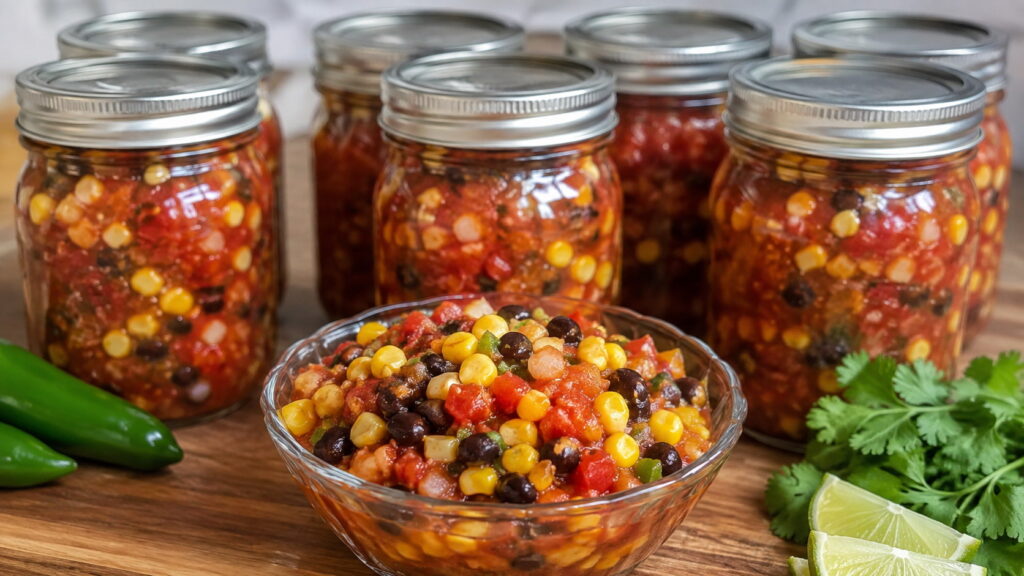
Can You Safely Can Corn and Black Bean Salsa?
The short answer is only when the recipe and processing method have been properly tested for canning.
A homemade corn and black bean salsa can certainly be delicious, but a recipe designed for fresh eating should not automatically be converted into a shelf-stable canned product.
Why Corn and Black Beans Make Canning More Complicated
Tomatoes are acidic, but tomatoes vary naturally in acidity. Corn and black beans are much lower in acid. A safe canning formula therefore needs to account for the entire mixture rather than treating the tomato component as though it automatically makes everything safe.
Acidification is one part of the safety equation, while heat processing provides another important control. The two work together according to the tested formulation and processing instructions.
Salsa also tends to contain several chopped vegetables packed relatively closely together. The resulting density can affect how quickly heat reaches the center of the jar.
Does Adding Lemon or Lime Juice Make Salsa Safe?
Not necessarily.
Adding acid is important in many tested salsa recipes, but simply pouring extra lemon or lime juice into an untested recipe does not establish a validated canning process.
The type, concentration, and quantity of acid matter. Bottled lemon or lime juice may also be specified instead of fresh juice because commercial products provide a more consistent acidity.
Never assume that a highly acidic-tasting salsa is automatically safe for shelf storage. Taste cannot be used as a reliable test of canning safety.
What About Vinegar?
Vinegar can be part of a tested salsa recipe, and some tested formulations use vinegar as their primary acidifying ingredient.
Substituting vinegar for lemon or lime juice, however, should only be done when the tested recipe specifically permits the substitution and provides the appropriate quantity.
Different vinegars have different acidity levels and flavor profiles. A substitution that works beautifully in a refrigerator salsa may not be appropriate for canning.
The Safest Strategy for Homemade Corn and Black Bean Salsa
Readers who want a shelf-stable product should begin with a tested canning recipe rather than building a formula from scratch.
Follow the recipe exactly, including:
- Vegetable quantities
- Corn and bean quantities
- Acid type and amount
- Preparation method
- Jar size
- Headspace
- Processing method
- Processing time
- Altitude adjustment
Readers who want more freedom to customize the salsa can make a fresh refrigerator version instead. A customized salsa can include extra corn, black beans, avocado, cilantro, lime, or additional peppers without having to fit the restrictions of a shelf-stable canning formula.
The Ingredients Behind a Flavorful Corn and Black Bean Salsa
Once the food-safety requirements are understood, the flavor profile becomes much easier to appreciate. A good corn and black bean salsa should balance sweet, acidic, savory, spicy, and fresh flavors while maintaining enough texture to make every spoonful interesting.
Sweet Corn
Corn provides the signature sweetness and gives the salsa a pleasant contrast against acidic tomatoes and spicy peppers.
Fresh corn can have an especially crisp texture, while properly prepared frozen or canned corn can be convenient depending on the tested formula being followed.
Do not increase the corn quantity simply to make the salsa more corn-forward when using a canning recipe. Extra corn changes the ratio of low-acid ingredients and can affect the safety of the finished product.
Black Beans
Black beans make the salsa heartier than a traditional tomato-and-pepper salsa. Their creamy interior contrasts nicely with crisp vegetables and tender corn.
For a canning recipe, use black beans exactly as specified by the tested formula. Adding extra cooked beans to a tested salsa recipe is not a safe customization.
A refrigerator version gives you much more flexibility. You can adjust the bean-to-corn ratio according to your preferred texture and use the salsa as a topping for bowls, tacos, salads, or grilled foods.
Tomatoes
Tomatoes provide moisture, acidity, color, and a naturally sweet-tart flavor.
Fresh tomatoes are common in salsa, but the specific tomato preparation and quantity matter when following a canning formula. Removing, increasing, or substituting tomatoes can alter the recipe’s overall characteristics.
Follow the tested recipe’s tomato instructions rather than estimating the amount by volume after chopping.
Peppers
Peppers supply heat and contribute another layer of flavor. Jalapeños are a familiar choice, while milder peppers can create a gentler salsa.
Pepper substitutions need special care when canning. A tested recipe may allow certain substitutions while maintaining the intended balance, but adding substantially more peppers or replacing other vegetables with peppers should not be improvised.
For a fresh salsa, however, you can easily adjust the heat level to suit your family.
Onions
Onions provide savory depth and help balance the sweetness of corn.
Finely or moderately chopped onions work particularly well because large chunks can overpower the more delicate corn and bean flavors. Use the quantity specified in the tested canning formula rather than adding extra onions to increase volume.
Acidic Ingredients
Acid is a critical component of many safe salsa-canning formulas.
Depending on the tested recipe, the acidic ingredient may be:
- Bottled lemon juice
- Bottled lime juice
- Vinegar
- Another specifically approved acidic ingredient
Never reduce the specified amount of acid. Avoid switching between acidic ingredients unless the tested instructions explicitly allow the substitution.
Fresh citrus juice can be wonderful in a refrigerator salsa, but bottled juice may be required for a tested canning formula because consistent acidity is important.
Salt and Spices
Salt primarily enhances flavor, while dry spices contribute the characteristic Southwest-inspired profile many people expect from corn and black bean salsa.
Salt is not a substitute for acid, and adding extra salt does not make an unsafe canning recipe safe.
Dry seasonings can also behave differently during processing, so use the quantities and types specified by the tested recipe.
Fresh cilantro is best treated as a finishing ingredient when possible. Adding fresh cilantro after opening a properly canned salsa can provide a brighter, more vibrant herbal flavor than processing the herb for an extended period.
Why the Acid Matters So Much in Canned Salsa
Acid is one of the most important components of a corn and black bean salsa recipe for canning. Tomatoes, peppers, onions, corn, and black beans do not all contribute the same level of acidity, so a safe canning formula must account for the entire ingredient combination.
Acid Helps Create a Safer Canning Environment
Many tested salsa recipes use bottled lemon juice, bottled lime juice, or vinegar to bring the finished mixture to the required acidity level.
The amount is not simply there to make the salsa taste tangy. Acidification is part of the preservation process.
Reducing the acid because the flavor seems too sharp can change the safety characteristics of the recipe. Adding extra acid, meanwhile, does not make an untested formula automatically safe.
Follow the tested recipe precisely rather than trying to judge the correct amount by taste.
Bottled Lemon or Lime Juice vs. Fresh Juice
Fresh citrus juice tastes excellent in refrigerator salsa, but tested canning recipes may specifically require bottled lemon or lime juice.
Commercial bottled citrus juice provides more consistent acidity than fresh fruit, whose acidity can vary naturally.
Use the exact type of acid specified by the tested recipe. If bottled lemon juice is called for, do not casually substitute fresh lemon juice. If vinegar is specified, do not replace it with lime juice simply because the flavor seems more appealing.
Approved substitutions should come directly from the tested recipe or authoritative preservation guidance.
Can You Add More Acid?
Adding extra acid may be acceptable from a food-quality perspective in some circumstances, but changing a tested recipe is not the same as following the validated formula.
Extra acid can also dramatically change the flavor and texture of salsa.
A better approach is to choose a tested recipe whose flavor profile you already enjoy. Preservation safety should come from the recipe’s tested formulation, not from trying to compensate for an untested ingredient ratio with additional acid.
Why Taste Is Not a Safety Test
A salsa can taste intensely acidic and still not have been processed according to a safe, tested procedure.
Likewise, a mild-tasting salsa can be safe when prepared using an appropriate tested formula.
Do not use taste, smell, thickness, or appearance to determine whether a salsa is safe for room-temperature storage. Proper formulation and processing are what matter.
Common Canning Mistakes That Can Make Salsa Unsafe
The biggest problems with homemade canned salsa usually begin with well-intentioned changes. A cook may be trying to make the recipe tastier, thicker, spicier, or more filling, but those modifications can change the characteristics that a tested process depends upon.
Adding Extra Corn or Black Beans
Extra corn and black beans may sound like easy ways to make the salsa heartier.
Avoid increasing either ingredient in a tested canning formula.
Both ingredients are relatively low in acid, so changing their proportions can affect the overall balance of the recipe.
Fresh refrigerator salsa is much more flexible. Add as much corn or black beans as you like when the finished product will remain refrigerated.
Reducing the Acid
Cutting the vinegar, bottled lemon juice, or bottled lime juice is one of the most important changes to avoid.
A cook might reduce the acid because the salsa tastes too tart, but the specified quantity has a preservation purpose beyond flavor.
Choose a different tested recipe if the flavor profile does not suit you rather than reducing the acid in an existing formula.
Swapping Acidic Ingredients Without Checking
Lemon juice, lime juice, and vinegar are not interchangeable simply because all three are acidic.
Their acidity levels, concentrations, and flavors can differ. A tested recipe may allow a particular substitution, but such permission should come from the recipe itself.
Never assume that equal volumes of different acidic ingredients provide equivalent results.
Adding Extra Vegetables
Additional onions, peppers, garlic, zucchini, carrots, or other vegetables can change the ratio of acidic and low-acid ingredients.
Fresh salsa recipes often encourage experimentation. Shelf-stable canning requires considerably more discipline.
Keep the ingredient proportions unchanged unless the tested source specifically provides the substitution or adjustment.
Thickening the Salsa
Flour, cornstarch, and similar thickeners can change how heat moves through a jar.
A salsa that seems too watery should not automatically be thickened before canning.
Do not add flour, cornstarch, or another thickening agent to a tested canning salsa unless the tested recipe specifically calls for it.
A slightly thinner canned salsa can often be thickened after opening with fresh ingredients or served in ways where extra liquid is not a problem.
Using a Larger Jar
Jar size matters because processing recommendations are developed around specific container sizes.
A recipe tested for pint jars should not automatically be processed in quart jars.
Never assume that doubling the jar size means doubling the processing time. Use only the jar size permitted by the tested recipe.
Guessing the Processing Time
Perhaps the most dangerous shortcut is borrowing a processing time from another salsa recipe.
Two recipes can look almost identical while having different ingredient ratios, densities, preparation methods, or acidity levels.
Processing time should therefore come from the tested recipe—not from a similar-looking recipe, a social media comment, or a general estimate.
Fresh Corn and Black Bean Salsa vs. Canned Salsa
Not every batch of corn and black bean salsa needs to become shelf-stable. Fresh refrigerator salsa is often the better choice when customization, texture, and bright flavor are the priorities.
Choosing between the two versions depends largely on what you want from the finished salsa.
| Feature | Fresh Refrigerator Salsa | Tested Canned Salsa |
| Ingredient flexibility | High | Limited |
| Fresh texture | Excellent | Softer after processing |
| Custom spice level | Easy to adjust | Follow tested formula |
| Extra corn or beans | Easy to add | Do not improvise |
| Storage | Refrigerated | Shelf-stable when properly processed |
| Preparation | Usually quick | Requires canning equipment and processing |
| Best use | Immediate meals and snacks | Longer-term pantry storage |
When Fresh Salsa Makes More Sense
Choose a refrigerator version when you want to experiment with ingredients.
Fresh corn and black bean salsa can be customized with:
- Extra black beans
- Additional corn
- Fresh cilantro
- Diced avocado
- Fresh lime juice
- More jalapeño
- Mild bell peppers
- Additional tomatoes
- A little smoked paprika or cumin
Fresh preparation also preserves the crisp texture of vegetables and the bright flavor of freshly squeezed citrus.
Customized combinations belong in the refrigerator or freezer unless a tested canning formula specifically supports the changes.
When Canning Is Worth the Extra Work
Canning becomes useful when you have a reliable tested formula and want a properly processed product for longer-term storage.
The biggest advantage is convenience. Once properly processed and stored, unopened jars can be kept in an appropriate pantry environment rather than taking up refrigerator space.
Canning also makes sense during a seasonal harvest when you have more tomatoes, peppers, or corn than you can reasonably use fresh.
The trade-off is that heat processing changes the texture. Expect canned salsa to be softer and more integrated than freshly prepared salsa.
A Freezer-Friendly Alternative
Freezing provides another option when you want to preserve a customized corn and black bean salsa without developing your own canning formula.
Prepare the salsa as a refrigerator-style recipe, allow the mixture to cool appropriately, and portion it into freezer-safe containers while leaving enough room for expansion.
Freezing may soften vegetables after thawing, so the texture will not be identical to fresh salsa. Still, the method can work well for cooked or chunky salsa intended for tacos, burrito bowls, grilled meats, and other dishes.
Freezing is especially useful when your preferred recipe contains ingredient combinations or proportions that have not been tested for shelf-stable canning.
How to Store and Check Home-Canned Salsa
Proper storage matters just as much as proper processing when you are making corn and black bean salsa for canning. A properly processed jar should be protected from heat, light, moisture, and unnecessary temperature changes.
Let the Jars Cool Undisturbed
After processing, remove the jars according to the tested recipe’s instructions and place them upright on a protected surface.
Leave the jars undisturbed while they cool. Avoid tightening bands, pressing the lids, turning jars upside down, or stacking warm jars.
Once the appropriate cooling period has passed, check each lid for a proper seal.
A sealed lid should not flex up and down when pressed in the center. Any jar that has failed to seal should not simply be placed in the pantry for long-term storage.
Clean and Label the Jars
Wipe the outside of cooled jars if any salsa residue remains.
Label each jar with:
- The name of the salsa
- The date it was canned
- Any useful batch information
Removing the screw bands after the jars have cooled and sealed can also make it easier to identify a failed seal later. Keep the jars clean and dry before placing them in storage.
Store Canned Salsa in the Right Place
Choose a cool, dark, dry location for properly sealed jars. Excessive heat and direct light can gradually reduce quality.
University of Minnesota Extension recommends using home-canned salsa within about one year for best quality and nutritional value. (University of Minnesota Extension)
Avoid storing jars:
- Beside a stove or oven
- In direct sunlight
- Near a hot water heater
- In a damp area
- Where temperatures fluctuate dramatically
Know When to Discard a Jar
Never taste questionable home-canned food to determine whether it is safe.
Discard a jar if you notice signs such as:
- A broken or failed seal
- Mold
- Unusual discoloration
- Spurting liquid when opened
- An abnormal odor
- Leaking
- Unexpected bubbling or other signs of spoilage
Food can sometimes look or smell normal while still being unsafe, so following a tested recipe and proper processing procedure remains essential. (University of Minnesota Extension)
Once the Jar Is Opened
Opened home-canned salsa belongs in the refrigerator.
Use a clean utensil each time you serve the salsa, keep the container covered, and use the salsa within a reasonable refrigerated storage period based on food-quality and safety guidance.
A jar that has been opened should never be returned to the pantry simply because some salsa remains.
Serving Ideas for Corn and Black Bean Salsa
A properly prepared corn and black bean salsa recipe for canning can become much more than a dip for tortilla chips. The sweet corn, creamy beans, tomatoes, peppers, and acidic seasoning work particularly well with hearty Southwestern and Mexican-inspired meals.
Serve It With Tortilla Chips
The simplest option is also one of the best.
Drain or stir the salsa as needed, spoon it into a serving bowl, and pair it with sturdy tortilla chips.
Fresh cilantro and a little diced avocado can be added after opening for extra freshness.
Build Better Tacos and Burrito Bowls
Spoon salsa over:
- Chicken tacos
- Beef tacos
- Bean tacos
- Burrito bowls
- Rice bowls
- Fajita bowls
- Quesadillas
- Enchiladas
The beans add substance while the corn brings sweetness that balances smoky, spicy fillings.
Spoon It Over Grilled Foods
Corn and black bean salsa works particularly well with grilled chicken.
The acidic salsa cuts through richer foods while the vegetables provide freshness and texture. Grilled fish also benefits from the combination, especially when the salsa includes a moderate amount of pepper.
Add It to Breakfast
A spoonful of salsa can turn ordinary eggs into a more flavorful breakfast.
Try it with:
- Scrambled eggs
- Fried eggs
- Breakfast burritos
- Egg tacos
- Avocado toast
- Crispy breakfast potatoes
Add fresh avocado or cilantro after serving rather than modifying the canned recipe itself.
Use It for Easy Weeknight Meals
A jar from the pantry can become a useful shortcut when you need a quick meal.
Combine opened salsa with cooked rice and shredded chicken, spoon it over baked potatoes, or use it as a topping for a simple grain bowl.
Think of canned salsa as a flavor-packed pantry ingredient rather than only a dip.
Corn and Black Bean Salsa Canning FAQ
Can you safely can corn and black bean salsa?
Only when you use a research-tested recipe and follow its exact ingredient proportions and processing instructions. Corn and black beans are low-acid ingredients, so an improvised recipe should not be processed for shelf-stable storage.
Can I add black beans to a tested salsa recipe?
Do not add black beans to a tested salsa formula unless the recipe specifically includes them or provides a tested substitution. Adding extra low-acid ingredients can change the characteristics of the product.
Can I add more corn to canned salsa?
Not when following a tested canning formula unless the source specifically permits the change. Extra corn alters the proportion of low-acid ingredients.
Can I use fresh lime juice instead of bottled lime juice?
Use the type of acid specified by the tested recipe. Bottled lemon or lime juice is commonly specified because its acidity is more consistent. Do not make substitutions unless the tested recipe permits them. (University of Minnesota Extension)
Can I substitute vinegar for lemon juice in a canning salsa?
Only when the tested recipe specifically allows the substitution. National Center for Home Food Preservation guidance warns that substituting vinegar for lemon juice can result in a less acidic and potentially unsafe salsa. (Home Food Preservation)
Can I use quart jars for corn and black bean salsa?
Do not automatically use quart jars when a tested recipe specifies pints or half-pints. Current research-tested salsa guidance does not provide a general formula for extending processing times to larger jars. (University of Minnesota Extension)
Can I pressure-can my own corn and black bean salsa?
Pressure canning should not be treated as a shortcut for an untested salsa recipe. The appropriate processing method and time depend on the specific formula, preparation, acidity, density, and jar size. (Home Food Preservation)
How long does home-canned salsa last?
Properly processed and sealed salsa should be stored in a cool, dark, dry location and is best used within about one year for quality. Refrigerate the salsa after opening. (University of Minnesota Extension)
Can I freeze an untested corn and black bean salsa?
Yes. Freezing is a useful alternative when you want to customize the ingredients without relying on an untested canning formula. Expect some softening of the vegetables after thawing. (University of Minnesota Extension)
How should frozen corn and black bean salsa be thawed?
Thaw the salsa in the refrigerator rather than at room temperature. Some liquid may separate during freezing, so drain or stir the salsa before serving.
Can I thicken canned salsa with cornstarch?
Do not add cornstarch, flour, or another thickener before canning unless the tested recipe specifically calls for it. Thickening can change the product’s density and affect safe processing. A thickener can be added after opening if desired. (Home Food Preservation)
Can I add fresh cilantro to canned salsa?
Fresh cilantro is better added after opening when you want a stronger herbal flavor. Heat processing can reduce the fresh character of cilantro. (Home Food Preservation)
Can I make a customized corn and black bean salsa ahead of time?
Yes, when preparing a refrigerator or freezer version. Refrigerated salsa gives you considerably more freedom to adjust corn, black beans, peppers, lime juice, cilantro, and seasonings. Customized salsa should not be processed for room-temperature storage unless the complete formula has been properly tested.
The Safest Way to Approach Homemade Corn and Black Bean Salsa
A corn and black bean salsa recipe for canning can be a useful way to preserve a flavorful harvest, but safe preservation starts with the formula—not the jar.
Corn and black beans add wonderful sweetness, color, texture, and substance, yet their low acidity means the recipe cannot be improvised like an ordinary fresh salsa. Use a research-tested canning formula, keep the ingredient proportions intact, follow the specified acid instructions, use the correct jar size, and process the jars exactly as directed.
Readers who prefer to customize their salsa should choose the refrigerator or freezer route instead. Extra corn, more black beans, fresh cilantro, additional peppers, avocado, and fresh citrus can all be wonderful additions when shelf stability is not the goal.
For the most reliable preservation guidance, consult the National Center for Home Food Preservation’s salsa resources before beginning a canning project. (Home Food Preservation)
Once you have a tested corn and black bean salsa recipe for canning, label the jars, store them properly, and save a few for busy nights when a spoonful of bright, hearty salsa can instantly upgrade tacos, bowls, grilled chicken, eggs, or a simple plate of tortilla chips.

1 thought on “Corn and Black Bean Salsa Recipe for Canning”