
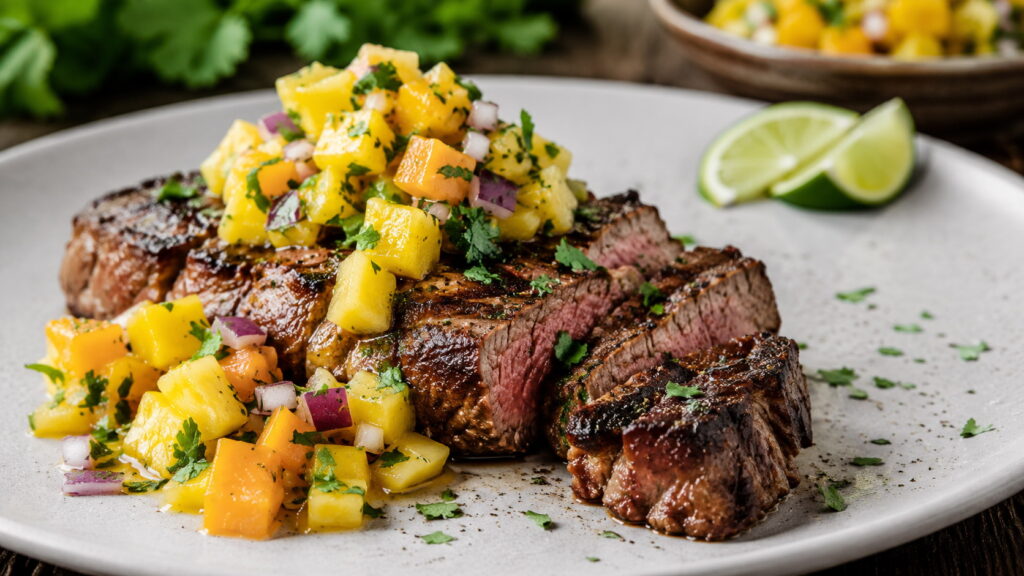
A pan seared tenderloin recipe paired with pineapple mango salsa delivers the perfect balance of rich, juicy beef and bright tropical freshness. This guide walks you through everything needed to cook tenderloin with a flawless crust, prepare a vibrant salsa, and plate a restaurant-quality dish at home.
Expect practical tips on ingredient selection, precise cooking techniques, doneness cues, and smart variations so your dish turns out consistently delicious—whether you’re cooking for a weeknight dinner or a special occasion.
In This Article
Why This Pan Seared Tenderloin Recipe with Pineapple Mango Salsa Works So Well
A great dish often comes down to contrast, and this recipe nails it.
Tenderloin is naturally lean, buttery, and tender. When seared correctly, it develops a deep golden crust while staying juicy inside. Pairing it with pineapple mango salsa introduces sweetness, acidity, and a hint of heat, cutting through the richness of the beef.
Here’s why this combination stands out:
- Flavor balance: savory + sweet + tangy + fresh
- Texture contrast: crisp crust vs soft fruit salsa
- Quick cooking: tenderloin cooks fast, making it ideal for efficient meals
- Versatility: works for elegant dinners or casual plating
Real cooking insight: Tenderloin lacks heavy marbling compared to ribeye, so pairing it with a bright, juicy topping prevents the dish from feeling too dense or dry.
Ingredients Breakdown for Pan Seared Tenderloin Recipe Paired with Pineapple Mango Salsa
🥩 For the Tenderloin
- 2–4 beef tenderloin steaks (filet mignon or medallions, ~1.5–2 inches thick)
- 1–2 tbsp high smoke point oil (canola, avocado, or grapeseed)
- 2 tbsp unsalted butter
- Salt (preferably kosher)
- Freshly ground black pepper
- Optional aromatics: 2 garlic cloves (crushed), fresh thyme or rosemary
Why these matter:
- High smoke point oil prevents burning during searing
- Butter + herbs enhance aroma and create a rich finish
- Thick cuts allow better control of doneness
🥭 For the Pineapple Mango Salsa
- 1 cup fresh pineapple (small diced)
- 1 ripe mango (diced)
- 2–3 tbsp finely chopped red onion
- Juice of 1 lime
- 2 tbsp chopped fresh cilantro
- Salt to taste
- Optional: minced jalapeño or chili flakes
Flavor role breakdown:
- Pineapple adds acidity and brightness
- Mango brings smooth sweetness
- Lime ties everything together
- Onion adds sharp contrast
- Chili adds subtle heat
💡 Ingredient Quality Tips
- Tenderloin selection: Look for bright red meat with minimal surface moisture. Avoid grayish tones.
- Mango ripeness: Slightly soft when pressed, with a fruity aroma.
- Pineapple readiness: Sweet smell at the base and golden color.
Choosing high-quality ingredients makes a noticeable difference because this recipe uses minimal seasoning and relies heavily on natural flavors.
Prepping Like a Pro: Setting Up for Perfect Pan Seared Tenderloin
Proper preparation determines whether your tenderloin develops a crust or just steams.
Bring the Meat to Room Temperature
Remove the tenderloin from the fridge 30–40 minutes before cooking.
Cold meat lowers the pan temperature and prevents proper searing.
Pat the Surface Completely Dry
Use paper towels to remove moisture.
Dry surface = better browning and crust formation.
Season at the Right Time
- Salt just before cooking for a crisp crust
- Add pepper right before searing to prevent burning
Prep the Salsa Ahead
Combine all salsa ingredients and let it sit for 10–15 minutes.
This resting time allows flavors to meld and intensify.
Equipment You’ll Need
- Heavy skillet (cast iron preferred)
- Tongs
- Spoon for basting
- Cutting board
- Sharp knife
For safe internal temperatures and doneness guidance, refer to this trusted resource from the USDA:
Safe Minimum Internal Temperatures
Pro tip: Preheat your pan for at least 3–5 minutes before adding oil. A properly heated pan is essential for achieving that signature golden crust.
How to Cook the Perfect Pan Seared Tenderloin (Step-by-Step)
Cooking tenderloin in a pan is all about heat control, timing, and restraint. Follow these steps for a beautifully seared crust and a juicy center every time.
🔥 Step-by-Step Instructions
- Preheat the pan properly
Place a heavy skillet (preferably cast iron) over medium-high heat for 3–5 minutes.
The pan is ready when a drop of water sizzles instantly. - Add oil, then place the tenderloin
Add 1–2 tablespoons of high smoke point oil.
Carefully lay the steaks away from you to avoid splatter. - Sear without moving
Let the meat sear undisturbed for 2–3 minutes.
Tip: Movement prevents crust formation—leave it alone. - Flip once and repeat
Turn the steak using tongs and sear the other side for another 2–3 minutes. - Add butter and aromatics
Lower heat slightly, then add butter, garlic, and herbs.
Tilt the pan and baste continuously for 1–2 minutes. - Check doneness with temperature or touch
| Doneness | Internal Temp | Feel |
| Rare | 50°C / 122°F | Very soft |
| Medium-rare | 54°C / 130°F | Soft with slight resistance |
| Medium | 60°C / 140°F | Firm but springy |
| Well-done | 70°C / 160°F | Firm |
Best result: Medium-rare to medium for tenderloin.- Rest before slicing
Transfer to a plate and rest for 5–10 minutes.
This allows juices to redistribute instead of spilling out.
⏱️ Quick Cooking Timeline
- Prep time: 10 minutes
- Cook time: 6–8 minutes
- Rest time: 5–10 minutes
- Total time: ~25 minutes
Key success cue: A properly seared tenderloin will release easily from the pan when ready to flip. If it sticks, give it more time.
How to Make Fresh Pineapple Mango Salsa That Elevates the Dish
This pineapple mango salsa isn’t just a topping—it’s what transforms the dish into something vibrant and memorable.
🥭 Step-by-Step Salsa Preparation
- Dice fruits evenly
Cut pineapple and mango into small, uniform cubes for balanced texture. - Combine core ingredients
In a bowl, mix:- Pineapple
- Mango
- Red onion
- Cilantro
- Add acidity and seasoning
Squeeze fresh lime juice and add a pinch of salt.
Taste and adjust—this step defines the balance. - Optional heat layer
Add finely chopped jalapeño or chili flakes if desired. - Let it rest
Allow the salsa to sit for 10–15 minutes before serving.
This enhances flavor integration.
⚖️ Flavor Balancing Tips
- Too sweet? Add more lime juice or a pinch of salt
- Too acidic? Add extra mango to soften the edge
- Too mild? Introduce chili or more onion
Texture tip: Avoid overmixing—gentle tossing keeps the fruit intact and visually appealing.
Plating the Pan Seared Tenderloin Recipe with Pineapple Mango Salsa
Presentation plays a big role in how this dish is experienced. Simple adjustments can make it look restaurant-quality.
🔪 Slice or Serve Whole?
- Whole steaks: Best for elegant plating
- Sliced medallions: Ideal for showcasing doneness and easier serving
Slice against the grain for maximum tenderness.
🍽️ Salsa Placement Styles
- Top layering: Spoon salsa directly over the steak for bold presentation
- Side placement: Keeps crust crisp and gives a cleaner look
- Half-and-half: Combines both visual appeal and texture control
🌿 Garnishing Ideas
- Fresh cilantro leaves
- Lime zest or wedge
- Light drizzle of pan juices
🎯 Restaurant-Style Plating Tips
- Use a white or neutral plate for contrast
- Keep portions centered and uncluttered
- Add height by stacking slightly or layering elements
Final touch: Spoon a little of the warm butter from the pan over the steak just before serving for added richness and shine.
Expert Tips for the Best Pan Seared Tenderloin Every Time
Great technique turns a good cut into an unforgettable dish. These practical tips come from real kitchen experience and will help you get consistent results.
🔥 Master the Heat and Timing
- Start with high heat, then adjust: High heat builds the crust, but slightly lowering it during butter basting prevents burning.
- Use visual cues: A deep golden-brown crust signals proper searing—not black or pale.
- Flip only once: Constant flipping interrupts crust development.
🧈 Use Butter the Right Way
- Add butter after the initial sear, not at the beginning.
- Tilt the pan and spoon the melted butter over the meat for even flavor distribution.
- Pro tip: Butter browns quickly—watch for nutty aroma, not burnt smell.
🥩 Thickness Matters
- Thicker cuts (1.5–2 inches) cook more evenly and are easier to control.
- Thin cuts overcook fast and won’t develop the same crust-to-juiciness ratio.
🌡️ Don’t Guess Doneness
- Use a thermometer if possible.
- If cooking by feel, press the center lightly—springy but soft indicates medium-rare.
🧂 Season with Intention
- Salt enhances flavor and helps form a crust.
- Avoid over-seasoning: Tenderloin has a delicate, naturally rich taste.
Common Mistakes to Avoid When Making Pan Seared Tenderloin with Fruit Salsa
Avoiding these mistakes can instantly improve your results.
❌ Cooking Mistakes That Ruin Texture
| Mistake | What Happens | How to Fix It |
| Cooking straight from fridge | Uneven cooking, gray exterior | Let meat rest at room temp first |
| Overcrowding the pan | Steaming instead of searing | Cook in batches if needed |
| Moving meat too soon | No crust formation | Wait until it releases naturally |
| Skipping resting time | Juices run out, dry meat | Rest 5–10 minutes |
❌ Salsa Mistakes That Affect Flavor
- Using unripe fruit: Results in bland or sour taste
- Too much lime juice: Overpowers the natural sweetness
- Cutting uneven pieces: Leads to inconsistent texture
- Overmixing: Turns salsa mushy
⚠️ Balance Is Everything
The salsa should enhance, not dominate. If the fruit flavor overwhelms the beef, reduce the portion or add more acidity to balance.
Easy Variations of Pan Seared Tenderloin Recipe Paired with Pineapple Mango Salsa
This recipe is flexible and easy to adapt based on preferences or available ingredients.
🔄 Protein Swaps
- Pork tenderloin: Slightly sweeter flavor, pairs beautifully with fruit salsa
- Chicken breast or thighs: Lighter option, reduce cooking time accordingly
- Salmon: Rich and fatty, works well with tropical flavors
🌶️ Flavor Variations for the Salsa
- Add avocado for a creamy texture
- Include cucumber for extra freshness
- Mix in mint or basil for a different herbal note
- Increase chili for a spicy tropical twist
🔥 Cooking Method Alternatives
- Grilled tenderloin: Adds smoky flavor, perfect for outdoor cooking
- Oven-finished method: Sear first, then finish in oven at 200°C (400°F)
- Reverse sear: Cook gently first, then sear at the end for precision
🍽️ Low-Carb or Light Adjustments
- Serve over greens instead of grains
- Reduce butter slightly for a lighter version
- Add extra citrus to brighten flavors without extra calories
Pro insight: The sweet-acidic profile of pineapple mango salsa works with many proteins, making this a great base recipe to experiment with.
What to Serve with Pan Seared Tenderloin and Pineapple Mango Salsa
A well-chosen side can elevate this pan seared tenderloin recipe paired with pineapple mango salsa into a complete, balanced meal. Since the dish already delivers richness and brightness, aim for sides that complement without overpowering.
🍚 Light and Fluffy Bases
- Jasmine rice: Absorbs juices and balances bold flavors
- Coconut rice: Adds subtle sweetness that echoes the salsa
- Quinoa or couscous: Nutty, light, and quick to prepare
🥦 Vegetable Sides That Add Depth
- Roasted asparagus or green beans
- Grilled corn with a squeeze of lime
- Sautéed spinach with garlic
🥗 Fresh Salads for Contrast
- Mixed greens with citrus vinaigrette
- Cucumber salad for cooling freshness
- Arugula salad with shaved parmesan
🍷 Beverage Pairings
- Red wine: Pinot Noir or Merlot for a softer tannin profile
- White wine: Sauvignon Blanc complements the salsa acidity
- Non-alcoholic: Sparkling water with lime or iced herbal tea
Serving tip: Keep sides simple so the tenderloin and salsa remain the star.
Make-Ahead, Storage, and Reheating Tips
Planning ahead makes this recipe even more convenient without sacrificing quality.
🕒 Make-Ahead Tips
- Salsa can be prepared up to 24 hours in advance
- Store it in an airtight container in the fridge
- Stir and adjust seasoning before serving
🧊 Storage Guidelines
- Cooked tenderloin: refrigerate for up to 3 days
- Salsa: best within 1–2 days for freshness
- Store separately to maintain texture
🔥 Reheating Without Drying Out
- Reheat tenderloin gently in a pan over low heat with a bit of butter
- Avoid microwave if possible—it can overcook quickly
- Add a splash of broth or water to retain moisture
❄️ Freezing Notes
- Tenderloin can be frozen (wrapped tightly) for up to 2 months
- Salsa is not freezer-friendly due to texture changes
Pro tip: Slice leftover tenderloin thinly and use it for salads or wraps the next day.
Nutrition Snapshot (Per Serving Approximation)
| Nutrient | Amount |
| Calories | 420–500 kcal |
| Protein | 30–35 g |
| Fat | 22–28 g |
| Carbohydrates | 18–22 g |
| Fiber | 2–4 g |
Why it works nutritionally:
- Tenderloin provides high-quality protein and iron
- Mango and pineapple contribute vitamin C and antioxidants
- Balanced macros make it suitable for many diets
Frequently Asked Questions About Pan Seared Tenderloin Recipe Paired with Pineapple Mango Salsa
How long should I sear tenderloin for the best results?
Sear each side for 2–3 minutes over medium-high heat, then baste with butter. Total cook time is usually 6–8 minutes depending on thickness.
What is the best pan for pan seared tenderloin?
A cast iron skillet works best because it retains heat well and creates an even crust.
Can I use frozen fruit for the pineapple mango salsa?
Fresh fruit is strongly recommended. Frozen fruit tends to release excess moisture and affects texture.
How do I know when tenderloin is done without a thermometer?
Press the center lightly. Medium-rare feels soft with slight resistance. Over time, this method becomes more intuitive.
Can I make this recipe spicy or milder?
Yes. Add jalapeño or chili flakes for heat, or skip them entirely for a mild, family-friendly version.
Can I prepare the tenderloin ahead of time?
It’s best cooked fresh. You can season it in advance, but cook just before serving for optimal texture.
This pan seared tenderloin recipe paired with pineapple mango salsa proves that a gourmet-quality meal doesn’t require complicated techniques—just the right balance of heat, timing, and fresh ingredients. Try it for your next dinner, experiment with the variations, and make it your own.
