
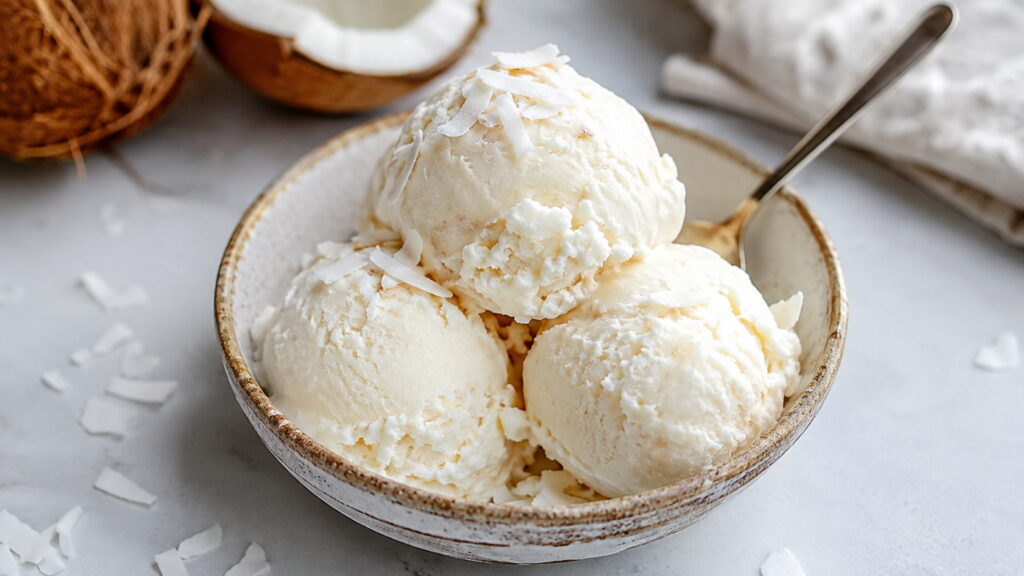
Craving a tropical dessert with an irresistibly smooth texture? This creamy coconut a letter ice cream recipe delivers rich coconut flavor, a silky consistency, and a refreshing finish without requiring complicated ingredients. Full-fat coconut products do most of the heavy lifting, while careful chilling and churning help create the creamy texture homemade ice cream lovers want.
The guide below walks through the ingredients, explains why each one matters, and shows how to prepare the coconut base for the best possible frozen texture. You’ll also find practical ingredient swaps and tips for avoiding an icy or overly hard result.
In This Article
What Makes Creamy Coconut A Letter Ice Cream So Irresistible?
Coconut ice cream has a naturally luxurious character. Full-fat coconut milk or coconut cream provides plenty of richness, while sugar keeps the frozen dessert pleasantly scoopable and balances the concentrated coconut flavor.
The best creamy coconut a letter ice cream recipe should taste distinctly coconutty without becoming heavy or greasy. A small amount of vanilla can round out the flavor, while a pinch of salt helps sharpen the sweetness and brings more depth to the coconut.
The secret is the fat-to-liquid balance
Ice cream texture depends heavily on the amount of fat, water, and sugar in the base. Coconut cream contains considerably more coconut fat than a thin coconut beverage, giving the finished dessert a denser and creamier mouthfeel.
Choose full-fat coconut milk or coconut cream whenever possible. Reduced-fat versions contain more water, which can encourage larger ice crystals during freezing.
Sugar has another important job beyond sweetness. Dissolved sugar lowers the freezing point of the mixture, helping prevent the ice cream from becoming rock-hard.
What the finished ice cream should feel like
Properly prepared coconut ice cream should have:
- A smooth, creamy consistency
- Strong but clean coconut flavor
- Fine ice crystals rather than a grainy texture
- Enough firmness to hold a scoop
- A texture that softens after a few minutes at room temperature
Freshly churned ice cream will usually be softer than store-bought ice cream. A few hours in the freezer gives the dessert enough structure for neat scoops while preserving a pleasant creamy texture.
The Coconut Ingredients That Create a Rich, Creamy Scoop
Ingredient quality matters more than a long ingredient list. Coconut flavor becomes especially noticeable in frozen desserts because cold temperatures mute some flavors, so choosing concentrated coconut ingredients gives the finished ice cream much more character.
Full-fat coconut milk or coconut cream
Full-fat coconut milk works well for a balanced coconut flavor and creamy body. Coconut cream provides an even richer result because it contains more coconut solids and fat.
Avoid cartons of coconut beverage intended primarily for drinking. Such products are usually much thinner and can leave homemade ice cream icy.
If using canned coconut milk, shake the can well before opening unless the recipe specifically calls for separating the cream from the liquid. Coconut solids can settle during storage.
Granulated sugar
Sugar sweetens the base while also improving the frozen texture. Too little sugar can produce a hard, brittle dessert, while excessive sugar can make the ice cream overly soft.
Regular granulated sugar is a straightforward choice. Fine sugar dissolves especially easily, reducing the chance of undissolved crystals in the mixture.
Vanilla extract
Vanilla does not need to dominate the recipe. A small amount simply rounds out the coconut flavor and adds subtle aromatic depth.
Pure vanilla extract works beautifully, although vanilla bean paste can provide a slightly more pronounced vanilla character.
Fine salt
A tiny pinch of salt can make a surprisingly noticeable difference. Salt helps balance the sweetness and makes the coconut taste more defined rather than simply sugary.
Do not skip salt entirely if your coconut base tastes flat after mixing. A very small amount is usually enough.
Optional coconut additions
Extra coconut can intensify the tropical character, but the form matters.
- Unsweetened shredded coconut: Adds chew and noticeable coconut texture.
- Toasted coconut: Provides deeper, nutty notes and a pleasant contrast.
- Coconut extract: Useful when a stronger coconut aroma is desired.
- Fresh coconut: Delicious when available, although excess moisture can affect the final texture.
Toasted coconut is particularly useful as a topping because it adds flavor without introducing much additional liquid to the ice cream base.
Creamy Coconut A Letter Ice Cream Recipe Ingredients and Measurements
The following ingredient proportions are designed to produce a rich coconut ice cream base with a smooth, scoopable texture. The recipe can be prepared with an ice cream maker, followed by a short firming period in the freezer.
Ingredients
| Ingredient | Amount | Purpose |
| Full-fat coconut milk | 1 can, about 13.5 oz (400 ml) | Main coconut flavor and liquid |
| Coconut cream | 1 cup (240 ml) | Adds richness and creamy body |
| Granulated sugar | ¾ cup (150 g) | Sweetness and softer frozen texture |
| Vanilla extract | 1 teaspoon | Rounds out the flavor |
| Fine salt | ⅛ teaspoon | Balances sweetness |
| Unsweetened shredded coconut | ½ cup (40 g), optional | Adds extra coconut texture |
Ingredient notes
Use full-fat coconut products. The higher fat content gives the base a richer mouthfeel and helps reduce the perception of iciness.
Coconut cream can vary significantly between brands. Some products are thick and dense, while others are closer to concentrated coconut milk. Check the label and avoid products containing a large amount of added water when a particularly rich result is desired.
Sugar can be adjusted slightly according to taste, but reducing the quantity substantially may make the frozen ice cream harder and less creamy.
Can you substitute the ingredients?
Yes, with a few considerations.
- Coconut milk for coconut cream: Possible, but the finished ice cream will generally be less rich. Increasing the coconut milk alone does not necessarily reproduce the same texture.
- Coconut sugar for granulated sugar: Works, although the ice cream will have a darker color and a deeper caramel-like flavor.
- Vanilla bean paste for vanilla extract: Use approximately the same amount for a stronger vanilla appearance and flavor.
- Dairy milk: Not recommended if the goal is a distinctly coconut-based, dairy-free ice cream, although dairy can be incorporated into a different coconut ice cream formula.
- Sweetened shredded coconut: Reduce the added sugar slightly if using a heavily sweetened coconut product.
Avoid making major liquid substitutions without adjusting the rest of the formula. Extra water is one of the easiest ways to turn a creamy coconut ice cream base into an icy one.
How to Make Creamy Coconut A Letter Ice Cream Step by Step
Making homemade coconut ice cream is mostly about controlling temperature, dissolving the sugar completely, and giving the base enough time to chill before churning. Rushing any of those stages can leave the finished dessert less creamy than expected.
Prepare the coconut ice cream base
- Combine the coconut ingredients.
Pour the full-fat coconut milk and coconut cream into a medium saucepan. Add the granulated sugar and salt. - Warm gently.
Place the saucepan over low to medium-low heat. Stir frequently until the sugar dissolves and the mixture becomes evenly combined. The mixture should become warm but should not boil. - Add the vanilla.
Remove the saucepan from the heat and stir in the vanilla extract. Add unsweetened shredded coconut at this stage if you want the coconut flavor distributed throughout the ice cream. - Taste before chilling.
Carefully taste a small spoonful once the mixture has cooled slightly. The base should taste a little sweeter and more strongly flavored than you expect because freezing dulls sweetness and aroma. - Cool the mixture quickly.
Transfer the coconut base to a clean bowl or container. Cover the surface and refrigerate until thoroughly chilled, preferably for at least 4 hours or overnight.
Churn the chilled coconut base
Once the base is completely cold, pour it into your prepared ice cream maker. Follow the manufacturer’s instructions for churning.
The ice cream is ready to transfer when the mixture resembles thick soft serve and the churn begins to slow. Avoid continuing far beyond the manufacturer’s recommended churning time because excessive churning can make the texture dense rather than silky.
Finish and freeze
Transfer the freshly churned ice cream to a shallow, freezer-safe container. Smooth the surface and press a piece of parchment or freezer paper directly against the top if desired.
Cover tightly and freeze for approximately 3–5 hours, or until firm enough to scoop.
Allow the container to sit at room temperature for 5–10 minutes before serving if the ice cream becomes very firm.
No-churn option
No ice cream maker? A simple freezer method can still work, although the texture will generally be less airy and may contain more noticeable ice crystals.
Pour the thoroughly chilled coconut mixture into a shallow metal pan and freeze. Stir vigorously every 30–45 minutes during the first few hours, scraping frozen portions from the edges toward the center. Continue until the mixture becomes thick and mostly frozen, then allow it to freeze completely.
A shallow container is important for the no-churn method because a thinner layer freezes more evenly and quickly.
The Key to Extra-Creamy Coconut Ice Cream Texture
Creaminess does not come from one ingredient alone. The final texture develops from the interaction between coconut fat, sugar, water, temperature, and churning.
Start with enough coconut fat
Coconut fat gives the ice cream its rich body. Full-fat coconut milk combined with coconut cream creates a much more luxurious base than low-fat coconut milk.
Avoid replacing the entire coconut cream portion with a thin coconut beverage. Extra water can freeze into larger crystals, producing a hard or crunchy texture.
Chill the base thoroughly
A properly chilled base churns more efficiently. Cold mixture enters the ice cream maker ready to freeze, allowing the machine to create smaller ice crystals while incorporating air.
For the smoothest result, refrigerate the base for at least 4 hours, with overnight chilling being even more convenient.
Don’t underestimate sugar
Sugar affects both flavor and texture. Dissolved sugar helps keep some of the water from freezing completely, which makes the finished ice cream easier to scoop.
Reducing the sugar dramatically may sound appealing if you prefer less sweetness, but the result can become noticeably harder after several hours in the freezer.
Use the right freezer container
A shallow, airtight container is ideal. A wide container gives the ice cream more surface area, allowing it to freeze relatively quickly.
Slow freezing encourages larger ice crystals. Fast freezing generally produces a finer texture.
Let the ice cream soften naturally
Freshly frozen coconut ice cream can become quite firm, especially after overnight storage. Give the container several minutes on the counter before scooping.
Avoid repeatedly microwaving the entire container. Frequent temperature fluctuations encourage melting and refreezing, which can damage the creamy texture.
Creamy Coconut A Letter Ice Cream Recipe: Common Mistakes to Avoid
Small preparation mistakes can make a major difference in homemade ice cream. Fortunately, most problems are easy to prevent.
Using reduced-fat coconut milk
Reduced-fat coconut milk contains more water and less coconut fat. The finished dessert may freeze harder and develop a more icy texture.
Best fix: Choose full-fat canned coconut milk and a rich coconut cream.
Boiling the coconut base
High heat is unnecessary. Boiling can alter the texture of the coconut mixture and create avoidable problems during preparation.
Best fix: Warm the base gently until the sugar has dissolved, then remove it from the heat.
Churning a warm mixture
Warm ice cream base places unnecessary strain on the ice cream maker and can result in larger ice crystals.
Best fix: Chill the base thoroughly before churning. An overnight rest in the refrigerator works particularly well.
Adding too many wet mix-ins
Fresh fruit, syrups, or watery coconut additions can introduce extra moisture. That moisture eventually freezes and can make the ice cream harder or icier.
Best fix: Keep additions modest and choose concentrated ingredients when possible. Toasted coconut is especially convenient because it contributes strong flavor without adding much water.
Freezing in a loosely covered container
Air exposure causes freezer burn and allows ice crystals to develop on the surface.
Best fix: Use a freezer-safe airtight container and press parchment or freezer paper directly over the ice cream surface before sealing when practical.
Serving immediately after deep freezing
Very cold ice cream can seem harder and less flavorful than intended.
Best fix: Let the container rest at room temperature for about 5–10 minutes before scooping. The brief tempering period improves both scoopability and coconut aroma.
Quick troubleshooting guide
| Problem | Likely cause | Practical solution |
| Ice cream is very icy | Too much water or insufficient fat | Use full-fat coconut products and avoid watery additions |
| Ice cream is rock-hard | Too little sugar, long freezing, or low fat | Allow 5–10 minutes to soften before scooping |
| Coconut flavor seems weak | Low-fat or diluted coconut product | Use coconut cream and consider toasted coconut |
| Texture is greasy | Excessive coconut fat or poor ingredient balance | Keep the proportions balanced rather than adding extra coconut cream |
| Ice cream melts too quickly | Base contains too much liquid or was under-frozen | Chill thoroughly and freeze until properly firm |
| Ice crystals form on top | Poor sealing or repeated thawing | Use an airtight container and minimize temperature changes |
Easy Variations for Coconut Ice Cream Lovers
Once you have the basic creamy coconut a letter ice cream recipe down, a few carefully chosen additions can completely change the dessert without sacrificing its smooth texture. Keep extra liquids to a minimum so the frozen base remains creamy rather than icy.
Toasted Coconut Ice Cream
Toasted coconut brings a deeper, nuttier flavor that pairs beautifully with the naturally sweet coconut base.
Spread unsweetened shredded coconut over a baking sheet and toast at 325°F (165°C) for about 5–8 minutes, stirring once or twice. Watch closely because coconut can go from golden to burnt quickly.
Cool the toasted coconut completely before mixing some into the churned ice cream or sprinkling it over individual servings.
Coconut-Lime Ice Cream
Lime adds bright acidity that cuts through the richness of coconut.
Add 1–2 teaspoons of finely grated lime zest to the chilled base. A small amount of fresh lime juice can also be used, but keep the quantity modest because additional liquid can affect freezing.
Lime zest is the better choice when you want intense citrus flavor without adding much extra water.
Chocolate Coconut Ice Cream
Chocolate and coconut create a naturally rich combination.
Add 2–3 tablespoons of unsweetened cocoa powder to the coconut base while warming it, whisking thoroughly to eliminate lumps. For extra texture, fold a small amount of finely chopped dark chocolate into the ice cream after churning.
Choose chocolate with a strong cocoa flavor so the coconut remains noticeable rather than disappearing completely.
Tropical Coconut Fruit Ice Cream
Mango, pineapple, or passion fruit can give the dessert a more pronounced tropical character.
Fresh fruit contains considerable water, so prepare fruit additions carefully. Puree ripe fruit and reduce the quantity before incorporating it, or use a concentrated fruit preparation.
Adding too much fresh fruit can create hard ice crystals, particularly after overnight freezing.
Coconut Almond Variation
Toasted sliced almonds add crunch and a gentle nutty flavor. Fold the cooled toasted almonds into the finished ice cream just before transferring the mixture to the freezer.
Keep nut pieces relatively small so they remain easy to scoop once frozen.
How to Serve Creamy Coconut A Letter Ice Cream
Great coconut ice cream does not need an elaborate presentation. A few contrasting toppings can highlight the creamy texture and tropical flavor without overwhelming the dessert.
Simple topping ideas
Try serving each scoop with:
- Toasted coconut flakes
- Fresh mango cubes
- Thinly sliced pineapple
- Lime zest
- Dark chocolate shavings
- Chopped toasted almonds
- Crushed coconut cookies
- A light drizzle of chocolate sauce
Add crunchy toppings immediately before serving rather than mixing all of them into the storage container. Keeping toppings separate preserves their texture.
Serve in bowls or cones
A chilled dessert bowl works especially well when you want the ice cream to remain firm longer. Waffle cones add a crisp contrast to the soft coconut texture and make the dessert feel more like a classic ice cream-shop treat.
Let the ice cream soften for several minutes before scooping. A warm, dry ice cream scoop can also help create smooth, rounded portions.
Pair with other desserts
Coconut ice cream makes a particularly good finishing touch alongside desserts with warm or caramelized flavors.
Consider pairing a scoop with:
- Warm banana bread
- Grilled pineapple
- Chocolate brownies
- Coconut cake
- Fresh tropical fruit
- Warm fruit crumble
The contrast between a warm dessert and cold coconut ice cream creates a satisfying combination of temperatures and textures.
Beverage pairings
Coffee provides a roasted contrast to the sweet coconut flavor. A cup of strong brewed coffee or espresso works especially well when the ice cream is served as an after-dinner dessert.
Iced coffee also pairs nicely during warmer weather, especially with toasted coconut or chocolate variations.
How to Store Homemade Creamy Coconut Ice Cream
Proper storage is essential for keeping homemade creamy coconut ice cream smooth after freezing. Homemade desserts generally lack some of the stabilizers found in commercial ice cream, so exposure to air and repeated temperature changes can affect quality.
Choose the right container
Use a shallow, freezer-safe airtight container with enough room for the ice cream but not excessive empty space.
Pressing parchment or freezer paper directly against the surface can provide another layer of protection from air.
Keep the container tightly sealed every time you return it to the freezer.
How long does coconut ice cream last?
For the best texture and flavor, enjoy homemade coconut ice cream within approximately 1–2 weeks.
The dessert may remain safe for longer when continuously frozen and properly stored, but quality gradually declines. Freezer odors can also transfer into the ice cream if the container is poorly sealed.
Prevent freezer burn and ice crystals
Several simple habits help preserve the creamy texture:
- Store the ice cream toward the back of the freezer where temperatures are more stable.
- Avoid leaving the container on the counter for extended periods.
- Close the lid immediately after scooping.
- Use a container with a secure seal.
- Avoid repeatedly melting and refreezing the ice cream.
Should coconut ice cream be refrigerated?
No. The finished ice cream should remain frozen, not refrigerated. Refrigerating the entire container will cause the dessert to melt, and refreezing afterward can create a coarse texture.
Allow only the portion you plan to eat to soften at room temperature.
Can you re-freeze melted coconut ice cream?
A completely melted container can usually be frozen again from a food-safety perspective if proper temperature control has been maintained, but the texture will suffer. Melted and refrozen ice cream often develops larger ice crystals and loses the smooth consistency achieved during the original churning process.
For the best results, scoop only what you need and return the remaining ice cream to the freezer promptly.
Creamy Coconut A Letter Ice Cream Recipe FAQ
Can I make creamy coconut A letter ice cream without an ice cream maker?
Yes. Use the no-churn method described earlier by freezing the chilled coconut mixture in a shallow container and stirring vigorously every 30–45 minutes during the early freezing stage. The texture may be slightly denser than machine-churned ice cream, but the method works well when an ice cream maker is unavailable.
Can I use coconut milk instead of coconut cream?
Yes, although the finished ice cream will generally be less rich. Coconut cream contains more coconut solids and fat, which helps create the creamy texture associated with a rich coconut ice cream recipe. Replacing all of the coconut cream with thin coconut milk can introduce too much water.
Why did my coconut ice cream become icy?
Excess water is one of the most common reasons. Low-fat coconut milk, watery fruit, insufficient sugar, inadequate chilling, and slow freezing can all contribute to larger ice crystals. Full-fat coconut products, proper chilling, and an airtight freezer container help minimize the problem.
How can I make coconut ice cream creamier?
Use full-fat coconut milk together with coconut cream, dissolve the sugar completely, chill the base thoroughly, and churn it while very cold. Freezing the freshly churned ice cream in a shallow airtight container also helps preserve a fine texture.
Can I reduce the sugar in the recipe?
You can reduce the sugar slightly, but a substantial reduction can make the ice cream harder and less scoopable. Sugar affects freezing behavior as well as sweetness, so changing the quantity can alter the texture.
How long should homemade coconut ice cream freeze?
Freshly churned ice cream usually needs around 3–5 hours to become firm enough for scooping. Overnight freezing produces a firmer texture. Allow approximately 5–10 minutes at room temperature before serving if the ice cream feels too hard.
Can I add shredded coconut to the ice cream?
Yes. Unsweetened shredded coconut adds extra coconut flavor and a pleasant chewy texture. Toasting the coconut first creates deeper, nuttier notes. Cool toasted coconut completely before adding it to the frozen dessert.
Can I add fresh fruit to coconut ice cream?
Yes, but use fruit sparingly. Mango, pineapple, passion fruit, and other tropical fruits contain significant water, which can increase ice formation. Concentrated fruit preparations or small amounts of fruit puree generally work better than large quantities of watery fresh fruit.
How should I store homemade coconut ice cream?
Keep the ice cream in a tightly sealed, freezer-safe container. Press parchment or freezer paper against the surface when practical to limit air exposure. For the best quality, enjoy homemade coconut ice cream within about 1–2 weeks.
Can I prepare the coconut ice cream base ahead of time?
Yes. Preparing the base the day before is actually helpful. Refrigerate the covered mixture for up to overnight, then churn once thoroughly chilled. A cold base freezes more efficiently and can produce a smoother finished texture.
Creamy Coconut A Letter Ice Cream Recipe at a Glance
| Recipe detail | Recommendation |
| Prep time | 15 minutes |
| Cooking time | About 5 minutes |
| Chilling time | At least 4 hours |
| Churning time | Usually 20–30 minutes, depending on machine |
| Freezing time | 3–5 hours |
| Total time | About 7–9 hours, including chilling and firming |
| Yield | Approximately 1½ quarts |
| Difficulty | Easy |
| Main equipment | Saucepan, mixing bowl, whisk, ice cream maker, freezer-safe container |
| Best coconut products | Full-fat coconut milk and coconut cream |
| Best storage period | About 1–2 weeks for peak quality |
The most important success points
Use full-fat coconut products. More coconut fat creates a richer base and helps deliver the creamy mouthfeel expected from homemade coconut ice cream.
Chill before churning. A thoroughly cold base freezes more efficiently and encourages smaller ice crystals.
Don’t rush the final freeze. Freshly churned ice cream is soft; several hours in the freezer gives the dessert enough structure for clean scoops.
Protect the surface from air. An airtight container helps prevent freezer burn and unwanted ice crystals.
Scoop Into Something Special
A successful creamy coconut A Letter ice cream recipe comes down to a few fundamentals: rich full-fat coconut ingredients, balanced sugar, thorough chilling, efficient churning, and careful freezer storage. Once those details are handled, the recipe becomes an easy foundation for toasted coconut, chocolate, lime, tropical fruit, and other variations.
Serve each scoop with toasted coconut, fresh fruit, chocolate shavings, or simply enjoy the clean coconut flavor on its own. Save this creamy coconut ice cream recipe for your next warm-weather dessert, make a batch ahead, and experiment with your favorite tropical toppings.
