
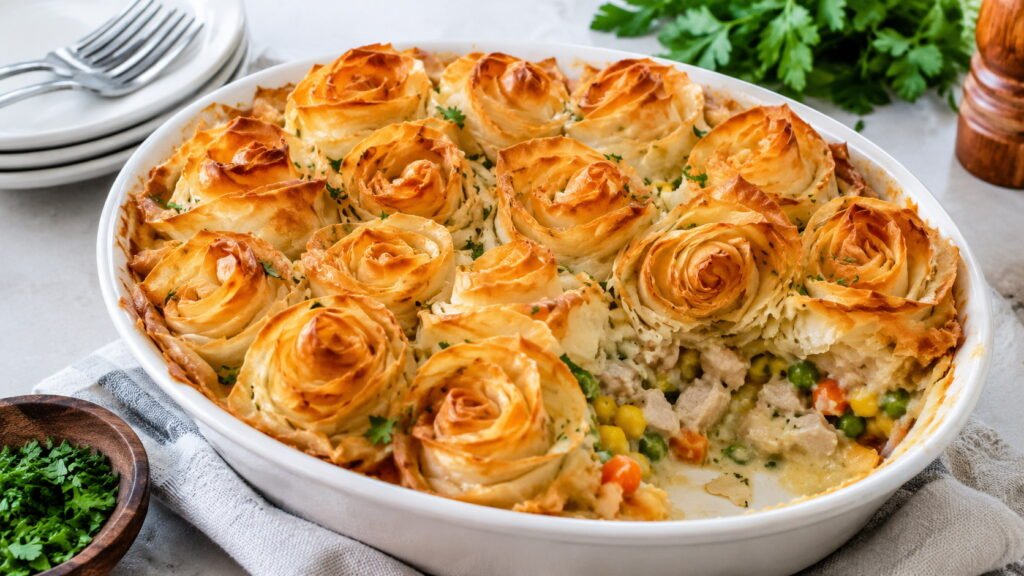
Merry Makes It Easy chicken pot pie with phyllo rose topping puts an elegant twist on classic comfort food, combining tender chicken, colorful vegetables, and creamy gravy beneath a beautiful layer of golden, flaky pastry roses. The result is a cozy, satisfying main dish that looks impressive enough for guests while still delivering the familiar flavors of homemade chicken pot pie.
The secret to making a successful chicken pot pie with phyllo dough lies in balancing a thick, flavorful filling with delicate pastry that bakes into crisp, golden layers. With the right preparation techniques, you can create an attractive rose-shaped topping without making the cooking process unnecessarily complicated.
This guide covers the essential ingredients, how to prepare a creamy chicken filling, techniques for shaping phyllo roses, and practical baking tips for the best texture. You’ll also find helpful substitutions, serving suggestions, storage advice, and answers to common questions about preparing this comforting dish.
In This Article
What Makes Merry Makes It Easy Chicken Pot Pie with Phyllo Rose Topping Special?
Traditional chicken pot pie usually features a pastry crust covering a rich mixture of chicken, vegetables, and creamy sauce. The phyllo rose version offers a lighter, more delicate alternative while preserving the hearty filling that makes the dish so comforting.
Instead of covering the entire pie with a thick layer of dough, thin phyllo sheets are shaped into decorative roses and arranged over the filling. Each layer becomes crisp during baking, creating a beautiful contrast with the soft chicken and vegetables underneath.
A Beautiful Twist on Classic Comfort Food
The rose-shaped topping transforms an everyday family dinner into a dish that feels special. Its golden, layered appearance makes the pie particularly appealing for holiday meals, dinner parties, Sunday suppers, or occasions when you want homemade food to look a little more elegant.
Phyllo pastry also provides a different eating experience from traditional pie crust. Its thin layers create a delicate crunch, while the creamy filling supplies richness and moisture.
The best part is that the filling doesn’t need complicated ingredients. Cooked chicken, onions, carrots, peas, broth, milk, butter, and flour form the foundation of a delicious homemade pot pie.
Why Phyllo Dough Works So Well
Phyllo dough consists of extremely thin sheets of pastry that become crisp when brushed lightly with butter or oil and baked. Unlike puff pastry, which rises into airy layers through its fat-and-dough structure, phyllo relies on its individual sheets for a delicate, shattering texture.
Several qualities make phyllo especially suitable for chicken pot pie:
- Crispy texture: Thin pastry layers develop a delicate crunch when baked properly.
- Elegant presentation: Rolled and folded sheets can resemble flower petals, creating an attractive rose topping.
- Light, flaky finish: Phyllo provides a crisp contrast without the heavier texture of a thick pie crust.
- Flexible arrangement: You can place the roses close together for a fuller appearance or leave small gaps for a more rustic presentation.
Phyllo does require a little extra care because the sheets dry out quickly. Keeping the unused pastry covered and brushing the sheets gently with melted butter will make the shaping process easier.
When to Serve Chicken Pot Pie with Phyllo Roses
The combination of creamy filling and decorative pastry makes the dish versatile enough for casual and special meals alike.
Serve it for a comforting weeknight dinner, a family gathering, or a weekend meal when you have time to shape the pastry carefully. Pairing the rich pie with a crisp green salad or roasted vegetables creates a balanced plate without adding much extra preparation.
Recipe note: The method below is a practical homemade interpretation of the Merry Makes It Easy chicken pot pie with phyllo rose topping concept. Exact quantities and timing should be checked against the original recipe if you want to reproduce its specific version.
Ingredients You Need for Chicken Pot Pie with Phyllo Rose Topping
A great chicken pot pie depends on two main components: a creamy, well-seasoned filling and a crisp phyllo topping. Preparing both correctly helps the finished dish maintain its flavor, texture, and attractive appearance.
The following ingredients provide a useful starting point for a homemade version serving approximately six people.
Ingredients for the Creamy Chicken Pot Pie Filling
Estimated quantities for a standard 9-by-13-inch baking dish or similar-capacity casserole.
| Ingredient | Suggested amount | Purpose |
| Cooked chicken, shredded or diced | 3 cups | Provides tender, savory protein |
| Butter | 4 tablespoons | Adds richness and helps cook the vegetables |
| Yellow onion, diced | 1 medium | Builds the savory flavor base |
| Carrots, diced | 1 cup | Adds sweetness, color, and texture |
| Celery, diced | 2 stalks | Provides aromatic depth |
| Frozen peas | 1 cup | Adds color and mild sweetness |
| All-purpose flour | ¼ cup | Thickens the gravy |
| Chicken broth | 2 cups | Supplies savory flavor and moisture |
| Milk or half-and-half | 1 cup | Creates a creamy sauce |
| Garlic, minced | 2 cloves | Adds aromatic flavor |
| Dried thyme | ½ teaspoon | Complements the chicken and vegetables |
| Salt and black pepper | To taste | Balances and enhances the flavors |
Cooked chicken is the easiest option. Rotisserie chicken, leftover roasted chicken, or chicken prepared specifically for the recipe can all work well. Remove the skin and bones before shredding or dicing the meat.
Carrots, celery, onions, and peas create a classic pot pie flavor profile. Cut the vegetables into relatively small, uniform pieces so they cook evenly and distribute throughout the filling.
Butter and flour form the base of the thickened sauce. Cooking the flour briefly in the melted butter before adding liquid helps eliminate its raw taste and creates a smoother gravy.
Chicken broth contributes savory depth, while milk or half-and-half adds creaminess. Half-and-half creates a richer filling, but ordinary milk works well when you want a slightly lighter result.
Ingredients for the Phyllo Rose Topping
| Ingredient | Suggested amount | Purpose |
| Frozen phyllo dough | 8–12 sheets | Forms the decorative pastry roses |
| Unsalted butter, melted | 4–6 tablespoons | Helps separate layers and promotes browning |
| Fresh parsley or thyme | Optional | Adds color and a fresh herbal finish |
The amount of phyllo needed depends on the size of the sheets and the shape of the roses. Begin with eight sheets and keep additional sheets available if you want fuller flowers or more complete coverage.
Thaw frozen phyllo according to the package directions, usually in the refrigerator before use. Never try to separate frozen sheets by force, because the brittle pastry can break into small pieces.
Melt the butter and let it cool slightly before brushing. The butter should remain liquid but not be so hot that handling the delicate sheets becomes uncomfortable.
For a lighter finish, olive oil can replace butter, although the flavor and browning will differ slightly. Butter generally provides the familiar rich taste associated with traditional chicken pot pie.
Ingredient Substitutions That Still Taste Delicious
You can adjust the filling to suit what you have available without losing the essential character of the dish.
- Chicken: Replace the cooked chicken with leftover turkey for a similar savory flavor and texture.
- Vegetables: Substitute some of the peas or carrots with corn, green beans, or sautéed mushrooms.
- Milk: Use whole milk for a creamy sauce or half-and-half for additional richness. Unsweetened, unflavored plant-based milk may also work, although the sauce’s consistency can vary.
- Flour: A suitable gluten-free flour blend can thicken the sauce, but standard phyllo dough usually contains wheat. A fully gluten-free version requires an appropriate specialty pastry.
- Herbs: Replace dried thyme with a small amount of dried rosemary or poultry seasoning. Fresh parsley works well as a finishing garnish.
- Butter: Olive oil can be used for brushing phyllo if you prefer its flavor or want to avoid dairy in the topping.
Keep the vegetable quantity reasonably consistent when making substitutions. Adding too many moisture-rich ingredients without adjusting the sauce can produce a watery filling that softens the delicate pastry.
Kitchen Equipment for the Best Results
Gathering the equipment before you start makes the recipe easier to assemble.
- A large skillet or saucepan for preparing the filling
- A wooden spoon or heat-resistant spatula
- A whisk for smoothing the gravy
- A sharp knife and cutting board
- Measuring cups and spoons
- A pastry brush for applying melted butter
- A baking dish with enough room for the filling and rose topping
- A clean kitchen towel to keep unused phyllo covered
A pastry brush is particularly helpful because phyllo sheets tear easily. Use gentle strokes and distribute the butter in a thin, even layer rather than pressing hard against the pastry.
How to Make the Creamy Chicken Pot Pie Filling from Scratch
The filling is the heart of chicken pot pie with phyllo rose topping. A good version should be rich and creamy without becoming runny, with tender chicken and vegetables that retain enough texture to remain distinct.
The most important technique is making a smooth gravy before adding the cooked chicken and finishing vegetables. Once the sauce reaches the right consistency, assembling the pie becomes much easier.
Prepare the Chicken and Vegetables
If you’re using leftover chicken or rotisserie chicken, remove any skin and bones before cutting the meat into bite-sized pieces. Aim for pieces small enough to fit comfortably on a fork without shredding into a paste.
Dice the onion, carrots, and celery into similarly sized pieces. Uniform cuts help the vegetables soften at approximately the same rate, preventing some pieces from becoming mushy while others remain too firm.
Melt the butter in a large skillet over medium heat. Add the onion, carrots, and celery, stirring occasionally until the onion softens and the carrots begin to turn tender.
Add the minced garlic near the end of the vegetable-cooking stage. Garlic cooks quickly, so giving it only a short time in the pan helps prevent bitterness.
Build a Smooth, Flavorful Gravy
Sprinkle the flour over the softened vegetables and stir until the butter coats the flour evenly. Cook the mixture for about one to two minutes, stirring continuously.
The flour should look lightly moistened rather than powdery. Avoid browning it heavily, since a lighter roux preserves the creamy color expected in chicken pot pie.
Gradually pour in the chicken broth while whisking. Adding the liquid in stages helps break up lumps before they become difficult to remove.
Once the broth is incorporated, stir in the milk or half-and-half. Bring the mixture to a gentle simmer, stirring frequently until the sauce thickens.
Look for a gravy that coats the back of a spoon and slowly flows when stirred. The sauce should be thick enough to hold the chicken and vegetables together without becoming pasty.
If the filling looks too thick, add a small splash of broth. If it remains thin, simmer it for a few additional minutes before adding the chicken.
Add the Chicken, Peas, and Seasonings
Stir the cooked chicken into the thickened gravy, followed by the peas and dried thyme. Season with salt and black pepper, then taste the mixture.
The flavor should be savory and well-balanced, with enough seasoning to stand up to the delicate pastry topping. Add salt gradually, particularly if you’re using rotisserie chicken or prepared broth that may already contain sodium.
Frozen peas can go straight into the sauce without thawing. They need only enough time to heat through, so adding them toward the end helps preserve their color and texture.
Let the filling simmer gently for a few minutes, stirring occasionally. Avoid prolonged boiling, which can make the chicken dry and cause the sauce to reduce more than intended.
Check the Filling Before Assembly
Before transferring the mixture to your baking dish, evaluate its texture and moisture level.
- Too thin: Simmer gently until excess liquid evaporates and the sauce thickens.
- Too thick: Stir in a tablespoon or two of chicken broth until the consistency loosens.
- Too bland: Adjust the salt, pepper, garlic, or thyme a little at a time.
- Too salty: Add a little unsalted broth or milk if the consistency allows, rather than adding more seasoning.
Transfer the filling to the baking dish and spread it into an even layer. If the filling is very hot, handle the dish carefully and allow a brief cooling period before arranging the pastry.
A thick filling helps support the phyllo roses and reduces the amount of steam and moisture that reaches the underside of the pastry. Although the topping will naturally soften slightly where it touches the sauce, properly thickened filling helps the exposed layers bake into a crisp, golden finish.
Food-safety tip: Cooked chicken should be handled and refrigerated promptly. When reheating leftovers, the USDA recommends reaching an internal temperature of 165°F (74°C). See the USDA’s safe temperature guidance for additional information.
The Secret to Creating Beautiful Phyllo Rose Topping
The phyllo rose topping is what makes this chicken pot pie stand out from a traditional casserole. Delicate pastry sheets are layered, folded, and rolled into flower-like shapes that turn crisp and golden in the oven.
Although the finished roses look impressive, the process becomes much easier once you understand how to handle phyllo dough. The key is keeping the sheets moist enough to remain flexible while using just enough butter to create crisp, separate layers.
How to Prepare Phyllo Dough for Shaping
Frozen phyllo dough typically needs to thaw in the refrigerator before you begin. Follow the instructions on the package, since thawing recommendations can vary between brands.
Once thawed, carefully unroll the sheets on a clean, dry work surface. Cover the unused sheets with a clean kitchen towel to protect them from air exposure.
Phyllo dries quickly, and dried sheets become brittle and difficult to shape. A slightly damp towel placed over the pastry can help maintain flexibility, but avoid letting the towel become wet enough to leave the sheets sticky.
Keep a small bowl of melted butter nearby, along with a pastry brush and a sharp knife or kitchen scissors.
How to Shape Phyllo Roses
The exact folding technique may vary depending on the rose design you’re following, but a simple layered, folded, and rolled method works well for a decorative homemade topping.
- Lay out a sheet of phyllo. Place one sheet on your work surface and keep the remaining sheets covered.
- Brush lightly with melted butter. Apply a thin layer across the pastry, concentrating on even coverage rather than soaking the sheet.
- Add another layer if desired. Layering two sheets can make the rose easier to handle and create a slightly sturdier flower.
- Fold the pastry into a strip. Fold the sheet lengthwise or accordion-style, depending on the appearance you want.
- Roll the strip into a rose. Starting at one end, roll the folded pastry loosely so the layers resemble flower petals.
- Shape the petals gently. Separate the outer folds slightly to create a fuller appearance without tearing the pastry.
- Repeat with the remaining sheets. Make enough roses to cover most of the filling’s surface.
Avoid rolling the roses too tightly. Looser layers give the pastry room to expand and become crisp during baking.
How to Arrange the Roses Over the Filling
Arrange the prepared roses over the chicken filling, placing them close enough to create a decorative topping while leaving small gaps between some of the flowers.
A circular arrangement works beautifully in a round baking dish, while rows of roses create a neat appearance in a rectangular casserole. For a more natural look, alternate the sizes and angles slightly.
Brush the exposed pastry lightly with melted butter just before baking. Take care not to flood the gaps between the roses with butter, since excess fat can collect on the surface of the filling.
The most important tip: Keep the roses reasonably uniform in size. Consistent shapes make the topping look intentional and help the pastry brown more evenly.
Step-by-Step: Baking Merry Makes It Easy Chicken Pot Pie with Phyllo Rose Topping
Once the filling is prepared and the roses are shaped, assembling the pie is straightforward. The goal is to heat the filling thoroughly while allowing the delicate pastry to become crisp and golden without burning.
The following method provides a practical starting point for a homemade version of this recipe.
Estimated timing
| Preparation stage | Approximate time |
| Preparing ingredients | 15 minutes |
| Cooking the filling | 20–25 minutes |
| Shaping and assembling roses | 15–20 minutes |
| Baking | 25–35 minutes |
| Resting | 5–10 minutes |
| Total time | About 80–105 minutes |
These are estimates for the homemade method, not verified timings from the original Merry Makes It Easy recipe. Actual timing depends on the baking dish, filling temperature, and size of the phyllo roses.
Step 1: Preheat the Oven and Prepare the Filling
Preheat the oven to 375°F (190°C) as a starting point for this homemade version. Lightly grease an oven-safe baking dish if needed.
Prepare the chicken and vegetable filling using the method described earlier. Check the sauce consistency before transferring the mixture to the dish.
Spread the filling evenly so the chicken and vegetables are distributed throughout. Avoid filling the dish all the way to the rim, since bubbling gravy can spill over during baking.
Step 2: Shape the Phyllo Roses
Prepare the phyllo roses on a clean work surface while keeping unused sheets covered.
Brush the pastry lightly with melted butter and fold or roll the sheets into rose-like shapes. Arrange the completed roses on a plate or tray until you’re ready to assemble the pie.
Work at a steady pace rather than rushing. If a sheet tears slightly, you can often use the damaged piece inside a layered rose where the tear won’t be noticeable.
Step 3: Arrange the Roses on the Filling
Place the phyllo roses over the chicken filling, beginning around the outside and working toward the center if you want a balanced arrangement.
Press the base of each rose gently against the surface so it stays in position. Avoid pushing the pastry deeply into the sauce, because submerged layers will absorb moisture instead of crisping properly.
Brush the tops lightly with melted butter. If some roses appear thicker than others, spread their folds slightly so the exposed layers can brown more evenly.
Step 4: Bake Until Golden and Bubbling
Place the dish on the middle rack of the preheated oven. Bake for approximately 25–35 minutes, checking the pie toward the end of the estimated baking window.
Look for three signs of doneness:
- Golden pastry: The exposed phyllo layers should turn golden brown and appear crisp.
- Bubbling filling: The sauce should bubble gently around the edges.
- Hot center: The filling should be thoroughly heated throughout.
Because the filling is already cooked, the baking stage mainly heats the center and crisps the pastry. A cold filling will generally need more time than one that is warm when assembled.
If the roses brown too quickly before the center is hot, loosely cover the top with foil and continue baking. Avoid pressing the foil against the delicate petals.
Step 5: Rest Briefly Before Serving
Remove the baking dish from the oven and let the pie rest for about 5–10 minutes.
Resting allows the thick sauce to settle slightly, making the filling easier to serve without running across the plate. The pastry will remain crispest when served soon after baking.
Finish with a small amount of chopped parsley or thyme if desired. Serve generous portions with the phyllo roses visible on top for the best presentation.
Tips for Crispy Phyllo Roses and a Rich, Thick Filling
The contrast between crisp pastry and creamy filling is what makes this recipe successful. A few small adjustments during preparation can help prevent soggy pastry, bland gravy, and uneven browning.
Keep the Phyllo Covered While Working
Phyllo sheets lose moisture quickly when exposed to air. Dry sheets can crack when folded, making it difficult to create neat rose shapes.
Remove only the sheets you need, then cover the rest immediately. If a sheet becomes slightly dry around the edges, handle it gently rather than trying to force it into a tight roll.
Use Butter Sparingly but Evenly
Butter helps separate the layers and contributes to browning. However, brushing too much onto the pastry can make the topping greasy.
Use a light hand and make sure the exposed folds receive enough butter to encourage an even golden color. A silicone pastry brush is useful because it distributes butter without pulling at the delicate sheets.
Make Sure the Filling Is Thick Enough
Thin gravy can bubble up between the roses and soften the bottom layers of phyllo.
If your sauce looks watery, simmer it a little longer before assembling the pie. The finished filling should be creamy and spoonable, with enough body to hold the chicken and vegetables together.
Remember that the sauce may thicken slightly as the pie rests, so you don’t need to reduce it until it becomes extremely dense.
Give the Roses Room to Brown
A topping made of tightly packed, oversized roses may look attractive before baking but can remain soft in the middle.
Create distinct flower shapes with visible folds. A few small gaps between the roses allow hot air to circulate and help the exposed pastry crisp.
Watch the Final Minutes Carefully
Phyllo can change from golden to overly dark in a short period. Begin checking the pie near the end of the estimated baking time, particularly if your oven tends to run hot.
If the pastry is ready before the filling has heated through, cover the top loosely with foil and continue baking until the center is hot.
Ingredient Substitutions and Easy Ways to Customize the Recipe
The classic combination of chicken, vegetables, and creamy gravy is easy to adapt. Small changes can create a different flavor profile without sacrificing the defining contrast between the filling and the phyllo rose topping.
Swap the Chicken for Turkey
Leftover roasted turkey works particularly well in chicken pot pie. Use the same approximate amount of cooked meat and cut it into bite-sized pieces.
Turkey is especially useful after holiday meals, when you may already have cooked meat available. Check the seasoning before adding salt, since leftover turkey may have been seasoned during roasting.
Add Mushrooms for a Deeper Savory Flavor
Sautéed mushrooms bring an earthy flavor that complements the creamy gravy.
Cook sliced mushrooms separately or add them to the skillet with the vegetables. Allow excess moisture to evaporate before adding the flour, broth, and milk.
Mushrooms release water as they cook, so giving them enough time in the pan helps prevent a thin filling.
Change the Vegetables
Frozen peas, carrots, and celery create a traditional pot pie flavor, but other vegetables can work well.
Consider adding:
- Corn for sweetness and color
- Green beans for a firmer texture
- Leeks for a mild onion flavor
- Small amounts of sautéed spinach for additional greens
- Cooked potatoes for a heartier filling
Keep the total vegetable quantity reasonably close to the original amount. Adding too many vegetables, particularly those with high water content, may require extra simmering to maintain the correct sauce consistency.
Adjust the Herbs and Seasonings
Thyme is a natural partner for chicken and creamy gravy, but other herbs can add variety.
- Rosemary: Use a small amount for a woodsy, savory flavor.
- Parsley: Stir chopped parsley into the filling or sprinkle it over the finished pie.
- Sage: Add a little for a classic roast-chicken flavor.
- Poultry seasoning: Use sparingly as a convenient blend of complementary herbs.
Taste the filling before assembling the pie. The phyllo topping is relatively mild, so the sauce should carry most of the dish’s seasoning.
Can You Make the Recipe Gluten-Free or Dairy-Free?
A gluten-free adaptation requires more than replacing the flour in the gravy. Standard phyllo dough is generally made with wheat flour, so you would also need a suitable gluten-free pastry alternative.
For the sauce, use a gluten-free flour blend or another compatible thickener according to its instructions.
For a dairy-free version, replace the butter with olive oil or a suitable plant-based alternative, and use an unsweetened, unflavored milk substitute. The sauce may have a slightly different richness and consistency.
Check ingredient labels carefully if you are cooking for someone with a food allergy or celiac disease, including any cross-contact warnings on packaged pastry.
Common Mistakes That Can Ruin Chicken Pot Pie with Phyllo Rose Topping
Even when the ingredients are right, a few preparation mistakes can affect the finished pie. Use the following troubleshooting guide to identify and correct common problems.
| Problem | Likely cause | How to fix it |
| Phyllo sheets crack during shaping | The pastry dried out or was not fully thawed | Thaw according to package instructions and keep unused sheets covered |
| Roses collapse or unroll | The pastry was shaped too loosely or unevenly | Roll the folds gently and position each rose securely on the filling |
| Topping becomes greasy | Too much butter was applied | Brush a thin, even layer over the exposed pastry |
| Pastry turns soggy | The filling is too watery or the topping is submerged | Thicken the sauce and keep most of the pastry above the filling |
| Filling remains runny | The gravy did not simmer long enough | Simmer until it coats the back of a spoon before assembly |
| Pastry browns before the center is hot | The topping cooks faster than the filling heats | Cover loosely with foil and continue baking |
| Filling tastes bland | The sauce needs more seasoning or aromatic flavor | Adjust salt, pepper, garlic, and herbs before assembly |
| Pie spills over during baking | The dish is overfilled | Leave room near the rim for the filling to bubble |
The most effective prevention is preparing the filling properly before adding the phyllo. A well-thickened sauce and carefully shaped roses eliminate many of the problems associated with this style of pot pie.
What to Serve with Chicken Pot Pie and Phyllo Rose Topping
Chicken pot pie is already a substantial main course, with protein, vegetables, and a creamy sauce in one dish. The best side dishes add freshness, a contrasting texture, or a little acidity without making the meal feel too heavy.
Fresh Salads
A crisp green salad is one of the easiest ways to balance the richness of the filling.
Combine mixed greens, cucumber, cherry tomatoes, and thinly sliced red onion with a lemon vinaigrette. The bright dressing contrasts nicely with the buttery pastry and creamy sauce.
An apple and spinach salad also works well, especially when the filling contains thyme or rosemary.
Roasted Vegetables
Roasted broccoli, Brussels sprouts, asparagus, or green beans provide a slightly crisp texture that complements the soft chicken filling.
Toss the vegetables with olive oil, salt, and black pepper, then roast until tender with lightly browned edges. Add lemon juice just before serving for a fresh finish.
Simple Vegetable Sides
Steamed green beans, sautéed spinach, or glazed carrots are good choices when you want a straightforward family dinner.
Choose one or two sides rather than preparing a large assortment. The pot pie should remain the centerpiece of the meal.
Drink Pairings
Refreshing beverages work particularly well with the rich sauce and buttery pastry.
- Iced tea: Unsweetened tea or lightly sweetened tea offers a refreshing contrast.
- Sparkling water: Add lemon or cucumber for a simple, clean finish.
- Apple spritzer: Mix apple juice with sparkling water for a lightly fruity pairing.
- Lemon water: A simple option that complements the savory filling without competing with its flavor.
For a balanced meal, serve a moderate portion of pot pie with a fresh salad or roasted green vegetables and a refreshing drink.
Make-Ahead, Storage, and Reheating Tips
Preparing chicken pot pie ahead of time can make dinner much easier, especially when you want to serve the dish to guests. The best approach is to prepare the filling separately and assemble the pastry topping closer to baking time.
Can You Prepare the Chicken Pot Pie Filling Ahead of Time?
Yes. The chicken and vegetable filling can be prepared in advance and refrigerated separately from the phyllo.
Cook the filling, then transfer it to a shallow container to help it cool more quickly. Refrigerate it promptly in a covered container, following food-safety guidance for cooked leftovers.
When you’re ready to assemble the pie, transfer the chilled filling to the baking dish and arrange the freshly shaped phyllo roses over the top.
Allow extra baking time if the filling is cold. The center must become thoroughly hot before serving, even when the pastry already looks golden.
For the crispiest topping, avoid assembling the phyllo roses far in advance and leaving them sitting on the moist filling. Prolonged contact with the sauce can soften the bottom layers before baking.
How to Store Leftover Chicken Pot Pie
Let the leftovers cool briefly, then refrigerate them promptly in a covered, shallow container.
Cooked chicken pot pie should generally be refrigerated within two hours of cooking, or within one hour when the surrounding temperature exceeds 90°F (32°C). Refrigerated leftovers should be eaten within three to four days.
For food-safety guidance, consult the USDA’s recommendations for storing cooked foods and leftovers.
How to Reheat Chicken Pot Pie Without Soggy Pastry
The oven is usually the best option for reheating phyllo-topped pot pie because dry heat helps restore some of the pastry’s crispness.
- Preheat the oven to 325–350°F (165–175°C).
- Place an individual portion or the remaining pie in an oven-safe dish.
- Cover loosely with foil if the pastry is already dark or the filling needs time to heat.
- Warm until the center reaches 165°F (74°C).
- Remove the foil near the end if needed to help the pastry crisp.
The exact reheating time depends on the portion size and starting temperature. Check the center with a food thermometer rather than relying only on the appearance of the topping.
Microwave reheating is convenient for a quick lunch, but the steam tends to soften the phyllo. If you use a microwave, reheating smaller portions and finishing them briefly in an oven or toaster oven can improve the texture.
Can You Freeze Chicken Pot Pie with Phyllo Roses?
Freezing is possible, although the phyllo may lose some of its crispness after thawing and reheating.
For better texture, freeze the filling separately in a freezer-safe container. Cool it promptly, seal it well, and label it with the date.
Thaw the filling in the refrigerator before assembling the pie. Prepare fresh phyllo roses, place them over the filling, and bake until the center is hot and the pastry is golden.
If freezing a fully assembled or baked pie, use freezer-safe packaging and expect some change in the pastry texture. Follow safe thawing practices and reheat leftovers to 165°F (74°C).
Frequently Asked Questions About Merry Makes It Easy Chicken Pot Pie with Phyllo Rose Topping
Can I use puff pastry instead of phyllo dough?
Yes. Puff pastry can replace phyllo if you prefer a thicker, more substantial topping. The result will be different, though: puff pastry rises into airy layers, while phyllo creates delicate, crisp sheets. The decorative rose design may also need to be adjusted for the different pastry.
Do I need to cook the chicken before adding it to the filling?
The homemade method in this article uses cooked chicken because it simplifies preparation and makes the filling easier to control. If you start with raw chicken, cook it thoroughly as part of a properly designed recipe and ensure the thickest pieces reach 165°F (74°C).
How long does chicken pot pie with phyllo rose topping take to bake?
For the homemade method described here, allow approximately 25–35 minutes at 375°F (190°C). The actual time depends on the baking dish, filling temperature, and pastry thickness. Look for golden pastry and bubbling filling, and confirm that the center is thoroughly hot.
How do I keep phyllo roses from unrolling?
Roll the folded pastry into a loose but secure spiral, then place the rose with its base resting against the filling. Avoid making the folds too tight or too loose. A light brushing of butter helps the layers hold together, but excessive butter is unnecessary.
Why is my chicken pot pie filling watery?
The sauce may not have simmered long enough, or the vegetables may have released too much moisture. Cook the flour and butter together before adding the liquid, simmer until the sauce thickens, and drain excess moisture from frozen or cooked vegetables when necessary.
Can I use rotisserie chicken for this recipe?
Absolutely. Rotisserie chicken is a convenient choice because the meat is already cooked and flavorful. Remove the skin and bones, shred or dice the meat, and stir it into the thickened sauce. Taste the filling before adding extra salt.
Can I make individual chicken pot pies with phyllo roses?
Yes. Divide the filling among oven-safe ramekins and top each portion with smaller phyllo roses. Smaller pies may bake more quickly than a large casserole, so check the pastry color and the temperature of the filling rather than relying on the original baking time.
How do I know when the phyllo topping is done?
The exposed layers should be golden brown and crisp, with visible folds that look dry rather than wet or doughy. The filling should bubble gently around the edges. If the pastry browns before the center is hot, cover the top loosely with foil and continue baking.
Can I prepare the phyllo roses in advance?
You can shape the roses shortly before assembling the pie, provided you protect the pastry from drying out. For the best texture, keep the filling and pastry separate until you’re ready to bake. Avoid leaving assembled roses on the moist filling for an extended period.
How long can chicken pot pie leftovers stay in the refrigerator?
Store leftovers in a covered container in the refrigerator and eat them within three to four days. Refrigerate promptly after cooking, and reheat portions to an internal temperature of 165°F (74°C).
What is the best way to reheat phyllo-topped chicken pot pie?
An oven or toaster oven generally gives the best results because dry heat helps the pastry crisp. Reheat at 325–350°F (165–175°C) until the center reaches 165°F (74°C). The microwave works for convenience but usually produces a softer topping.
What should I serve with chicken pot pie and phyllo rose topping?
A green salad with lemon vinaigrette, roasted broccoli, sautéed green beans, or steamed vegetables pairs well with the creamy filling. Iced tea, sparkling water with lemon, or an apple spritzer provides a refreshing drink alongside the rich pastry.
Merry Makes It Easy chicken pot pie with phyllo rose topping brings a fresh presentation to a familiar comfort-food favorite. With a thick, savory filling, carefully shaped pastry roses, and a golden finish, the dish can feel special without relying on complicated ingredients.
Try the homemade method for your next family dinner, adjust the vegetables and herbs to suit your taste, and serve the pie with a crisp salad or roasted vegetables. Save the recipe for a cozy weekend meal or your next gathering, and enjoy the contrast between the creamy chicken filling and delicate, flaky phyllo roses.
