
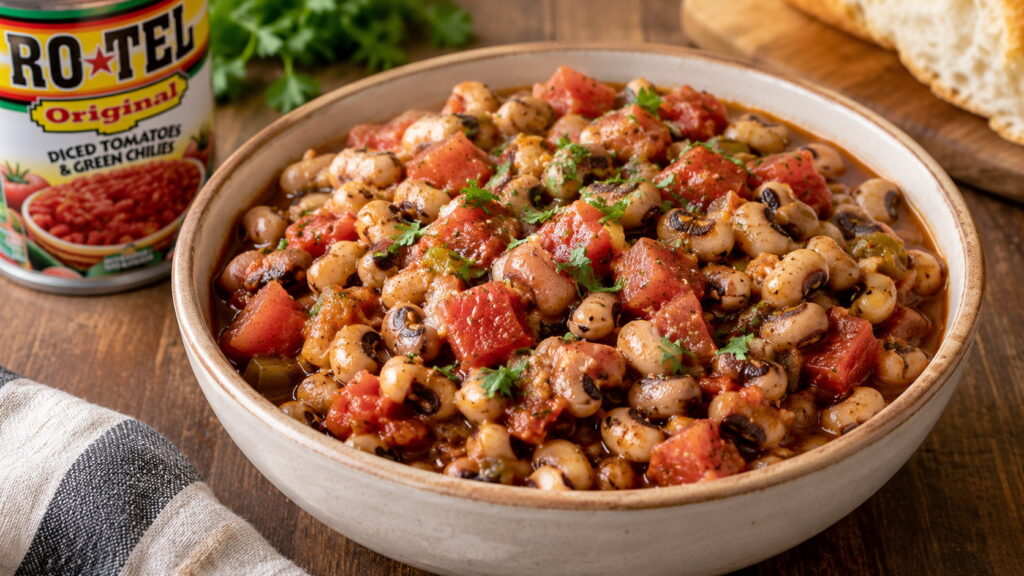
Craving a comforting, savory dish that comes together with simple pantry staples? This black eyed peas recipe with Rotel tomatoes combines tender black-eyed peas with juicy diced tomatoes, green chiles, aromatics, and smoky seasonings for a flavorful pot of Southern-inspired comfort food.
The recipe is designed to be easy enough for a weeknight but flavorful enough to serve alongside a larger family meal. Below, you’ll learn how to choose between canned and dried peas, build a rich tomato-based cooking liquid, control the spice level, avoid common texture problems, and store leftovers for later.
In This Article
Black Eyed Peas Recipe with Rotel Tomatoes: A Cozy, Flavor-Packed One-Pot Favorite
Tender black-eyed peas have a naturally mild, earthy flavor, which makes them an excellent match for bold ingredients. Rotel tomatoes add two important elements at once: bright tomato acidity and green chile heat. Together, they keep the beans from tasting flat while creating a flavorful broth for serving over rice or alongside cornbread.
One of the best features of the recipe is its flexibility. Canned black-eyed peas can turn the dish into a quick dinner, while dried peas work beautifully when you have more time for a traditional simmer. Smoky ingredients such as bacon, ham, smoked sausage, or smoked turkey can also be added when you want a heartier pot.
Quick Recipe Overview
| Detail | What to Expect |
| Prep time | 10–15 minutes |
| Cook time | About 25–35 minutes with canned peas |
| Total time | About 40–50 minutes |
| Servings | 6 |
| Method | Stovetop |
| Equipment | Large pot or Dutch oven, wooden spoon, measuring spoons |
| Best texture | Tender peas with a thick, savory tomato broth |
| Heat level | Mild to moderately spicy, depending on Rotel variety |
The finished peas should be tender without completely falling apart. A small amount of natural starch released during simmering helps the broth become richer and cling to the beans.
Why This Recipe Works
Several small cooking decisions make a noticeable difference.
Sautéing the onion before adding the liquid creates a sweeter, deeper base. Garlic and seasonings bloom briefly in the oil, releasing their aromas before the tomatoes and broth go into the pot.
Rotel then provides a concentrated combination of tomatoes and green chiles. Using the tomato juices as part of the cooking liquid helps distribute the chile flavor throughout the peas rather than leaving the heat concentrated in one spot.
A gentle simmer brings everything together without aggressively breaking down the beans. The result is hearty enough to serve as a main dish but versatile enough to work as a side.
Why Rotel Tomatoes Work So Well in Black-Eyed Peas
Black-eyed peas can be delicious on their own, but their mild flavor benefits from ingredients that provide acidity, spice, and savory depth. Rotel tomatoes accomplish all three without making the recipe complicated.
Tomatoes Add Brightness and Balance
Diced tomatoes bring acidity to the pot, helping balance the earthy flavor of the peas and richness from any added meat or cooking fat.
Tomatoes also contribute moisture and body. Once simmered with the peas and broth, their juices become part of the sauce-like cooking liquid.
Green Chiles Bring Gentle Heat
Green chiles add a mild pepper flavor along with varying levels of heat. Choosing the right Rotel variety gives you control over the finished dish.
Original Rotel works well for a balanced, mildly spicy version. Mild varieties are useful when serving children or guests who prefer less heat, while hotter versions can create a much more assertive dish.
Extra cayenne or hot sauce can always be added near the end, so starting with a moderate level of heat is usually the safer approach.
Rotel Helps Build Flavor Without a Long Ingredient List
One can of Rotel replaces the need to separately measure tomatoes and fresh chiles. The combination also gives the broth a recognizable Tex-Mex-inspired character while still working beautifully with classic Southern-style additions such as smoked turkey, ham, or bacon.
Choose a low-sodium broth when possible if you’re using canned peas and other salty ingredients. Seasoning gradually gives you much more control over the final flavor.
Ingredients You’ll Need for This Black Eyed Peas Recipe with Rotel Tomatoes
The ingredient list is straightforward, but each component has a specific job. Keeping the balance right will give you tender peas, a flavorful broth, and enough tomato-chile flavor without overwhelming the beans.
The Main Ingredients
- 3 cans black-eyed peas, about 15 ounces each, drained and rinsed
- 1 can Rotel diced tomatoes with green chiles, about 10 ounces
- 1 medium yellow onion, finely diced
- 3 cloves garlic, minced
- 2 tablespoons olive oil or neutral cooking oil
- 2 cups chicken or vegetable broth
- 1 teaspoon smoked paprika
- ½ teaspoon black pepper
- ½ teaspoon salt, plus more to taste
- ¼ teaspoon cayenne pepper, optional
- 1 bay leaf, optional
- 2 green onions, sliced, for garnish
- Fresh parsley, optional, for finishing
Optional Ingredients for More Smoky Depth
Meat isn’t necessary for flavorful black-eyed peas, but a smoky addition can transform the dish into an especially hearty meal.
Consider adding:
- 3–4 slices cooked bacon, chopped
- 1 cup diced smoked sausage
- 1 cup diced cooked ham
- 1 small smoked turkey leg or approximately 1 cup shredded smoked turkey
Choose one smoky ingredient rather than piling several into the same pot. Too many salty additions can overpower the tomatoes and make the broth difficult to balance.
Ingredient Notes That Make a Difference
Black-eyed peas: Canned peas are the fastest option and require very little preparation. Look for cans with intact peas rather than beans that already appear heavily broken down.
Rotel tomatoes: Original Rotel gives a moderate level of chile heat. Mild or hot varieties can be substituted according to taste.
Broth: Chicken broth creates a richer, more savory result, while vegetable broth works well for a meat-free version.
Smoked paprika: A small amount adds smoky character without requiring meat. Avoid adding too much because its flavor can quickly dominate the delicate peas.
Garlic and onion: These form the aromatic foundation of the dish. Fresh garlic provides a brighter flavor than garlic powder, although garlic powder can work in a pinch.
Easy Ingredient Substitutions
| Original Ingredient | Simple Substitute | What Changes |
| Canned black-eyed peas | Cooked dried black-eyed peas | Longer preparation, hearty texture |
| Chicken broth | Vegetable broth | Keeps the dish meat-free |
| Olive oil | Butter or neutral oil | Slightly richer flavor |
| Smoked paprika | Smoked meat | Deeper savory flavor |
| Yellow onion | White onion | Slightly sharper onion flavor |
| Cayenne | Hot sauce or crushed red pepper | Adjustable heat |
| Fresh parsley | Green onions | Fresher, sharper garnish |
Avoid replacing Rotel with plain diced tomatoes if you want the characteristic tomato-and-green-chile flavor. Plain tomatoes can work, but you’ll need to add chopped green chiles or another source of pepper heat to achieve a similar profile.
Canned or Dried Black-Eyed Peas: Which One Should You Use?
Both canned and dried black-eyed peas work well in a black eyed peas recipe with Rotel tomatoes, but the two options produce slightly different cooking experiences. Choosing between them mostly comes down to how much time you have and how much control you want over the final texture.
Canned Black-Eyed Peas for a Faster Dinner
Canned black-eyed peas are the easiest choice when you want dinner on the table without a long soaking and cooking process. The peas are already cooked, so they only need to be warmed and allowed to absorb the flavors of the tomato, chile, broth, and seasonings.
USDA guidance notes that canned black-eyed peas are precooked and do not require soaking, making them particularly convenient for quick recipes. (FNS Production)
Drain and rinse the peas before adding them to the pot. Rinsing removes excess canning liquid and gives you more control over the salt and flavor of the finished dish.
Look for cans where most of the peas are still intact. Peas that are already cracked or heavily mashed can break apart quickly during simmering.
Dried Black-Eyed Peas for Deeper Control
Dried peas take more preparation but give you greater control over texture and seasoning. Start by sorting through the peas and removing any stones, debris, shriveled pieces, or damaged peas.
USDA guidance recommends soaking dried black-eyed peas before cooking, with either an overnight soak or a quick-soak method. (FNS Production)
For an overnight soak, cover the dried peas with plenty of water and let them stand for several hours. Drain and rinse them before cooking.
A quick soak works when you need to speed things up. Cover the peas with water, bring them to a boil for about two minutes, remove the pot from the heat, cover, and let the peas stand for about an hour. Drain and rinse before cooking. (FNS Production)
Which Option Is Best for This Recipe?
| Option | Best For | Approximate Preparation |
| Canned | Quick weeknight meals | Minimal |
| Dried | Traditional cooking and meal prep | Soaking required |
| Canned + smoked meat | Fast, hearty comfort food | Minimal |
| Dried + smoked meat | Longer, slow-simmered flavor | More time |
Use canned black-eyed peas when convenience matters most. Choose dried peas when you want to start with uncooked beans and have enough time for soaking and simmering.
How to Make Black Eyed Peas with Rotel Tomatoes on the Stovetop
The key to a flavorful pot is building the seasoning in layers rather than throwing everything into the pot at once. Sautéing the aromatics first gives the final dish much more depth.
Step 1: Prepare the Black-Eyed Peas
Drain and rinse three 15-ounce cans of black-eyed peas. Set them aside while you prepare the flavor base.
If using cooked dried peas, make sure they are tender before beginning the recipe. Avoid using dried peas directly in the quick stovetop version because they require substantially more cooking time.
Step 2: Sauté the Onion
Heat 2 tablespoons of oil in a large Dutch oven or heavy-bottomed pot over medium heat.
Add the diced onion and cook for about 4–5 minutes, stirring occasionally. Look for softened edges and a slightly translucent appearance rather than browned or crisp onions.
Softening the onion first creates a mellow sweetness that balances the tangy tomatoes and green chiles.
Step 3: Add Garlic and Seasonings
Stir in the minced garlic, smoked paprika, black pepper, and optional cayenne.
Cook for approximately 30–60 seconds, stirring constantly.
Don’t cook the garlic for several minutes at this stage. Garlic can burn quickly, especially once the pan is hot, and burnt garlic will introduce an unpleasant bitterness to the broth.
Step 4: Add the Rotel Tomatoes
Pour in the Rotel tomatoes and green chiles, including their liquid.
Stir thoroughly, scraping the bottom of the pot with a wooden spoon to loosen any flavorful bits left behind by the onions and seasonings.
Let the tomato mixture cook for about 2–3 minutes. The brief cooking time helps the tomatoes mingle with the aromatics before the broth and peas are added.
Step 5: Add the Peas and Broth
Add the drained black-eyed peas and 2 cups of broth.
Stir gently so the peas remain intact. Add the optional bay leaf if using one.
Bring the mixture to a gentle simmer over medium heat, then reduce the heat to low.
Step 6: Simmer Until the Broth Thickens
Let the black-eyed peas simmer uncovered for approximately 20–25 minutes, stirring gently every few minutes.
The goal isn’t to boil the peas aggressively. A gentle simmer protects the texture while giving the beans enough time to absorb the tomato, chile, and smoky flavors.
Watch the consistency toward the end of cooking. The broth should become slightly thicker and more concentrated rather than remaining as thin as plain stock.
If the pot becomes too dry before the peas are fully heated and seasoned, add a small splash of broth.
Step 7: Taste and Adjust Before Serving
Remove the bay leaf if used, then taste the peas.
Adjust the seasoning with additional salt, black pepper, smoked paprika, cayenne, or hot sauce as needed.
A small splash of vinegar or fresh lemon juice can also brighten the finished dish if the tomatoes taste overly rich or the peas need more contrast.
Taste before adding extra salt. Canned peas, broth, bacon, ham, and smoked sausage can all contribute sodium, so seasoning gradually is the safest way to reach the right balance.
Step 8: Finish with Fresh Garnishes
Spoon the hot black-eyed peas into bowls and garnish with sliced green onions or fresh parsley.
Serve immediately with rice, cornbread, or cooked greens. The thick, tomato-rich broth is especially good when spooned over rice, allowing the rice to soak up the seasoned juices.
Cooking Timeline
- 0–5 minutes: Sauté onion
- 5–6 minutes: Add garlic and seasonings
- 6–9 minutes: Cook Rotel tomatoes
- 9–10 minutes: Add peas and broth
- 10–35 minutes: Gentle simmer
- 35–40 minutes: Taste, adjust, and garnish
Cooking time can vary slightly depending on the brand and texture of the canned peas. Stop simmering once the peas are hot, tender, and flavorful rather than waiting for them to become extremely soft.
Simple Cooking Tricks for Creamy, Flavorful Black-Eyed Peas
Small technique changes can make a big difference in a simple bean dish. The goal is to develop a broth with plenty of flavor while keeping the black-eyed peas intact.
Keep the Simmer Gentle
A rolling boil can cause already-cooked canned peas to split and become mushy. Keep the heat low enough that the liquid produces gentle bubbles.
Think simmer, not boil.
Gentle cooking also gives the Rotel tomatoes, broth, aromatics, and seasonings time to blend without reducing the liquid too aggressively.
Use Broth Instead of Water
Chicken or vegetable broth provides more savory flavor than plain water. Vegetable broth is the better choice for a meat-free version, while chicken broth pairs particularly well with smoked turkey, ham, or bacon.
Low-sodium broth is especially useful when several seasoned ingredients are going into the same pot.
Let the Peas Thicken Their Own Broth
A naturally thickened broth is preferable to adding flour or cornstarch. During simmering, some peas will soften slightly and release starch into the liquid.
For an even creamier consistency, remove roughly ½ cup of peas, mash them lightly with a fork, and stir them back into the pot.
Mash only a small portion. Leaving most of the peas whole gives the dish a much better contrast between creamy broth and tender beans.
Don’t Rush the Final Seasoning
The flavor changes as the broth reduces. A seasoning level that tastes mild early in cooking may become noticeably stronger after 20 minutes of simmering.
Taste near the end, then make small adjustments.
A useful finishing sequence is:
- Check the salt.
- Add black pepper if needed.
- Adjust heat with cayenne or hot sauce.
- Add a little acidity if the dish tastes heavy.
- Finish with fresh green onions or parsley.
Add Acidity When the Dish Needs Brightness
Tomatoes already contribute acidity, but a small amount of vinegar or lemon juice can make the entire pot taste fresher.
Start with ½ teaspoon, stir well, and taste before adding more. Too much acidity can overpower the earthy flavor of the peas, so a little goes a long way.
The finished black-eyed peas should taste savory, smoky, lightly tangy, and pleasantly spicy—not overwhelmingly hot or acidic.
Easy Ways to Customize the Heat and Smoky Flavor
One of the easiest things to adjust in a black eyed peas recipe with Rotel tomatoes is the balance of heat and smoky flavor. Rotel already provides green chiles, so you can build from a mild base or make the pot considerably spicier depending on who you’re serving.
Choose the Right Rotel
Rotel comes in different varieties, making the tomato base easy to customize.
- Mild Rotel: Best for a gentle chile flavor and family-friendly version.
- Original Rotel: A balanced choice with noticeable but manageable heat.
- Hot Rotel: Ideal for anyone who likes a stronger pepper kick.
Starting with mild or original Rotel gives you more control. Extra heat can be added later with cayenne, crushed red pepper, jalapeños, or hot sauce.
Add Smokiness Without Meat
Smoked paprika is one of the simplest ways to give black-eyed peas a deeper, more savory character. Start with about 1 teaspoon, then add more near the end if you want a stronger smoky note.
Other options include:
- Cooked bacon: Adds smoky fat and salty richness.
- Smoked sausage: Makes the peas more substantial and turns them into a heartier meal.
- Ham: Provides traditional savory depth.
- Smoked turkey: A flavorful option when you want meat without relying on bacon.
- Smoked paprika: The easiest meat-free option.
Choose one primary smoky ingredient and let the Rotel remain noticeable. Too many strong smoky flavors can hide the fresh tomato and chile character.
How to Make the Recipe Spicier
Extra heat is easy to introduce gradually. Try one of these additions:
- ¼ teaspoon cayenne pepper
- ¼–½ teaspoon crushed red pepper flakes
- 1 finely diced jalapeño
- A few dashes of your favorite hot sauce
- Hot Rotel instead of mild or original
Hot sauce works particularly well as a finishing ingredient because each person can adjust their own bowl.
How to Tone Down Too Much Heat
A spicy pot can usually be balanced without starting over. Add more cooked black-eyed peas, broth, or tomatoes to dilute the chile intensity.
Serving the peas over rice also softens the perceived heat. A creamy topping or mild side dish can provide additional contrast.
Avoid adding large amounts of sugar to counteract excessive heat. Sweetness can make the dish taste unbalanced rather than simply less spicy.
Common Mistakes That Can Ruin Black-Eyed Peas with Rotel
Black-eyed peas are fairly forgiving, but a few mistakes can turn a flavorful dish into something watery, mushy, or overly salty. Paying attention to liquid, heat, and seasoning will give you much more consistent results.
Using Too Much Liquid
Canned black-eyed peas don’t need a large amount of broth because they’re already cooked. Excess liquid can leave the finished dish thin and dilute the tomato-chile flavor.
Start with the recommended amount of broth and add more only when necessary.
A thicker consistency is especially desirable when serving the peas over rice.
Boiling the Peas Too Hard
Hard boiling can cause cooked black-eyed peas to split apart. The result may taste fine but have a less appealing texture.
Keep the pot at a gentle simmer instead. Occasional small bubbles should appear across the surface without the liquid aggressively churning.
Overcooking Canned Peas
Canned peas have already reached a tender texture before they enter your kitchen. Their job during this recipe is mainly to absorb flavor and heat through.
Taste a few peas toward the end of simmering. Stop cooking when they’re tender and creamy but still hold their shape.
Under-Seasoning the Cooking Liquid
Black-eyed peas have a mild flavor and need enough seasoning to make the finished dish satisfying.
Salt, black pepper, smoked paprika, garlic, onion, and Rotel work together to create a balanced base. Taste during cooking, but make the final salt adjustment near the end.
Salting Too Early and Too Heavily
Canned peas, broth, bacon, sausage, and ham can all contain significant amounts of sodium.
Adding a large quantity of salt at the beginning can leave the finished pot overly salty once the liquid reduces.
Season lightly at first and adjust after simmering.
Skipping the Aromatic Base
Dumping the peas, tomatoes, broth, and seasonings directly into a pot may save a few minutes, but sautéing the onion and garlic first creates noticeably better flavor.
Allowing the onion to soften before adding liquid gives the dish a sweeter, more developed foundation.
Letting the Pot Become Too Dry
A thick broth is desirable, but the peas still need enough moisture to simmer properly.
If the liquid disappears before the desired flavor and texture develop, add broth ¼ cup at a time. Stir gently and continue cooking until the consistency looks right.
Quick Troubleshooting Guide
| Problem | Likely Cause | Easy Fix |
| Peas are too watery | Too much broth | Simmer uncovered a little longer |
| Peas are mushy | Heat was too high or cooking lasted too long | Use a gentler simmer next time |
| Dish tastes bland | Not enough seasoning or aromatics | Add salt, pepper, smoked paprika, or hot sauce gradually |
| Dish tastes too salty | Salty canned or smoked ingredients | Add unsalted peas or broth to dilute |
| Too spicy | Too much chile or cayenne | Add more peas and broth; serve with rice |
| Broth is too thick | Excessive reduction | Stir in warm broth a little at a time |
| Flavor tastes heavy | Not enough acidity | Add a small splash of vinegar or lemon juice |
What to Serve with Black Eyed Peas Recipe with Rotel Tomatoes
A warm bowl of black eyed peas with Rotel tomatoes can stand on its own, but the right side dishes make the meal even more satisfying. Starchy sides are particularly useful because they soak up the seasoned tomato broth.
Serve the Peas Over Rice
White rice is one of the simplest pairings. Spoon the hot black-eyed peas and plenty of tomato-rich broth over freshly cooked rice.
Brown rice works well when you prefer a nuttier flavor and firmer texture.
Don’t drain the cooking liquid before serving. The seasoned broth is one of the best parts of the recipe and helps turn ordinary rice into a flavorful side.
Add Cornbread for a Classic Comfort-Food Meal
Warm cornbread provides a slightly sweet, crumbly contrast to the savory peas and spicy tomatoes.
Serve thick slices alongside the pot, or crumble a little cornbread directly into the bowl to absorb the broth.
A skillet-style cornbread works especially well when you’re serving the peas as part of a larger Southern-inspired dinner.
Pair with Cooked Greens
Collard greens, mustard greens, or turnip greens bring a slightly bitter, earthy contrast that balances the rich tomato broth.
Season the greens simply so their flavor doesn’t compete with the black-eyed peas.
Add a Simple Vegetable
Roasted or sautéed vegetables can round out the meal without making the plate too heavy.
Good choices include:
- Roasted green beans
- Sautéed cabbage
- Roasted carrots
- Steamed broccoli
- Sautéed zucchini
- Simple roasted bell peppers
Keep vegetable seasoning relatively light when the black-eyed peas contain smoked meat or a spicy Rotel variety.
Make It a Complete Bowl
For an easy main-dish presentation, layer:
- Cooked rice on the bottom
- Rotel black-eyed peas over the rice
- Sliced green onions on top
- A few dashes of hot sauce, if desired
- Fresh parsley or another mild herb for color
The combination provides creamy beans, spicy tomato broth, fluffy rice, and fresh garnish in every bite.
Garnishes That Add Freshness
Fresh toppings can brighten the rich, slow-simmered flavor.
Try:
- Sliced green onions
- Fresh parsley
- Chopped cilantro
- A small squeeze of lemon
- A dash of hot sauce
- Thinly sliced fresh jalapeño
Add acidic garnishes sparingly. The Rotel already provides tomato acidity, so the goal is to brighten the dish rather than make it sour.
Make-Ahead, Storage, and Reheating Tips
One advantage of this black eyed peas recipe with Rotel tomatoes is how well the flavors hold up after cooking. The tomato, chile, onion, and smoky flavors often taste even more blended after a night in the refrigerator.
How to Store Leftover Black-Eyed Peas
Allow the cooked peas to cool slightly, then transfer them to shallow airtight containers. Refrigerate within about two hours of cooking.
Stored properly in the refrigerator, cooked black-eyed peas are best enjoyed within 3–4 days.
Keep the peas and rice in separate containers when possible. Separate storage helps prevent the rice from absorbing all the flavorful broth and becoming overly soft.
How to Reheat on the Stovetop
Place the desired amount of peas in a saucepan over medium-low heat.
Add 1–3 tablespoons of broth or water depending on how thick the leftovers have become. Cover and heat gently, stirring occasionally, until steaming hot throughout.
Avoid high heat during reheating. Gentle warming helps preserve the texture of the peas and prevents the bottom of the pot from scorching.
Microwave Reheating
Place a serving in a microwave-safe bowl and add a small splash of broth or water.
Cover loosely and heat in short intervals, stirring between each interval. Continue until the peas are heated evenly.
A little fresh green onion or hot sauce added after reheating can bring back some of the brightness lost during refrigeration.
Can You Freeze Black-Eyed Peas with Rotel?
Yes. The cooked peas freeze well, especially when stored with enough of their tomato-rich broth to prevent them from drying out.
Cool the dish completely, then portion it into freezer-safe airtight containers or freezer bags. Leave a little room for expansion.
For best quality, use frozen portions within 2–3 months.
Thaw overnight in the refrigerator when possible. Reheat gently on the stovetop, adding broth as needed to restore the original consistency.
Black-Eyed Peas with Rotel Recipe Variations for Different Meals
The basic recipe is flexible enough to adapt without losing its signature tomato-and-chile character. A few carefully chosen additions can change the dish from a simple side into a substantial main course.
Meat-Free Black-Eyed Peas
Skip bacon, ham, sausage, and smoked turkey. Use vegetable broth and rely on smoked paprika, garlic, onion, and Rotel for the flavor base.
A small splash of vinegar at the end can add the brightness normally provided by richer ingredients.
Choose a flavorful vegetable broth rather than plain water to give the meat-free version a fuller taste.
Southern-Style Black-Eyed Peas
Add chopped bacon, diced ham, or smoked turkey to create a richer, more traditional comfort-food profile.
Bacon can be cooked directly in the pot first. Remove some of the crisp pieces for garnish, then sauté the onion in a small amount of the rendered fat.
Smoked turkey works particularly well when you want deep flavor without making the dish excessively greasy.
Smoked Sausage Version
Slice about 1 cup of smoked sausage into rounds and brown the pieces before cooking the onion.
Browning creates caramelized edges that add extra savory flavor to the broth. Remove excess grease if necessary before continuing with the recipe.
Taste carefully before adding salt because smoked sausage can be quite salty.
Extra-Spicy Rotel Black-Eyed Peas
Use hot Rotel and add cayenne or crushed red pepper for a stronger kick.
Jalapeño can also be sautéed with the onion for a fresh pepper flavor. Hot sauce makes a good finishing option because diners can control the heat in individual servings.
Black-Eyed Pea Rice Bowls
Turn the finished peas into a simple meal-prep bowl by serving them over cooked rice.
Add sliced green onions, fresh herbs, roasted vegetables, or a small spoonful of hot sauce. Portion the rice and peas into separate meal-prep containers when you plan to refrigerate them for several days.
Frequently Asked Questions About Black Eyed Peas with Rotel Tomatoes
Can you use canned black-eyed peas for this recipe?
Canned black-eyed peas are ideal for a quick version of the recipe. Drain and rinse them before adding them to the tomato and broth mixture, then simmer gently until heated through and well seasoned.
Do you drain and rinse black-eyed peas before cooking?
Yes, canned black-eyed peas should generally be drained and rinsed. Rinsing removes the thick canning liquid and gives you better control over the salt and consistency of the finished dish.
Can you use dried black-eyed peas instead of canned?
Yes. Dried peas need to be sorted, soaked, drained, and cooked until tender before being incorporated into the Rotel mixture. The extra preparation takes longer but gives you more control over texture.
How long does it take to cook black-eyed peas with Rotel?
Using canned black-eyed peas, the dish generally takes about 25–35 minutes of stovetop cooking after the aromatics are prepared. Dried peas require substantially more time because they must first be cooked until tender.
Are Rotel tomatoes too spicy for black-eyed peas?
Not necessarily. Mild and original varieties provide different levels of chile heat, while hot varieties deliver more intensity. Start with mild or original Rotel if you’re unsure about the preferred spice level.
How do you make black-eyed peas with Rotel thicker?
Simmer the pot uncovered for several additional minutes to reduce excess liquid. You can also mash a small portion of the peas with a fork and stir them back into the pot. The released starch naturally thickens the broth.
Can you make black-eyed peas with Rotel without meat?
Absolutely. Use vegetable broth and smoked paprika in place of bacon, ham, sausage, or smoked turkey. Garlic, onion, Rotel, and seasonings provide plenty of flavor for a satisfying meat-free version.
Can you freeze black-eyed peas with Rotel tomatoes?
Yes. Cool the cooked peas completely, portion them into airtight freezer-safe containers, and freeze with some of the broth. For the best quality, use the frozen portions within about 2–3 months.
How should you reheat leftover black-eyed peas?
Reheat them gently on the stovetop over medium-low heat with a small splash of broth or water. Microwave reheating also works when the peas are covered loosely and stirred between short heating intervals.
Can black-eyed peas with Rotel be made ahead?
Yes. Prepare the recipe up to several days ahead and refrigerate the cooked peas in an airtight container. Reheat gently before serving, adding a little broth if the mixture has thickened.
What can you serve with black-eyed peas and Rotel tomatoes?
Rice, cornbread, collard greens, turnip greens, cabbage, and roasted vegetables all pair nicely with the savory tomato-chile broth. Rice and cornbread are especially useful for soaking up the flavorful cooking liquid.
Why are my black-eyed peas mushy?
Mushy peas usually result from excessive cooking or a vigorous boil. Canned peas are already cooked, so keep the finished dish at a gentle simmer and stop cooking once the peas are tender and hot.
How can you make black-eyed peas more flavorful?
Build flavor by sautéing the onion and garlic first, blooming the spices briefly, using broth instead of water, and allowing the Rotel and peas to simmer together. A smoky ingredient such as bacon, smoked turkey, sausage, or smoked paprika can add another layer of depth.
A Comforting Pot Worth Making Again
Few pantry-friendly dishes deliver as much flavor with so little effort as a black eyed peas recipe with Rotel tomatoes. Tender peas, juicy tomatoes, green chiles, aromatic vegetables, and smoky seasonings come together in one pot to create a satisfying dish that works as both a hearty side and an easy main meal.
Serve the finished peas over rice, alongside warm cornbread, or with your favorite cooked greens. Start with the original Rotel for balanced heat, adjust the seasoning near the end, and keep the simmer gentle for the best texture.
Save the recipe for a busy weeknight, make a batch for meal prep, or customize the pot with smoked sausage, bacon, ham, or extra chile heat. Once you find your favorite combination, this flavorful black-eyed pea recipe is one you’ll want to keep in regular rotation.
