
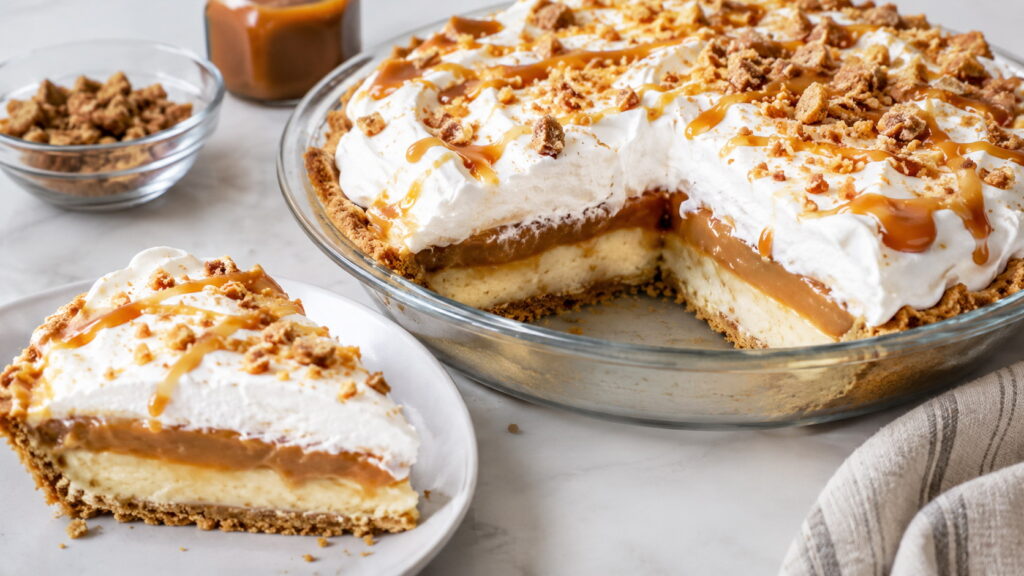
Few desserts deliver the same combination of creamy, buttery sweetness and fluffy texture as a caramel cream pie recipe with marshmallow fluff. A crisp cookie crust holds a rich caramel-infused filling, while marshmallow fluff gives the pie an irresistibly soft and airy finish.
Making a caramel cream pie successfully comes down to a few important details: keeping the caramel balanced rather than overly sweet, folding the marshmallow fluff gently, whipping the cream to the right consistency, and giving the finished pie enough time to chill. The guide below covers the ingredients, crust options, preparation method, texture tips, variations, storage, troubleshooting, and serving ideas you need for a reliable homemade dessert.
In This Article
Caramel Cream Pie Recipe with Marshmallow Fluff: A Silky, Sweet Dessert Worth Making
Caramel and marshmallow are natural partners. Caramel brings a deep, buttery flavor with lightly toasted notes, while marshmallow fluff contributes sweetness and a pillowy texture. Whipped cream keeps the filling from becoming heavy, creating a dessert that feels rich without eating like a dense pudding.
A caramel cream pie with marshmallow fluff works especially well when you want something that can be prepared ahead of time. Once assembled, the pie needs several hours in the refrigerator to firm up, making it convenient for holidays, family dinners, potlucks, and special occasions.
What you can expect from the finished pie
The ideal slice should hold its shape when cut while remaining soft and creamy inside. The crust provides a crisp contrast to the tender filling, and a drizzle of caramel adds an extra layer of flavor without requiring complicated decoration.
A good finished pie has:
- A crisp, sturdy crust
- A smooth caramel-flavored filling
- Light, fluffy marshmallow notes
- Enough whipped cream to keep the texture airy
- A balanced sweet-and-salty caramel flavor
- Clean slices after thorough chilling
Give the pie plenty of refrigerator time before slicing. Rushing the chilling process is one of the easiest ways to end up with a filling that spreads across the plate.
What Makes This Caramel Cream Pie So Creamy and Fluffy?
Several ingredients work together to create the characteristic texture. Understanding their individual jobs makes the recipe easier to troubleshoot and customize.
Caramel creates the signature flavor
Caramel provides the main flavor foundation, adding buttery sweetness and subtle toasted notes. Homemade caramel can give you excellent depth, but a good-quality prepared caramel sauce can save time and produce a dependable result.
Salt deserves special attention when working with caramel. A small amount of salt keeps the sweetness from becoming one-dimensional and makes the caramel taste richer.
Marshmallow fluff adds sweetness and softness
Marshmallow fluff isn’t simply a decorative topping in this style of pie. Folded into the creamy mixture, the fluffy marshmallow spread contributes sweetness and a soft, smooth texture.
Gentle mixing matters here. Vigorous stirring can knock air out of the whipped components, leaving the filling heavier than intended.
Whipped cream keeps the filling light
Heavy whipping cream adds richness while also helping create the airy texture associated with cream pies. Whip the cream until it forms medium to firm peaks, depending on how the filling is assembled.
Under-whipped cream can leave the pie too loose. Over-whipped cream may become grainy and difficult to incorporate smoothly.
Chilling transforms the texture
Refrigeration gives the filling time to firm and allows the caramel flavor to settle into the creamy base. Plan on at least 4 hours of chilling, with an overnight rest being even better when your schedule allows.
For general guidance on safe refrigeration temperatures, the USDA recommends keeping a refrigerator at 40°F (4°C) or below.
Ingredients You’ll Need for the Caramel Cream Pie Recipe with Marshmallow Fluff
A relatively short ingredient list produces the best results because each component has a noticeable role. Quality matters most with the caramel, cream, and crust.
For the crust
- 1 ½ cups graham cracker crumbs
- 6 tablespoons unsalted butter, melted
- 2 tablespoons granulated sugar
- Pinch of salt
A prepared 9-inch graham cracker crust can replace the homemade version when convenience is the priority.
For the caramel cream filling
- 1 cup caramel sauce, cooled to room temperature
- 8 ounces cream cheese, softened
- ¾ cup marshmallow fluff
- 1 teaspoon vanilla extract
- ¼ teaspoon fine salt
- 1 cup heavy whipping cream
- ¼ cup powdered sugar
For the topping
- Whipped cream, as needed
- Extra caramel sauce for drizzling
- Optional chopped pecans or toffee pieces
- Optional pinch of flaky sea salt
Ingredient notes that make a difference
Use softened cream cheese. Cold cream cheese tends to leave small lumps in the filling. Allow the cream cheese to sit at room temperature for roughly 30–45 minutes before mixing.
Cool the caramel before adding it to dairy ingredients. Warm caramel can soften the cream cheese mixture excessively and cause the finished filling to lose structure.
Choose thick caramel sauce. Very thin caramel toppings contain more moisture and can make the filling difficult to set. A sauce with a spoon-coating consistency works especially well.
Use full-fat heavy cream. Lower-fat dairy does not whip or hold the same structure, which can leave the pie softer than expected.
Marshmallow fluff should be fresh and pliable. Older fluff can become firmer and harder to incorporate smoothly.
Ingredient substitutions
A few substitutions can work without changing the character of the dessert:
| Ingredient | Possible Substitute | What to Expect |
| Graham crackers | Vanilla wafer or shortbread cookies | Sweeter, more buttery crust |
| Cream cheese | Mascarpone | Softer, milder filling |
| Homemade caramel | Prepared caramel sauce | Faster preparation |
| Heavy cream | Whipping cream | Similar result if properly whipped |
| Granulated sugar | Light brown sugar in the crust | Slightly deeper flavor |
| Pecans | Walnuts or toffee bits | Different crunch and flavor |
Avoid replacing heavy cream with milk. Milk does not whip into the stable, airy component needed for a classic cream pie filling.
Kitchen equipment
You won’t need specialized equipment, but having the following ready makes preparation much easier:
- 9-inch pie dish
- Food processor or rolling pin for crushing cookies
- Mixing bowls
- Electric hand mixer or stand mixer
- Rubber spatula
- Measuring cups and spoons
- Offset spatula or spoon for smoothing the filling
- Refrigerator space for chilling the assembled pie
Quick recipe timeline
| Stage | Approximate Time |
| Prepare crust | 10 minutes |
| Bake crust, if using | 8–10 minutes |
| Prepare filling | 15–20 minutes |
| Assemble pie | 5 minutes |
| Chill | 4–6 hours |
| Total active time | About 30–35 minutes |
The chilling time is not optional. A beautifully mixed filling still needs sufficient refrigeration to become sliceable.
Choosing the Right Crust for a Caramel Cream Pie
The crust sets the foundation for the entire dessert, so choosing one that complements the sweet, creamy filling makes a noticeable difference. A crisp crust provides the best contrast against the soft caramel filling and also helps each slice hold its shape.
Graham cracker crust: the easiest classic choice
A homemade graham cracker crust works particularly well with caramel and marshmallow. The lightly toasted flavor of the crackers adds enough contrast without competing with the filling.
Combine graham cracker crumbs with melted butter, sugar, and a pinch of salt. Press the mixture firmly into a 9-inch pie dish, making sure the bottom and sides have an even layer.
Bake the crust at 350°F (175°C) for about 8–10 minutes, then let it cool completely before adding the filling.
Allowing the crust to cool fully is essential. A warm crust can soften the filling and interfere with the setting process.
Cookie crust for extra caramel sweetness
Vanilla wafer crumbs make an excellent alternative when you want a sweeter, more dessert-like base. Shortbread cookies also work beautifully because their buttery flavor echoes the caramel.
Chocolate cookie crumbs create a richer variation, although the chocolate flavor will become more prominent than the traditional caramel-and-marshmallow combination.
Traditional pastry crust for a bakery-style pie
A blind-baked pastry crust gives the dessert a more classic pie-shop character. The flaky crust contrasts nicely with the creamy filling, but preparation requires slightly more attention than a crumb crust.
Blind-bake the pastry until completely cooked and lightly golden. Cool it thoroughly before filling.
Never pour the caramel cream mixture into a warm pastry shell. Residual heat can soften the butter in the crust and make the bottom lose its crispness.
How to prevent a soggy crust
Several small details help preserve the crust after refrigeration:
- Bake crumb crusts long enough to bind the butter and crumbs.
- Cool the crust completely before filling.
- Avoid using excessively thin caramel sauce.
- Don’t add watery fruit or wet toppings to the filling.
- Keep the assembled pie refrigerated.
- Add decorative toppings close to serving time when possible.
A well-baked crumb crust should feel firm when gently pressed after cooling. If the crust seems loose or crumbly, press the mixture more firmly into the pan before baking.
How to Make Caramel Cream Pie with Marshmallow Fluff Step by Step
Once the crust has cooled, the filling comes together quickly. The main goal is to create a smooth caramel cream base without losing the lightness from the whipped cream.
Prepare the crust
- Preheat the oven to 350°F (175°C).
- Combine graham cracker crumbs, melted butter, sugar, and salt in a bowl.
- Stir until every crumb appears lightly coated with butter.
- Press the mixture firmly into the bottom and sides of a 9-inch pie dish.
- Bake for 8–10 minutes, until lightly golden and fragrant.
- Transfer the crust to a cooling rack and let it cool completely.
A completely cooled crust should feel firm rather than warm or soft before the filling goes in.
Build the caramel cream filling
- Place softened cream cheese in a large mixing bowl.
- Beat until smooth and creamy, scraping the sides of the bowl as needed.
- Add the cooled caramel sauce, marshmallow fluff, vanilla extract, and salt.
- Beat on low to medium speed until the mixture becomes smooth and evenly combined.
- Stop mixing as soon as no obvious streaks remain.
Avoid overmixing at this stage. Excessive beating can make the mixture unnecessarily loose and can make the later folding process more difficult.
Whip the cream separately
Pour the heavy whipping cream into a clean chilled bowl. Add powdered sugar and whip with an electric mixer until medium-stiff peaks form.
The whipped cream should hold its shape when the beaters are lifted, while the tip of the peak should retain a slight softness.
Under-whipped cream will not provide enough structure. Over-whipped cream can become grainy and buttery.
Fold everything together gently
Add roughly one-third of the whipped cream to the caramel mixture and fold gently with a rubber spatula. Once the mixture has loosened, fold in the remaining whipped cream in two additions.
Use broad strokes that travel from the bottom of the bowl upward. Scraping around the sides and turning the mixture over helps preserve as much air as possible.
Don’t stir rapidly in circles. Gentle folding produces a lighter filling and prevents the whipped cream from collapsing.
Fill and chill the pie
Spoon the finished filling into the cooled crust. Spread the surface evenly with an offset spatula or the back of a spoon.
Drizzle additional caramel over the top if desired. A few decorative swirls look especially appealing when the caramel is slightly warmed but not hot.
Cover the pie loosely with plastic wrap or place it in a covered container. Refrigerate for at least 4–6 hours, preferably overnight.
The center should feel firm when gently touched rather than liquid or wobbly. Overnight chilling gives the cleanest slices and allows the caramel flavor to develop.
Finish just before serving
Add whipped cream, caramel drizzle, chopped pecans, toffee pieces, or a small pinch of flaky sea salt immediately before serving.
For cleaner slices, dip a sharp knife into hot water, wipe it dry, and then cut through the chilled pie. Repeat the process between slices.
The Key to Getting the Filling Just Right
A successful caramel cream pie depends less on complicated techniques and more on controlling temperature, consistency, and mixing.
Watch the caramel temperature
Room-temperature caramel is ideal when combining it with cream cheese. Hot caramel can loosen the dairy mixture and make the finished pie difficult to set.
If homemade caramel has just been cooked, allow it to cool until warm rather than hot before using. Very cold caramel can also become difficult to incorporate, especially if it has thickened considerably.
Look for the right filling consistency
The finished filling should be thick enough to mound slightly on a spoon while remaining smooth and spreadable.
A loose, glossy mixture usually indicates that the cream was under-whipped, the caramel was too warm, or the ingredients contained too much moisture.
A very stiff mixture can result from over-whipped cream or excessive chilling before assembly.
Fold rather than beat
Whipped cream contains tiny air bubbles that give the pie its light texture. Aggressive mixing breaks those bubbles and produces a denser filling.
Gentle folding is one of the most important techniques in a caramel cream pie recipe with marshmallow fluff.
Give the pie enough time to set
Four hours is a useful minimum, but an overnight chill is often preferable. Refrigeration allows the filling to firm gradually while giving the crust time to absorb some of the caramel aroma without becoming excessively soft.
Slice the pie only after the center has fully chilled. A properly set filling should remain upright on the crust instead of slowly spreading outward.
Quick texture troubleshooting
| Problem | Likely Cause | Best Fix |
| Filling is too loose | Warm caramel or under-whipped cream | Chill longer and ensure cream reaches proper peaks |
| Filling feels dense | Overmixing | Fold whipped cream more gently next time |
| Small lumps appear | Cream cheese was too cold | Soften cream cheese before mixing |
| Pie won’t slice cleanly | Insufficient chilling | Refrigerate for several additional hours |
| Crust becomes soft | Warm filling or excess moisture | Cool crust completely and use a thicker caramel |
| Filling tastes overly sweet | Too much caramel or marshmallow | Add a little salt and use less sweet topping |
Patience makes a major difference. Properly cooled ingredients, gentle folding, and thorough refrigeration are the three biggest factors behind a creamy, fluffy, sliceable caramel pie.
Caramel Cream Pie Recipe with Marshmallow Fluff: Easy Ways to Customize It
Once the basic caramel cream pie recipe with marshmallow fluff is mastered, a few simple additions can create completely different flavor combinations without changing the core preparation method. Keep the filling balanced, since caramel and marshmallow already bring plenty of sweetness.
Turn it into a salted caramel cream pie
Salted caramel is one of the easiest upgrades. Add a small pinch of flaky sea salt to the filling, then finish the chilled pie with another light sprinkle before serving.
Go gradually with the salt. Caramel should taste richer and more complex, not noticeably salty.
Add toasted pecans for crunch
Chopped pecans pair naturally with caramel and add a pleasant contrast to the soft filling. Toast the nuts in a dry skillet over medium-low heat for several minutes, stirring frequently, until fragrant.
Let the pecans cool completely before scattering them over the pie. Warm nuts can soften the whipped topping and disturb the chilled filling.
Walnuts can replace pecans if preferred, although pecans provide a naturally sweeter, more buttery flavor.
Make a chocolate-caramel version
Replace the graham cracker crust with chocolate cookie crumbs for a more indulgent variation. Chocolate wafers or chocolate sandwich cookies can both work well.
A light chocolate drizzle over the whipped topping also adds visual appeal without overwhelming the caramel flavor.
Add toffee for extra texture
Crushed toffee pieces bring another layer of caramel flavor along with a crisp texture. Sprinkle them over individual slices immediately before serving.
Avoid mixing large quantities of toffee directly into the filling. Prolonged contact with the creamy mixture can soften the candy and reduce the textural contrast.
Create a toasted marshmallow finish
Marshmallow fluff can also inspire the presentation. Spread a thin layer over the chilled pie or pipe small portions around the edge, then carefully toast the surface with a kitchen torch.
Never leave a torched marshmallow topping unattended. Keep the flame moving and use short bursts so the sugar caramelizes without burning.
Common Mistakes That Can Ruin a Cream Pie—and How to Avoid Them
Cream pies can look simple, but small preparation mistakes can affect the final texture considerably. Fortunately, most problems are easy to prevent.
Using warm caramel
Warm caramel can loosen cream cheese and whipped cream, making the filling softer than expected.
Better approach: Let freshly prepared caramel cool to room temperature before incorporating it into the creamy base.
Skipping the crust cooling step
A warm crust transfers heat directly into the filling. Butter in a crumb crust can also soften, causing the base to lose its structure.
Better approach: Cool the crust completely before adding any filling.
Overmixing the whipped cream
Whipped cream needs to retain its air bubbles to give the pie a light texture. Beating beyond stiff peaks can produce a grainy consistency, while aggressive folding can deflate the cream.
Better approach: Stop whipping once firm peaks form, then fold the cream into the caramel mixture with a rubber spatula.
Cutting the pie too early
A freshly assembled pie may look firm around the edges while remaining soft in the center.
Better approach: Refrigerate for at least 4–6 hours. Overnight chilling generally gives the most reliable texture.
Making the filling excessively sweet
Caramel sauce, marshmallow fluff, powdered sugar, and sweet toppings can quickly push the dessert into overly sugary territory.
Better approach: Use salt strategically and avoid piling every sweet topping onto the same pie. A little caramel drizzle can be more effective than a thick layer.
Using too much liquid caramel
Thin caramel sauce can introduce excess moisture into the filling and make slicing difficult.
Better approach: Choose a thick caramel sauce that coats a spoon. Reserve thinner caramel for decorative drizzling rather than using it as the primary filling component.
Forgetting to soften the cream cheese
Cold cream cheese can remain lumpy even after extended mixing. Those small pieces become especially noticeable in a smooth cream pie.
Better approach: Let cream cheese soften naturally at room temperature before beginning.
How to Serve This Caramel Cream Pie for the Best Texture and Flavor
Caramel cream pie tastes best when served thoroughly chilled. The cold temperature firms the filling while keeping the texture creamy rather than heavy.
Give the pie a short rest before slicing
Remove the pie from the refrigerator only when you’re ready to portion it. A very cold pie produces cleaner cuts, especially when using a sharp knife.
Dip the knife in hot water, dry it thoroughly, and slice straight through the filling. Wipe the blade clean between cuts for neat presentation.
Choose toppings that add contrast
A simple topping often works better than a crowded one. Consider:
- Lightly sweetened whipped cream
- Warm caramel drizzle
- Toasted pecans
- Crushed toffee
- Flaky sea salt
- Chocolate shavings
- Small pieces of toasted marshmallow
Add crunchy toppings close to serving time so they retain their texture.
Balance each slice with a beverage
Rich caramel desserts pair particularly well with drinks that have bitterness or gentle acidity.
Coffee and espresso provide a pleasant contrast to the sweet filling. Black tea, unsweetened iced tea, or lightly sweetened chai can also work well.
Hot chocolate creates a much richer pairing, making the combination best suited to smaller portions.
Make the presentation simple
Spread whipped cream over the center of the chilled pie, then drizzle caramel in thin lines from one side to the other. Finish with a few toasted pecans and a tiny pinch of flaky salt.
Individual slices can receive their own caramel drizzle and whipped cream just before serving. Such a simple presentation highlights the creamy filling and gives the caramel cream pie recipe with marshmallow fluff an inviting homemade appearance.
Make-Ahead, Storage, and Leftover Tips
Caramel cream pie is an excellent make-ahead dessert because the filling actually benefits from several hours of refrigeration. Preparing the pie the day before serving can also make slicing easier and reduce last-minute dessert preparation.
How far ahead can you make caramel cream pie?
Prepare the complete pie up to 24 hours before serving for the best combination of convenience and texture. Keep the pie covered and refrigerated until you’re ready to decorate and serve.
Whipped cream, caramel drizzle, and crunchy toppings can be prepared separately and added shortly before serving.
How to store leftover caramel cream pie
Cover leftover slices loosely with plastic wrap or place them in an airtight pie container. Keep the pie refrigerated at 40°F (4°C) or below.
For the best texture and freshness, enjoy leftovers within 3–4 days. The crust may gradually soften as it sits, so earlier servings will have the strongest contrast between the crisp base and creamy filling.
Can caramel cream pie be frozen?
Freezing is possible, but the texture may not be quite as smooth after thawing. Whipped cream and dairy-based fillings can sometimes develop a slightly grainy or watery consistency during the freeze-and-thaw process.
If freezing is necessary, wrap the uncovered pie tightly once the filling has completely chilled. Add a second layer of protection with aluminum foil, then freeze for up to 1 month for the best quality.
Thaw the pie slowly in the refrigerator overnight. Do not thaw it at room temperature, since the filling contains perishable dairy ingredients.
Add fresh whipped cream, caramel drizzle, pecans, or toffee after thawing rather than freezing decorative toppings with the pie.
Troubleshooting Your Caramel Cream Pie
A few common problems can affect cream pies, but most have straightforward solutions. Understanding what went wrong can also make the next pie much more reliable.
| Problem | Possible Cause | Solution |
| Filling is too soft | Warm caramel, excess moisture, or insufficient chilling | Refrigerate longer and use cooled, thick caramel |
| Pie spreads after slicing | Center hasn’t fully set | Chill several more hours or overnight |
| Filling is lumpy | Cold cream cheese | Soften cream cheese completely before mixing |
| Filling tastes too sweet | Too much caramel or marshmallow | Add salt and reduce sweet toppings |
| Crust is soggy | Warm filling or excess moisture | Cool crust completely and use thick caramel |
| Filling feels heavy | Overmixed whipped cream | Fold whipped cream gently |
| Caramel flavor is weak | Mild caramel sauce | Use a deeply flavored caramel and a small amount of salt |
| Topping becomes watery | Pie sits uncovered or topping is added too early | Cover the pie and add toppings closer to serving |
What if the filling doesn’t set?
Start by giving the pie more refrigeration time. Some cream pies simply need longer than expected, especially when the kitchen is warm or the caramel was slightly thinner.
If the filling remains very loose after an overnight chill, the original mixture may have contained too much liquid or insufficiently whipped cream. Avoid trying to aggressively remix the assembled pie, since doing so can damage the crust and make the texture worse.
What if the caramel flavor is too strong?
A little salt can help balance an intensely sweet caramel filling. Additional unsweetened whipped cream served alongside each slice can also soften the overall sweetness.
Avoid adding more sugar to compensate for a strong caramel flavor.
What if the crust falls apart?
Crumb crusts need enough melted butter to bind the crumbs, but they also need firm pressure during shaping. Press the mixture evenly against the bottom and sides of the pie dish using the flat bottom of a measuring cup.
Baking the crust before filling also helps establish a firmer structure.
Frequently Asked Questions About Caramel Cream Pie with Marshmallow Fluff
- Can marshmallow fluff be used in caramel cream pie?
Yes. Marshmallow fluff works particularly well in caramel cream pie because its soft texture blends easily with creamy fillings and adds sweetness without the chewiness of whole marshmallows. - How long should caramel cream pie chill before serving?
Chill the pie for at least 4–6 hours before slicing. Overnight refrigeration is preferable when possible because the filling becomes firmer and easier to portion. - Does caramel cream pie need to be refrigerated?
Yes. The cream cheese, heavy cream, and other dairy ingredients make refrigeration necessary. Keep the finished pie covered and chilled until serving. - Can I use store-bought caramel sauce for this recipe?
Absolutely. A thick, good-quality caramel sauce can save preparation time. Choose one with a spoon-coating consistency rather than an especially thin sauce. - Can I substitute mascarpone for cream cheese?
Mascarpone can be used for a milder, more delicate flavor. The finished filling may be softer and richer, so thorough chilling becomes especially important. - Can I make caramel cream pie ahead of time?
Yes. Preparing the pie up to one day ahead works very well. Keep the pie covered and refrigerated, then add decorative toppings shortly before serving. - Can caramel cream pie be frozen?
The pie can be frozen, although the creamy filling may lose some of its original smoothness after thawing. Freeze it well wrapped for up to about one month and thaw overnight in the refrigerator. - How do I keep the caramel cream pie crust from getting soggy?
Bake the crust until firm, let it cool completely, and use a thick caramel sauce. Avoid adding warm filling to the crust, and keep wet toppings to a minimum. - Why is my caramel cream pie filling too runny?
Warm caramel, under-whipped cream, excess liquid, or insufficient chilling can all contribute to a loose filling. Start by chilling the pie longer before making any adjustments. - How do I get clean slices from a cream pie?
Chill the pie thoroughly, then use a sharp knife warmed under hot water and wiped dry. Clean the blade between cuts for smoother, more attractive slices. - Can I add nuts or toffee to caramel cream pie?
Yes. Toasted pecans, walnuts, and toffee pieces provide excellent crunch against the soft filling. Add crunchy toppings close to serving time to preserve their texture.
Final Tips for a Rich, Fluffy, Sliceable Caramel Cream Pie
A great caramel cream pie recipe with marshmallow fluff depends on balance rather than complicated technique. The crust should be firm, the caramel should be flavorful but not watery, and the whipped cream needs to remain light enough to give the filling an airy texture.
Remember the most important points:
- Cool the crust completely before filling it.
- Use room-temperature cream cheese for a smooth mixture.
- Let caramel cool before combining it with dairy ingredients.
- Whip the cream to medium-stiff peaks.
- Fold the whipped cream gently rather than beating it into the filling.
- Chill the finished pie for at least 4–6 hours.
- Add crunchy toppings and decorative caramel close to serving.
- Keep leftovers refrigerated and well covered.
A simple caramel drizzle and pinch of flaky sea salt can make the finished pie look bakery-worthy without complicated decorating. Toasted pecans or toffee add another layer of texture when you want something more indulgent.
Serve each chilled slice with coffee, tea, or espresso, and enjoy the contrast between the crisp crust, creamy caramel filling, and fluffy marshmallow texture. Save this caramel cream pie recipe with marshmallow fluff for your next holiday gathering, family dinner, or whenever a rich homemade dessert is worth making from scratch.
