
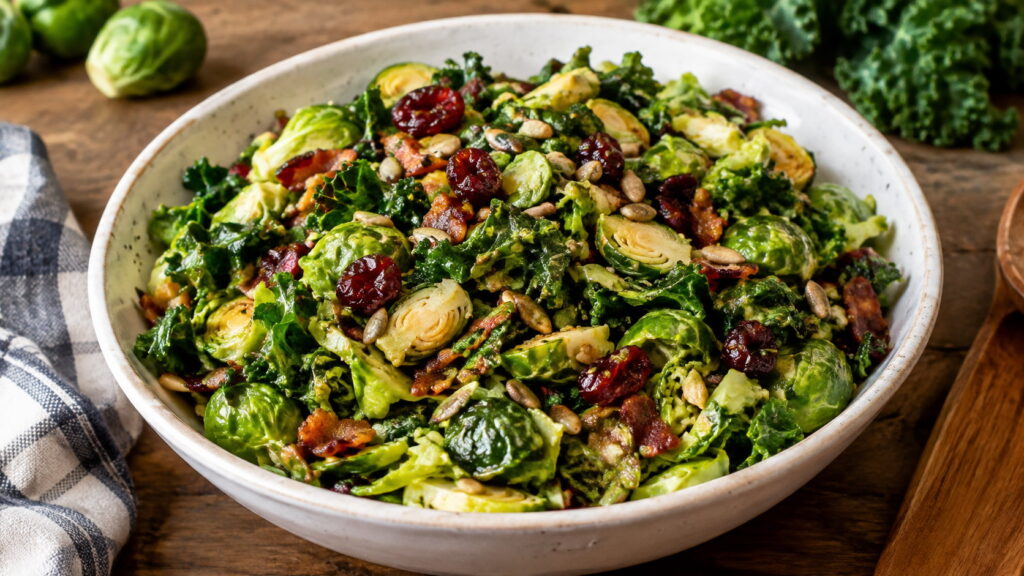
Craving the crisp, slightly sweet salad served at Cracker Barrel? This brussel sprout and kale salad Cracker Barrel recipe combines finely sliced Brussels sprouts, tender kale, a creamy sweet-tangy dressing, and crunchy toppings for a fresh side dish that is easy to make at home.
The recipe below walks you through choosing the best ingredients, preparing the vegetables for the right texture, balancing the dressing, and assembling the salad so every bite is flavorful. You’ll also find practical tips for making the salad ahead, adjusting the sweetness or acidity, and keeping the vegetables crisp.
In This Article
Why This Cracker Barrel Brussels Sprout and Kale Salad Is Worth Making at Home
Restaurant-style salads can be surprisingly easy to recreate once you understand what makes the flavors work. Brussels sprouts and kale provide a hearty base that holds up much better than delicate lettuce, while a creamy, tangy dressing softens the vegetables and brings everything together.
Freshly shaved Brussels sprouts offer a mild cabbage-like flavor with plenty of crunch. Kale contributes a deeper, slightly earthy taste and a sturdy texture. Once the kale is massaged and the vegetables have time to mingle with the dressing, the salad becomes much more tender without turning mushy.
A Fresh Salad With Plenty of Texture
The appeal of a Cracker Barrel-inspired Brussels sprout and kale salad comes from contrast. Crisp shredded vegetables meet tender kale, while sweet and savory additions give the salad more dimension.
A well-balanced bowl should have:
- Crunchy Brussels sprouts that are thin enough to eat comfortably
- Tender kale rather than tough, fibrous leaves
- Creamy, tangy dressing with enough sweetness to balance the greens
- Crunchy toppings for additional texture
- Sweet elements that complement the earthy vegetables
The hearty greens also make the salad practical for gatherings because they do not wilt as quickly as lettuce-based salads.
Why Homemade Works So Well
Making a copycat salad at home gives you control over every part of the recipe. You can make the dressing sweeter, increase the tang, add more crunch, or reduce the amount of dressing depending on your preference.
Fresh preparation also makes a noticeable difference. Thinly sliced Brussels sprouts have a much more pleasant texture than large chunks, while freshly washed and properly dried kale absorbs dressing without becoming watery.
Key tip: Give the assembled salad some resting time before serving. A short rest allows the dressing to penetrate the kale and Brussels sprouts while preserving enough crunch for a satisfying bite.
What Makes the Cracker Barrel-Style Salad So Good?
The secret is less about one unusual ingredient and more about balance. Brussels sprouts can have a slightly bitter edge, and kale has a naturally sturdy, earthy character. A sweet-tangy dressing helps mellow those flavors while adding richness.
The Brussels Sprouts Bring the Crunch
Raw Brussels sprouts are excellent in salads when sliced very thinly. Their flavor is milder than many people expect, especially when combined with a flavorful dressing.
Choose Brussels sprouts with:
- Firm, tightly packed leaves
- Bright green coloring
- Minimal browning or yellowing
- No soft or excessively damaged spots
Trim the woody stem before slicing. A sharp chef’s knife, mandoline, or food processor fitted with a slicing attachment can produce thin pieces quickly.
Thin slices are important. Thick pieces can feel dense and difficult to chew, while finely shaved sprouts blend naturally with the kale.
Kale Adds Body and Staying Power
Kale gives the salad a substantial texture and helps it remain enjoyable after dressing. Curly kale works well, although lacinato kale can provide a slightly softer bite.
Remove the thick central stems before chopping. The stems are fibrous and can distract from the tender leaves.
Massaging the chopped kale for a minute or two with clean hands helps break down some of its toughness. The leaves should become darker, softer, and easier to chew while still retaining some structure.
The Dressing Creates the Flavor Balance
A creamy dressing provides richness, while acidity keeps the salad from tasting heavy. Sweetness helps counter the earthy greens and gives the finished salad the familiar sweet-savory character associated with many restaurant-style vegetable salads.
Taste the dressing before adding it to the vegetables. The dressing should taste slightly more pronounced on its own than you want the finished salad to taste, because the raw vegetables will dilute and absorb some of its flavor.
Crunch and Sweetness Complete the Salad
Small additions such as dried fruit, nuts, seeds, or other crunchy toppings can transform the texture without overwhelming the vegetables.
Keep the quantities balanced. Too many toppings can turn a fresh Brussels sprout and kale salad into a mixture where the greens become secondary.
Ingredients for a Brussels Sprout and Kale Salad Cracker Barrel Recipe
The ingredient list is straightforward, but preparation makes a major difference in the final result.
Salad Ingredients
- 4 cups finely shredded Brussels sprouts
- 4 cups chopped fresh kale, stems removed
- ⅓ cup dried cranberries or another dried fruit
- ⅓ cup chopped pecans or sunflower seeds
- ¼ cup finely shredded Parmesan cheese, optional
- Salt and freshly ground black pepper, to taste
Fresh Brussels sprouts should feel firm when pressed. Kale leaves should look vibrant and fresh without excessive wilting.
Sweet-Tangy Dressing
- ½ cup mayonnaise
- 2 tablespoons apple cider vinegar
- 2 tablespoons honey
- 1 tablespoon fresh lemon juice
- 1 teaspoon Dijon mustard
- 1–2 tablespoons water, as needed for consistency
- ¼ teaspoon salt
- ⅛ teaspoon black pepper
The dressing can be adjusted to suit your taste. Add another teaspoon of honey if you prefer a sweeter salad, or increase the apple cider vinegar slightly for a sharper finish.
Ingredient Notes
Mayonnaise: Creates a creamy base and helps the dressing cling to the shredded vegetables.
Apple cider vinegar: Provides acidity and cuts through the richness of the mayonnaise.
Honey: Adds gentle sweetness that balances the bitterness of kale and Brussels sprouts.
Lemon juice: Brightens the dressing and keeps the flavor from becoming overly rich.
Dijon mustard: Adds subtle savory depth and helps round out the sweet-and-tangy profile.
Dried cranberries: Bring chewy texture and concentrated fruit sweetness. Raisins or chopped dried cherries can also work.
Pecans: Add buttery crunch. Sunflower seeds make a useful alternative when nuts are unsuitable.
Kitchen Equipment You’ll Need
No specialized equipment is necessary. Gather:
- Large mixing bowl
- Small bowl for the dressing
- Sharp chef’s knife
- Cutting board
- Whisk
- Salad tongs or large spoons
- Mandoline or food processor, optional
A mandoline can make quick work of the Brussels sprouts, but use the hand guard and work carefully because the blade is extremely sharp. A sharp chef’s knife gives you excellent control if you prefer to slice the sprouts by hand.
A Simple Prep Timeline
| Task | Approximate Time |
| Wash and trim vegetables | 5 minutes |
| Slice Brussels sprouts | 5–8 minutes |
| Remove stems and chop kale | 5 minutes |
| Mix dressing | 3 minutes |
| Massage kale | 2 minutes |
| Assemble salad | 3 minutes |
| Rest before serving | 20–30 minutes |
| Total active preparation | About 20–25 minutes |
No cooking is required, making the brussel sprout and kale salad Cracker Barrel recipe especially convenient when you need a fresh side dish without turning on the oven or stovetop.
How to Prepare the Brussels Sprouts and Kale for the Best Texture
Great texture starts before the dressing ever touches the vegetables. Brussels sprouts should be thin enough to chew easily, while kale needs a little hands-on preparation to become tender without losing its fresh character.
Shave the Brussels Sprouts Thinly
Start by removing any loose or damaged outer leaves. Trim a thin slice from the stem end, then cut each Brussels sprout in half.
Slice the halves crosswise into very thin strips. A sharp chef’s knife works well, while a mandoline can produce especially fine shreds.
Aim for thin, delicate slices rather than chunky pieces. Finely shredded Brussels sprouts absorb the dressing more evenly and blend better with chopped kale.
Avoid soaking the sliced sprouts for an extended period. Excess water can dilute the dressing and leave the finished salad watery.
Prepare the Kale Properly
Wash the kale under cool running water, then dry it thoroughly. Excess moisture on the leaves can prevent the dressing from coating them properly.
Strip the leaves from the thick central stems. Stack several leaves, roll them loosely, and slice into thin ribbons before chopping them into manageable pieces.
A salad spinner makes drying much easier, but clean kitchen towels also work. Dry greens are especially important when making a creamy dressing-based salad.
Combine the Greens Before Dressing
Place the shaved Brussels sprouts and chopped kale in a large bowl. Toss them together with your hands or salad tongs so the two vegetables are evenly distributed.
Check the bowl for unusually large pieces of stem or thick Brussels sprout slices and remove them before moving on to the next step.
The Secret to Tender, Flavorful Kale Without Cooking It
Raw kale can sometimes taste tough or overly fibrous, but cooking is not necessary to make it pleasant in a salad. Gentle massaging breaks down the leaves and gives them a softer texture while preserving their fresh flavor.
How to Massage Kale
Place the chopped kale in a large bowl and add about 1 tablespoon of the prepared dressing.
Use clean hands to gently squeeze and rub the kale leaves for about 60–90 seconds. Work the leaves until they become darker, softer, and slightly glossy.
The goal is tender, not limp. Stop once the kale has noticeably softened but still has enough structure to provide texture.
Why Massaging Makes Such a Difference
Kale has a firmer structure than lettuce, which is why simply tossing it with dressing may leave the leaves feeling coarse.
Massaging helps soften the leaves and distributes a small amount of seasoning throughout the greens. The technique also allows the kale to absorb more of the dressing later without requiring excessive amounts.
Avoid over-massaging. Several minutes of vigorous squeezing can turn the leaves too soft and diminish the hearty texture that makes kale useful in a make-ahead salad.
Should Brussels Sprouts Be Massaged Too?
Usually, no. Thinly sliced Brussels sprouts already have a crisp but manageable texture.
Letting the sprouts sit with the finished dressing will soften them slightly. A short resting period provides a pleasant balance between crunch and tenderness without requiring any cooking.
Making the Sweet-Tangy Dressing for This Cracker Barrel Salad
A flavorful dressing ties the hearty vegetables together. The ideal consistency should be creamy enough to coat the kale and Brussels sprouts but loose enough to distribute without leaving heavy clumps.
Whisk the Dressing Until Smooth
Add the mayonnaise, apple cider vinegar, honey, lemon juice, Dijon mustard, salt, and black pepper to a small bowl.
Whisk thoroughly until the mixture looks smooth and uniform. Add water 1 teaspoon at a time if the dressing feels too thick to toss easily.
Taste before dressing the salad. Adjust according to the flavor balance you want:
- Too sweet: Add a small splash of apple cider vinegar or lemon juice.
- Too tangy: Whisk in a little more honey.
- Too thick: Add a teaspoon of water at a time.
- Too rich: Increase the lemon juice slightly.
- Needs more savory flavor: Add a small pinch of salt or another touch of Dijon mustard.
Give the Dressing a Short Rest
Let the mixed dressing sit for about 5–10 minutes before tossing the salad. A brief rest gives the flavors a chance to blend.
The dressing can also be prepared several hours ahead and refrigerated in an airtight container. Bring it out and whisk briefly before using because the mixture may thicken while chilled.
How Much Dressing Should You Use?
Start with roughly three-quarters of the dressing, toss the vegetables thoroughly, and check the consistency before adding the rest.
Adding dressing gradually is one of the easiest ways to avoid a soggy salad. Brussels sprouts and kale can absorb quite a bit of flavor, but the finished salad should still look fresh rather than saturated.
Once the greens are evenly coated, fold in the dried cranberries, pecans or sunflower seeds, and Parmesan if using. Let the salad rest for 20–30 minutes in the refrigerator before serving so the flavors have time to develop while the vegetables retain their crunch.
How to Assemble the Brussels Sprout and Kale Salad Cracker Barrel Recipe
Once the vegetables and dressing are ready, assembly takes only a few minutes. The main goal is to coat the greens evenly without drowning them in dressing.
Toss the Salad in Stages
- Place the shaved Brussels sprouts and massaged kale in a large mixing bowl.
- Pour in about three-quarters of the dressing.
- Toss thoroughly with salad tongs or clean hands, lifting the vegetables from the bottom of the bowl so the dressing reaches everything.
- Add the remaining dressing only if the salad looks dry.
- Fold in the dried cranberries, chopped pecans or sunflower seeds, and Parmesan if using.
- Season with a small amount of salt and freshly ground black pepper.
- Refrigerate the salad for 20–30 minutes before serving.
A short resting period gives the dressing time to work into the shredded vegetables. Brussels sprouts become slightly more tender, while the kale takes on a richer flavor without losing its structure.
Taste Before Serving
Give the salad a final toss after chilling, then taste a small bite. Add a little salt if the flavors seem flat, or use a small splash of lemon juice when the dressing needs more brightness.
Avoid adding a large amount of dressing at the end. A properly dressed salad should look glossy and flavorful, not wet or soupy.
Keep Crunchy Toppings Fresh
Nuts and seeds provide an important contrast to the softening greens. Adding them shortly before serving helps preserve their crunch, particularly when preparing the salad several hours ahead.
The same approach works well with other crisp toppings. Keep delicate ingredients separate until serving whenever possible.
Cooking Tips That Make This Copycat Salad Taste Restaurant-Quality
Although the recipe requires no cooking, a few preparation details make a noticeable difference. Small changes in slicing, seasoning, and resting time can determine whether the finished salad tastes fresh and balanced or heavy and watery.
Slice the Brussels Sprouts as Thinly as Possible
Thin shreds make raw Brussels sprouts much easier to eat. Uniform pieces also distribute the dressing more consistently.
A sharp knife is safer and more effective than a dull one because it allows you to make controlled cuts without excessive pressure.
Massage the Kale Before Full Assembly
Do not skip the brief massage. Kale needs more preparation than lettuce, and the small amount of dressing used during massaging helps soften the leaves.
Look for a change in appearance rather than relying only on a timer. Properly massaged kale should become darker and more pliable while still retaining some firmness.
Balance the Dressing Before Adding It
Taste the dressing by itself. Sweetness, acidity, and creaminess should all be noticeable without one flavor completely dominating.
Raw Brussels sprouts and kale have strong personalities, so a bland dressing will leave the finished salad tasting flat. Conversely, an overly sweet dressing can make the salad feel heavy.
Let the Salad Rest, But Not All Day
A 20–30 minute rest is a useful starting point. The vegetables soften slightly and absorb the dressing while retaining their characteristic crunch.
Longer resting can work when making the salad ahead, but crunchy toppings should remain separate until close to serving.
Dry Every Vegetable Thoroughly
Water left on washed kale or Brussels sprouts can dilute the dressing. Excess moisture is particularly troublesome with a creamy dressing because the salad can lose its concentrated flavor.
A salad spinner is convenient, but several clean kitchen towels can also remove enough moisture for good results.
Chill Before Serving
Cold temperatures help the dressing feel creamy and refreshing. Refrigerating the finished salad also gives the flavors time to meld.
Serve the salad cold or slightly chilled rather than leaving it at room temperature for an extended period.
Common Mistakes That Can Ruin a Brussels Sprout and Kale Salad
A few easily avoidable mistakes can affect the texture and flavor of an otherwise simple salad.
| Common mistake | What happens | Better approach |
| Cutting Brussels sprouts too thick | Pieces feel tough and bulky | Shave them into thin strips |
| Leaving kale stems attached | Salad becomes fibrous | Remove thick stems before chopping |
| Skipping the kale massage | Leaves remain tough | Massage for 60–90 seconds |
| Using wet vegetables | Dressing becomes diluted | Dry greens thoroughly |
| Adding all dressing at once | Salad can become soggy | Start with three-quarters |
| Over-sweetening the dressing | Vegetable flavors disappear | Balance honey with vinegar and lemon |
| Serving immediately | Flavors have less time to develop | Rest for 20–30 minutes |
| Adding nuts too early | Crunch can diminish | Add close to serving |
| Over-massaging kale | Leaves become limp | Stop once leaves soften and darken |
| Under-seasoning | Salad tastes flat despite good ingredients | Taste and adjust before serving |
Why Overdressing Is the Biggest Problem
Brussels sprouts and kale are sturdy vegetables, so the salad can handle more dressing than delicate lettuce. More dressing does not necessarily mean more flavor, though.
Excess dressing can make the vegetables heavy and mask the fresh, slightly earthy flavor of the greens. Start conservatively and add more only after tossing and tasting.
What to Do If the Salad Tastes Too Bitter
Fresh Brussels sprouts and kale naturally have some bitterness. Thin slicing, massaging the kale, and using a balanced dressing help mellow those flavors.
If bitterness still dominates, add a small amount of honey to the dressing or increase the lemon juice slightly. A modest amount of dried fruit can also provide a pleasant sweet contrast.
What to Do If the Salad Becomes Too Wet
Extra moisture usually comes from undried vegetables or too much dressing. Avoid trying to correct the problem by adding more kale or Brussels sprouts after the salad has already become saturated.
For the best result, drain or spoon off obvious excess dressing, then add a modest amount of freshly prepared dry greens. Future batches should use thoroughly dried vegetables and gradual dressing additions.
Easy Substitutions and Variations for the Copycat Recipe
One of the best things about a Brussels sprout and kale salad is how easily the ingredients can be adjusted without losing the character of the dish. Keep the shredded vegetables and sweet-tangy dressing as the foundation, then customize the toppings around what you have available.
Nut-Free Brussels Sprout and Kale Salad
Replace pecans with sunflower seeds or pumpkin seeds for a satisfying crunch without tree nuts. Toasted seeds add a slightly savory flavor that works particularly well with the sweet dressing.
Swap the Dried Fruit
Dried cranberries are a natural choice because their tart sweetness balances the earthy greens. Chopped dried cherries, raisins, golden raisins, or finely chopped dried apricots can also work.
Choose unsweetened or lightly sweetened dried fruit when possible if you prefer the dressing to remain the primary source of sweetness.
Try a Different Kale
Curly kale gives the salad plenty of texture and holds dressing exceptionally well. Lacinato kale, sometimes called dinosaur kale, has flatter leaves and a somewhat more tender bite.
Remove the thick stems regardless of the variety you choose.
Make the Dressing Lighter
A lighter dressing can be made by replacing part of the mayonnaise with plain Greek yogurt. Start by substituting about one-quarter of the mayonnaise, then adjust the consistency with a small splash of water.
Greek yogurt adds tang, so taste the dressing before adding extra vinegar or lemon juice.
Add More Protein
Turn the salad into a more substantial lunch by adding sliced grilled chicken, roasted turkey, or another mild protein. Keep additions moderate so the Brussels sprouts and kale remain the focus.
For the closest copycat-style experience, keep the basic vegetable-to-dressing ratio intact and make changes primarily to the toppings.
What to Serve With This Cracker Barrel-Inspired Brussels Sprout and Kale Salad
The fresh, slightly sweet flavor makes the salad particularly useful beside rich or savory main dishes. Crisp vegetables provide contrast when the rest of the meal contains roasted, grilled, or creamy foods.
Pair It With Chicken
Serve the salad alongside:
- Herb-roasted chicken
- Grilled chicken breasts
- Oven-baked chicken thighs
- Roasted chicken with pan juices
The bright dressing helps balance the savory flavor of roasted poultry.
Pair It With Steak or Pork
A generous bowl of salad works beautifully alongside grilled steak, pork chops, or roasted pork tenderloin. The combination gives the meal both hearty and fresh elements.
Serve It at Holiday Meals
The colorful mixture of green vegetables and dried fruit makes the salad suitable for Thanksgiving, Christmas, Easter, or family gatherings.
Prepare the vegetables and dressing ahead of time, then combine them shortly before the meal. Keeping crunchy toppings separate until serving helps maintain the best texture.
Make It Part of a Casual Dinner
The salad also fits naturally into weeknight meals. Pair it with baked potatoes, sandwiches, roasted vegetables, or a simple soup when you want a fresh side without much additional cooking.
Make-Ahead, Storage, and Meal Prep Tips
Brussels sprouts and kale are much sturdier than lettuce, making this salad particularly convenient for advance preparation. Proper storage keeps the vegetables crisp while allowing the dressing to develop more flavor.
How to Make the Salad Ahead
Prepare the dressing up to 2 days ahead and keep it refrigerated in a covered container.
Brussels sprouts and kale can also be washed, thoroughly dried, trimmed, and sliced ahead of time. Store the vegetables separately in airtight containers lined with a clean paper towel to absorb excess moisture.
Combine the greens and dressing several hours before serving when you want a softer, more developed texture.
How Long Does the Salad Last?
A dressed salad is best enjoyed within 2–3 days when properly refrigerated. Texture gradually softens as the vegetables absorb the dressing, although the hearty greens generally hold up better than lettuce.
Keep the salad refrigerated at 40°F (4°C) or below. The USDA provides additional food-storage and food-safety guidance for refrigerated prepared foods.
Store Toppings Separately
Nuts, seeds, and other crunchy ingredients should ideally be stored separately. Add them immediately before serving to preserve their texture.
Dried fruit can remain mixed into the salad because its texture does not deteriorate as quickly as crunchy toppings.
Can You Freeze Brussels Sprout and Kale Salad?
Freezing the assembled salad is not recommended. Raw kale and Brussels sprouts can become limp and watery after thawing, while a mayonnaise-based dressing may separate.
The better approach is to prepare fresh vegetables and dressing separately and refrigerate them until needed.
Meal Prep Strategy
For several ready-to-eat portions, divide the shredded vegetables into individual containers and keep the dressing in small sealed containers.
Add dressing shortly before eating, then finish each portion with nuts or seeds. Such an approach keeps the vegetables crisp and gives you better control over the amount of dressing in each serving.
Frequently Asked Questions About Brussels Sprout and Kale Salad
Can you eat Brussels sprouts raw in a salad?
Yes. Raw Brussels sprouts are excellent in salads when they are fresh and thinly sliced. Fine shreds make the sprouts easier to chew and allow the dressing to coat them evenly.
Do you need to massage kale for this recipe?
Massaging is highly recommended. Gently working the kale with a small amount of dressing for 60–90 seconds softens the leaves and makes the finished salad more pleasant to eat.
How do you make Brussels sprouts less bitter?
Choose fresh, firm sprouts and slice them thinly. A balanced dressing containing sweetness and acidity also helps mellow their natural bitterness.
Can I make this Brussels sprout and kale salad the day before?
Yes. The vegetables can be prepared the day before, and the dressing can be refrigerated separately. For the freshest texture, combine the dressing with the vegetables several hours before serving rather than dressing the salad too far in advance.
How long does Brussels sprout and kale salad last in the refrigerator?
A dressed salad is generally best within 2–3 days when kept properly refrigerated. Crunchy toppings are best stored separately and added immediately before serving.
Can I use bagged shredded Brussels sprouts?
Yes. Bagged shredded Brussels sprouts can save preparation time. Check that the pieces are fresh, crisp, and free from excessive moisture before using them.
What can I substitute for kale?
Lacinato kale is an easy swap for curly kale. Other sturdy greens can work, although the texture and flavor will change. Avoid very delicate lettuce if you want the salad to retain its hearty, make-ahead character.
Can I make the dressing less sweet?
Absolutely. Start with less honey, taste the dressing, and add more only if needed. A little extra lemon juice or apple cider vinegar can restore balance if the dressing becomes too rich.
How can I make the salad more filling?
Add a moderate portion of grilled chicken, turkey, or another mild protein. Seeds and nuts can also provide additional texture and richness without changing the basic salad.
Should the salad be served cold or at room temperature?
Serve it chilled or slightly cool. Refrigeration helps the flavors blend and keeps the vegetables refreshing and crisp.
A Fresh, Crunchy Salad Worth Making Again
A good brussel sprout and kale salad Cracker Barrel recipe depends on simple ingredients handled carefully. Thinly shaved Brussels sprouts, properly prepared kale, and a balanced sweet-tangy dressing create the foundation, while dried fruit and crunchy toppings add the finishing contrast.
Take the extra minute to massage the kale, dry the vegetables thoroughly, and add the dressing gradually. Those small preparation details make the biggest difference in texture and flavor.
Serve the salad alongside roasted chicken, steak, pork, or your favorite hearty dinner, or portion it into containers for an easy make-ahead lunch. Once you have the basic recipe down, adjust the toppings and dressing to create your own favorite version while keeping the signature combination of crisp Brussels sprouts and tender kale.
Save this Cracker Barrel-inspired Brussels sprout and kale salad recipe for your next family dinner, holiday spread, or meal-prep day, and enjoy a restaurant-style salad made fresh in your own kitchen.
