
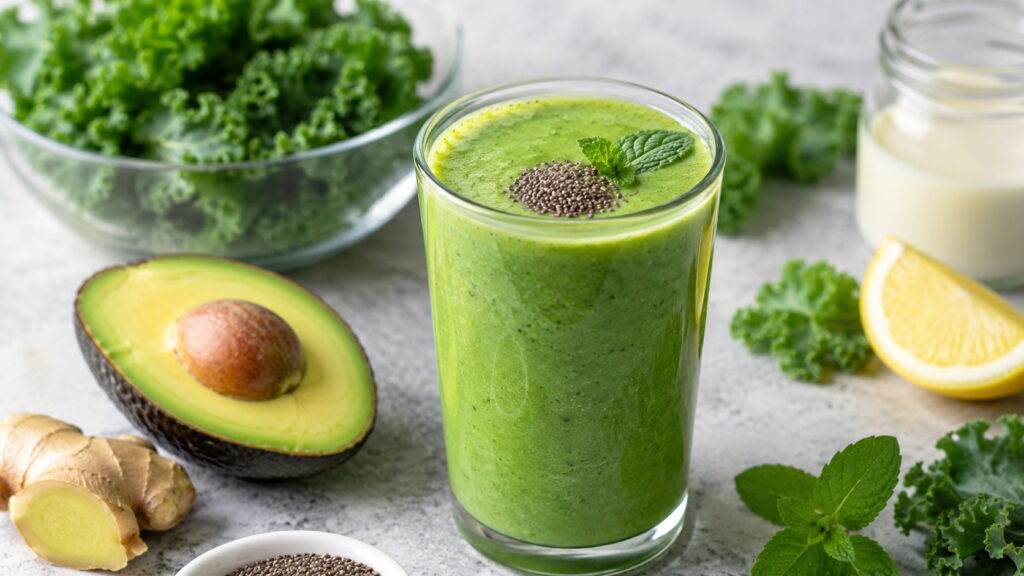
A kale and avocado smoothie for inflammation recipe no banana is more than just a trendy green drink—it’s a purposeful blend designed to support your body while still tasting smooth, fresh, and satisfying. This recipe skips banana entirely, which makes it ideal for anyone avoiding excess sugar, managing sensitivities, or simply looking for a lighter, cleaner flavor.
Inflammation plays a role in many everyday health concerns, from fatigue to joint discomfort. What you eat can either fuel that inflammation or help calm it. This smoothie leans heavily toward the latter by combining nutrient-dense greens with healthy fats and natural anti-inflammatory compounds.
What makes this smoothie especially effective:
- Balanced nutrition: fiber, healthy fats, and antioxidants in one glass
- Naturally creamy texture without relying on banana
- Low sugar profile, making it suitable for many diets
- Quick preparation, perfect for busy mornings or post-workout recovery
Readers will learn how to:
- Blend a smooth, non-bitter kale smoothie
- Choose ingredients that actively support inflammation reduction
- Customize the recipe for taste, texture, and nutrition
- Store and prep smoothies efficiently for daily use
This is not just another green smoothie—it’s a functional recipe designed to work with your body.
In This Article
The Science Behind Anti-Inflammatory Ingredients in This Smoothie
Every ingredient in this smoothie has a purpose. Instead of random add-ins, the combination here focuses on reducing inflammation while supporting overall wellness.
Kale: The Nutrient Powerhouse
Kale delivers a strong dose of vitamins A, C, and K, along with antioxidants like quercetin and kaempferol. These compounds help combat oxidative stress, which is closely linked to inflammation.
Removing the stems before blending is essential. Stems can add bitterness and make the texture fibrous instead of smooth.
Avocado: Creaminess with a Health Boost
Avocado replaces banana in this recipe while bringing healthy monounsaturated fats, which are known to help reduce inflammation markers in the body. It also adds a naturally creamy texture that makes the smoothie feel rich without dairy.
Ginger and Turmeric: Natural Anti-Inflammatory Agents
- Ginger helps with digestion and may reduce muscle soreness
- Turmeric contains curcumin, widely studied for its anti-inflammatory effects
For better absorption of turmeric, pairing it with a small pinch of black pepper is highly effective.
Lemon Juice: Brightness and Detox Support
Fresh lemon juice adds vitamin C and helps balance the earthy flavor of kale. It also enhances the absorption of plant-based iron found in greens.
For deeper insights into how anti-inflammatory foods support health, you can explore this resource from Harvard:
https://www.hsph.harvard.edu/nutritionsource/anti-inflammatory-diet/
Why These Ingredients Work Better Together
Combining leafy greens, healthy fats, and anti-inflammatory spices creates a synergistic effect:
- Fat from avocado helps absorb fat-soluble vitamins
- Vitamin C from lemon boosts mineral absorption
- Spices amplify the anti-inflammatory impact
The result is a smoothie that’s both functional and satisfying.
Ingredients for Kale and Avocado Smoothie (No Banana)
A successful smoothie starts with the right ingredients and proper balance. This version keeps it simple while maximizing both flavor and health benefits.
Core Ingredients
- 1 cup fresh kale leaves (stems removed)
- ½ ripe avocado
- 1 cup unsweetened almond milk (or preferred plant milk)
- ½ cup cold water or ice
- 1 tablespoon fresh lemon juice
- ½ teaspoon grated fresh ginger
- ¼ teaspoon turmeric powder (or small fresh turmeric piece)
- Pinch of black pepper (enhances turmeric absorption)
Optional Add-Ins for Extra Nutrition
- 1 tablespoon chia seeds or flaxseeds
- 1 scoop plant-based protein powder
- 1–2 soft dates for natural sweetness
- Handful of spinach for a milder green flavor
Ingredient Notes for Best Results
- Use ripe avocado for a smooth, buttery texture
- Choose young kale if possible—it’s less bitter than mature leaves
- Unsweetened milk keeps sugar levels low and flavor clean
- Fresh ginger provides a brighter, more vibrant taste than powdered
Simple Substitutions
- Replace almond milk with oat milk or coconut milk for a different flavor
- Swap kale with spinach if you prefer a milder taste
- Use lime juice instead of lemon for a slightly different citrus profile
Having the right ingredients—and understanding why they matter—sets the foundation for a smoothie that is both delicious and genuinely beneficial.
Step-by-Step: How to Make Kale and Avocado Smoothie for Inflammation Recipe No Banana
Making this kale and avocado smoothie for inflammation recipe no banana is simple, but a few small technique details make a big difference in texture and flavor.
Quick Recipe Snapshot
- Prep time: 5 minutes
- Blend time: 1–2 minutes
- Total time: 7 minutes
- Servings: 1–2 glasses
Equipment You’ll Need
- High-speed blender (recommended for smooth texture)
- Measuring cups and spoons
- Knife and cutting board
Step-by-Step Instructions
- Prep the kale properly
Remove the thick stems and tear the leaves into smaller pieces. Rinse thoroughly to remove any grit.
Tip: Smaller pieces blend faster and more evenly. - Add liquids first
Pour almond milk and water (or ice) into the blender.
This helps the blades move freely and prevents clumping. - Layer the soft ingredients
Add avocado, lemon juice, ginger, turmeric, and black pepper. - Add kale last
Place kale on top so it gets pulled down into the blades gradually. - Blend until smooth
Start on low speed, then increase to high. Blend for 45–90 seconds.
Look for a vibrant green color and silky texture with no visible bits. - Taste and adjust
If needed, add:- A date for sweetness
- More lemon for brightness
- Extra liquid for thinner consistency
- Serve immediately
Pour into a glass and enjoy fresh for maximum nutrient retention.
Pro Tip: If your blender struggles, pause and stir once, then continue blending.
How to Make This Smoothie Creamy Without Banana
Bananas are often used in smoothies for texture and sweetness, but they’re not essential. This recipe proves you can get a rich, satisfying result without them.
Why Banana Is Usually Used
- Adds natural sweetness
- Creates a thick, creamy consistency
- Masks bitterness from greens
Smart Alternatives That Work Even Better
- Avocado (primary choice)
Provides a buttery texture and healthy fats without overpowering flavor - Plant-based yogurt
Adds creaminess and slight tang - Nut butters (almond, cashew)
Boosts richness and protein - Soaked chia seeds
Thickens naturally while adding fiber
Texture-Balancing Tips
- Use ½ ripe avocado—too much can make the smoothie heavy
- Add ice gradually to control thickness
- Blend longer than usual for a smoother finish
Flavor Balancing Without Banana
Without banana’s sweetness, balance becomes key:
- Add 1–2 dates for natural sweetness
- Increase citrus slightly to brighten the taste
- Use cinnamon or vanilla extract for subtle depth
Key takeaway: Creaminess comes from fat and blending technique—not just banana.
Flavor Boosters That Enhance Your Anti-Inflammatory Smoothie
Once you master the base recipe, small additions can elevate both flavor and nutritional value without compromising the anti-inflammatory focus.
Natural Sweeteners (Low-Impact Options)
- Medjool dates
- Raw honey
- Maple syrup
Use sparingly to keep the smoothie balanced and not overly sweet.
Citrus & Fresh Elements
- Extra lemon or lime juice for brightness
- Fresh mint for a refreshing finish
- Cucumber for added hydration and lightness
Anti-Inflammatory Spices
- Turmeric (already included, but can be increased slightly)
- Cinnamon for warmth and blood sugar support
- Ginger for a zesty kick
Superfood Add-Ins
- Chia seeds or flaxseeds for omega-3s
- Spirulina for a nutrient boost
- Matcha for gentle energy
- Collagen powder (if not strictly plant-based)
How to Combine Without Overpowering
Stick to 1–2 boosters at a time. Too many additions can:
- Muddle the flavor
- Affect texture negatively
- Reduce the refreshing quality
Pro Tip: Start simple, taste, then build gradually. A well-balanced smoothie always beats an overloaded one.
Common Mistakes to Avoid When Making Kale Smoothies
Even a simple recipe like this can go wrong without the right technique. Avoiding these common mistakes will help you get a smooth, balanced kale and avocado smoothie for inflammation recipe no banana every time.
Using Too Much Kale
Kale is powerful, but overdoing it leads to bitterness and a harsh aftertaste.
Stick to about 1 cup of leaves per serving for the best balance.
Skipping Stem Removal
Kale stems are tough and fibrous. Blending them results in a gritty texture.
Always remove stems before adding to the blender.
Poor Blending Order
Throwing everything in at once can cause uneven blending.
Liquids should always go first, followed by soft ingredients, then greens.
Not Blending Long Enough
A quick blend often leaves tiny kale bits behind.
Blend until the texture is completely smooth and velvety, usually 60–90 seconds.
Overloading Ingredients
Adding too many extras can:
- Mute the fresh flavor
- Make the smoothie too thick
- Reduce drinkability
Keep it simple and intentional.
Ignoring Flavor Balance
Without banana, balance matters more:
- Too bitter → add a date or more lemon
- Too thick → add liquid
- Too flat → add a pinch of salt or citrus
Easy Variations of Kale and Avocado Smoothie for Inflammation
Once you’re comfortable with the base, small tweaks can tailor the smoothie to your goals without losing its anti-inflammatory benefits.
Low-Calorie Light Version
- Reduce avocado to ¼
- Add more cucumber or spinach
- Use extra water instead of milk
Result: lighter texture, fewer calories, still refreshing
High-Protein Recovery Version
- Add 1 scoop plant-based protein powder
- Include 1 tablespoon almond butter
- Use soy milk or protein-rich plant milk
Best for: post-workout or meal replacement
Detox-Focused Green Version
- Add celery and parsley
- Increase lemon juice
- Include a small piece of fresh turmeric
Flavor: brighter, more herbal, very refreshing
Tropical Twist (No Banana)
- Add frozen mango or pineapple (small amount)
- Use coconut milk instead of almond milk
Result: slightly sweeter with a tropical vibe, still banana-free
Creamier Breakfast Version
- Add plant-based yogurt
- Include oats (1–2 tablespoons)
Keeps you full longer and adds a breakfast-friendly texture
When and How to Drink This Smoothie for Maximum Benefits
Timing and consistency can make a noticeable difference in how effective this smoothie feels in your routine.
Best Time to Drink It
- Morning (empty stomach):
Helps your body absorb nutrients efficiently and kickstart digestion - Post-workout:
Supports recovery with hydration, nutrients, and anti-inflammatory compounds - Midday reset:
Great as a light, energizing boost without heaviness
How Often Should You Drink It?
- 3–5 times per week works well for most people
- Daily use is fine if ingredients are balanced and varied over time
Consistency matters more than frequency. A smoothie like this works best as part of a long-term habit.
Should You Pair It With Food?
- Can be enjoyed on its own as a light meal
- Pair with:
- Whole grain toast
- Nuts or seeds
- Boiled eggs (if not plant-based)
This helps create a more complete and satisfying meal.
Practical Tips for Routine
- Prep ingredients the night before
- Keep smoothie packs ready in the freezer
- Drink immediately after blending for best nutrient quality
Key takeaway: Regular, mindful consumption delivers better results than occasional use.
Storage, Meal Prep, and Make-Ahead Tips
Fresh smoothies always taste best, but with the right approach, you can still prep this kale and avocado smoothie for inflammation recipe no banana ahead of time without sacrificing too much quality.
How Long It Stays Fresh
- Refrigerator: up to 24 hours in an airtight container
- Best consumed within 12 hours for optimal flavor and nutrients
- Separation is natural—just shake or stir before drinking
Best Storage Containers
- Glass jars with tight lids (preferred)
- BPA-free airtight bottles
- Fill container to the top to minimize oxidation
Freezing Smoothie Packs (Best Method)
Instead of storing blended smoothies, prep ingredients in advance:
- Add kale, avocado chunks, ginger, and turmeric to freezer bags
- Freeze flat for easy storage
- When ready, dump into blender with liquid and blend fresh
Benefit: better texture, fresher taste, and preserved nutrients
Can You Freeze the Smoothie Itself?
Yes, but with a small trade-off:
- Texture may slightly change after thawing
- Stir or re-blend before drinking
Quick Grab-and-Blend Routine
- Prep 3–5 smoothie packs at once
- Store in freezer
- Blend in under 2 minutes each morning
Pro Tip: Add lemon juice before freezing to help preserve color and freshness.
Nutritional Benefits Breakdown (Per Serving)
This smoothie is designed to deliver real functional benefits—not just taste good.
Estimated Nutrition (1 serving)
| Nutrient | Amount (Approx.) |
| Calories | 220–260 kcal |
| Healthy Fats | 15–18g |
| Carbohydrates | 12–18g |
| Fiber | 6–8g |
| Protein | 3–6g |
Key Nutritional Highlights
- Rich in antioxidants from kale and spices
- High in healthy fats from avocado for sustained energy
- Good fiber content supports digestion and gut health
- Naturally low in sugar (especially without banana)
Anti-Inflammatory Compounds
- Curcumin (turmeric)
- Quercetin (kale)
- Omega-3s (if chia/flax added)
- Vitamin C (lemon juice)
This combination supports:
- Reduced oxidative stress
- Improved recovery after exercise
- Better overall wellness
FAQs About Kale and Avocado Smoothie for Inflammation Recipe No Banana
Can I use frozen kale instead of fresh?
Yes. Frozen kale works well and may even blend smoother. Let it sit for a minute before blending if your blender isn’t very powerful.
What can replace avocado in this smoothie?
Try plant-based yogurt, soaked cashews, or a small amount of nut butter. Each option keeps the creamy texture without banana.
Is this smoothie good for weight loss?
It can support weight loss thanks to its fiber and healthy fats, which help keep you full. Portion control still matters.
How do I reduce the bitterness of kale?
Use young kale, remove stems, and add lemon juice or a date. Proper blending also improves taste significantly.
Can I make this smoothie without a high-speed blender?
Yes, but chop ingredients smaller and blend longer. You may need to strain it for a smoother texture.
Can I prepare it the night before?
You can, but freshness is best. Store in an airtight container and shake well before drinking.
What liquid works best besides almond milk?
Oat milk, coconut milk, or even plain water all work. Each creates a slightly different flavor and texture.
A Simple Daily Habit Worth Keeping
A well-made kale and avocado smoothie for inflammation recipe no banana can easily become part of your daily routine without feeling repetitive or restrictive. It’s quick, adaptable, and genuinely supportive of your health goals.
Try it as written first, then adjust flavors and add-ins to suit your taste. Small tweaks can make it feel new every time while keeping the same core benefits.
Blend a batch tomorrow morning, experiment with one variation, and see how your body responds. If it works for you, save it, share it, and make it a habit that actually sticks.
