
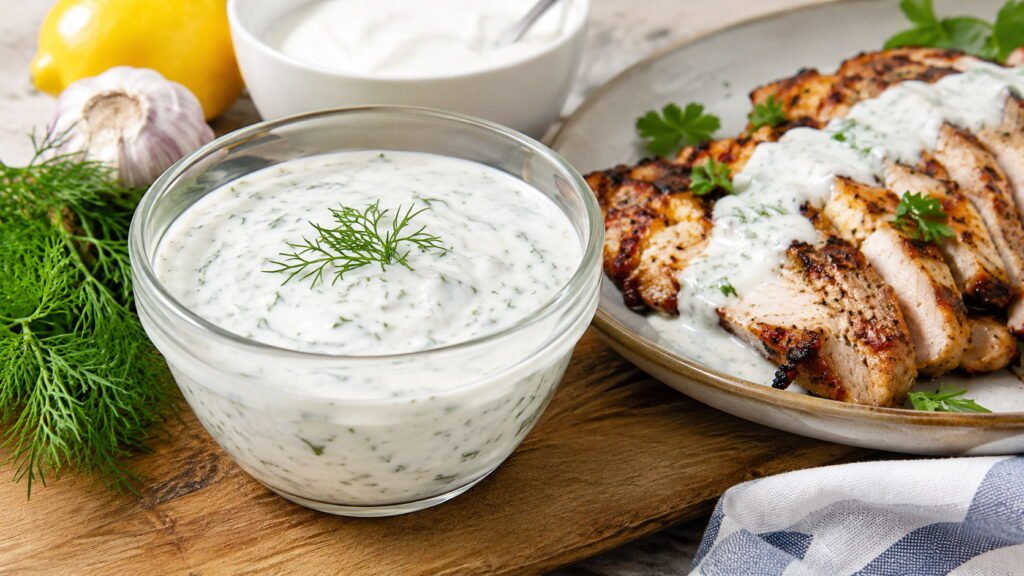
Yoghurt dressing for meats is a simple way to make grilled chicken, juicy beef, tender lamb, and roasted pork even more flavorful. Made with creamy plain yogurt, fresh lemon juice, garlic, olive oil, and fragrant herbs, this easy homemade sauce delivers a refreshing tang that balances the rich, savory flavors of cooked meat.
The best part is how quickly the dressing comes together. You need just a few everyday ingredients, one mixing bowl, and about 10 minutes to prepare a versatile sauce for weeknight dinners, summer barbecues, kebabs, and Mediterranean-inspired meals. No cooking is required, and the flavor can be adjusted easily to suit your favorite dishes.
Throughout this guide, you’ll learn how to make yoghurt dressing for meats from scratch, choose the right type of yogurt, balance the seasonings, and customize the recipe for different proteins. You’ll also find practical tips for achieving a smooth consistency, delicious flavor variations, serving suggestions, and safe storage advice.
In This Article
What Is Yoghurt Dressing for Meats, and Why Does It Work So Well?
Yoghurt dressing for meats is a creamy, tangy sauce made by combining plain yogurt with seasonings, herbs, and acidic ingredients such as lemon juice. Depending on the recipe, it can be mild and refreshing, boldly garlicky, spicy, or packed with fresh herbs.
Unlike heavy cream-based sauces, yogurt dressing has a naturally bright flavor that complements rich meats without overwhelming them. Its smooth texture also provides a pleasant contrast to the browned, crispy edges of grilled or roasted meat.
The Difference Between Yogurt Dressing, Dipping Sauce, and Marinade
Although these preparations share similar ingredients, each serves a slightly different purpose.
- Yogurt dressing: Usually thinner and designed to drizzle over cooked meat, salads, wraps, or grain bowls.
- Yogurt dipping sauce: Often thicker, making it ideal for kebabs, grilled chicken strips, meatballs, and roasted vegetables.
- Yogurt marinade: Used before cooking to coat raw meat. Yogurt’s acidity and other ingredients help flavor the surface and can influence the meat’s texture, particularly when combined with an appropriate marinating time.
The recipe in this article is primarily a ready-to-serve dressing and dipping sauce. For food safety, prepare a separate portion if you’d also like to marinate raw meat.
Why Yogurt Pairs So Well With Different Meats
Yogurt brings several useful qualities to a meat-based meal.
- Tangy flavor: Lemon and yogurt provide acidity that balances the savory richness of beef, lamb, and pork.
- Creamy texture: The sauce adds moisture to grilled chicken breast, kebabs, and roasted meat without requiring a heavy gravy.
- Fresh herbal notes: Parsley, dill, and mint introduce freshness that works particularly well with smoky or spicy seasonings.
- Versatile seasoning: Garlic, cumin, paprika, and chili can transform the same yogurt base into several distinct sauces.
The contrast is especially appealing when the dressing is served chilled alongside freshly cooked meat. A spoonful of cool garlic yogurt sauce can balance the smoky char of grilled lamb or soften the heat of spicy chicken.
Ingredients for the Best Homemade Yoghurt Dressing for Meats
The secret to a delicious yoghurt dressing for meats is balancing creaminess, acidity, seasoning, and fresh aromatics. Each ingredient contributes something important, but the recipe remains flexible enough for substitutions.
The following quantities make approximately 1 cup of dressing, enough for four servings when served alongside a main dish.
Prep time: 10 minutes
Cooking time: 0 minutes
Total time: 10 minutes, plus optional chilling
Servings: 4
Difficulty: Easy
Ingredients
- 1 cup (245 g) plain yogurt, preferably Greek yogurt for a thicker sauce
- 1 tablespoon fresh lemon juice
- 1 tablespoon extra-virgin olive oil
- 1 small garlic clove, finely grated or minced
- 2 tablespoons finely chopped fresh parsley
- 1 tablespoon chopped fresh mint or dill
- ¼ teaspoon fine salt, or to taste
- ⅛ teaspoon freshly ground black pepper
- 1–2 tablespoons cold water, optional, for thinning
- ¼ teaspoon ground cumin, optional, for a warm, savory flavor
Ingredient Notes: Choosing the Right Yogurt and Seasonings
Plain yogurt
Yogurt forms the foundation of the sauce, so choose one with a clean, mildly tangy flavor. Greek yogurt is an excellent option because its thick consistency produces a rich dressing that clings to grilled meat. Regular plain yogurt works equally well when you prefer a lighter, more pourable sauce.
Avoid vanilla yogurt, sweetened yogurt, or fruit-flavored varieties. Their sweetness can clash with garlic, herbs, and savory spices.
Fresh lemon juice
Lemon juice brightens the dressing and balances the creamy yogurt. Freshly squeezed juice generally provides the cleanest flavor. Begin with one tablespoon, then add more gradually if you prefer a sharper, more citrus-forward sauce.
Garlic
One small clove provides enough savory flavor without overpowering the other ingredients. Finely grating the garlic distributes it evenly throughout the yogurt and releases more of its pungent aroma.
For a milder dressing, start with half a clove. Garlic becomes more pronounced as the sauce rests, so taste again before adding extra.
Extra-virgin olive oil
Olive oil contributes a rounded flavor and helps create a smoother mouthfeel. A tablespoon is usually sufficient; adding too much can make the dressing greasy rather than creamy.
Fresh herbs
Parsley offers a clean, versatile flavor, while mint gives the sauce a refreshing quality that pairs beautifully with lamb. Dill works particularly well with chicken and pork.
Use whichever herbs complement the meat you’re serving. If fresh herbs are unavailable, substitute approximately one teaspoon of dried herbs for the combined fresh herbs, adjusting to taste.
Salt, pepper, and optional spices
Salt enhances the other flavors, while black pepper adds gentle warmth. Ground cumin creates an earthy, savory profile suited to kebabs and grilled beef.
Smoked paprika, coriander, chili flakes, or a small pinch of cayenne can also be used, depending on your preferred flavor. Add stronger spices sparingly so the dressing complements the meat rather than competing with it.
Ingredient Substitutions for Different Dietary Needs and Preferences
| Ingredient | Possible substitute | What to expect |
| Greek yogurt | Regular plain yogurt | A thinner, lighter dressing |
| Dairy yogurt | Unsweetened, thick plant-based yogurt | A dairy-free sauce with a slightly different tang |
| Lemon juice | A small amount of apple cider vinegar | A sharper acidity; add gradually |
| Fresh parsley | Fresh cilantro or extra dill | A different herbal character |
| Fresh garlic | A small pinch of garlic powder | A milder, more evenly distributed garlic flavor |
| Olive oil | Another mild-tasting oil | A neutral flavor with less olive oil character |
For a dairy-free version, select an unsweetened plant-based yogurt with a thick consistency. Coconut-based yogurt can work, although its flavor may be noticeable alongside delicate meats.
Kitchen Equipment You’ll Need
No blender or food processor is necessary for the basic recipe. Gather these simple tools before starting:
- A medium mixing bowl
- A measuring spoon set and measuring cup
- A small whisk or fork
- A sharp knife and cutting board
- A fine grater for the garlic, if available
- An airtight container for storing leftovers
A whisk helps incorporate the olive oil and lemon juice evenly, while a spoon is sufficient for stirring in the chopped herbs.
What Should the Finished Dressing Taste and Look Like?
The ideal yoghurt dressing for meats should be creamy, lightly tangy, and savory, with noticeable but balanced garlic and herbal flavors.
When made with Greek yogurt, the sauce should hold its shape on a spoon while remaining easy to spread or drizzle. Regular yogurt will produce a looser consistency, especially after lemon juice is added.
Taste the dressing before serving. Add a pinch of salt if the flavor seems flat, a few drops of lemon juice if the sauce feels too rich, or a spoonful of yogurt if the acidity is too strong. A little cold water can loosen a thick dressing without significantly changing its flavor.
Helpful tip: Start with less lemon juice and seasoning than you think you need. Small adjustments are easier than correcting an overly sour or salty sauce.
How to Make Yoghurt Dressing for Meats in Just a Few Minutes
Making yoghurt dressing for meats takes only about 10 minutes, and the entire recipe comes together in one bowl. The key is to combine the ingredients gradually, taste as you go, and adjust the consistency to match how you plan to serve the sauce.
The recipe requires no cooking, making it a convenient addition to grilled dinners, roasted meats, and quick weeknight meals.
Step-by-Step Instructions
Step 1: Prepare the garlic, lemon, and herbs
Finely grate or mince one small garlic clove. Chop the parsley and mint or dill, then squeeze the lemon juice into a small bowl, removing any seeds.
Finely chopped ingredients distribute more evenly throughout the dressing, so every spoonful has a balanced flavor.
Step 2: Mix the yogurt base
Add the plain yogurt to a medium mixing bowl. Stir in the lemon juice, olive oil, garlic, salt, black pepper, and optional ground cumin.
Whisk gently until the ingredients form a smooth, creamy mixture. Avoid vigorous whisking for too long, especially when using regular yogurt, because the goal is simply to combine the ingredients evenly.
Step 3: Fold in the fresh herbs
Add the chopped parsley and mint or dill. Stir with a spoon until the herbs are distributed throughout the sauce.
Taste a small spoonful before adding extra seasoning. The dressing should taste pleasantly tangy, mildly garlicky, and fresh rather than overwhelmingly acidic or salty.
Step 4: Adjust the consistency
Check the thickness before serving. Greek yogurt creates a dense dressing that works well as a dip, while regular yogurt generally produces a thinner sauce.
If the mixture is too thick for drizzling, stir in cold water one teaspoon at a time until it reaches the desired consistency. Add extra lemon juice only when you want additional acidity, not simply to thin the sauce.
Step 5: Chill and let the flavors develop
Serve the dressing immediately or cover and refrigerate it for 15–30 minutes. Resting allows the garlic, herbs, and seasonings to blend into the yogurt.
Give the sauce a final stir before serving and adjust the salt, pepper, or lemon juice if needed.
Quick Recipe Timeline
| Stage | Time |
| Prepare garlic, lemon, and herbs | 3 minutes |
| Mix the yogurt and seasonings | 3 minutes |
| Adjust consistency and taste | 2 minutes |
| Final stirring and serving preparation | 2 minutes |
| Total preparation time | 10 minutes |
Optional chilling adds another 15–30 minutes, but the sauce does not require any cooking or resting time to be usable.
Expert Tips for the Best Results
- Use cold yogurt: Chilled yogurt creates a refreshing contrast to hot, freshly grilled meat.
- Grate the garlic finely: Smaller pieces distribute evenly and prevent strong, concentrated bites.
- Add liquid gradually: Too much lemon juice or water can make the sauce runny.
- Season in stages: Start with the suggested quantities and make small adjustments after tasting.
- Keep the herbs fresh: Add freshly chopped herbs shortly before serving when you want their brightest flavor.
- Serve separately when possible: Offering the sauce in a small bowl allows everyone to control how much they use and helps preserve the texture of crispy meat.
Food safety reminder: Prepare the dressing with clean utensils and keep it separate from raw meat and any marinade that has contacted raw meat.
Which Yogurt Works Best for a Meat Dressing?
The yogurt you choose affects the dressing’s thickness, tanginess, and richness. Greek yogurt is a dependable choice for a thick garlic yogurt sauce, but regular plain yogurt can be just as delicious when you prefer something lighter.
The best option depends on whether you plan to drizzle the sauce over sliced meat, serve it as a dip, or spoon it into wraps and sandwiches.
Greek Yogurt: Best for Thick, Creamy Dressing
Greek yogurt is strained to remove some of its whey, giving it a thicker consistency than most regular yogurts. The result is a sauce that clings nicely to grilled chicken, lamb kebabs, and strips of beef.
Its concentrated texture also makes it a good choice for dipping. A spoonful stays on the surface of the meat rather than immediately running onto the plate.
Choose plain, unsweetened Greek yogurt, preferably full-fat if you want a particularly rich and smooth dressing. Low-fat Greek yogurt also works well, although the finished sauce may feel less silky.
Best for: Lamb chops, grilled chicken, beef kebabs, meat wraps, and dipping platters.
Regular Plain Yogurt: Best for a Lighter Sauce
Regular plain yogurt usually contains more moisture, producing a thinner and more pourable dressing. The texture is useful when you want to drizzle sauce over sliced roast meat or distribute it throughout a grain bowl.
Because regular yogurt is already relatively loose, begin with less lemon juice and skip the optional water until you have checked the consistency.
If your yogurt seems particularly watery, strain it through a fine-mesh sieve lined with clean cheesecloth in the refrigerator until it reaches the thickness you prefer.
Best for: Roasted chicken, pork tenderloin, rice bowls, and lighter meat salads.
Full-Fat vs. Low-Fat Yogurt
Both varieties work, but their results differ slightly.
| Yogurt type | Texture | Flavor and best use |
| Full-fat Greek yogurt | Thick and creamy | Rich dipping sauce for grilled meats |
| Low-fat Greek yogurt | Thick, sometimes less silky | Lighter garlic yogurt dressing |
| Full-fat regular yogurt | Smooth and relatively loose | Balanced sauce for roast chicken or pork |
| Low-fat regular yogurt | Thin and light | Pourable dressing for wraps and grain bowls |
Full-fat yogurt often provides a more satisfying mouthfeel, while low-fat varieties can be useful when you prefer a lighter sauce. Neither option requires a different preparation method.
Can You Use Dairy-Free Yogurt?
Yes. Unsweetened, plain plant-based yogurt can replace dairy yogurt in this recipe. Choose a thick variety without added vanilla, fruit, or sweeteners.
Soy-based and other neutral-tasting yogurts can work well, while coconut yogurt may contribute a noticeable coconut flavor. Since plant-based products vary in acidity and thickness, add the lemon juice gradually and adjust the seasonings after mixing.
For the smoothest result, stir the plant-based yogurt before measuring and check the ingredient label for added sugar or strong flavorings.
How to Fix Yogurt That Is Too Thin or Too Thick
A few simple adjustments can rescue the texture before serving.
- Too thin: Mix in another spoonful of thick Greek yogurt, or strain watery yogurt in the refrigerator.
- Too thick: Add cold water one teaspoon at a time.
- Too sour: Stir in more plain yogurt and a small drizzle of olive oil.
- Too bland: Add a pinch of salt, a little more garlic, or freshly chopped herbs.
- Too garlicky: Add extra yogurt to dilute the garlic flavor, then adjust the seasoning again.
Avoid adding large amounts of oil to thicken a watery sauce. Yogurt provides the structure, while olive oil mainly contributes flavor and a smoother mouthfeel.
The Best Ways to Pair Yoghurt Dressing With Different Meats
One of the biggest advantages of homemade yoghurt dressing is its versatility. The same creamy base can complement several types of meat with only a few small changes to the herbs, spices, and acidity.
Matching the seasoning to the meat makes the sauce feel intentional rather than like an afterthought.
Yoghurt Dressing for Chicken
Chicken pairs particularly well with lemon, garlic, parsley, and dill. The fresh flavors complement grilled chicken breast, roasted thighs, chicken skewers, and pan-seared chicken without masking the meat’s natural taste.
For a simple chicken dressing, follow the base recipe and add a little lemon zest for extra citrus aroma. A pinch of smoked paprika also works beautifully with grilled or oven-roasted chicken.
Serve the sauce chilled alongside hot chicken, or drizzle a small amount over sliced meat just before bringing the dish to the table.
Serving idea: Pair lemon-herb yogurt sauce with grilled chicken, roasted potatoes, and a cucumber salad for an easy Mediterranean-inspired dinner.
Yoghurt Dressing for Beef
Beef has a deeper, more savory flavor, so it can stand up to stronger seasonings. Cumin, smoked paprika, black pepper, coriander, and chili are particularly useful additions.
For steak, keep the dressing relatively simple with garlic, lemon, and black pepper. For beef kebabs or grilled skewers, add cumin and smoked paprika to create a warmer, more robust sauce.
A small bowl of yogurt dressing also makes an excellent accompaniment to beef wraps, burgers served without a traditional heavy sauce, or sliced roast beef in flatbread.
Serving idea: Spoon smoky cumin yogurt sauce alongside grilled beef skewers, warm flatbread, and roasted peppers.
Yoghurt Dressing for Lamb
Lamb is a natural match for yogurt because its rich flavor benefits from fresh, tangy ingredients. Mint, lemon, garlic, and cumin create a particularly balanced combination.
Add one tablespoon of finely chopped fresh mint to the base recipe, then include a small pinch of cumin if desired. The mint brings freshness, while the cumin contributes earthy warmth.
Serve the sauce with lamb chops, kofta, roasted lamb, or grilled lamb kebabs. A thicker dressing also works well inside pita bread with sliced lamb and crunchy vegetables.
Serving idea: Combine mint yogurt sauce, grilled lamb, warm pita, tomato, and sliced red onion for a satisfying kebab-style meal.
Yoghurt Dressing for Pork
Pork works well with a slightly brighter dressing, especially when served roasted or grilled. Parsley, garlic, lemon, and a little Dijon mustard create a savory sauce that complements pork chops and tenderloin.
Start with the basic recipe and whisk in half a teaspoon of Dijon mustard. Taste before adding more lemon juice, as mustard contributes its own acidity.
The finished sauce is especially useful for lean cuts of pork that can feel dry without an accompanying condiment.
Serving idea: Serve mustard-herb yogurt dressing with roasted pork tenderloin, green beans, and crispy potatoes.
Yoghurt Dressing for Barbecued and Spicy Meats
Smoky barbecue flavors and spicy marinades pair beautifully with a cool, creamy yogurt sauce. Yogurt provides a refreshing contrast to charred edges, chili heat, and bold spice rubs.
For a barbecue-inspired version, add smoked paprika and a small pinch of cumin. For spicy grilled chicken or kebabs, mix in chili flakes or a little cayenne pepper.
Keep the dressing cool and serve it separately rather than heating it directly on the grill. High heat can cause yogurt to separate, leaving the sauce grainy and watery.
Quick Meat-and-Sauce Pairing Guide
| Meat | Best flavor additions | Ideal serving style |
| Chicken | Lemon, garlic, parsley, dill | Drizzled or served on the side |
| Beef | Cumin, smoked paprika, black pepper | Dipping sauce for steaks and kebabs |
| Lamb | Mint, lemon, garlic | Thick sauce for chops and kofta |
| Pork | Dijon mustard, parsley, lemon | Spoon over sliced roast pork |
| Spicy barbecue meat | Smoked paprika, cumin, mild chili | Chilled sauce served separately |
The key to a great pairing is balance: Use bright herbs and lemon for rich meats, earthy spices for beef, and refreshing mint for lamb. Keep the yogurt base simple enough to complement the meat rather than compete with it.
Try the original garlic-herb version first, then customize a small batch to match your next meal. A few thoughtful additions can turn one easy yoghurt dressing for meats into several dependable sauces for everyday cooking.
Flavor Variations to Keep Your Yoghurt Dressing for Meats Interesting
The basic garlic and herb recipe is delicious on its own, but a few simple ingredient changes can create completely different flavor profiles. Whether you’re preparing smoky beef kebabs, grilled chicken, or tender lamb chops, these variations make it easy to match the dressing to your meal without starting from scratch.
Begin with the original yogurt base, then add your preferred herbs, spices, or vegetables. Make small adjustments and taste as you go so the finished sauce stays balanced and creamy.
Garlic and Herb Yoghurt Dressing
Garlic and herb yogurt dressing is the most versatile variation, offering a fresh, savory flavor that works with nearly any grilled or roasted meat.
Ingredients to add:
- 1 tablespoon finely chopped fresh parsley
- 1 tablespoon chopped fresh dill
- 1 small garlic clove, finely grated
- 1 teaspoon lemon zest, optional
Stir the ingredients into 1 cup of plain yogurt along with a little lemon juice, olive oil, salt, and black pepper. Refrigerate for 15–30 minutes if time allows.
The parsley keeps the sauce fresh, while dill adds a subtle herbal aroma. Lemon zest provides extra citrus fragrance without making the dressing too acidic.
Best served with: Grilled chicken breast, roasted chicken thighs, pork chops, and beef sandwiches.
Mint and Lemon Yoghurt Sauce for Lamb
Mint and lemon create a refreshing contrast to lamb’s rich, savory flavor. The combination is particularly popular in Mediterranean- and Middle Eastern-inspired meals.
Ingredients to add:
- 2 tablespoons finely chopped fresh mint
- 1 teaspoon lemon zest
- ¼ teaspoon ground cumin, optional
- A small pinch of black pepper
Mix the ingredients into the yogurt base, starting with a modest amount of cumin. Allow the sauce to rest briefly so the mint aroma can spread throughout the mixture.
Fresh mint is preferable for its bright flavor, although a small amount of dried mint can work when fresh herbs are unavailable.
Best served with: Lamb chops, grilled lamb skewers, kofta, roasted lamb, and warm pita wraps.
Spicy Yoghurt Dressing for Grilled Meat
A spicy yogurt dressing adds creamy contrast to grilled meats seasoned with chili, pepper, or smoky barbecue spices. The yogurt softens the sensation of heat without completely hiding the seasoning.
Ingredients to add:
- ¼ teaspoon chili flakes or cayenne pepper
- ¼ teaspoon smoked paprika
- ¼ teaspoon ground cumin
- A small squeeze of extra lemon juice, if needed
Whisk the spices into the yogurt base and taste before adding more chili. Cayenne can become overpowering quickly, so start with a small pinch if you’re sensitive to heat.
For a deeper, more complex flavor, replace some of the dry spices with a little harissa paste. Check its salt content before seasoning the dressing.
Best served with: Spicy chicken skewers, grilled beef, pork kebabs, and barbecued meat platters.
Mediterranean Yoghurt Dressing
Mediterranean-inspired yogurt dressing combines lemon, garlic, olive oil, and aromatic herbs. The result is bright and savory, with enough flexibility to accompany several types of meat.
Ingredients to add:
- 1 teaspoon chopped fresh oregano or ¼ teaspoon dried oregano
- 1 tablespoon chopped parsley
- 1 tablespoon extra-virgin olive oil
- A small pinch of ground coriander, optional
Stir the ingredients into the yogurt and adjust the lemon juice to taste. Use dried oregano sparingly because its flavor can be more concentrated than fresh oregano.
The sauce works particularly well with meals featuring grilled vegetables, tomatoes, cucumber, olives, or flatbread.
Best served with: Grilled chicken, beef kebabs, roasted pork, and Mediterranean-style meat bowls.
Smoky Paprika Yoghurt Sauce
Smoked paprika gives yogurt dressing a deeper, slightly smoky flavor that complements charred meat. Ground cumin adds warmth, while lemon juice prevents the sauce from tasting too heavy.
Ingredients to add:
- ½ teaspoon smoked paprika
- ¼ teaspoon ground cumin
- 1 tablespoon lemon juice
- 1 tablespoon chopped parsley
Mix everything into the yogurt base and allow the sauce to rest for about 10 minutes before serving. The brief resting period helps the spices hydrate and distribute their flavor.
Choose smoked paprika rather than sweet paprika when you want a noticeable smoky character. Add a pinch of chili powder for gentle heat if desired.
Best served with: Grilled beef, barbecued chicken, pork tenderloin, and mixed meat skewers.
Cucumber Yoghurt Dressing
Cucumber yogurt dressing is a refreshing, tzatziki-inspired variation. The cucumber contributes freshness and a light crunch, making the sauce particularly appealing alongside heavily seasoned meat.
Ingredients to add:
- ½ small cucumber, finely grated
- 1 tablespoon chopped fresh dill or mint
- 1 small garlic clove, finely grated
- 1 teaspoon lemon juice, or to taste
Grate the cucumber, then squeeze out as much excess liquid as possible using clean hands or a clean kitchen towel. Stir the drained cucumber into thick yogurt with the garlic, herbs, and lemon juice.
Draining the cucumber is essential. Excess moisture can turn a thick dressing watery after it sits in the refrigerator.
Best served with: Lamb kebabs, grilled chicken, beef wraps, and roasted pork.
Mustard Yoghurt Dressing for Pork and Beef
Mustard adds a gentle sharpness that works especially well with roasted or pan-seared meat. Combined with yogurt, the result is creamy without requiring mayonnaise or heavy cream.
Ingredients to add:
- ½–1 teaspoon Dijon mustard
- 1 tablespoon chopped fresh parsley
- ¼ teaspoon freshly ground black pepper
- A small squeeze of lemon juice, optional
Whisk the mustard into the yogurt before adding the herbs. Taste before adding more lemon because Dijon mustard already contributes acidity.
Use a smaller amount of mustard for a subtle flavor or increase it gradually for a more pronounced savory sauce.
Best served with: Pork chops, roast beef, grilled steak, and meat sandwiches.
How to Choose the Right Variation
| Variation | Main flavor | Best meat pairing |
| Garlic and herb | Fresh, savory | Chicken and pork |
| Mint and lemon | Bright, refreshing | Lamb |
| Spicy yogurt | Warm, fiery | Chili-seasoned beef and chicken |
| Mediterranean | Herbal, citrusy | Grilled meats and kebabs |
| Smoky paprika | Earthy, smoky | Beef and barbecue meats |
| Cucumber yogurt | Cool, refreshing | Lamb and grilled chicken |
| Mustard yogurt | Tangy, savory | Pork and roast beef |
Practical tip: Prepare the plain yogurt base first, then divide it into smaller bowls to experiment with different seasonings. You can offer several sauces at a barbecue or family dinner without preparing an entirely separate recipe for each one.
Essential Tips for a Smooth, Flavorful Yogurt Dressing
A good yogurt dressing should taste balanced, feel creamy, and complement the meat on the plate. Small preparation details can make a noticeable difference, particularly when you’re working with thick Greek yogurt, fresh garlic, or watery ingredients.
Start With the Right Yogurt Consistency
Choose thick plain yogurt when you want a sauce that clings to chicken, lamb, or beef. Regular yogurt is suitable for a lighter dressing, but you may need to reduce the amount of lemon juice or skip the water.
If the yogurt contains a layer of liquid on top, stir it in for a looser dressing or drain some away for a thicker result.
For a dipping sauce, aim for a consistency that holds on a spoon. For drizzling, make the mixture slightly looser without allowing it to become watery.
Balance Acidity Before Adding More Lemon
Lemon juice brightens the sauce, but too much can make the yogurt taste sharply sour. Start with one tablespoon per cup of yogurt, mix thoroughly, and taste before adding more.
If the dressing becomes too acidic, stir in another spoonful or two of plain yogurt. A little extra olive oil can soften the flavor, although adding more yogurt is usually the most effective correction.
Lemon zest is another useful option when you want a stronger citrus aroma without adding much additional liquid.
Handle Garlic Carefully
Raw garlic becomes more noticeable as the dressing rests. A sauce that tastes pleasantly garlicky immediately after mixing may become much stronger after several hours in the refrigerator.
Finely grate the garlic for even distribution, and start with half a clove if you’re preparing the dressing ahead of time. You can always add more just before serving.
Garlic powder offers a milder alternative when you prefer a smoother flavor without the sharpness of raw garlic.
Let the Flavors Develop
Although the dressing is ready to eat immediately, a short rest can improve its overall flavor.
Refrigerate the covered sauce for 15–30 minutes before serving when possible. The garlic, herbs, and spices have time to blend into the yogurt, creating a more unified taste.
Taste the dressing again after chilling. Cold temperatures can make flavors seem less pronounced, so a small final adjustment to the salt, pepper, or lemon juice may be helpful.
Keep the Sauce Cool When Serving Hot Meat
The contrast between cool yogurt dressing and freshly cooked meat is one of the recipe’s biggest advantages. Serve the sauce chilled or briefly let it stand outside the refrigerator while you finish plating.
Avoid pouring the dressing into a very hot pan or heating it directly over a flame. Yogurt can separate under high heat, producing a grainy texture and watery liquid.
For hot wraps or bowls, add the sauce just before serving rather than mixing it into steaming ingredients well in advance.
Use Fresh Herbs at the Right Time
Fresh herbs provide the brightest flavor when they’re finely chopped and added shortly before serving. For a make-ahead dressing, the sauce can be mixed earlier, but delicate herbs may lose some of their freshness during storage.
If you’re preparing the sauce a day ahead, consider reserving a small amount of parsley, mint, or dill to stir in just before serving.
Common Mistakes to Avoid
| Problem | Why it happens | How to fix it |
| Dressing is watery | Thin yogurt, excess lemon juice, or wet cucumber | Use thicker yogurt or drain excess liquid |
| Sauce tastes too sour | Too much lemon juice | Add more plain yogurt |
| Garlic flavor is overpowering | Too much raw garlic or extended resting | Dilute with yogurt and start with less garlic next time |
| Dressing tastes bland | Not enough salt, herbs, or seasoning | Adjust gradually after tasting |
| Sauce becomes grainy | Excessive heat or an unsuitable yogurt texture | Keep the dressing cool and avoid boiling |
| Herbs taste dull | Herbs were old or the sauce was stored too long | Use fresh herbs and add some shortly before serving |
| Sauce is too thick to drizzle | Greek yogurt is very dense | Stir in cold water a teaspoon at a time |
One final technique worth remembering: Adjust the dressing after all the ingredients have been combined rather than seasoning each ingredient heavily on its own. Yogurt, lemon, garlic, and herbs influence one another, and the best balance becomes clearer once the sauce is fully mixed.
Make Your Yoghurt Dressing Work for Every Meal
Once you’ve mastered the basic method, you’ll have a versatile sauce for everyday dinners and special occasions alike. Keep the garlic and herb version on hand for chicken, choose mint and lemon for lamb, or reach for smoky paprika when you’re serving barbecue.
Experiment with one variation at a time, save your favorite combinations, and serve the dressing alongside freshly cooked meat for the best contrast in flavor and texture.
How to Serve Yoghurt Dressing With Grilled, Roasted, and Pan-Seared Meat
Yoghurt dressing for meats is more than a dipping sauce. Its creamy texture and tangy flavor can brighten a plate of roasted meat, bring freshness to a grilled dinner, or turn a simple sandwich into a satisfying meal. The best way to serve the dressing depends on the meat’s texture, seasoning, and cooking method.
For the best contrast, serve the yogurt dressing cool alongside freshly cooked meat. Add it just before eating to preserve the sauce’s creamy texture and prevent crispy surfaces from becoming soggy.
Serve It Alongside Grilled Meat
Grilled meat develops a smoky, browned exterior that pairs naturally with cool garlic and herb yogurt sauce. Offer the dressing in a small bowl so everyone can add as much as they like.
Try these combinations:
- Grilled chicken: Serve with lemon-herb yogurt dressing, grilled zucchini, and roasted potatoes.
- Beef kebabs: Pair with cumin yogurt sauce, warm flatbread, sliced tomatoes, and red onion.
- Lamb chops: Add mint and lemon yogurt sauce alongside couscous or a fresh cucumber salad.
- Pork skewers: Serve with mustard-herb yogurt dressing and grilled peppers.
A thick dressing works particularly well for dipping meat straight from the grill. If you prefer to drizzle the sauce over sliced meat, thin it with a little cold water before serving.
Add a Creamy Finish to Roasted Meat
Roasted meat often has a rich, concentrated flavor that benefits from a fresh, tangy accompaniment. Yogurt dressing provides a lighter alternative to gravy or cream-based sauces, especially when served with lean cuts.
Spoon a small amount beside sliced roast chicken, pork tenderloin, or roast beef. Keep the dressing separate from the roasting juices so the flavors remain distinct.
For roasted chicken, use parsley, dill, and lemon. Pork pairs nicely with Dijon mustard and black pepper, while beef benefits from smoked paprika or a touch of cumin.
Avoid pouring cold yogurt dressing directly into a hot roasting pan. High heat can cause the sauce to separate, and the texture may become grainy.
Use Yoghurt Dressing in Wraps, Pitas, and Sandwiches
Yogurt dressing makes an excellent spread for sandwiches and wraps because it adds moisture without the heaviness of some mayonnaise-based sauces.
Spread a thin layer inside warm pita bread or a tortilla, then add cooked meat, crunchy vegetables, and fresh herbs.
Good combinations include:
- Grilled chicken, lettuce, cucumber, and garlic yogurt sauce
- Sliced beef, tomatoes, red onion, and smoky paprika yogurt dressing
- Lamb kofta, shredded cabbage, and mint yogurt sauce
- Roast pork, crisp lettuce, and mustard yogurt dressing
Keep the meat cooked and slightly cooled before assembling the wrap. Extremely hot fillings can warm the yogurt too quickly, while excess sauce can make the bread soggy.
Pair the Dressing With Sides That Complement Its Flavor
The right side dishes help turn a simple meat-and-sauce combination into a complete meal.
| Side dish | Why it works |
| Roasted potatoes | Their crisp edges contrast with creamy yogurt |
| Rice or couscous | Mild grains absorb the dressing’s savory flavors |
| Grilled vegetables | Smoky vegetables complement the cool sauce |
| Cucumber and tomato salad | Fresh vegetables reinforce the dressing’s brightness |
| Warm flatbread or pita | Perfect for scooping up sauce and meat |
| Roasted carrots or cauliflower | Slight sweetness balances garlic and lemon |
For a Mediterranean-inspired dinner, combine grilled chicken or lamb with warm flatbread, tomato-cucumber salad, and a bowl of garlic-herb yogurt dressing.
How Much Dressing Should You Serve?
For a typical meal, allow approximately 2–4 tablespoons of dressing per person, depending on whether it’s used as a finishing sauce or a generous dip.
A thicker sauce may be served in a smaller portion because it clings well to the meat. A thinner dressing can be drizzled more lightly across a plate.
Start with a small amount and offer extra at the table. Keeping the sauce separate also makes leftovers easier to store safely.
Storage, Make-Ahead Preparation, and Food Safety
Homemade yoghurt dressing is convenient to prepare ahead, especially when you’re planning a barbecue, family dinner, or meal-prep session. Proper refrigeration helps preserve its flavor and texture while reducing the risk of foodborne illness.
How to Store Homemade Yoghurt Dressing
Transfer the finished dressing to a clean, airtight container and refrigerate promptly at 40°F (4°C) or below.
For the best quality, aim to use the dressing within 3–4 days, provided the ingredients are fresh and the sauce has been handled safely. Follow any shorter storage guidance required by the yogurt or other ingredients you use.
Keep the container covered to prevent the dressing from absorbing odors from other foods. Use a clean spoon whenever you serve it, and avoid returning sauce that has been sitting on the table to the storage container.
The USDA’s food safety guidance provides useful information about keeping refrigerated foods safe.
Can You Make Yoghurt Dressing Ahead of Time?
Yes. Preparing the sauce a few hours ahead can actually improve its flavor because the garlic and seasonings have time to blend.
For the best results:
- Mix the yogurt, lemon juice, olive oil, garlic, and seasonings.
- Stir in the herbs or reserve some fresh herbs for later.
- Transfer the dressing to an airtight container.
- Refrigerate until needed.
- Stir and taste before serving, adjusting the seasoning if necessary.
If you’re preparing the dressing a day in advance, consider adding delicate fresh herbs shortly before serving. Cucumber variations should be made with thoroughly drained cucumber to reduce excess moisture.
Can You Freeze Yogurt Dressing?
Freezing is generally not recommended. Yogurt can separate during freezing and thawing, leaving the dressing watery or grainy rather than smooth.
The fresh herbs may also lose their color and texture, while garlic can develop a stronger flavor during storage.
Because the recipe takes only about 10 minutes to prepare, making a fresh batch is usually the better option. If you need a larger quantity, prepare it in smaller batches over several days rather than freezing the finished sauce.
What About Leftover Dressing From the Dinner Table?
Food safety depends on how the dressing has been handled.
- Refrigerate unused dressing promptly.
- Discard dressing that has been left at room temperature for more than 2 hours, or more than 1 hour when the temperature is above 90°F (32°C).
- Never store sauce that has been contaminated by raw meat, used dipping utensils, or meat juices.
- Keep raw-meat marinades separate from the finished dressing.
For an outdoor barbecue in warm weather, serve a small bowl of dressing and replenish it from the refrigerator as needed. Keeping the main container chilled is especially important in hot conditions.
Frequently Asked Questions About Yoghurt Dressing for Meats
Can you use yoghurt dressing on all types of meat?
Yes. Garlic and herb yogurt dressing complements chicken, beef, lamb, and pork. Adjust the herbs and spices to suit each meat, using mint for lamb, smoky paprika for beef, and lemon and dill for chicken.
Is yoghurt dressing better served cold or at room temperature?
Yogurt dressing is best served chilled or cool alongside freshly cooked meat. You can let it stand briefly while plating, but avoid leaving it at room temperature for extended periods, particularly during hot weather.
Can I make yoghurt dressing without garlic?
Absolutely. Leave out the garlic and add extra parsley, dill, lemon zest, or a small amount of Dijon mustard. The result will be milder while remaining flavorful.
How do I make yogurt dressing thinner?
Add cold water one teaspoon at a time, stirring after each addition. Continue until the dressing is easy to drizzle. Add extra lemon juice only if you also want a more pronounced citrus flavor.
Can I use yoghurt dressing as a marinade for meat?
The yogurt mixture can inspire a separate marinade, but a finished dressing intended for serving should be kept away from raw meat. Prepare a separate portion for marinating, and discard used marinade unless it is handled and cooked according to food-safety guidance.
Can I make yoghurt dressing without lemon juice?
Yes. A small amount of apple cider vinegar or white wine vinegar can provide acidity, but add it gradually because vinegar may taste sharper than lemon juice. You can also omit the acid for a milder sauce and rely on fresh herbs and seasoning.
Why does my yogurt dressing taste too sour?
Too much lemon juice or naturally tangy yogurt can make the sauce overly acidic. Stir in more plain yogurt, then add a little olive oil if needed. Avoid adding more acidic ingredients until the flavor is balanced.
Is Greek yogurt suitable for meat sauce?
Greek yogurt is an excellent choice because its thick consistency creates a creamy sauce that clings to grilled meat. Thin it with a little cold water if you want a pourable dressing.
How long does homemade yoghurt dressing last in the refrigerator?
For the best quality, use it within approximately 3–4 days when stored in a clean, airtight container at 40°F (4°C) or below. Discard the dressing if it has been mishandled or shows signs of spoilage.
Can I freeze leftover yoghurt dressing?
Freezing is not recommended because the yogurt may separate and become grainy after thawing. A fresh batch generally offers much better texture and flavor.
Can I prepare garlic yogurt sauce the night before?
Yes. Mix the sauce, cover it, and refrigerate overnight. Since raw garlic can become stronger as it rests, begin with a modest amount and adjust the flavor before serving.
What herbs taste best in yoghurt dressing for meats?
Parsley and dill are versatile choices for chicken and pork, while mint pairs particularly well with lamb. Cilantro works nicely with cumin and chili, especially when serving spicy grilled meats.
Quick Recipe Card: Creamy Yoghurt Dressing for Meats
Prep time: 10 minutes · Cook time: 0 minutes · Total time: 10 minutes · Yield: Approximately 1 cup · Servings: 4
Ingredients
- 1 cup (245 g) plain Greek yogurt
- 1 tablespoon fresh lemon juice
- 1 tablespoon extra-virgin olive oil
- 1 small garlic clove, finely grated
- 2 tablespoons chopped fresh parsley
- 1 tablespoon chopped fresh mint or dill
- ¼ teaspoon salt, or to taste
- ⅛ teaspoon black pepper
- ¼ teaspoon ground cumin, optional
- 1–2 tablespoons cold water, optional
Instructions
- Add the Greek yogurt, lemon juice, olive oil, garlic, salt, black pepper, and optional cumin to a mixing bowl.
- Whisk gently until smooth and evenly combined.
- Fold in the chopped parsley and mint or dill.
- Add cold water a teaspoon at a time if you prefer a thinner consistency.
- Taste and adjust the seasoning, then refrigerate for 15–30 minutes if desired.
- Serve chilled alongside grilled chicken, beef, lamb, pork, or your favorite roasted meats.
Recipe Notes
- For a thicker dip: Use full-fat Greek yogurt and omit the water.
- For a lighter dressing: Substitute regular plain yogurt and adjust the liquid gradually.
- For extra flavor: Add smoked paprika for beef, fresh mint for lamb, or Dijon mustard for pork.
- Storage: Refrigerate in an airtight container and aim to use within 3–4 days.
- Freezing: Not recommended because the yogurt may separate and lose its smooth texture.
Nutrition Information
Approximate nutrition per serving, assuming four equal servings and full-fat plain Greek yogurt:
| Nutrient | Estimated amount |
| Calories | 95–110 kcal |
| Protein | 4–6 g |
| Fat | 7–9 g |
| Carbohydrates | 3–4 g |
Actual values vary depending on the yogurt brand, fat content, and amount of dressing served. The estimates do not include the meat or accompanying side dishes.
Give this easy yoghurt dressing for meats a try the next time you’re grilling chicken, roasting pork, or preparing lamb kebabs. Start with the garlic and herb version, then experiment with mint, cumin, smoked paprika, or mustard to find your favorite combination. Save the recipe for your next barbecue or weeknight dinner, and enjoy having a fresh, homemade sauce ready whenever your meal needs a creamy, tangy finish.
