
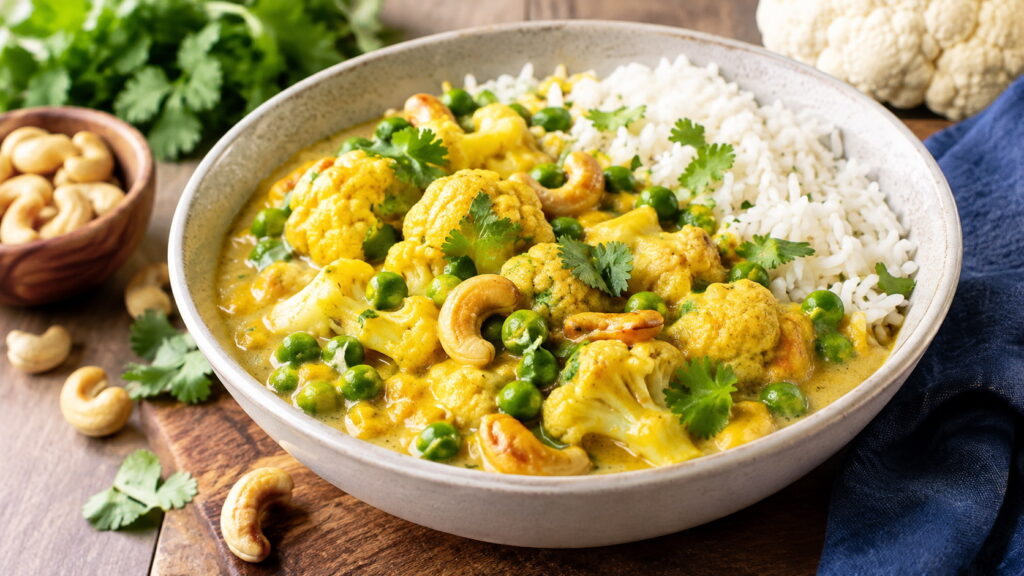
Creamy, fragrant, and packed with tender vegetables, this cauliflower cashew pea and coconut curry recipe makes a satisfying meat-free dinner without requiring complicated techniques. Cauliflower absorbs the aromatic spices beautifully, green peas add little bursts of sweetness, cashews bring a pleasant crunch, and coconut milk ties everything together into a rich, silky sauce.
You’ll learn how to prepare the vegetables for the best texture, build a flavorful curry base, balance coconut milk with spices and acidity, and avoid the common problems that can leave vegetable curry watery or bland. Helpful substitutions, cooking tips, serving ideas, and storage guidance will also make the recipe easy to adapt for weeknight meals and meal prep.
In This Article
Why This Cauliflower Cashew Pea and Coconut Curry Recipe Works
The appeal of this cauliflower cashew pea and coconut curry recipe comes from the contrast between its ingredients. Tender cauliflower provides a hearty vegetable base, while green peas add color and natural sweetness. Cashews contribute richness and crunch, giving the finished curry more texture than a typical vegetable stew.
Coconut milk creates a naturally creamy sauce without needing cream or dairy. Aromatics such as onion, garlic, and fresh ginger give the curry a savory foundation, while curry powder and complementary spices add warmth and depth.
The goal is not to cook every ingredient until soft. Good curry has contrast. Cauliflower should become fork-tender while still holding its shape, peas should remain bright and fresh-tasting, and cashews should retain some bite.
A few finishing touches make an especially noticeable difference. Fresh lime juice cuts through the richness of the coconut milk, while cilantro adds freshness. Toasted cashews sprinkled over the top provide a final layer of nuttiness and texture.
What Makes the Flavor So Balanced?
Several elements work together in the sauce:
- Coconut milk: Provides richness, creaminess, and subtle sweetness.
- Cauliflower: Absorbs the curry sauce while contributing a mild, savory flavor.
- Green peas: Add sweetness and a soft pop of texture.
- Cashews: Bring nuttiness and satisfying crunch.
- Onion: Builds sweetness and body in the curry base.
- Garlic and ginger: Add aromatic warmth and savory complexity.
- Curry spices: Provide the characteristic earthy, warm flavor.
- Lime juice: Brightens the finished sauce and keeps the coconut milk from tasting overly heavy.
- Fresh cilantro: Adds a clean herbal contrast.
The result is a curry that tastes creamy and comforting without relying on a long ingredient list.
Why Cauliflower Is Ideal for Coconut Curry
Cauliflower has a mild flavor and a firm structure, making it particularly useful in saucy dishes. Properly cooked florets absorb some of the coconut curry while retaining enough texture to keep each bite interesting.
Cut the florets into similarly sized pieces. Uniform pieces cook at roughly the same rate, preventing a situation where tiny pieces turn mushy while larger chunks remain firm.
Fresh cauliflower works especially well because the florets can be browned slightly before simmering. Frozen cauliflower can also work, although extra moisture may thin the sauce and soften the vegetable more quickly.
The Ingredients That Give This Coconut Curry Its Rich Flavor
Core Ingredients
A relatively simple collection of ingredients creates plenty of flavor when each component is cooked at the right stage.
- 1 large head cauliflower, cut into bite-size florets
- 1 cup green peas, fresh or frozen
- 1 cup cashews, divided for cooking and garnish
- 1 can full-fat coconut milk, about 13.5 to 14 ounces
- 1 medium yellow onion, finely diced
- 3 garlic cloves, minced
- 1 tablespoon fresh ginger, finely grated or minced
- 2 tablespoons cooking oil
- 1 tablespoon curry powder
- 1 teaspoon ground cumin
- 1 teaspoon ground coriander
- ½ teaspoon ground turmeric
- ½ to 1 teaspoon chili flakes, depending on preferred heat
- ½ cup vegetable broth or water
- ¾ teaspoon salt, plus more to taste
- ¼ teaspoon black pepper
- 1 tablespoon fresh lime juice
- ¼ cup chopped fresh cilantro
Full-fat coconut milk is the best choice when you want a creamy, substantial sauce. Light coconut milk can be used, but the curry will generally have a thinner consistency and less coconut richness.
Choosing the Best Cauliflower
Look for a cauliflower head with firm, compact florets and no significant dark spots or soft areas. Fresh cauliflower should feel dense for its size, with leaves that are reasonably crisp rather than wilted.
Wash the cauliflower and dry it thoroughly before cutting. Excess surface moisture can interfere with browning if the florets are sautéed first.
Cut the cauliflower into pieces around 1½ to 2 inches across. Smaller pieces can become overly soft during the simmering stage, while very large pieces take longer to cook through.
Fresh or Frozen Peas?
Both options are convenient, but they behave slightly differently.
Frozen peas are excellent for a quick weeknight curry. They can usually go directly into the pot without thawing and need only a few minutes to heat through.
Fresh peas may need slightly longer cooking depending on their size and maturity. Add them toward the later part of cooking so they retain their color and pleasant texture.
Avoid adding peas at the beginning of the recipe. Prolonged simmering can cause them to lose their bright green appearance and become overly soft.
Raw or Roasted Cashews?
Raw cashews work well when you want some of their nutty flavor incorporated into the sauce. Roasted cashews have a deeper, more pronounced flavor and are especially good as a crunchy garnish.
For the best texture, reserve part of the cashews for topping the finished curry. Adding all of them to the sauce at the beginning can leave the nuts soft by serving time.
A quick dry-toast in a skillet can intensify the cashew flavor. Keep the heat moderate and stir frequently because nuts can go from lightly toasted to burnt surprisingly quickly.
Spice Choices That Build Depth
Curry powder provides the main spice profile, while cumin, coriander, and turmeric round out the flavor.
Cumin contributes earthy warmth, coriander gives a slightly citrusy spice character, and turmeric provides earthy notes along with its distinctive golden color. Chili flakes can be adjusted according to taste.
Garam masala can also be added near the end if you want a warmer, more aromatic finish. Use a modest amount so the spice blend complements rather than overwhelms the coconut and vegetable flavors.
How to Prepare the Cauliflower, Cashews, and Peas for the Best Texture
Good preparation makes the cooking process much easier. Having the vegetables cut and the aromatics ready before turning on the stove also helps prevent garlic or spices from sitting too long in a hot pan.
Prep the Cauliflower Properly
Remove the leaves and thick core, then separate the cauliflower into evenly sized florets.
Give the florets a quick rinse if needed, then dry them well with a clean kitchen towel. Dry cauliflower has a better chance of developing light browning when cooked in oil.
Avoid cutting the florets too small. Pieces around 1½ to 2 inches generally hold their shape well during simmering.
Prepare the Cashews in Two Portions
Divide the cashews before cooking. One portion can go into the curry for added richness, while the remaining portion can be toasted and scattered over each serving.
Chopped cashews distribute their flavor more evenly throughout the curry. Whole or roughly chopped cashews work better as a garnish because they provide a more noticeable crunch.
Handle Frozen Peas Without Overcooking Them
Frozen peas don’t need complicated preparation. Keep them frozen until needed, then add them toward the end of the cooking process.
A few minutes in the hot curry is usually enough to warm frozen peas while preserving their color and slightly firm texture.
Have the Aromatics Ready Before Cooking
Finely chop the onion, mince the garlic, and grate the ginger before heating the pan. Measure the spices into a small bowl as well.
Spices can burn quickly once they hit hot oil, so having everything ready allows you to move smoothly from one stage to the next.
The finished curry should have tender cauliflower, creamy coconut sauce, bright green peas, and cashews that provide contrasting texture. Preparing each ingredient with those final textures in mind is the key to getting a balanced result.
How to Make Cauliflower Cashew Pea and Coconut Curry Recipe
Cooking the curry in stages gives every ingredient a chance to develop its best flavor and texture. The aromatics need time to soften, the spices benefit from blooming in oil, and the vegetables should simmer gently rather than aggressively.
Step 1: Build the Aromatic Base
Heat 2 tablespoons of oil in a large, deep skillet or Dutch oven over medium heat. Add the diced onion and cook for about 5–7 minutes, stirring occasionally, until softened and lightly golden around the edges.
Add the minced garlic and fresh ginger. Cook for another 30–60 seconds, stirring constantly, until fragrant.
Keep the garlic from browning heavily. Burnt garlic can introduce a bitter flavor that becomes especially noticeable in a creamy coconut sauce.
Step 2: Bloom the Spices
Add the curry powder, cumin, coriander, turmeric, chili flakes, and black pepper to the onion mixture.
Stir continuously for about 30 seconds. The spices should become fragrant and coat the onions without scorching.
Blooming the spices in oil helps release their aromatic compounds and gives the curry a deeper flavor than simply adding the spices after the liquid has been poured in.
Step 3: Add the Cauliflower
Add the prepared cauliflower florets to the skillet. Toss thoroughly so the vegetables become coated with the spiced onion mixture.
Cook for approximately 3–4 minutes, stirring occasionally. A few edges should begin to develop light golden color.
Partial browning isn’t mandatory, but the extra step gives the cauliflower a more developed savory flavor before the coconut sauce is added.
Step 4: Create the Coconut Sauce
Pour in the full-fat coconut milk and ½ cup vegetable broth or water. Stir well, scraping the bottom of the pan to loosen any flavorful spice mixture.
Bring the curry to a gentle simmer over medium heat. Avoid a rapid boil because aggressive bubbling can cause the cauliflower to cook too quickly on the outside while the sauce reduces unevenly.
Cover loosely and simmer for approximately 10–12 minutes, stirring once or twice.
The cauliflower should become fork-tender but still firm enough to hold its shape.
Step 5: Add Peas and Cashews at the Right Time
Stir in the green peas and about half of the cashews. Continue simmering uncovered for 3–5 minutes.
Frozen peas generally need only a few minutes to heat through. Fresh peas may require slightly longer depending on their size.
Leaving the pan uncovered during the final stage allows excess liquid to evaporate. The sauce should coat the vegetables rather than pool thinly around them.
Step 6: Finish and Balance the Curry
Remove the skillet from the heat and stir in the fresh lime juice. Taste carefully and adjust the salt, chili, or curry spices if necessary.
The finished sauce should taste rich but not flat, with enough acidity to balance the coconut milk.
Scatter chopped cilantro and the remaining cashews over the top. A little extra lime juice can be served alongside the curry for anyone who prefers a brighter flavor.
Cauliflower Cashew Curry Cooking Timeline
| Stage | Approximate Time | What to Look For |
| Sauté onion | 5–7 minutes | Soft and lightly golden |
| Cook garlic and ginger | 30–60 seconds | Fragrant, not burnt |
| Bloom spices | 30 seconds | Aromatic and well coated in oil |
| Sauté cauliflower | 3–4 minutes | Lightly browned edges |
| Simmer with coconut milk | 10–12 minutes | Cauliflower nearly tender |
| Add peas and cashews | 3–5 minutes | Peas bright, cauliflower tender |
| Finish with lime and herbs | 1 minute | Balanced, creamy sauce |
Total cooking time: about 25–30 minutes, depending on the size of the cauliflower florets.
The Secret to a Creamy Cauliflower Cashew Coconut Curry Without Making It Heavy
Creaminess depends more on ingredient selection and cooking technique than on adding extra dairy or thickeners. Full-fat coconut milk provides the richest base, while cashews add body and a subtle nutty character.
Use Full-Fat Coconut Milk for the Best Sauce
Full-fat coconut milk contains substantially more coconut richness than lighter versions, making it particularly suitable for curry.
Shake the can before opening if the coconut cream has separated. Stirring the contents together helps distribute the thicker and thinner portions throughout the sauce.
Light coconut milk can still be used, but expect a thinner curry. If using a lighter product, simmering uncovered for a few extra minutes can help concentrate the sauce.
Let the Curry Reduce Naturally
The best way to thicken the sauce is often simply to give excess water time to evaporate.
Once the cauliflower is nearly cooked, remove the lid and continue simmering gently. Stir occasionally and watch the consistency closely.
Avoid boiling the curry aggressively just to make it thicker. High heat can overcook the cauliflower before the sauce reaches the desired consistency.
A properly reduced curry should cling lightly to the cauliflower and peas while remaining loose enough to spoon over rice.
Cashews Add More Than Crunch
Cashews can contribute richness as well as texture. Some of the nuts soften slightly during cooking, allowing their flavor to blend into the coconut sauce.
Reserve another portion for the final garnish. The combination of soft vegetables, silky sauce, and crunchy cashews gives the dish a much more interesting mouthfeel.
How to Tell When the Curry Is Done
Use a fork or the tip of a small knife to test one of the larger cauliflower pieces.
The utensil should slide into the center with little resistance, but the floret shouldn’t collapse when lifted. Peas should remain plump and green, while the coconut sauce should look creamy rather than watery.
If the cauliflower is tender but the sauce seems thin, simmer uncovered for a few additional minutes. If the sauce becomes too thick, add a small splash of vegetable broth or water and stir gently.
Cooking Tips That Make This Curry Taste Better
Small technique changes can make a noticeable difference in a simple vegetable curry. Focus on developing flavor at each stage rather than relying on extra seasoning at the end.
Give the Onion Enough Time
Five to seven minutes may seem like a long time for diced onion, but proper softening creates a sweeter, more rounded foundation.
Avoid rushing the process over high heat. Medium heat gives the onion time to soften without burning.
Bloom Spices Before Adding Liquid
Thirty seconds in hot oil can make a big difference. The brief cooking period helps awaken the aroma of the curry powder, cumin, coriander, and turmeric.
Watch the pan closely during this stage. Spices should smell fragrant, never smoky or charred.
Don’t Overcook the Cauliflower
Cauliflower continues softening slightly from residual heat after the pan comes off the stove.
Remove the curry from the heat when the florets are just tender. Waiting until they are extremely soft can result in broken pieces when the curry is stirred or served.
Keep the Peas Bright
Adding peas during the final few minutes helps preserve their fresh flavor and color.
Frozen peas are particularly convenient because their small size allows them to heat quickly without needing a long simmer.
Finish With Acid
Coconut milk is naturally rich, so a small amount of lime juice can make the entire curry taste more balanced.
Add lime juice near the end rather than at the beginning. Fresh acidity is more noticeable when added after cooking and allows you to adjust the flavor based on the richness of the sauce.
Toast the Garnish Cashews
A quick toast gives cashews deeper flavor and a crispier texture.
Place them in a dry skillet over medium-low heat and stir frequently for a few minutes until lightly golden and fragrant. Transfer them to a plate immediately so residual pan heat doesn’t continue browning them.
Taste Before Serving
Seasoning requirements vary depending on the curry powder, vegetable broth, coconut milk, and personal preference.
Taste the sauce before serving and adjust salt first, then heat and acidity. A small seasoning adjustment can transform a curry from merely good to noticeably more flavorful.
Easy Ingredient Swaps and Variations for This Cauliflower Curry
One of the best features of a cauliflower coconut curry is how easily the recipe can be adjusted without losing its creamy, aromatic character. Simple substitutions can accommodate what you already have in the pantry, while a few additions can turn the curry into a more substantial meal.
Fresh or Frozen Peas
Frozen peas are the easiest option and work particularly well for quick weeknight cooking. Add them directly from frozen during the final few minutes of simmering.
Fresh peas can be used when available. Their cooking time may vary, so taste one before removing the curry from the heat.
Swap the Cashews
Cashews provide both richness and crunch, but several alternatives can work.
- Almonds: Use sliced or roughly chopped almonds for a firmer crunch.
- Peanuts: Add roasted peanuts for a stronger, more pronounced nutty flavor.
- Sunflower seeds: A useful option when avoiding tree nuts.
- Pumpkin seeds: Add them as a toasted garnish for extra texture.
Choose a substitute based on the desired texture rather than simply replacing the same volume without consideration.
Make the Curry More Filling With Chickpeas
Chickpeas pair naturally with cauliflower, peas, and coconut curry. Add 1½ cups of drained, rinsed cooked chickpeas during the coconut-milk simmering stage.
Chickpeas absorb some of the sauce and make the dish more substantial without requiring a major change to the cooking method.
Add Leafy Greens
Spinach is an easy addition because it cooks rapidly. Stir 2–3 handfuls of fresh spinach into the finished curry and cook for about 1–2 minutes, just until wilted.
Kale requires more time, so finely slice the leaves and add them earlier during the simmering stage.
Make It Milder or Spicier
The easiest way to control heat is through the chili flakes. Start with a small amount and add more toward the end if needed.
For a hotter curry, fresh chopped chili or cayenne pepper can provide additional heat. A milder version can omit the chili entirely while keeping the curry powder, cumin, coriander, and turmeric for flavor.
Try Roasted Cauliflower
Roasting the cauliflower before making the curry creates deeper caramelized notes.
Toss the florets with a little oil and roast at 425°F (220°C) until the edges are browned and the centers are nearly tender. Add the roasted cauliflower to the coconut sauce toward the end of cooking rather than simmering it from the beginning.
Roasted cauliflower gives the curry a noticeably deeper, more savory flavor.
Make a Nut-Free Version
For a nut-free cauliflower coconut curry, leave out the cashews and replace the garnish with toasted sunflower seeds or pumpkin seeds if those fit your dietary needs.
Check packaged curry powders, broths, and other prepared ingredients when cooking for someone with a serious allergy, since formulations and manufacturing environments can vary.
What to Serve With Cauliflower Cashew Pea and Coconut Curry
Creamy vegetable curry becomes a complete meal when paired with something that can soak up the coconut sauce. Rice and flatbreads are especially useful because their mild flavors allow the curry to remain the star.
Basmati Rice
Fluffy basmati rice is one of the best pairings for cauliflower cashew pea and coconut curry. The long grains separate easily and provide a neutral base for the rich sauce.
Spoon the curry over freshly cooked rice and finish with cilantro and toasted cashews.
Jasmine Rice
Jasmine rice has a softer texture and a naturally fragrant character. The subtle aroma works nicely with coconut milk and warm curry spices.
Choose jasmine rice when you prefer a slightly softer, more tender rice alongside the vegetables.
Coconut Rice
Coconut rice reinforces the coconut flavor of the curry and creates an especially rich meal.
Keep the rice seasoning relatively simple. Too many strong spices in the rice can compete with the curry rather than complementing it.
Naan, Roti, or Flatbread
Warm naan or roti offers another practical way to enjoy every bit of the sauce.
Tear off a piece of bread and use it to scoop up cauliflower, peas, cashews, and coconut sauce. A lightly toasted flatbread also adds a pleasant contrast to the soft vegetables.
Fresh and Crunchy Accompaniments
A simple cucumber or tomato salad can provide freshness alongside the creamy curry.
Try combining:
- Thinly sliced cucumber
- Fresh tomatoes
- Chopped cilantro
- A squeeze of lime
- A small pinch of salt
Keep the salad lightly seasoned so the cool, crisp vegetables provide contrast without overpowering the curry.
Simple Garnishes That Make a Difference
Finish each bowl with one or two fresh toppings rather than piling on too many ingredients.
Good choices include:
- Toasted cashews
- Fresh cilantro
- Thinly sliced fresh chili
- Lime wedges
- A small sprinkle of chili flakes
Lime wedges are particularly useful at the table because each person can adjust the acidity to taste.
Common Mistakes That Can Ruin a Vegetable Coconut Curry
Most problems with vegetable coconut curry come from timing, heat, or liquid management. Knowing what to watch for makes the cooking process much more predictable.
| Problem | Likely Cause | Practical Fix |
| Curry is watery | Too much broth or insufficient reduction | Simmer uncovered for a few extra minutes |
| Cauliflower is mushy | Florets were too small or cooked too long | Use larger, evenly sized pieces and check early |
| Curry tastes bland | Not enough salt or spice blooming | Taste and adjust seasoning; bloom spices in oil |
| Garlic tastes bitter | Garlic was cooked over excessive heat | Add garlic after the onion and cook briefly |
| Peas are dull and soft | Added too early | Stir them in during the final few minutes |
| Sauce is too thick | Excessive reduction | Add a splash of broth or water |
| Cashews are soft | All nuts were simmered in the sauce | Reserve some for a fresh garnish |
| Curry tastes too rich | Coconut milk dominates the dish | Add lime juice and adjust salt |
| Spices taste harsh | Spices were scorched | Use moderate heat and stir while blooming |
Avoid Cutting the Cauliflower Too Small
Small florets cook quickly, which sounds convenient but leaves little room for error.
Aim for bite-size pieces around 1½–2 inches. Larger, consistent florets are easier to monitor and are less likely to disintegrate during simmering.
Don’t Add All the Liquid at Once Without Checking
The amount of liquid needed can vary depending on the size of the pan, the cauliflower, and the coconut milk used.
Start with the recommended amount of broth and allow the curry to simmer before deciding whether more liquid is necessary. Adding too much broth early can leave you with a thin sauce that requires prolonged cooking.
Keep the Simmer Gentle
A coconut-based curry doesn’t need a vigorous boil.
Gentle bubbling allows the cauliflower to cook gradually while the sauce reduces at a controlled rate. If the surface is violently bubbling, lower the heat.
Don’t Forget the Final Seasoning
Coconut milk can soften the perception of salt and spices, making the curry seem less seasoned than expected.
Taste after the vegetables are cooked. Adjust salt, chili, and lime juice separately rather than adding large amounts of everything at once.
Watch the Cashews
Cashews can become soft if left in the sauce for too long. Softened nuts aren’t necessarily a problem, but the dish loses some of the texture that makes the ingredient appealing.
Reserve a generous handful for the final garnish. Crunchy toasted cashews on top provide an immediate contrast to the creamy coconut sauce.
Give the Curry a Few Minutes Before Serving
Allow the finished curry to rest for about 2–3 minutes after removing it from the heat. The sauce will settle slightly and cling more naturally to the vegetables.
Serve while warm, with rice or flatbread, fresh cilantro, toasted cashews, and lime on the side.
Make-Ahead, Storage, and Reheating Tips
Cauliflower cashew pea and coconut curry works particularly well for meal prep because the sauce develops even more flavor after resting. Proper storage helps preserve the vegetables and prevents the curry from becoming excessively soft or watery.
Refrigerating Leftover Curry
Allow the curry to cool slightly before transferring it to airtight containers. Refrigerate within a reasonable time rather than leaving a cooked dish at room temperature for an extended period.
Stored properly in the refrigerator, the curry is best enjoyed within 3–4 days.
Keep rice in a separate container when possible. Separate storage makes reheating easier and prevents the rice from absorbing too much curry sauce.
Freezing Cauliflower Coconut Curry
The curry can be frozen, although cauliflower and peas may become somewhat softer after thawing. The coconut sauce generally freezes well, so the main texture change comes from the vegetables.
Cool the curry completely, then portion it into freezer-safe airtight containers. Leave a little room for expansion.
For best quality, use frozen portions within 2–3 months.
Thaw overnight in the refrigerator when possible. Reheat gently on the stovetop, adding a splash of water or vegetable broth if the sauce has become very thick.
Reheating on the Stovetop
Place the desired portion in a saucepan over medium-low heat. Add a tablespoon or two of water or broth and stir gently.
Heat until the curry is steaming hot throughout, stirring occasionally. Avoid prolonged high heat because the cauliflower can become mushy and the coconut sauce may reduce too far.
Fresh lime juice and cilantro can be added after reheating to revive the flavors.
Reheating in the Microwave
Transfer a serving to a microwave-safe bowl and cover loosely. Heat in short intervals, stirring between each interval until evenly hot.
A small splash of water or broth can loosen a thickened sauce.
Add fresh cashews after reheating rather than before. Keeping the garnish separate preserves the crunchy texture.
Make-Ahead Tips for Busy Weeknights
The curry can be prepared a day ahead and refrigerated. The flavor often becomes more integrated overnight.
For the best texture, prepare the toasted cashews separately and add them immediately before serving. Fresh cilantro and lime juice should also be added after reheating rather than during storage.
Cauliflower Cashew Pea and Coconut Curry Recipe at a Glance
Quick Recipe Summary
Creamy coconut milk combines with tender cauliflower, sweet green peas, aromatic spices, and cashews for a hearty vegetarian curry. Lime juice and fresh cilantro provide a bright finish, while toasted cashews add satisfying crunch.
| Recipe Detail | Information |
| Prep time | 15 minutes |
| Cook time | 25–30 minutes |
| Total time | About 40–45 minutes |
| Servings | 4 |
| Difficulty | Easy to moderate |
| Cuisine style | Coconut-based vegetable curry |
| Main cooking method | Stovetop |
| Best served with | Basmati rice, jasmine rice, naan, or roti |
Ingredients
- 1 large head cauliflower, cut into bite-size florets
- 1 cup green peas, fresh or frozen
- 1 cup cashews, divided
- 1 can full-fat coconut milk, about 13.5–14 ounces
- 1 medium yellow onion, finely diced
- 3 garlic cloves, minced
- 1 tablespoon fresh ginger, grated or minced
- 2 tablespoons cooking oil
- 1 tablespoon curry powder
- 1 teaspoon ground cumin
- 1 teaspoon ground coriander
- ½ teaspoon ground turmeric
- ½–1 teaspoon chili flakes
- ½ cup vegetable broth or water
- ¾ teaspoon salt, plus more to taste
- ¼ teaspoon black pepper
- 1 tablespoon fresh lime juice
- ¼ cup chopped fresh cilantro
Equipment
- Large deep skillet or Dutch oven
- Cutting board
- Chef’s knife
- Wooden spoon or spatula
- Measuring spoons and cups
- Airtight containers for leftovers
Cooking Method
- Sauté the onion: Heat oil over medium heat and cook the onion for 5–7 minutes until soft and lightly golden.
- Add aromatics: Stir in garlic and ginger and cook for 30–60 seconds.
- Bloom spices: Add curry powder, cumin, coriander, turmeric, chili flakes, and black pepper. Stir for about 30 seconds.
- Cook cauliflower: Add cauliflower and toss to coat. Cook for 3–4 minutes.
- Add coconut milk: Pour in coconut milk and vegetable broth. Stir and bring to a gentle simmer.
- Simmer: Cover loosely and cook for 10–12 minutes, until cauliflower is nearly tender.
- Add peas and cashews: Stir in peas and half the cashews. Simmer uncovered for 3–5 minutes.
- Finish: Remove from heat and stir in lime juice. Taste and adjust salt or spice.
- Garnish: Top with cilantro and the remaining toasted cashews.
Doneness cue: The cauliflower should be fork-tender while still holding its shape, the peas should remain bright, and the coconut sauce should be thick enough to lightly coat the vegetables.
Frequently Asked Questions About Cauliflower Cashew Pea and Coconut Curry
Can I use frozen cauliflower for cauliflower coconut curry?
Yes. Frozen cauliflower can be used, although it may release more water and become tender faster than fresh cauliflower. Add the frozen florets carefully and allow the sauce to reduce uncovered if needed.
How long does cauliflower cashew pea and coconut curry take to cook?
Plan on roughly 40–45 minutes from start to finish, including about 15 minutes of preparation and 25–30 minutes of stovetop cooking.
Can I make cauliflower cashew pea and coconut curry vegan?
Yes. The recipe is naturally suitable for a vegan approach when the curry powder, vegetable broth, and other packaged ingredients are free from animal-derived ingredients.
How can I make coconut curry thicker?
Simmer the curry uncovered over medium-low heat for several additional minutes, stirring occasionally. Evaporation will concentrate the sauce without requiring a separate thickener.
Why is my coconut curry watery?
Excess broth, moisture from vegetables, or insufficient reduction can produce a thin sauce. Continue simmering uncovered until the sauce coats the cauliflower and peas more generously.
Can I add chickpeas to this curry?
Yes. Add about 1½ cups of cooked, drained chickpeas during the coconut-milk simmering stage. Chickpeas make the curry more filling while pairing naturally with cauliflower and peas.
How should I store leftover cauliflower curry?
Place cooled curry in an airtight container and refrigerate. For the best quality, enjoy the leftovers within 3–4 days and store rice separately when possible.
Can cauliflower coconut curry be frozen?
Yes. Freeze cooled curry in airtight freezer-safe containers and use within about 2–3 months for the best quality. Expect the cauliflower and peas to be slightly softer after thawing.
What is the best way to reheat coconut curry?
Reheat gently over medium-low heat on the stovetop, adding a splash of water or broth if necessary. Microwave portions can also be reheated in short intervals while stirring between intervals.
Can I make the curry ahead of time?
Yes. Preparing the curry one day ahead can allow the flavors to meld. Store toasted cashews, cilantro, and lime separately and add them shortly before serving.
What should I serve with cauliflower cashew pea and coconut curry?
Basmati rice, jasmine rice, coconut rice, naan, and roti are excellent choices. Cucumber or tomato salad also provides a cool, fresh contrast to the creamy curry.
How do I keep cashews crunchy in coconut curry?
Reserve part of the cashews and toast them separately. Add the crunchy nuts immediately before serving rather than simmering all of them in the sauce.
Final Tips for a Flavorful, Creamy Curry Every Time
Great cauliflower cashew pea and coconut curry depends on a few simple details: evenly sized cauliflower, properly bloomed spices, gentle simmering, and careful timing for the peas and cashews.
Don’t rush the onion or spice base. Those early stages establish much of the curry’s depth. Keep the coconut sauce at a gentle simmer and remove the cauliflower from the heat as soon as it reaches a tender-but-firm texture.
Lime juice, fresh cilantro, and toasted cashews provide the finishing contrast that makes the creamy sauce taste brighter and more balanced.
Serve the curry over fluffy rice or alongside warm naan, then add plenty of toasted cashews for crunch. Once you’ve mastered the basic cauliflower cashew pea and coconut curry recipe, experiment with chickpeas, spinach, roasted cauliflower, or different levels of chili heat to create your own favorite version.
Save the recipe for a busy weeknight, make a batch for meal prep, and don’t forget the lime wedges at serving time.
