
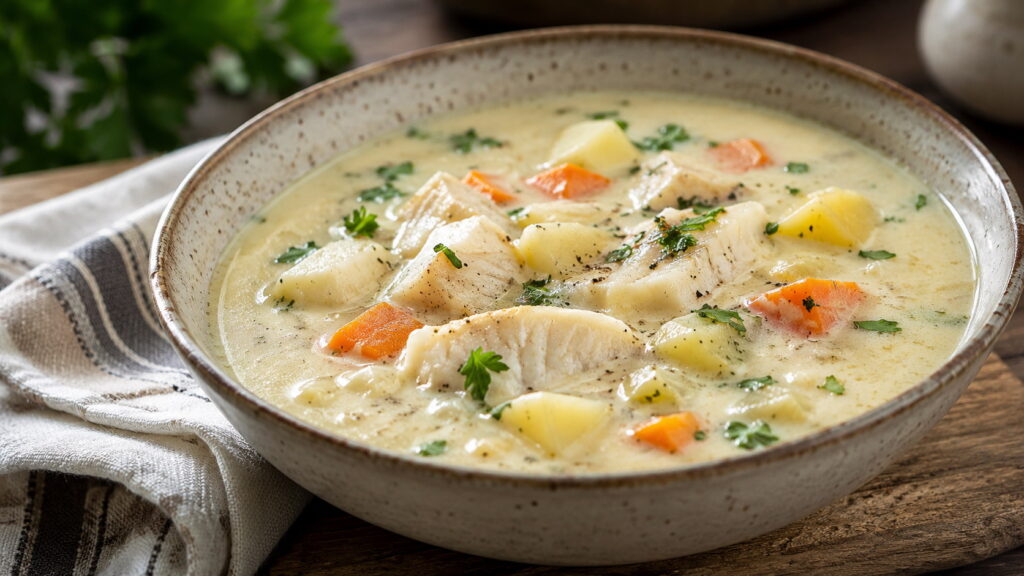
Acid reflux diet recipe for fish chowder might sound limiting, but this version proves you can enjoy a creamy, comforting bowl without irritation. This guide walks you through how to make a soothing, low-acid fish chowder using smart ingredient choices, gentle cooking techniques, and practical tips that support digestion.
Expect a step-by-step approach, ingredient insights, substitutions for sensitive stomachs, and expert tips to help you get a smooth, flavorful chowder every time. Whether you’re managing reflux daily or just need a lighter comfort meal, this recipe is designed to be both satisfying and safe.
In This Article
Why This Acid Reflux Diet Recipe for Fish Chowder Works
Traditional chowder recipes often rely on heavy cream, butter, onions, and strong seasonings—common triggers for acid reflux. This version is carefully adjusted to avoid those while still delivering warmth and flavor.
Here’s why it works:
- Low-fat base: Reduces pressure on the digestive system
- Mild ingredients: Avoids acidic and spicy triggers
- Gentle cooking method: Slow simmering helps preserve nutrients and keeps the dish easy to digest
- Balanced texture: Creamy without being heavy
Fish itself is an excellent protein choice for reflux-friendly meals. Lean varieties digest more easily and provide essential nutrients without excess fat.
According to the National Institute of Diabetes and Digestive and Kidney Diseases, choosing low-fat, non-irritating foods can help reduce acid reflux symptoms, making recipes like this especially beneficial.
What Makes a Fish Chowder Acid Reflux-Friendly?
Not all chowders are suitable for sensitive digestion. A reflux-friendly version focuses on both ingredient selection and cooking technique.
Key Principles to Follow
- Use low-fat dairy or dairy alternatives
- Keep seasoning mild and simple
- Avoid frying or high-heat cooking
- Focus on soft, well-cooked vegetables
Ingredients to Avoid
- Heavy cream and excessive butter
- Onions and garlic (can trigger symptoms)
- Spicy seasonings like chili flakes or paprika
- Highly processed broths with high sodium
Better Cooking Techniques
- Gentle simmer instead of boiling
- Minimal oil usage
- Slow flavor building with herbs instead of spices
Important tip: Texture matters. Smooth, creamy soups are generally easier on the stomach than chunky, greasy ones.
Ingredient Breakdown for This Acid Reflux Diet Fish Chowder
Choosing the right ingredients is the foundation of a successful acid reflux diet fish chowder. Each component plays a role in both flavor and digestibility.
Lean Fish (Protein Base)
- Cod – mild flavor, firm texture, easy to digest
- Haddock – slightly sweet and tender
- Tilapia – budget-friendly and very gentle on the stomach
Tip: Avoid oily fish like salmon if you’re highly sensitive, as fat content can trigger reflux.
Low-Fat Liquid Base
- Lactose-free milk
- Unsweetened oat milk
- Diluted low-sodium chicken or vegetable broth
This combination creates a creamy texture without heaviness.
Vegetables That Support Digestion
- Potatoes – natural thickener and very gentle
- Carrots – add subtle sweetness
- Celery – mild flavor without acidity
Cut vegetables evenly to ensure they cook at the same rate.
Herbs for Safe Flavor
- Fresh parsley
- Thyme
- Bay leaf (used during cooking, then removed)
These enhance flavor without irritating the stomach.
Thickening Options (Without Heavy Cream)
- Mashed potatoes
- Blended portion of the soup
- Small amount of cornstarch slurry (optional)
Key insight: Natural thickening keeps the chowder light while still satisfying.
Smart Ingredient Swaps for Sensitive Stomachs
Even gentle recipes sometimes need adjustments based on individual tolerance. This acid reflux diet recipe for fish chowder is flexible, and a few smart swaps can make it even more comfortable to enjoy.
Dairy Alternatives That Still Feel Creamy
- Replace regular milk with lactose-free milk if dairy causes discomfort
- Use unsweetened oat milk for a naturally smooth texture
- Combine broth + milk (50:50) to reduce richness
Tip: Avoid coconut milk if you’re sensitive to fat—it can feel heavy despite being dairy-free.
Flavor Without Onion and Garlic
- Use garlic-infused oil (flavor without the irritants)
- Add finely chopped celery and herbs to build aroma
- A pinch of dried thyme or parsley creates depth without sharpness
Gentle Thickening Options
- Mash part of the cooked potatoes directly into the soup
- Blend a small portion and stir it back in
- Use a light cornstarch slurry (1 teaspoon cornstarch + water) if needed
Lower Sodium Choices
- Choose low-sodium broth
- Dilute broth with water if necessary
- Season gradually instead of all at once
Key takeaway: Small ingredient changes can dramatically improve how your body responds without sacrificing flavor.
Step-by-Step: How to Make Acid Reflux Diet Fish Chowder
This method focuses on gentle cooking, balanced texture, and preserving the natural flavor of the fish.
Quick Recipe Overview
- Prep time: 15 minutes
- Cook time: 25 minutes
- Total time: 40 minutes
- Servings: 3–4 bowls
Kitchen Equipment
- Medium pot or Dutch oven
- Cutting board and knife
- Wooden spoon
- Ladle
Ingredients
- 300–400 g white fish (cod, haddock, or tilapia), cut into chunks
- 2 medium potatoes, diced small
- 1 carrot, finely sliced
- 1 celery stalk, chopped
- 2 cups low-sodium broth
- 1 cup lactose-free milk or oat milk
- 1 tablespoon olive oil
- 1 teaspoon dried thyme or fresh equivalent
- Small handful fresh parsley, chopped
- Salt (minimal, to taste)
Cooking Instructions
- Build a gentle base
Heat olive oil over medium-low heat. Add celery and carrots. Cook for 3–4 minutes until slightly softened.
Avoid browning—keep everything light and soft. - Add potatoes and broth
Stir in diced potatoes and pour in the broth. Bring to a gentle simmer.
Cook for 10–12 minutes until potatoes are fork-tender. - Create natural creaminess
Lightly mash a portion of the potatoes in the pot to thicken the broth.
This gives a creamy texture without heavy cream. - Add the fish
Place fish pieces into the simmering liquid. Cook for 5–7 minutes until opaque and flaky.
Do not stir aggressively to keep the fish intact. - Pour in milk and herbs
Lower the heat and add milk, thyme, and parsley. Warm gently for 2–3 minutes.
Avoid boiling after adding milk to prevent curdling. - Final seasoning
Taste and adjust with a small amount of salt if needed. Keep flavors mild.
Doneness Cues
- Fish should flake easily with a fork
- Potatoes should be soft but not falling apart completely
- Broth should be lightly creamy, not thick or greasy
Pro Tips for a Smooth, Non-Irritating Chowder
Small technique details can make a big difference in how this dish feels after eating.
Keep It Light but Satisfying
- Use just enough oil to soften vegetables
- Let potatoes provide most of the body
- Avoid adding extra butter at the end
Control the Heat Carefully
- Maintain a gentle simmer, never a rolling boil
- High heat can toughen fish and make the soup harder to digest
Perfect Fish Texture Every Time
- Cut fish into even chunks for consistent cooking
- Add fish only after vegetables are tender
- Stop cooking as soon as fish turns opaque
Balance Flavor Without Triggers
- Rely on herbs instead of spices
- Add freshness with parsley right before serving
- Keep seasoning subtle—this is key for reflux-friendly meals
Texture Matters More Than You Think
- Slightly creamy, smooth soups are easier on digestion
- Avoid overly chunky or oily consistency
Expert insight: The goal isn’t just great taste—it’s creating a chowder that feels gentle from the first spoonful to the last.
Common Mistakes That Can Trigger Acid Reflux
Even a well-planned acid reflux diet recipe for fish chowder can become irritating if a few key details are overlooked. Avoiding these common mistakes helps keep the dish truly gentle and enjoyable.
Using Too Much Fat
Adding extra butter, cream, or oil might seem like a way to boost flavor, but it often makes the chowder heavier and harder to digest.
Stick to minimal oil and rely on potatoes for creaminess.
Overseasoning with Strong Flavors
Spices like chili powder, black pepper in large amounts, or acidic seasonings can quickly turn this into a trigger meal.
Keep flavors mild and herb-based instead.
Cooking at High Heat
Boiling the soup aggressively can:
- Toughen the fish
- Break down the milk
- Create a heavier texture
A gentle simmer is the safest approach for both texture and digestion.
Adding Ingredients Too Early
Fish cooks quickly. Adding it too soon leads to:
- Overcooked, rubbery texture
- Stronger, less pleasant flavor
Always add fish near the end of cooking.
Ignoring Portion Size
Even reflux-friendly meals can cause discomfort if eaten in large portions.
Serve moderate portions and eat slowly for best results.
Easy Variations of This Acid Reflux Diet Recipe for Fish Chowder
One of the strengths of this acid reflux diet fish chowder is how adaptable it is. You can adjust the recipe to suit your tolerance level or personal taste without losing its soothing qualities.
Dairy-Free Version
- Replace milk with unsweetened oat milk or rice milk
- Use more mashed potatoes for thickness
Result: Extra light and easier on sensitive stomachs.
Broth-Based (Non-Creamy) Variation
- Skip milk entirely
- Increase broth slightly
- Add extra herbs for flavor
Result: A clear, soup-style chowder that feels even lighter.
Vegetable-Forward Chowder
- Add zucchini or peeled squash
- Increase carrots and celery
Result: Higher fiber and natural sweetness without irritation.
Protein-Boosted Version
- Add more lean fish
- Include small amounts of soft tofu if tolerated
Result: More filling while staying low-fat.
Ultra-Mild Version for Flare Days
- Reduce herbs slightly
- Use only potatoes and fish
- Keep broth very light
Result: Minimalist, soothing, and easy to digest.
What to Serve with Acid Reflux Diet Fish Chowder
Pairing this chowder with the right sides can enhance the meal without triggering symptoms. The goal is to keep everything light, soft, and balanced.
Gentle Side Dishes
- Steamed white rice – easy to digest and filling
- Soft whole-grain bread – for dipping without heaviness
- Boiled or steamed vegetables – such as carrots or green beans
Simple Add-Ons
- Plain crackers (low-sodium)
- A small side of mashed potatoes for extra comfort
Beverage Pairings That Won’t Trigger Reflux
- Warm herbal teas (chamomile or ginger)
- Warm water with a slice of cucumber
- Non-citrus infused water
Serving Tips for Comfort
- Serve warm, not hot
- Eat slowly and mindfully
- Keep portions moderate
Helpful insight: A calm, balanced meal experience is just as important as the ingredients when managing acid reflux.
Make-Ahead, Storage, and Reheating Tips
Planning ahead with this acid reflux diet recipe for fish chowder makes it even more convenient for busy days while keeping it safe and gentle on your stomach.
Make-Ahead Tips
- Prepare the chowder base (vegetables + broth) in advance
- Store separately from the fish for best texture
- Add fresh fish when reheating to avoid overcooking
Tip: Freshly cooked fish always gives the best flavor and texture.
Refrigeration Guidelines
- Let chowder cool to room temperature before storing
- Keep in an airtight container
- Store in the fridge for up to 2–3 days
Freezing Instructions
- Freeze only the broth and vegetable base (without milk and fish)
- Store in freezer-safe containers for up to 1 month
- Thaw overnight in the fridge before reheating
Important: Dairy and fish can change texture when frozen, so add them fresh after thawing.
Best Reheating Method
- Reheat gently on the stove over low heat
- Stir occasionally to maintain a smooth texture
- Add a splash of milk or broth if it thickens too much
Avoid microwaving on high heat, as it can separate the milk and toughen the fish.
Nutrition Highlights: Light Yet Satisfying
This acid reflux diet fish chowder is designed to nourish without causing discomfort. It balances protein, gentle carbs, and low fat for a satisfying meal.
Approximate Nutrition (Per Serving)
| Nutrient | Amount |
| Calories | 220–260 kcal |
| Protein | 20–25 g |
| Fat | 5–7 g |
| Carbohydrates | 20–25 g |
| Fiber | 2–3 g |
| Sodium | Low (depending on broth) |
Why It Supports Digestive Health
- Low fat content helps reduce reflux triggers
- Lean protein from fish supports satiety without heaviness
- Soft-cooked vegetables are easier to digest
- Mild seasoning minimizes irritation
Key takeaway: This chowder offers comfort and nutrition without overwhelming your digestive system.
Frequently Asked Questions About Acid Reflux Diet Fish Chowder
Can I use salmon instead of white fish?
Salmon is higher in fat, which may trigger reflux for some people. Lean fish like cod or tilapia are safer choices.
Is dairy safe for acid reflux?
Low-fat or lactose-free dairy is usually better tolerated. If sensitive, switch to oat milk or another gentle alternative.
How can I make the chowder even lighter?
Skip the milk and create a broth-based version. You can also reduce oil and increase vegetables.
Can I eat this chowder at night?
Yes, but keep portions moderate and allow time to digest before lying down.
How do I know when the fish is perfectly cooked?
Fish is ready when it turns opaque and flakes easily with a fork. Overcooking makes it tough and less enjoyable.
Can I make this recipe ahead of time?
Yes. Prepare the base in advance and add fresh fish when reheating for best results.
Why did my chowder turn too thick?
Potatoes release starch as they cook. Add a bit of warm broth or milk while reheating to adjust consistency.
This acid reflux diet recipe for fish chowder proves that comfort food doesn’t have to come with discomfort. With the right ingredients and gentle techniques, you can enjoy a warm, creamy bowl that supports your digestion and still tastes satisfying.
Try it once, then adjust it to your own tolerance—whether that means going dairy-free, adding more vegetables, or keeping it extra simple on sensitive days. Save this recipe for later, share it with someone who needs a soothing meal, and make it part of your go-to comfort food rotation.
