
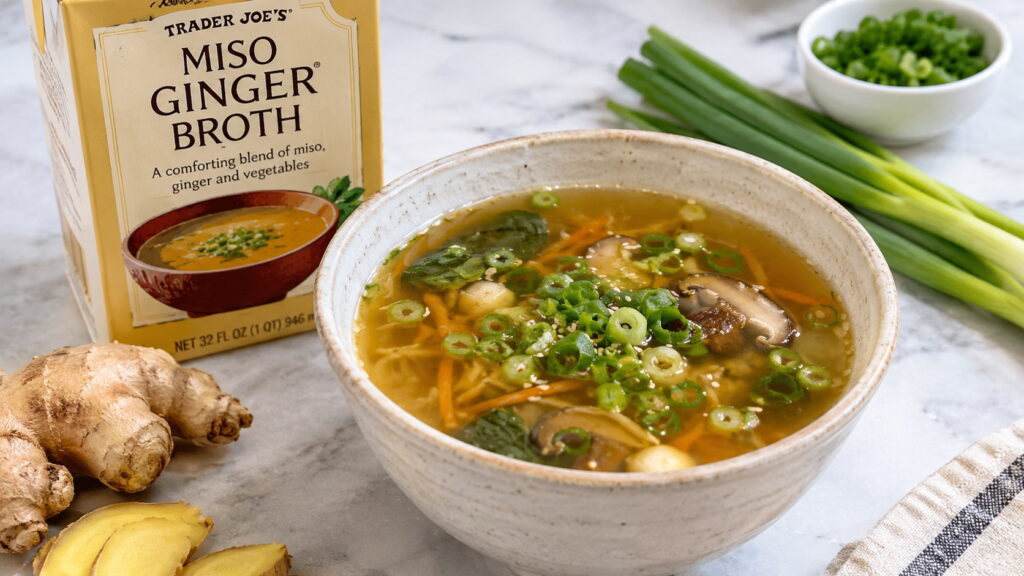
Craving a warm, savory bowl without spending much time in the kitchen? This Trader Joe’s miso ginger broth recipe creates a flavorful homemade broth with rich umami, fresh ginger, garlic, and a gentle sesame finish. The result is light enough to sip on its own but flavorful enough to become the foundation for noodles, tofu, vegetables, or a quick weeknight soup.
You’ll learn how to build the broth without overpowering the delicate miso flavor, how to dissolve miso smoothly, which ingredients can be swapped, and how to store and reheat the finished broth. The recipe also includes practical variations and serving ideas so you can turn one simple batch into several different meals.
In This Article
Trader Joe’s Miso Ginger Broth Recipe: A Cozy, Savory Broth You Can Make at Home
Trader Joe’s-style miso ginger broth is appealing because the flavor feels complex even though the ingredient list is relatively short. Miso supplies deep umami and natural saltiness, while fresh ginger brings warmth and brightness. Garlic adds another savory layer, and a small amount of sesame oil rounds everything out.
Homemade broth also gives you much more control. You can make the flavor more gingery, reduce the sodium, add heat, or choose a vegetable broth to keep the recipe vegetarian.
Quick Recipe Snapshot
| Detail | Information |
| Prep time | 5 minutes |
| Cook time | 10 minutes |
| Total time | 15 minutes |
| Servings | About 4 |
| Category | Soup / Broth |
| Cuisine inspiration | Japanese-inspired |
| Skill level | Easy |
Why You’ll Want to Keep This Broth in Your Recipe Rotation
Fast cooking time makes the broth ideal for busy evenings. Most of the work involves measuring, grating, and whisking rather than complicated cooking techniques.
Flexible ingredients make the recipe easy to adapt. White miso works beautifully for a mild broth, while yellow or red miso can create a deeper, more assertive flavor.
Multiple uses are another major advantage. Pour the broth over noodles, add tofu and vegetables, or serve a small mug alongside a meal.
Fresh ginger also makes a noticeable difference. Grated ginger disperses throughout the liquid and gives every spoonful a gentle warmth rather than leaving large pieces floating in the broth.
What Makes This Trader Joe’s Miso Ginger Broth So Good?
The appeal of Trader Joe’s miso ginger broth comes from balance rather than any single ingredient. Miso provides fermented depth, ginger cuts through the richness with a clean spicy note, and garlic gives the broth a fuller savory character.
The broth base matters, too. A mild vegetable broth allows the miso and ginger to stand out, while a stronger broth can make the finished soup taste heavier or saltier.
Miso Provides the Umami Foundation
Miso is a fermented soybean paste with a concentrated savory flavor. White miso is generally the easiest choice for a light, approachable broth because its flavor tends to be milder and slightly sweet.
Yellow miso can produce a stronger flavor without becoming quite as intense as many red misos. Red miso works when you want a darker, more robust broth, although you may need less of it because of its stronger taste.
Miso also contributes salt, so avoid automatically adding soy sauce before tasting the finished broth.
Fresh Ginger Brings Warmth and Brightness
Ginger keeps the broth from tasting flat. Freshly grated ginger offers a lively aroma and a warm, slightly peppery bite that works especially well with miso.
Use less ginger for a subtle background note or increase the amount when making a broth intended for noodles and hearty vegetables.
Tip: Peel fresh ginger with the edge of a teaspoon. The thin skin comes away easily, and the method wastes less ginger than using a vegetable peeler.
Garlic Adds Savory Depth
Garlic complements both miso and ginger without needing a large amount. Finely minced or grated garlic disperses quickly into the hot broth.
Gently cooking garlic with the broth produces a softer, sweeter flavor. Adding raw garlic near the end creates a sharper bite, so choose the timing according to the flavor you prefer.
Sesame Oil Finishes the Broth
Sesame oil is best treated as a finishing ingredient rather than the primary cooking fat. A small drizzle can add a toasted, nutty aroma without overpowering the miso and ginger.
A few drops are often enough. Too much sesame oil can make a light broth taste greasy and mask the more delicate ingredients.
A Simple Broth Base Keeps Everything Balanced
Choose a low-sodium vegetable broth when possible, especially if you plan to add soy sauce or tamari. Starting with a less salty base gives you room to adjust the final seasoning.
Chicken broth can also work if you don’t need a vegetarian version. Choose a mild variety so the broth retains the clean miso-ginger profile.
Ingredients You’ll Need for Trader Joe’s Miso Ginger Broth
The ingredient list stays intentionally simple. Quality and proportion matter more than adding lots of extras.
Core Ingredients
- 4 cups low-sodium vegetable broth
- 3 tablespoons white miso paste
- 1 tablespoon freshly grated ginger
- 2 cloves garlic, finely minced
- 1 tablespoon low-sodium soy sauce or tamari, optional
- 1 teaspoon toasted sesame oil
- 1 teaspoon rice vinegar, optional
- 2 green onions, thinly sliced, for serving
Optional Add-Ins
A few additions can turn the basic broth into a more substantial soup:
- Sliced mushrooms
- Baby spinach
- Bok choy
- Cubed tofu
- Rice noodles
- Chili flakes
- Chili crisp
- Sesame seeds
- Nori strips
Keep optional ingredients restrained when serving the broth on its own. The goal is to let miso and ginger remain the dominant flavors.
Ingredient Notes That Make a Difference
White miso: Choose a smooth paste for easy incorporation. Refrigerate opened miso according to the package instructions and use a clean utensil whenever scooping from the container.
Fresh ginger: Look for firm ginger with smooth skin. Soft or shriveled pieces tend to have a less vibrant flavor.
Garlic: Fresh cloves provide a cleaner flavor than jarred garlic, particularly in a broth where the aromatics are prominent.
Soy sauce or tamari: Add gradually. Miso already contains plenty of savory seasoning, so you may not need the full tablespoon.
Rice vinegar: A small amount adds acidity and helps brighten a broth that tastes too rich or salty. Add only after tasting.
Sesame oil: Toasted sesame oil delivers the most noticeable nutty aroma, making a tiny quantity sufficient.
Ingredient Substitutions
| Original ingredient | Possible substitute | What to expect |
| White miso | Yellow miso | Slightly deeper flavor |
| White miso | Red miso | Stronger, saltier, more intense broth |
| Vegetable broth | Chicken broth | Fuller savory flavor |
| Soy sauce | Tamari | Similar savory flavor; useful for gluten-free cooking when the label confirms gluten-free status |
| Soy sauce | Coconut aminos | Milder and somewhat sweeter |
| Fresh ginger | Ground ginger | Less bright and aromatic |
| Rice vinegar | Lemon juice | Brighter, sharper acidity |
Check labels when dietary restrictions matter. Ingredient formulations can vary between brands, particularly with broth, soy sauce, and miso products. For general information about sodium and nutrition considerations, the USDA FoodData Central database is a useful reference.
Best overall combination: Low-sodium vegetable broth + white miso + freshly grated ginger + fresh garlic + a small amount of toasted sesame oil. The combination gives you a balanced, savory broth without making any single flavor dominate.
How to Make Trader Joe’s Miso Ginger Broth at Home
Making this Trader Joe’s miso ginger broth recipe takes about 15 minutes from start to finish. The key is to build the aromatic base gently, then add the miso after removing the broth from aggressive heat.
Step-by-Step Instructions
- Warm the broth.
Pour 4 cups of low-sodium vegetable broth into a medium saucepan. Heat over medium heat until the broth is hot and beginning to steam, but avoid bringing it to a vigorous boil. - Add the ginger and garlic.
Stir in 1 tablespoon of freshly grated ginger and 2 minced garlic cloves. Let the mixture gently simmer for about 5 minutes. The broth should become fragrant without reducing significantly. - Dissolve the miso separately.
Place 3 tablespoons of white miso in a small bowl. Ladle about ½ cup of the hot broth into the bowl and whisk until the miso becomes completely smooth. - Return the miso mixture to the saucepan.
Lower the heat or remove the saucepan from the burner. Slowly stir the dissolved miso into the remaining broth. - Season gradually.
Add 1 tablespoon of soy sauce or tamari if needed. Stir in 1 teaspoon of toasted sesame oil and, if desired, 1 teaspoon of rice vinegar. - Taste before serving.
Take a small spoonful and check the balance. Add more miso for umami, ginger for warmth, rice vinegar for brightness, or a splash of water if the broth tastes too salty. - Garnish and serve.
Ladle the hot broth into bowls and top with sliced green onions. Sesame seeds, chili crisp, mushrooms, tofu, or noodles can turn the broth into a more substantial meal.
Why You Shouldn’t Boil the Miso
Avoid vigorously boiling the broth after adding miso. Gentle heating helps preserve the fresh, rounded flavor of the miso and prevents the broth from becoming unnecessarily harsh or overly concentrated.
A short simmer is useful for extracting flavor from ginger and garlic. Miso belongs later in the process, once those aromatics have had time to flavor the liquid.
How to Tell When the Broth Is Ready
The finished broth should be:
- Smooth: No visible clumps of undissolved miso.
- Fragrant: Ginger and garlic should be noticeable without dominating.
- Savory: Miso should provide the main umami character.
- Balanced: Saltiness should not overwhelm the ginger.
- Lightly aromatic: Sesame oil should add a subtle toasted finish.
Taste remains the best test because broth, miso, and soy sauce brands can vary considerably in saltiness.
The Simple Technique That Gives Miso Ginger Broth More Flavor
A few small technique changes can make a major difference in a simple broth. The biggest improvement comes from treating each ingredient according to how quickly its flavor develops.
Gently Infuse the Ginger and Garlic
Give ginger and garlic several minutes in the hot broth before adding miso. Gentle heat allows their flavors to spread throughout the liquid without creating bitter or overly browned notes.
Freshly grated ginger will release more flavor quickly than larger slices. Finely minced garlic behaves similarly, making both ingredients ideal for a short infusion.
Dissolve Miso Before Adding It
Dropping a spoonful of thick miso directly into the saucepan can leave small lumps behind. Whisking the paste with warm broth first creates a smooth slurry that incorporates evenly.
Never skip the small-bowl mixing step when you want an especially silky broth. The extra 30 seconds makes a noticeable difference.
Season Only After the Miso Goes In
Miso itself is salty and intensely savory. Adding soy sauce before tasting can easily push the broth beyond the ideal level of seasoning.
Start with no soy sauce or a small amount, then adjust after the dissolved miso has been incorporated.
Use Sesame Oil as a Finishing Touch
Toasted sesame oil has a concentrated aroma. Stirring it in near the end keeps the nutty fragrance prominent without requiring much oil.
A teaspoon is generally enough for four cups of broth. More can be added at the table if you prefer a stronger sesame flavor.
Add a Little Acid When the Flavor Feels Heavy
Rice vinegar isn’t essential, but a small amount can wake up the broth. Acid is particularly useful when the soup contains rich ingredients such as tofu, noodles, mushrooms, or coconut milk.
Add vinegar a little at a time. Too much can turn a mellow miso broth sharply sour.
Easy Ingredient Swaps Without Losing the Miso-Ginger Flavor
The basic formula is flexible, so you don’t need an exact pantry lineup to make a satisfying homemade miso ginger broth.
Choosing the Right Miso
White miso: Best for a mild, slightly sweet broth and the closest choice for a light everyday soup.
Yellow miso: A little stronger and earthier while remaining relatively balanced.
Red miso: Rich, bold, and more intensely savory. Use a smaller amount initially and adjust after tasting.
Mixing white and yellow miso can also create a middle-ground flavor when you have both available.
Vegetable Broth vs. Chicken Broth
Vegetable broth is the easiest choice for a vegetarian version and allows the ginger and miso to remain prominent.
Chicken broth creates a deeper, rounder base. Choose a mild, low-sodium variety so the broth doesn’t become too heavy or salty.
Soy Sauce, Tamari, or Coconut Aminos
Soy sauce gives the broth a familiar salty, savory finish. Tamari can provide a similar result and is commonly used when preparing gluten-free versions, although always check the product label to verify its gluten-free status.
Coconut aminos offer a gentler, slightly sweeter flavor. Because the seasoning profile differs, add a small amount first and adjust according to taste.
Fresh Ginger vs. Ground Ginger
Fresh ginger is strongly recommended for the best Trader Joe’s miso ginger broth recipe because it contributes both warmth and a bright, fresh aroma.
Ground ginger can work when fresh ginger isn’t available, but the flavor will be less vibrant. Start with a small amount rather than replacing fresh ginger at a one-to-one volume ratio.
Adjusting the Garlic
Two cloves provide a noticeable but balanced garlic flavor. Use one clove for a more delicate broth or three cloves when building a heartier noodle soup.
Freshly grated garlic produces a stronger flavor than gently minced garlic, so the preparation method can change the intensity even when the quantity stays the same.
Ways to Turn Trader Joe’s Miso Ginger Broth Into a Complete Meal
The beauty of Trader Joe’s miso ginger broth is how easily a simple cup of broth can become a satisfying meal. Start with the prepared broth, then add ingredients with different textures and flavors so the finished bowl feels substantial without becoming overly complicated.
Add Noodles for a Quick Miso Noodle Soup
Rice noodles, soba, ramen-style noodles, or udon all work well. Cook the noodles according to their package directions, then add them to the hot miso ginger broth just before serving.
Cook noodles separately when meal prepping. Keeping noodles apart prevents them from absorbing too much broth and becoming soft during storage.
Add Tofu for an Easy Vegetarian Bowl
Firm or extra-firm tofu makes an excellent addition. Cut the tofu into small cubes and warm them directly in the broth for a few minutes.
For more texture, pan-sear or air-fry the tofu before adding it. Crisp edges contrast nicely with the smooth, savory broth.
Add Mushrooms and Greens
Mushrooms bring an earthy quality that complements miso beautifully. Shiitake, cremini, oyster, or sliced button mushrooms can all work.
Leafy greens need very little cooking. Add baby spinach during the final minute or two, while bok choy can go in slightly earlier so the stems soften while the leaves remain vibrant.
Add Protein for a Heartier Meal
Shredded chicken, cooked shrimp, edamame, or a soft-boiled egg can turn the broth into a more filling dinner.
Use already-cooked proteins whenever possible for the fastest version. Warm the protein gently in the finished broth rather than boiling it for an extended period.
Build a Balanced Bowl
A simple formula makes customization easy:
Broth + carbohydrate + protein + vegetables + flavorful toppings
Try rice noodles with tofu and bok choy, or udon with mushrooms, spinach, and a soft-boiled egg. Keep the broth itself relatively simple so the additional ingredients don’t compete with the miso and ginger.
Trader Joe’s Miso Ginger Broth Recipe Variations to Try
Once you have the basic miso ginger broth recipe mastered, a few carefully chosen additions can completely change the character of the bowl.
Spicy Miso Ginger Broth
Add ½ teaspoon of chili flakes, a spoonful of chili crisp, or thinly sliced fresh chili.
Chili crisp works especially well when you want heat plus texture. Add it directly to individual bowls so everyone can control the spice level.
Creamy Miso Ginger Broth
Stir in a small amount of unsweetened coconut milk after the miso has been incorporated. Start with about ¼ cup per four cups of broth and increase gradually.
Coconut milk softens the sharpness of ginger and creates a richer, silkier soup. Avoid adding too much or the coconut flavor can overwhelm the miso.
Mushroom Miso Ginger Broth
Add sliced shiitake or other mushrooms while the ginger and garlic are infusing. Allow the mushrooms several minutes to soften and release their earthy flavor.
A small splash of soy sauce can complement the mushrooms, but taste first because both miso and soy sauce contribute salt.
Lemon-Ginger Miso Broth
Replace rice vinegar with a small squeeze of fresh lemon juice. Add the juice near the end of cooking rather than simmering it for several minutes.
The citrus creates a brighter broth that works particularly well with leafy greens, tofu, and delicate vegetables.
Protein-Packed Miso Ginger Broth
Add tofu, edamame, shredded chicken, shrimp, or a cooked egg. Choose one main protein rather than piling several into the same bowl.
A soft-boiled egg is especially convenient because the creamy yolk adds richness without requiring additional oil or dairy.
Common Mistakes That Can Ruin Miso Ginger Broth
Simple recipes leave little room for hiding mistakes, so technique matters. Avoiding a few common problems will help produce a smoother, more balanced homemade miso ginger broth.
| Problem | What went wrong | How to fix it |
| Broth tastes too salty | Too much miso, soy sauce, or salty broth | Add unsalted broth or water, then rebalance with a small amount of ginger or vinegar |
| Miso is clumpy | Miso was added directly to the hot liquid | Whisk miso with warm broth separately before incorporating |
| Ginger tastes harsh | Too much ginger or prolonged aggressive cooking | Add more broth and balance with a little acidity |
| Broth tastes flat | Insufficient aromatics or seasoning | Add a small amount of ginger, garlic, soy sauce, or rice vinegar after tasting |
| Sesame flavor is overpowering | Too much toasted sesame oil | Dilute with additional broth and avoid adding more oil |
| Miso flavor is weak | Too little miso or an overly strong broth base | Whisk another small spoonful of miso with warm broth and add gradually |
| Broth tastes bitter | Garlic may have scorched or aromatics were cooked too aggressively | Dilute with fresh broth and avoid high heat during the next batch |
Don’t Start With Too Much Salt
Low-sodium broth gives you the greatest control. Miso already brings substantial seasoning, while soy sauce adds another concentrated source of salt.
Taste after every major seasoning addition rather than following the full amounts automatically.
Don’t Boil the Finished Miso Broth
A rolling boil isn’t necessary once the miso has been incorporated. Keep the finished broth hot and gently heated instead.
Removing the saucepan from direct heat before adding miso is the simplest approach and makes the process much easier to control.
Don’t Overdo the Ginger
Fresh ginger is one of the defining flavors, but more isn’t always better. Excessive ginger can produce a sharp, almost medicinal quality that masks the savory depth of the miso.
Start with the recommended amount. Additional grated ginger can always be stirred into the broth if you want a stronger kick.
Don’t Let Noodles Sit in the Broth Too Long
Noodles continue absorbing liquid after cooking. A bowl that starts perfectly balanced can become thick, salty, and soggy after sitting for 20 minutes.
Serve noodles immediately or store them separately from the broth when preparing meals ahead of time.
How to Store, Reheat, and Meal Prep Miso Ginger Broth
Proper storage keeps homemade Trader Joe’s miso ginger broth tasting fresh while making the recipe even more convenient for busy days.
Refrigerating the Broth
Let the broth cool slightly, then transfer it to an airtight container. Refrigerate within about 2 hours of cooking.
The broth should keep well in the refrigerator for 3 to 4 days when handled and stored properly. Store noodles, fresh greens, tofu, and other toppings separately whenever possible.
Keeping the broth separate from add-ins gives you better texture and makes reheating easier.
Reheating Miso Ginger Broth
Pour the desired amount into a saucepan and warm gently over medium-low heat. Stir occasionally until the broth is steaming hot.
Avoid bringing the broth to a vigorous boil. Gentle reheating helps preserve the balanced miso flavor and prevents unnecessary evaporation that could make the broth taste saltier.
Microwave reheating also works. Heat the broth in a microwave-safe bowl in short intervals, stirring between each interval, until thoroughly hot.
Can You Freeze Miso Ginger Broth?
Yes, the plain broth can be frozen. Allow the broth to cool appropriately before transferring it to freezer-safe containers or portioned freezer bags.
Leave some room for expansion, since liquid increases in volume as it freezes. Freeze in individual portions if you expect to use the broth for quick lunches or single servings.
Freeze the broth without noodles or delicate vegetables. Those ingredients generally develop a softer texture after thawing and reheating.
Thaw frozen broth in the refrigerator when possible, then reheat gently on the stovetop. Give the broth a good stir and taste before serving because freezing and reheating can slightly change the seasoning balance.
Easy Meal Prep Strategy
Prepare one batch of broth and divide the ingredients into separate containers:
- Homemade miso ginger broth
- Cooked noodles or rice
- Tofu, chicken, shrimp, or edamame
- Prepared vegetables
- Green onions and sesame seeds
- Chili crisp or other spicy toppings
Reheat only the amount of broth needed for each meal. Add the remaining components immediately before serving for a fresher texture.
What to Serve With Trader Joe’s Miso Ginger Broth
A bowl of miso ginger broth can stay light and simple, or you can build it into a complete meal with noodles, protein, vegetables, and toppings.
Simple Toppings
Try finishing each bowl with:
- Thinly sliced green onions
- Toasted sesame seeds
- Nori strips
- Sliced mushrooms
- Chili crisp
- Red pepper flakes
- Fresh cilantro
- A few drops of toasted sesame oil
Toppings should complement rather than hide the broth. Green onions and sesame seeds provide freshness and texture, while chili crisp adds heat and richness.
Easy Bowl Combinations
Light lunch: Miso ginger broth + tofu + spinach + green onions
Noodle bowl: Miso ginger broth + udon + mushrooms + bok choy
Protein-rich bowl: Miso ginger broth + chicken + rice noodles + spinach
Vegetarian dinner: Miso ginger broth + tofu + shiitake mushrooms + soba noodles
Spicy version: Miso ginger broth + ramen noodles + mushrooms + chili crisp + soft-boiled egg
What Goes Well on the Side?
Keep side dishes relatively simple so the meal doesn’t become overly rich. Steamed edamame, a small cucumber salad, rice, or lightly seasoned vegetables can work nicely alongside a bowl of broth.
Trader Joe’s Miso Ginger Broth Recipe FAQ
Can I use any type of miso paste?
Yes. White miso is the best starting point for a mild, slightly sweet broth. Yellow miso gives a deeper flavor, while red miso produces a stronger and saltier result. Adjust the quantity gradually when switching varieties.
How long does Trader Joe’s miso ginger broth take to make?
The homemade version takes about 15 minutes from start to finish, including roughly 5 minutes of preparation and 10 minutes of cooking and infusion.
Can I make miso ginger broth ahead of time?
Yes. Prepare the plain broth ahead and refrigerate it in an airtight container for up to 3 to 4 days. Store noodles and other add-ins separately for better texture.
Can I freeze homemade miso ginger broth?
Yes. Freeze the plain broth in freezer-safe containers or individual portions. Avoid freezing noodles and delicate vegetables in the broth because their texture can suffer after thawing.
How should I reheat miso ginger broth?
Warm the broth gently in a saucepan over medium-low heat until steaming hot. Microwave reheating also works when done in short intervals with stirring between each interval.
Why shouldn’t I boil miso broth?
Aggressive boiling isn’t necessary and can make the finished broth taste less delicate. Add dissolved miso toward the end of cooking and keep the finished broth gently heated.
How can I make miso ginger broth less salty?
Dilute the broth with unsalted vegetable broth or water. Avoid adding more soy sauce or miso until the flavor has been reassessed. A small amount of rice vinegar can also brighten the broth without adding more salt.
Can I use ground ginger instead of fresh ginger?
Yes, although fresh ginger gives the broth a brighter and more aromatic flavor. Start with a small amount of ground ginger and adjust gradually because the flavor behaves differently from freshly grated ginger.
What can I add to make miso ginger broth a complete meal?
Tofu, chicken, shrimp, edamame, eggs, noodles, mushrooms, bok choy, spinach, and other vegetables all work well. A useful formula is broth plus one protein, one carbohydrate, vegetables, and a few fresh toppings.
What is the best way to serve Trader Joe’s miso ginger broth?
Serve the broth hot with green onions and sesame seeds for a simple bowl, or add noodles, tofu, mushrooms, greens, or your preferred protein for a heartier meal.
Make This Trader Joe’s Miso Ginger Broth Recipe Your Own
A good Trader Joe’s miso ginger broth recipe doesn’t need complicated ingredients or hours of simmering. White miso creates the savory foundation, fresh ginger and garlic build aromatic depth, and a small amount of sesame oil gives the finished broth a warm, nutty finish.
The most important technique is simple: infuse the ginger and garlic first, dissolve the miso separately, then add the miso without aggressively boiling the broth. Gradual seasoning also gives you much better control over saltiness.
Try the basic broth first, then turn the next batch into a spicy noodle soup, creamy coconut version, mushroom bowl, or protein-packed meal. Save the recipe for a busy weeknight and experiment with your favorite combination of noodles, vegetables, proteins, and toppings.
